
Verwandte Artikel zu Bin Laden's Legacy: Why We're Still Losing...
Inhaltsangabe
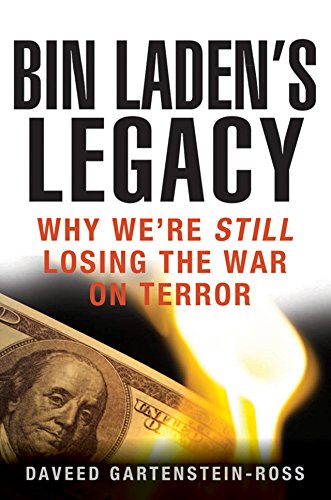
Why al Qaeda is winning its war against the West—and America has been playing right into its hands
In the decade since 9/11, the United States has grown weaker: It has been bogged down by costly wars in Iraq and Afghanistan. It has spent billions of dollars on security to protect air travel and other transport, as well as the homeland more generally. Much of this money has been channeled into efforts that are inefficient by design and highly bureaucratic, a lack of coordination between and among the government and an array of contractors making it difficult to evaluate the return on the enormous investment that we have made in national security. Meanwhile, public morale has been sapped by measures ranging from color-coded terror alerts to full-body hand searches.
Now counterterrorism expert Daveed Gartenstein-Ross details the strategic missteps the U.S. has made in the fight against al Qaeda, a group that U.S. planners never really took the time to understand. For this reason, America's responses to the terrorist threat have often unwittingly helped al Qaeda achieve its goals. Gartenstein-Ross's book explains what the country must do now to stem the bleeding.
- Explains in detail al Qaeda's strategy to sap and undermine the American economy, and shows how the United States played into the terrorist group's hands by expanding the battlefield and setting up an expensive homeland security bureaucracy that has difficulty dealing with a nimble, adaptive foe
- Outlines how al Qaeda's economic plans have evolved toward an ultimate "strategy of a thousand cuts," which involves smaller yet more frequent attacks against Western societies
- Shows how the domestic politicization of terrorism has weakened the United States, skewing its priorities and causing it to misallocate counterterrorism resources
- Offers a practical plan for building domestic resiliency against terrorist attacks, and escaping the mistakes that have undermined America's war against its jihadist foes
Clearly written and powerfully argued by a prominent counterterrorism expert, this book is essential reading for anyone who wants to understand what al Qaeda is really after and how the United States can thwart its goals—or help unwittingly to achieve them.
Die Inhaltsangabe kann sich auf eine andere Ausgabe dieses Titels beziehen.
Über die Autorin bzw. den Autor
Daveed Gartenstein-Ross has been described as "a rising star in the counterterrorism community" by the International Herald Tribune. He is often featured as a speaker at conferences sponsored by prestigious academic institutions, policy institutes, and the U.S. military, and has been called upon as a consultant to deal with problems ranging from hostage negotiations and border security to story development for major media companies. Gartenstein-Ross frequently leads training for the U.S. military and domestic law enforcement and has designed an educational curriculum dealing with terrorism for the U.S. Department of State. His writing has appeared in Foreign Policy, the Atlantic, Reader's Digest, and the Review of Faith and International Affairs, among other publications. He is a senior fellow at the Foundation for Defense of Democracies.
Von der hinteren Coverseite
Despite the death of Osama bin Laden, al Qaeda remains a significant threat because bin Laden's strategy for combating the United States?sapping its economic and military strength while expanding the battlefield on which America has to fight?lives on. In fact, this strategy has evolved over the past decade, it's working, and because U.S. planners never took the time to understand it, many of our responses have actually helped al Qaeda achieve its goals while undermining our own.
In Bin Laden's Legacy, counterterrorism expert Daveed Gartenstein-Ross explains why al Qaeda's "death by a thousand cuts" strategy has been effective. He shows how such well-publicized plots as the "underwear bomber" and printer cartridge bombs achieved their primary goals, despite being foiled. He notes how we have played into al Qaeda's hands with two costly, unpopular wars and by setting up an expensive homeland security bureaucracy that has difficulty dealing with a nimble, adaptive foe. He explains how many of our antiterrorism efforts are inefficient by design, suffer from a lack of coordination between the government and an array of contractors, and lack any obvious means to evaluate the return on our enormous investment in them. He explores how domestic politicization of the terrorist threat has skewed U.S. priorities, led to the misallocation of counterterrorism resources, and created flawed counterterrorism paradigms and bad policies. Meanwhile, public morale has been weakened by measures ranging from color-coded terror alerts to invasive, full-body searches in airports.
If bin Laden's death is to truly represent a turning point in the war on terror, it won't be due just to his importance to al Qaeda. It will be because his death allowed the United States to reevaluate its paradigms for protecting itself from and defeating this adversary. But to do so, it is first necessary to understand the key errors that the country has made along the way and why these mistakes occurred. Gartenstein-Ross shows what we've done wrong, then proposes a practical plan to start doing right.
For if we mistakenly believe that bin Laden's death signifies the end of al Qaeda's threat, or that it vindicates our previous policies, bin Laden may well experience even greater success in death than he ever did while among us.
Aus dem Klappentext
Despite the death of Osama bin Laden, al Qaeda remains a significant threat because bin Laden's strategy for combating the United States?sapping its economic and military strength while expanding the battlefield on which America has to fight?lives on. In fact, this strategy has evolved over the past decade, it's working, and because U.S. planners never took the time to understand it, many of our responses have actually helped al Qaeda achieve its goals while undermining our own.
In Bin Laden's Legacy, counterterrorism expert Daveed Gartenstein-Ross explains why al Qaeda's "death by a thousand cuts" strategy has been effective. He shows how such well-publicized plots as the "underwear bomber" and printer cartridge bombs achieved their primary goals, despite being foiled. He notes how we have played into al Qaeda's hands with two costly, unpopular wars and by setting up an expensive homeland security bureaucracy that has difficulty dealing with a nimble, adaptive foe. He explains how many of our antiterrorism efforts are inefficient by design, suffer from a lack of coordination between the government and an array of contractors, and lack any obvious means to evaluate the return on our enormous investment in them. He explores how domestic politicization of the terrorist threat has skewed U.S. priorities, led to the misallocation of counterterrorism resources, and created flawed counterterrorism paradigms and bad policies. Meanwhile, public morale has been weakened by measures ranging from color-coded terror alerts to invasive, full-body searches in airports.
If bin Laden's death is to truly represent a turning point in the war on terror, it won't be due just to his importance to al Qaeda. It will be because his death allowed the United States to reevaluate its paradigms for protecting itself from and defeating this adversary. But to do so, it is first necessary to understand the key errors that the country has made along the way and why these mistakes occurred. Gartenstein-Ross shows what we've done wrong, then proposes a practical plan to start doing right.
For if we mistakenly believe that bin Laden's death signifies the end of al Qaeda's threat, or that it vindicates our previous policies, bin Laden may well experience even greater success in death than he ever did while among us.
Auszug. © Genehmigter Nachdruck. Alle Rechte vorbehalten.
Bin Laden's Legacy
Why We're Still Losing the War on TerrorBy Daveed Gartenstein-RossJohn Wiley & Sons
Copyright © 2011 John Wiley & Sons, LtdAll right reserved.
ISBN: 978-1-1180-9494-5
Chapter One
Bin Laden Is Dead; His Strategy Lives
In the wake of Osama bin Laden's death, a number of people are saying that this does not mean that al Qaeda has been destroyed. Some argue that the organization may, in fact, be thriving.... I understand why officials have to say this. They want to be cautious. They don't want to overpromise. But the truth is this is a huge, devastating blow to al Qaeda, which had already been crippled by the Arab Spring. It is not an exaggeration to say that this is the end of al Qaeda in any meaningful sense of the word.
—Fareed Zakaria, May 2, 2011
On May 1, 2011, President Barack Obama delivered a rare Sunday night address to the nation. "Good evening," he began. "Tonight, I can report to the American people and to the world that the United States has conducted an operation that killed Osama bin Laden, the leader of al Qaeda and a terrorist who's responsible for the murder of thousands of innocent men, women, and children."
Killing bin Laden was a significant accomplishment. The hunt for the terrorist mastermind, led by Navy SEAL Team Six, will surely become, justifiably, the stuff of American legend. Spontaneous celebration erupted after President Obama's announcement, as citizens flocked to the perimeter of the White House and to ground zero in New York City, where bin Laden had struck U.S. soil almost a decade earlier. One D.C.-based website described the festivities outside the White House as a "massive gathering, drawing hundreds of others in a boisterous, sign-waving, lamppost-climbing, anthem-filled display of happiness." Members of the crowd waved American flags and smoked victory cigars well into the wee hours of the morning.
But what did bin Laden's death actually mean? Did killing one man end the so-called war on terrorism? Was bin Laden actually important to al Qaeda, or had he been relegated to the role of an operationally irrelevant figurehead?
Even if bin Laden had been only a figurehead, he performed that role with deadly competence. Islamist militants who knew bin Laden personally spoke of their love and reverence for him. The fact that he had been able to survive the most expensive manhunt in human history for so long had turned him into a worldwide legend. But the early stream of information that has been released, based on the computer hard drives and other data seized from bin Laden's compound in Abbottabad, Pakistan, suggests that bin Laden was more than a mere figurehead. As an Associated Press report published within a week of his death noted, analysts who examined this information came to believe that bin Laden "was a lot more involved in directing al Qaeda personnel and operations than sometimes thought over the last decade" and that he had been providing strategic guidance to al Qaeda affiliates in Yemen and Somalia. So the view that bin Laden's death had no operational relevance seems overstated.
Yet at the same time, the threat posed by Islamist militancy hasn't passed. The threat posed by al Qaeda hasn't passed. And even though Osama bin Laden is dead, his strategy for combating the United States lives on. This strategy has adapted and evolved over the past decade, and—although many observers are loathe to admit it—the strategy has been working. If we mistakenly believe that bin Laden's death signifies the end of the fight against Islamic militancy, or that it vindicates our previous policies and obviates the need to change our approach to counterterrorism, bin Laden may well experience even greater success in death than he ever did while among us.
The "Foiled Plots"
In trying to understand the strategy to which bin Laden helped lead al Qaeda, a good starting point is al Qaeda's own words. For example, the centerpiece article in the November 2010 issue of Inspire, the English-language online magazine produced by the militant group al Qaeda in the Arabian Peninsula (AQAP), began as follows:
Two Nokia phones, $150 each, two HP printers, $300 each, plus shipping, transportation and other miscellaneous expenses add up to a total bill of $4,200. That is all that Operation Hemorrhage cost us.... On the other hand this supposedly "foiled plot," as some of our enemies would like to call it, will without a doubt cost America and other Western countries billions of dollars in new security measures.
The publication's cover featured a somewhat blurry photograph of a United Parcel Service plane on a runway, along with the crisp headline "$4,200." This was an unmistakable reference to a terrorist plot that the Yemen-based AQAP had launched the previous month, involving bombs hidden in printer cartridges.
In the plot, AQAP militants shipped these explosive devices via UPS and Federal Express in Yemen. Both packages were addressed to synagogues in Chicago. Investigators seized the explosive device sent via FedEx in Dubai; it contained three hundred grams of the military-grade explosive pentaerythritol tetranitrate (PETN) hidden in a Hewlett-Packard desktop printer cartridge. Although it never left the Middle East, that device had been loaded onto, and subsequently flown on, two different passenger jets—first on a Qatar Airways Airbus A320 to Doha, then on a second flight from Doha to Dubai.
Finding the second bomb, a PETN device sent via UPS, proved disturbingly difficult. As Deputy National Security Adviser John Brennan would later recount, it was truly a "race against the clock." A call from Saudi Arabian intelligence originally alerted U.S. officials to the danger. The Americans then notified the German federal police, because the bomb-carrying plane was to make its first stop at Germany's Cologne-Bonn airport, a UPS hub, before continuing to Britain and ultimately the United States. But by the time the German police learned of the suspicious package, it was already too late. The plane had taken off again.
When it landed at Britain's East Midlands Airport, officials cordoned off the cargo area and emptied the plane. They conducted a thorough search but found nothing out of the ordinary. Even the seemingly innocuous printer cartridge hiding four hundred grams of PETN was cleared by security, and the authorities removed the cordon around 10 a.m. British authorities had inadvertently given a green light to tragedy, for the bomb might have exploded over the U.S. eastern seaboard had the plane taken off.
Then officials called from Dubai. They had just discovered the PETN in the Hewlett-Packard cartridge that had been routed through their country. These officials instructed their British colleagues on how to locate the explosives, which were carefully disguised to avoid detection by an X-ray machine. The British authorities again cordoned off the area, and this time they found the bomb.
After the 9/11 attacks, the United States poured enormous sums of money into bolstering aviation security. Yet time and again, terrorists affiliated with al Qaeda have shown how just a bit of technical ingenuity can thwart these expensive defenses. About three months after 9/11—on December 22, 2001—a British ex-con named Richard Reid boarded the Miami-bound American Airlines flight 63 in Paris with enough...
„Über diesen Titel“ kann sich auf eine andere Ausgabe dieses Titels beziehen.
Suchergebnisse für Bin Laden's Legacy: Why We're Still Losing...

Beispielbild für diese ISBN
Bin Laden's Legacy: Why We're Still Losing the War on Terror
Anbieter: Wonder Book, Frederick, MD, USA
Verkäuferbewertung 5 von 5 Sternen

Zustand: Good. Good condition. Good dust jacket. A copy that has been read but remains intact. May contain markings such as bookplates, stamps, limited notes and highlighting, or a few light stains. Artikel-Nr. F27A-04485
Gebraucht kaufen
EUR 6,22
Versand gratis
Versand innerhalb von USA
Versand innerhalb von USA
Anzahl: 1 verfügbar
Beispielbild für diese ISBN
Bin Laden's Legacy: Why We're Still Losing the War on Terror
Anbieter: Wonder Book, Frederick, MD, USA
Verkäuferbewertung 5 von 5 Sternen
Zustand: Very Good. Very Good condition. Very Good dust jacket. A copy that may have a few cosmetic defects. May also contain light spine creasing or a few markings such as an owner's name, short gifter's inscription or light stamp. Artikel-Nr. T08R-00571
Gebraucht kaufen
EUR 6,22
Versand gratis
Versand innerhalb von USA
Versand innerhalb von USA
Anzahl: 1 verfügbar
Beispielbild für diese ISBN
Bin Laden's Legacy : Why We're Still Losing the War on Terror
Verlag:
Wiley & Sons Canada, Limited, John, 2011
ISBN 10: 1118094948
ISBN 13: 9781118094945
Gebraucht
Hardcover
Anbieter: Better World Books, Mishawaka, IN, USA
Verkäuferbewertung 5 von 5 Sternen
Zustand: Very Good. Pages intact with possible writing/highlighting. Binding strong with minor wear. Dust jackets/supplements may not be included. Stock photo provided. Product includes identifying sticker. Better World Books: Buy Books. Do Good. Artikel-Nr. 4809731-6
Gebraucht kaufen
EUR 6,54
Versand gratis
Versand innerhalb von USA
Versand innerhalb von USA
Anzahl: 1 verfügbar
Beispielbild für diese ISBN
Bin Laden's Legacy : Why We're Still Losing the War on Terror
Verlag:
Wiley & Sons Canada, Limited, John, 2011
ISBN 10: 1118094948
ISBN 13: 9781118094945
Gebraucht
Hardcover
Anbieter: Better World Books, Mishawaka, IN, USA
Verkäuferbewertung 5 von 5 Sternen
Zustand: Very Good. Former library copy. Pages intact with possible writing/highlighting. Binding strong with minor wear. Dust jackets/supplements may not be included. Includes library markings. Stock photo provided. Product includes identifying sticker. Better World Books: Buy Books. Do Good. Artikel-Nr. 3957004-75
Gebraucht kaufen
EUR 6,54
Versand gratis
Versand innerhalb von USA
Versand innerhalb von USA
Anzahl: 1 verfügbar
Beispielbild für diese ISBN
Bin Laden's Legacy : Why We're Still Losing the War on Terror
Verlag:
Wiley & Sons Canada, Limited, John, 2011
ISBN 10: 1118094948
ISBN 13: 9781118094945
Gebraucht
Hardcover
Anbieter: Better World Books, Mishawaka, IN, USA
Verkäuferbewertung 5 von 5 Sternen
Zustand: Good. Former library copy. Pages intact with minimal writing/highlighting. The binding may be loose and creased. Dust jackets/supplements are not included. Includes library markings. Stock photo provided. Product includes identifying sticker. Better World Books: Buy Books. Do Good. Artikel-Nr. 4638417-75
Gebraucht kaufen
EUR 6,54
Versand gratis
Versand innerhalb von USA
Versand innerhalb von USA
Anzahl: 1 verfügbar
Beispielbild für diese ISBN
Bin Laden's Legacy: Why We're Still Losing the War on Terror
Anbieter: WorldofBooks, Goring-By-Sea, WS, Vereinigtes Königreich
Verkäuferbewertung 5 von 5 Sternen
Paperback. Zustand: Very Good. The book has been read, but is in excellent condition. Pages are intact and not marred by notes or highlighting. The spine remains undamaged. Artikel-Nr. GOR009602054
Gebraucht kaufen
EUR 2,16
EUR 6,55 Versand
Versand von Vereinigtes Königreich nach USA
Versand von Vereinigtes Königreich nach USA
Anzahl: 1 verfügbar
Beispielbild für diese ISBN
Bin Laden's Legacy: Why We're Still Losing the War on Terror
Anbieter: AwesomeBooks, Wallingford, Vereinigtes Königreich
Verkäuferbewertung 5 von 5 Sternen
Hardcover. Zustand: Very Good. Bin Laden's Legacy: Why We're Still Losing the War on Terror This book is in very good condition and will be shipped within 24 hours of ordering. The cover may have some limited signs of wear but the pages are clean, intact and the spine remains undamaged. This book has clearly been well maintained and looked after thus far. Money back guarantee if you are not satisfied. See all our books here, order more than 1 book and get discounted shipping. . Artikel-Nr. 7719-9781118094945
Gebraucht kaufen
EUR 5,58
EUR 4,82 Versand
Versand von Vereinigtes Königreich nach USA
Versand von Vereinigtes Königreich nach USA
Anzahl: 1 verfügbar
Foto des Verkäufers
Bin Laden's Legacy: Why We're Still Losing the War on Terror
Verlag:
Trade Paper Press, 2011
ISBN 10: 1118094948
ISBN 13: 9781118094945
Gebraucht
Hardcover
Erstausgabe
Signiert
Anbieter: ThriftBooksVintage, Tukwila, WA, USA
Verkäuferbewertung 5 von 5 Sternen
Hardcover. Zustand: Very Good. Zustand des Schutzumschlags: Good. First Edition. Dust jacket in good condition. First edition, first printing. SIGNED and inscribed by the author. Minor shelf and handling wear, overall a clean solid copy with minimal signs of use. Secure packaging for safe delivery. signed and inscribed by author. Artikel-Nr. 736097265
Gebraucht kaufen
EUR 10,68
Versand gratis
Versand innerhalb von USA
Versand innerhalb von USA
Anzahl: 1 verfügbar
Beispielbild für diese ISBN
Bin Laden's Legacy: Why We're Still Losing the War on Terror
Anbieter: Foggypaws, Sonoma, CA, USA
Verkäuferbewertung 4 von 5 Sternen

hardcover. Zustand: New. Hardcover. Artikel-Nr. mon0000071879
Beispielbild für diese ISBN
Bin Laden's Legacy: Why We're Still Losing the War on Terror
Verlag:
John Wiley & Sons 15/04/2013, 2013
ISBN 10: 1118094948
ISBN 13: 9781118094945
Gebraucht
Hardcover
Anbieter: Bahamut Media, Reading, Vereinigtes Königreich
Verkäuferbewertung 5 von 5 Sternen
Hardcover. Zustand: Very Good. Shipped within 24 hours from our UK warehouse. Clean, undamaged book with no damage to pages and minimal wear to the cover. Spine still tight, in very good condition. Remember if you are not happy, you are covered by our 100% money back guarantee. Artikel-Nr. 6545-9781118094945
Gebraucht kaufen
EUR 5,58
EUR 8,17 Versand
Versand von Vereinigtes Königreich nach USA
Versand von Vereinigtes Königreich nach USA
Anzahl: 1 verfügbar