
Verwandte Artikel zu Red-Blooded Risk: The Secret History of Wall Street
Inhaltsangabe
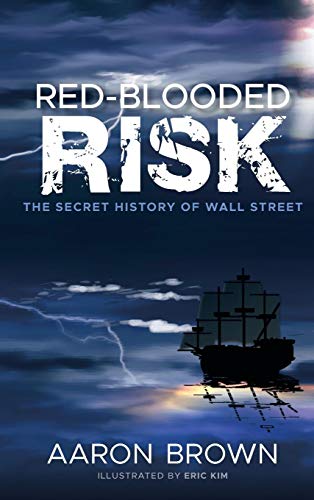
An innovative guide that identifies what distinguishes the best financial risk takers from the rest
From 1987 to 1992, a small group of Wall Street quants invented an entirely new way of managing risk to maximize success: risk management for risk-takers. This is the secret that lets tiny quantitative edges create hedge fund billionaires, and defines the powerful modern global derivatives economy. The same practical techniques are still used today by risk-takers in finance as well as many other fields. Red-Blooded Risk examines this approach and offers valuable advice for the calculated risk-takers who need precise quantitative guidance that will help separate them from the rest of the pack.
While most commentators say that the last financial crisis proved it's time to follow risk-minimizing techniques, they're wrong. The only way to succeed at anything is to manage true risk, which includes the chance of loss. Red-Blooded Risk presents specific, actionable strategies that will allow you to be a practical risk-taker in even the most dynamic markets.
- Contains a secret history of Wall Street, the parts all the other books leave out
- Includes an intellectually rigorous narrative addressing what it takes to really make it in any risky activity, on or off Wall Street
- Addresses essential issues ranging from the way you think about chance to economics, politics, finance, and life
- Written by Aaron Brown, one of the most calculated and successful risk takers in the world of finance, who was an active participant in the creation of modern risk management and had a front-row seat to the last meltdown
- Written in an engaging but rigorous style, with no equations
- Contains illustrations and graphic narrative by renowned manga artist Eric Kim
There are people who disapprove of every risk before the fact, but never stop anyone from doing anything dangerous because they want to take credit for any success. The recent financial crisis has swelled their ranks, but in learning how to break free of these people, you'll discover how taking on the right risk can open the door to the most profitable opportunities.
Die Inhaltsangabe kann sich auf eine andere Ausgabe dieses Titels beziehen.
Über die Autorin bzw. den Autor
AARON BROWN is risk manager at AQR Capital Management and the author of The Poker Face of Wall Street (Wiley), selected one of the ten best books of 2006 by BusinessWeek, and A World of Chance with Reuven and Gabrielle Brenner. In his thirty-year Wall Street career, he has been a trader, portfolio manager, head of mortgage securities, and risk manager for institutions including Citigroup and Morgan Stanley. He also served a stint as a finance professor and was among the top poker players in the world during the 1970s and 1980s. He holds degrees in applied mathematics from Harvard and in finance and statistics from the University of Chicago.
Von der hinteren Coverseite
Everyone talks about risk, but few people give serious thought to what risk is. It's hard to describe it without expressing an opinion we like things that are innovative, daring, creative, and bold; but those are exactly the same things that are reckless, speculative, risky, and irresponsible.
This book is the story of a group of young math whizzes who unleashed a revolution one that reshaped our financial system and continues to echo through the halls of government, universities, and corporations today. In the 1970s, disillusioned with the sorry state of quantitative analysis, these young mathematicians (soon to be known as "quants") invented a new way of looking at probability and set out to prove it in the ultimate testing ground of odds-making: Las Vegas.
Once there, the quants turned conventional wisdom about gambling on its head. People said you can't beat the house, yet the quants managed to beat blackjack and other casino games. People said you needed a lifetime to learn poker, yet the quants' aggressive mathematical tactics swept the table against the best players in the world. Then the quants turned to sports betting, overturning the business model and squeezing out local bookies with a global organization that matched bets without taking risk.
Armed with their theories and experience, the quants raised their sights and headed to Wall Street, determined to replicate their success. Finance was a tougher challenge than gambling, but by the mid-1990s, the quants had remade Wall Street as thoroughly as they had remade Las Vegas. That transformation went unnoticed by the bond salesmen and investment bankers who ran Wall Street, as well as by academics, regulators, journalists, and investors; yet these changes caused both the greatest wealth creation event in the history of the world, and the financial disasters we have witnessed in its wake.
There's more here than just a lesson in recent financial history, however. Brown's story goes beyond the headlines to explore basic questions of economics, like the meaning of property and the nature of exchange. Along the way, it reveals secrets about the building of the pyramids, the glory of ancient Athens, the force that built the Roman Empire, a world-changing invention from medieval Italy, a secret in a mysterious letter written in 1654 and not decoded until the 1990s, and an essential aspect of the American Revolution left out of history books.
This book will change the way you think about everything from history, risk, and money to vampires, zombies, and tulips. It offers a fascinating and thrilling account of great events that have never before been described in an easily accessible form. There are bold ideas, colorful characters, and, most important, the keys to understanding the modern financial world and how its inner workings affect our daily lives.
Aus dem Klappentext
Everyone talks about risk, but few people give serious thought to what risk is. It's hard to describe it without expressing an opinion—we like things that are innovative, daring, creative, and bold; but those are exactly the same things that are reckless, speculative, risky, and irresponsible.
This book is the story of a group of young math whizzes who unleashed a revolution—one that reshaped our financial system and continues to echo through the halls of government, universities, and corporations today. In the 1970s, disillusioned with the sorry state of quantitative analysis, these young mathematicians (soon to be known as "quants") invented a new way of looking at probability and set out to prove it in the ultimate testing ground of odds-making: Las Vegas.
Once there, the quants turned conventional wisdom about gambling on its head. People said you can't beat the house, yet the quants managed to beat blackjack and other casino games. People said you needed a lifetime to learn poker, yet the quants' aggressive mathematical tactics swept the table against the best players in the world. Then the quants turned to sports betting, overturning the business model and squeezing out local bookies with a global organization that matched bets without taking risk.
Armed with their theories and experience, the quants raised their sights and headed to Wall Street, determined to replicate their success. Finance was a tougher challenge than gambling, but by the mid-1990s, the quants had remade Wall Street as thoroughly as they had remade Las Vegas. That transformation went unnoticed by the bond salesmen and investment bankers who ran Wall Street, as well as by academics, regulators, journalists, and investors; yet these changes caused both the greatest wealth creation event in the history of the world, and also to the financial disasters we have witnessed in its wake.
There's more here than just a lesson in recent financial history, however. Brown's story goes beyond the headlines to explore basic questions of economics, like the meaning of property and the nature of exchange. Along the way, it reveals secrets about the building of the pyramids, the glory of ancient Athens, the forcethat built the Roman Empire, a world-changing invention from medieval Italy, a secret in a mysterious letter written in 1654 and not decoded until the 1990s, and an essential aspect of the American Revolution left out of history books.
This book will change the way you think about everything from history, risk, and money to vampires, zombies, and tulips. It offers a fascinating and thrilling account of great events that have never before been described in an easily accessible form. There are bold ideas, colorful characters, and, most important, the keys to understanding the modern financial world and how its inner workings affect our daily lives.
„Über diesen Titel“ kann sich auf eine andere Ausgabe dieses Titels beziehen.
Suchergebnisse für Red-Blooded Risk: The Secret History of Wall Street

Beispielbild für diese ISBN
Red-Blooded Risk: The Secret History of Wall Street
Anbieter: AwesomeBooks, Wallingford, Vereinigtes Königreich
Verkäuferbewertung 5 von 5 Sternen

Hardcover. Zustand: Very Good. Red-Blooded Risk: The Secret History of Wall Street This book is in very good condition and will be shipped within 24 hours of ordering. The cover may have some limited signs of wear but the pages are clean, intact and the spine remains undamaged. This book has clearly been well maintained and looked after thus far. Money back guarantee if you are not satisfied. See all our books here, order more than 1 book and get discounted shipping. Artikel-Nr. 7719-9781118043868
Gebraucht kaufen
EUR 13,73
EUR 4,79 Versand
Versand von Vereinigtes Königreich nach USA
Versand von Vereinigtes Königreich nach USA
Anzahl: 2 verfügbar
Beispielbild für diese ISBN
Red-Blooded Risk: The Secret History of Wall Street
Anbieter: Bahamut Media, Reading, Vereinigtes Königreich
Verkäuferbewertung 5 von 5 Sternen
Hardcover. Zustand: Very Good. This book is in very good condition and will be shipped within 24 hours of ordering. The cover may have some limited signs of wear but the pages are clean, intact and the spine remains undamaged. This book has clearly been well maintained and looked after thus far. Money back guarantee if you are not satisfied. See all our books here, order more than 1 book and get discounted shipping. Artikel-Nr. 6545-9781118043868
Gebraucht kaufen
EUR 13,48
EUR 8,12 Versand
Versand von Vereinigtes Königreich nach USA
Versand von Vereinigtes Königreich nach USA
Anzahl: 2 verfügbar
Foto des Verkäufers
Red-Blooded Risk: The Secret History of Wall Street
Anbieter: WeBuyBooks, Rossendale, LANCS, Vereinigtes Königreich
Verkäuferbewertung 5 von 5 Sternen
hardcover. Zustand: Good. Most items will be dispatched the same or the next working day. A copy that has been read but remains in clean condition. All of the pages are intact and the cover is intact and the spine may show signs of wear. The book may have minor markings which are not specifically mentioned. Annotations to some page edges/pages, may include notes, highlighting or underlining. Artikel-Nr. rev9958803437
Gebraucht kaufen
EUR 11,73
EUR 11,29 Versand
Versand von Vereinigtes Königreich nach USA
Versand von Vereinigtes Königreich nach USA
Anzahl: 1 verfügbar
Beispielbild für diese ISBN
Red-Blooded Risk
Anbieter: PBShop.store UK, Fairford, GLOS, Vereinigtes Königreich
Verkäuferbewertung 5 von 5 Sternen
HRD. Zustand: New. New Book. Shipped from UK. Established seller since 2000. Artikel-Nr. FW-9781118043868
Neu kaufen
EUR 25,85
EUR 6,83 Versand
Versand von Vereinigtes Königreich nach USA
Versand von Vereinigtes Königreich nach USA
Anzahl: 15 verfügbar
Beispielbild für diese ISBN
Red-Blooded Risk
Anbieter: Majestic Books, Hounslow, Vereinigtes Königreich
Verkäuferbewertung 4 von 5 Sternen

Zustand: New. pp. 432. Artikel-Nr. 4699051
Neu kaufen
EUR 32,40
EUR 7,56 Versand
Versand von Vereinigtes Königreich nach USA
Versand von Vereinigtes Königreich nach USA
Anzahl: 3 verfügbar
Beispielbild für diese ISBN
Red-Blooded Risk: The Secret History of Wall Street
Anbieter: Ria Christie Collections, Uxbridge, Vereinigtes Königreich
Verkäuferbewertung 5 von 5 Sternen
Zustand: New. In English. Artikel-Nr. ria9781118043868_new
Neu kaufen
EUR 29,29
EUR 13,94 Versand
Versand von Vereinigtes Königreich nach USA
Versand von Vereinigtes Königreich nach USA
Anzahl: Mehr als 20 verfügbar
Beispielbild für diese ISBN
Red-Blooded Risk: The Secret History of Wall Street
Anbieter: Kennys Bookstore, Olney, MD, USA
Verkäuferbewertung 5 von 5 Sternen
Zustand: New. 2011. 1st Edition. Hardcover. An innovative guide that identifies what distinguishes the best financial risk takers from the rest From 1987 to 1992, a small group of Wall Street quants invented an entirely new way of managing risk to maximize success: risk management for risk-takers. Num Pages: 432 pages, Illustrations. BIC Classification: KF. Category: (P) Professional & Vocational. Dimension: 235 x 164 x 27. Weight in Grams: 954. . . . . . Books ship from the US and Ireland. Artikel-Nr. V9781118043868
Neu kaufen
EUR 40,66
EUR 9,06 Versand
Versand innerhalb von USA
Versand innerhalb von USA
Anzahl: 3 verfügbar
Beispielbild für diese ISBN
Red-blooded Risk: Quantitative Strategies for Embracing Risk
Anbieter: Revaluation Books, Exeter, Vereinigtes Königreich
Verkäuferbewertung 5 von 5 Sternen
Hardcover. Zustand: Brand New. 1st edition. 432 pages. 9.25x6.25x1.25 inches. In Stock. Artikel-Nr. x-1118043863
Neu kaufen
EUR 41,36
EUR 14,55 Versand
Versand von Vereinigtes Königreich nach USA
Versand von Vereinigtes Königreich nach USA
Anzahl: 2 verfügbar
Beispielbild für diese ISBN
RED BLOODED RISK
Anbieter: Speedyhen, Hertfordshire, Vereinigtes Königreich
Verkäuferbewertung 5 von 5 Sternen
Zustand: NEW. Artikel-Nr. NW9781118043868
Neu kaufen
EUR 24,58
EUR 47,72 Versand
Versand von Vereinigtes Königreich nach USA
Versand von Vereinigtes Königreich nach USA
Anzahl: 3 verfügbar
Foto des Verkäufers
Red-Blooded Risk
Anbieter: moluna, Greven, Deutschland
Verkäuferbewertung 5 von 5 Sternen
Zustand: New. Wickedly original, one of the most fascinating accounts I have ever seen. A rollicking and highly opinionated read. (Risk Professional, October 2011) No one who reads Red-Blooded Risk: The Secret History of Wall Street will ever again regard risk manageme. Artikel-Nr. 447232717
Neu kaufen
EUR 33,64
EUR 48,99 Versand
Versand von Deutschland nach USA
Versand von Deutschland nach USA
Anzahl: 3 verfügbar