
Verwandte Artikel zu From Foraging to Farming in the Andes: New Perspectives...
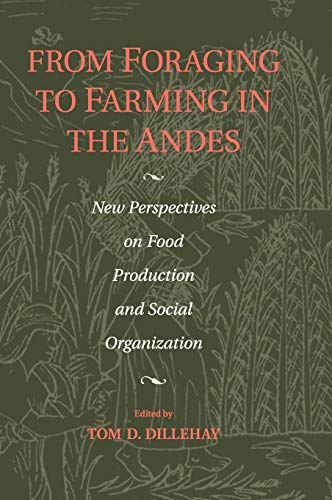
From Foraging to Farming in the Andes: New Perspectives on Food Production and Social Organization - Hardcover
Inhaltsangabe
This book proposes a new and more complex model for understanding the transition from hunting and gathering to cultivation.
Die Inhaltsangabe kann sich auf eine andere Ausgabe dieses Titels beziehen.
Über die Autorin bzw. den Autor
Tom D. Dillehay is Rebecca Web Wilson University Professor and Distinguished Professor of Anthropology in the Department of Anthropology at Vanderbilt University. He has conducted numerous archaeological and anthropological projects in Peru, Chile, Argentina, and other South American countries and the United States. He is the author of Monuments, Empires, and Resistance: The Araucanian Polity and Ritual Narratives, as well as numerous other books and articles.
„Über diesen Titel“ kann sich auf eine andere Ausgabe dieses Titels beziehen.
Suchergebnisse für From Foraging to Farming in the Andes: New Perspectives...

Beispielbild für diese ISBN
From Foraging to Farming in the Andes: New Perspectives on Food Production and Social Organization
Anbieter: Ria Christie Collections, Uxbridge, Vereinigtes Königreich
Verkäuferbewertung 5 von 5 Sternen

Zustand: New. In. Artikel-Nr. ria9781107005273_new
Neu kaufen
EUR 145,75
EUR 13,96 Versand
Versand von Vereinigtes Königreich nach USA
Versand von Vereinigtes Königreich nach USA
Anzahl: Mehr als 20 verfügbar
Beispielbild für diese ISBN
From Foraging to Farming in the Andes
Anbieter: Kennys Bookstore, Olney, MD, USA
Verkäuferbewertung 5 von 5 Sternen
Zustand: New. This book proposes a new and more complex model for understanding the transition from hunting and gathering to cultivation. Editor(s): Dillehay, Tom D. Num Pages: 380 pages, 96 b/w illus. 4 colour illus. 15 maps 9 tables. BIC Classification: HBJK; HDDA; JHBL. Category: (P) Professional & Vocational. Dimension: 253 x 215 x 24. Weight in Grams: 980. . 2011. Hardback. . . . . Books ship from the US and Ireland. Artikel-Nr. V9781107005273
Neu kaufen
EUR 197,95
EUR 9,03 Versand
Versand innerhalb von USA
Versand innerhalb von USA
Anzahl: Mehr als 20 verfügbar
Beispielbild für diese ISBN
From Foraging to Farming in the Andes: New Perspectives on Food Production and Social Organization
Anbieter: Revaluation Books, Exeter, Vereinigtes Königreich
Verkäuferbewertung 5 von 5 Sternen
Hardcover. Zustand: Brand New. 1st edition. 350 pages. 9.96x8.46x1.10 inches. In Stock. Artikel-Nr. x-1107005272
Neu kaufen
EUR 202,34
EUR 17,48 Versand
Versand von Vereinigtes Königreich nach USA
Versand von Vereinigtes Königreich nach USA
Anzahl: 2 verfügbar
Foto des Verkäufers
From Foraging to Farming in the Andes
Anbieter: AHA-BUCH GmbH, Einbeck, Deutschland
Verkäuferbewertung 5 von 5 Sternen
Buch. Zustand: Neu. Druck auf Anfrage Neuware - Printed after ordering - Archeologists have always considered the beginnings of Andean civilization from c.13,000 to 6,000 years ago to be important in terms of the appearance of domesticated plants and animals, social differentiation, and a sedentary lifestyle, but there is more to this period than just these developments. During this period, the spread of crop production and other technologies, kinship-based labor projects, mound-building, and population aggregation formed ever-changing conditions across the Andes. From Foraging to Farming in the Andes proposes a new and more complex model for understanding the transition from hunting and gathering to cultivation. It argues that such developments evolved regionally, were fluid and uneven, and were subject to reversal. This book develops these arguments from a large body of archaeological evidence, collected over 30 years in two valleys in northern Peru, and then places the valleys in the context of recent scholarship studying similar developments around the world. Artikel-Nr. 9781107005273
Neu kaufen
EUR 205,24
EUR 30,50 Versand
Versand von Deutschland nach USA
Versand von Deutschland nach USA
Anzahl: 1 verfügbar