
Verwandte Artikel zu The Penguin Lessons: What I Learned from a Remarkable...
Inhaltsangabe
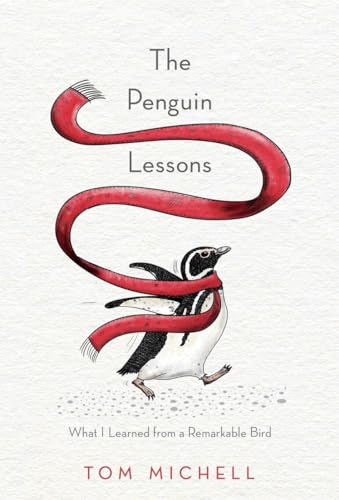
NOW A MAJOR MOTION PICTURE • The extraordinary and inspiring true story about the surprising bond between a young teacher and the small penguin he rescued
“The Penguin Lessons teaches an important truth: that a single act of compassion can be repaid a thousand-fold.”—Sy Montgomery, author of the National Book Award finalist The Soul of an Octopus
In 1975, twenty-three-year-old Englishman Tom Michell follows his wanderlust to Argentina, where he becomes assistant master at a prestigious boarding school. But Michell’s adventures really begin when, on a weekend in Uruguay, he rescues a penguin covered in oil from an ocean spill, cleans the bird up, and attempts to return him to the sea. The penguin refuses to leave his rescuer’s side. “That was the moment at which he became my penguin, and whatever the future held, we’d face it together,” says Michell in this charming memoir.
Michell names the penguin Juan Salvador (“John Saved”), but Juan Salvador, as it turns out, is the one who saves Michell.
After Michell smuggles the bird back to Argentina and into his campus apartment, word spreads about the young Englishman’s unusual roommate. Juan Salvador is suddenly the center of attention—as mascot of the rugby team, confidant to the dorm housekeeper, co-host of Michell’s parties, and an unprecedented swimming coach to a shy boy. Even through the collapse of the Perónist government and amid the country’s economic and political strife, Juan Salvador brings joy to everyone around him—especially Michell, who considers the affectionate animal a compadre and kindred spirit.
Witty and heartwarming, The Penguin Lessons is a classic in the making, a story that is both absurd and wonderful, exactly like Juan Salvador.
Die Inhaltsangabe kann sich auf eine andere Ausgabe dieses Titels beziehen.
Über die Autorin bzw. den Autor
Tom Michell lives in Cornwall, England. At the tender age of sixty-four, he wrote The Penguin Lessons. This is his first book.
Auszug. © Genehmigter Nachdruck. Alle Rechte vorbehalten.
I Pick Up a Penguin
The seaside resort of Punta del Este can be found at that point on the coast of Uruguay where the great southerly sweep of South America’s Atlantic seaboard meets the northern bank of the vast delta of the river Plate, or Río de la Plata. It lies some sixty miles to the east of the capital, Montevideo, and across the mighty river from Buenos Aires, the capital of the Republic of Argentina. In the 1960s and 1970s Punta del Este was, for the denizens of those two great metropolises, their Nice, Cannes, or St. Tropez. It was the place where the smart set went for summer holidays to escape the city heat, to stay and be seen in luxurious penthouses and apartment blocks facing the sea, and for all I know, they do so still.
The key to one of those apartments had kindly been lent to me by the Bellamys, friends of mine who, because it was midwinter, were not using it themselves. I was in Uruguay following an extraordinary stay in Paraguay and was making my way back to the Argentine via the gargantuan waterfalls at Iguazú and then along the coast. After several weeks of exertions and excitements I was content to spend a few days relaxing in quiet out-of-season Punta del Este.
I had returned to the apartment late in the afternoon on my last day in order to organize my belongings for a very early departure the following morning. My booking for the hydrofoil across the river Plate was for noon, which required that I catch the colectivo, the local bus, from Punta del Este to Montevideo at a quarter to six in the morning. Colectivos were enthusiastically decorated by their drivers with innumerable diverse adornments and good-luck charms, which were supposed to make up for the bald tires, I think.
Having finished the packing, I cleaned and checked the apartment, then decided to take a final walk by the sea before going out for what would be my last supper at the resort.
The harbor at Punta del Este, on the western side of the point, was small, sufficient only for a few score fishing boats and pleasure craft, which on that day were rocking gently on their moorings, in harmony with the floating pontoons along which owners could walk to reach their dinghies. Although the harbor is well defended against the Atlantic Ocean to the east, there was little protection from the westerly breeze that was blowing that day.
The air was full of the cry of gulls, the slap of halyards, and the smell of fish, and this little haven of security basked serenely in the bright winter sunlight. The vibrant colors of the gulls, boats, and houses were shown to their best advantage against the sapphire sea and azure sky. My attention, however, was drawn toward the countless thousands of fish in the cold, crystal-clear water. Swimming in unison, shoals of sprats raced around the harbor, attempting to evade their predators by zigzagging, or by dividing and reuniting every few seconds. I was mesmerized by the scintillating waves of light that pulsed across the water, like an aurora, as the sun reflected off the iridescent bodies of the fish.
Next to the rusting antiquated fuel pumps marked in gallons, and housed under a corrugated metal roof, a muscle-bound fisherwoman scooped her living from the harbor with a large green net securely tied to a stout bamboo pole. She wore a leather apron, rubber boots, and a satisfied expression, although, I noted, she had bare hands. Her hair was covered with a brown scarf and her face was deeply lined and weathered. Beside her were three wooden casks filled almost to the brim with sprats, which I presumed accounted for her satisfaction. Standing ankle-deep in flapping silver-banded fish, she dropped her net into the water and lifted a fresh catch almost every minute, to the dismay of the gulls, who scolded her noisily. She gave a toothless grin as she shook each new haul into the barrels and picked out the few fish that hadn’t fallen from the net, something I realized she couldn’t have done wearing gloves. The little black-backed, swallow-tailed gulls, after hovering briefly about ten feet above the sea, dived down, then bobbed up to the surface to sit on the water with sprats glistening like rubber mercury in their beaks. In another flash, the catch was swallowed.
There were a couple of penguins in the harbor, too, enjoying their share. It was captivating to watch them fly so fast through the water in pursuit of the fish, far more skillfully even than the gulls in the air. Twisting and turning, they tore through the shoals with breathtaking speed and agility, snapping up sprats as the fish scattered before them. Against such a superlative adversary the sprats appeared to be almost defenseless, other, perhaps, than their seemingly limitless numbers. I was only surprised that there weren’t more penguins there to feast on such rich and easy pickings.
I could gladly have watched them for much longer, but as the penguins swam out of view, I turned and walked round the promontory to the eastern side and so on to the next breakwater. Small, white-flecked waves were rolling in from the ocean and breaking on the beach. I had only been strolling along the seashore for ten, maybe fifteen minutes on that beautiful afternoon, reflecting on all my new experiences, the wonderful and awe-inspiring things I had seen and done on holiday, when I caught sight of the first of them: black, unmoving shapes. Initially I was aware of only a few, but as I walked on, they grew in number, until the whole beach appeared to be covered with black lumps in a black carpet. Hundreds of oil-drenched penguins lay dead in the sand, from the high-water mark to the sea, and stretching far away along the shore to the north. Dead penguins, covered in thick, cloying, suffocating oil and tar. The sight was so dreadful, so sickening and depressing, that I could only wonder what future lay ahead for any “civilization” that could tolerate, let alone perpetrate, such desecration. I understood then why there were so few penguins in the harbor catching sprats, given the abundance of the fish. Evidently only a lucky few had avoided the oil slick.
Consumed by dark thoughts, I continued my walk above the trail of devastation that covered much of the beach, trying to estimate the number of dead birds. Even if I had been able to calculate how many penguins were on the shore—in places heaped on top of each other—it was impossible to assess the number of bodies churning in the sea. Each wave that broke piled more birds on top of those already there, while further out every new breaker was sweeping another grim batch of black carcasses toward the shore.
The beach between the sea and the wall at the side of the road was narrow, possibly only thirty yards at its widest, but the pollution along the beach extended as far as I could see. Clearly thousands of penguins had died in the most horrifying manner while they were making their way north along their ancestral migration routes just as their forebears had done for millions of years.
I still don’t know why I continued to walk along the beach that day. Possibly I needed to understand just how appalling this event was—the extent of the damage. I hadn’t heard any reports of an oil spill in this part of the world, but in those days regulations regarding the conduct of oil tankers were less stringent and compliance minimal, so occurrences like this were not uncommon. After discharging cargo at their destinations, oil tankers would put to sea again and wash out their tanks while in transit to collect a new consignment.
It was events such as these that eventually provoked much-needed change. I had little doubt that what I was witnessing on this beach was the inevitable consequence of a hideous collision of cultures. When the instinctive, annual compulsion of seabirds to migrate met a...
„Über diesen Titel“ kann sich auf eine andere Ausgabe dieses Titels beziehen.
Suchergebnisse für The Penguin Lessons: What I Learned from a Remarkable...

Foto des Verkäufers
The Penguin Lessons: What I Learned from a Remarkable Bird
Anbieter: Dream Books Co., Denver, CO, USA
Verkäuferbewertung 5 von 5 Sternen

Zustand: acceptable. This copy has clearly been enjoyedâ"expect noticeable shelf wear and some minor creases to the cover. Binding is strong, and all pages are legible. May contain previous library markings or stamps. Artikel-Nr. DBV.1101967412.A
Gebraucht kaufen
EUR 7,92
Versand gratis
Versand innerhalb von USA
Versand innerhalb von USA
Anzahl: 1 verfügbar
Beispielbild für diese ISBN
The Penguin Lessons: What I Learned from a Remarkable Bird
Anbieter: World of Books (was SecondSale), Montgomery, IL, USA
Verkäuferbewertung 5 von 5 Sternen
Hardback. Zustand: Good. NOW A MAJOR MOTION PICTURE * The extraordinary and inspiring true story about the surprising bond between a young teacher and the small penguin he rescued "The Penguin Lessons teaches an important truth: that a single act of compassion can be repaid a thousand-fold."--Sy Montgomery, author of the National Book Award finalist The Soul of an Octopus In 1975, twenty-three-year-old Englishman Tom Michell follows his wanderlust to Argentina, where he becomes assistant master at a prestigious boarding school. But Michell's adventures really begin when, on a weekend in Uruguay, he rescues a penguin covered in oil from an ocean spill, cleans the bird up, and attempts to return him to the sea. The penguin refuses to leave his rescuer's side. "That was the moment at which he became my penguin, and whatever the future held, we'd face it together," says Michell in this charming memoir. Michell names the penguin Juan Salvador ("John Saved"), but Juan Salvador, as it turns out, is the one who saves Michell. After Michell smuggles the bird back to Argentina and into his campus apartment, word spreads about the young Englishman's unusual roommate. Juan Salvador is suddenly the center of attention--as mascot of the rugby team, confidant to the dorm housekeeper, co-host of Michell's parties, and an unprecedented swimming coach to a shy boy. Even through the collapse of the Perónist government and amid the country's economic and political strife, Juan Salvador brings joy to everyone around him--especially Michell, who considers the affectionate animal a compadre and kindred spirit. Witty and heartwarming, The Penguin Lessons is a classic in the making, a story that is both absurd and wonderful, exactly like Juan Salvador. Artikel-Nr. 00106992348
Gebraucht kaufen
EUR 10,77
Versand gratis
Versand innerhalb von USA
Versand innerhalb von USA
Anzahl: 1 verfügbar
Beispielbild für diese ISBN
The Penguin Lessons: What I Learned from a Remarkable Bird
Verlag:
Ballantine Books (edition Illustrated), 2015
ISBN 10: 1101967412
ISBN 13: 9781101967416
Gebraucht
Hardcover
Anbieter: BooksRun, Philadelphia, PA, USA
Verkäuferbewertung 5 von 5 Sternen
Hardcover. Zustand: Fair. Illustrated. With dust jacket. The item might be beaten up but readable. May contain markings or highlighting, as well as stains, bent corners, or any other major defect, but the text is not obscured in any way. Artikel-Nr. 1101967412-7-1-29
Gebraucht kaufen
EUR 11,04
Versand gratis
Versand innerhalb von USA
Versand innerhalb von USA
Anzahl: 1 verfügbar
Beispielbild für diese ISBN
The Penguin Lessons : What I Learned from a Remarkable Bird
Verlag:
Random House Publishing Group, 2015
ISBN 10: 1101967412
ISBN 13: 9781101967416
Gebraucht
Hardcover
Anbieter: Better World Books, Mishawaka, IN, USA
Verkäuferbewertung 5 von 5 Sternen
Zustand: Good. First American Edition. Former library copy. Pages intact with minimal writing/highlighting. The binding may be loose and creased. Dust jackets/supplements are not included. Includes library markings. Stock photo provided. Product includes identifying sticker. Better World Books: Buy Books. Do Good. Artikel-Nr. 8437056-6
Gebraucht kaufen
EUR 11,19
Versand gratis
Versand innerhalb von USA
Versand innerhalb von USA
Anzahl: 1 verfügbar
Foto des Verkäufers
The Penguin Lessons: What I Learned from a Remarkable Bird
Anbieter: BoundlessBookstore, Wallingford, Vereinigtes Königreich
Verkäuferbewertung 5 von 5 Sternen
Zustand: Good. Light wear to boards. Content is clean and bright. Rough cut pages. Good DJ with some edge wear and light fading. Artikel-Nr. 9999-999102716455
Gebraucht kaufen
EUR 13,28
EUR 8,33 Versand
Versand von Vereinigtes Königreich nach USA
Versand von Vereinigtes Königreich nach USA
Anzahl: 1 verfügbar
Beispielbild für diese ISBN
The Penguin Lessons: What I Learned from a Remarkable Bird
Anbieter: Revaluation Books, Exeter, Vereinigtes Königreich
Verkäuferbewertung 5 von 5 Sternen
Hardcover. Zustand: Brand New. 219 pages. 8.50x5.50x1.00 inches. In Stock. Artikel-Nr. 1101967412
Neu kaufen
EUR 43,04
EUR 14,93 Versand
Versand von Vereinigtes Königreich nach USA
Versand von Vereinigtes Königreich nach USA
Anzahl: 1 verfügbar
Beispielbild für diese ISBN
The Penguin Lessons: What I Learned from a Remarkable Bird
Anbieter: Sell Books, Elland, YORKS, Vereinigtes Königreich
Verkäuferbewertung 5 von 5 Sternen
Zustand: Good. Our good condition books are generally good for reading but not for gifting or collecting. They could have imperfections such as creasing, fanning, inscriptions, margin notes, yellowing, staining on edge or cover or pages, bumps, scuffs, etc etc (sometimes multiple of these). It's a wide category that encompasses anything that isn't almost-new down to anything that is slightly better than poor. We would NOT recommend gifting Good books - these should be considered reading copies. Our books are dispatched from a Yorkshire former cotton mill. We list via barcode/ISBN so please note that the images are stock images and may not be the exact copy you receive, furthermore the details about edition and year might not be accurate as many publishers reuse the same ISBN for multiple editions and as we simply scan a barcode or enter an ISBN we do not check the validity of the edition data when listing. If you're looking for an exact edition please don't order (at least not without checking with us first, although we don't always have time to check). We aim to dispatch prompty, the service used will depend on order value and book size. We can ship to most countries, see our shipping policies. Payment is via Abe only. Artikel-Nr. SBAB-SBL-006143
Gebraucht kaufen
EUR 1.108,08
EUR 9,27 Versand
Versand von Vereinigtes Königreich nach USA
Versand von Vereinigtes Königreich nach USA
Anzahl: 1 verfügbar