
Verwandte Artikel zu Words in Deep Blue
Inhaltsangabe
“One of the loveliest, most exquisitely beautiful books I’ve read in a very long time. . . . I didn’t just read the pages, I lived in them.” —Jennifer Niven, New York Times bestselling author of All the Bright Places
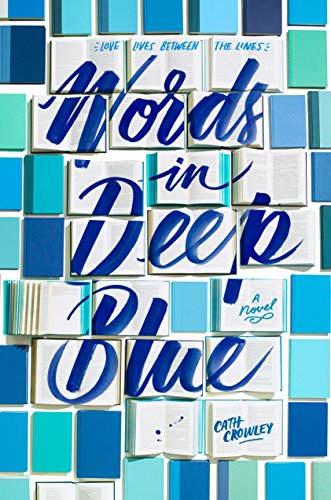
A beautiful love story for fans of Jandy Nelson and Nicola Yoon: two teens find their way back to each other in a bookstore full of secrets and crushes, grief and hope—and letters hidden between the pages.
Years ago, Rachel had a crush on Henry Jones. The day before she moved away, she tucked a love letter into his favorite book in his family’s bookshop. She waited. But Henry never came.
Now Rachel has returned to the city—and to the bookshop—to work alongside the boy she’d rather not see, if at all possible, for the rest of her life. But Rachel needs the distraction. Her brother drowned months ago, and she can’t feel anything anymore.
As Henry and Rachel work side by side—surrounded by books, watching love stories unfold, exchanging letters between the pages—they find hope in each other. Because life may be uncontrollable, even unbearable sometimes. But it’s possible that words, and love, and second chances are enough.
Die Inhaltsangabe kann sich auf eine andere Ausgabe dieses Titels beziehen.
Über die Autorin bzw. den Autor
CATH CROWLEY is an award-winning author of young adult novels, including Graffiti Moon and A Little Wanting Song. She lives, writes, and teaches creative writing in Melbourne, Australia. Visit her online at CathCrowley.com.au or find her on Twitter at @CathCrowley
Auszug. © Genehmigter Nachdruck. Alle Rechte vorbehalten.
Rachel
I open my eyes at midnight to the sound of the ocean and my brother’s breathing. It’s been ten months since Cal drowned, but the dreams still escape.
I’m confident in the dreams, liquid with the sea. I’m breathing underwater, eyes open and unstung by salt. I see fish, a school of silver--bellied moons thrumming beneath me. Cal appears, ready to identify, but these aren’t fish we know. “Mackerel,” he says, his words escaping in bubbles that I can hear. But the fish aren’t mackerel. Not bream, not any of the names we offer. They’re pure silver. “An unidentified species,” we say as we watch them fold and unfold around us. The water has the texture of sadness: salt and heat and memory.
Cal is in the room when I wake. He’s milky--skinned in the darkness, dripping of ocean. Impossible, but so real I smell salt and apple gum. So real I see the scar on his right foot—-a long--healed cut from glass on the beach. He’s talking about the dream fish: pure silver, unidentified, and gone.
The room is dark except for the moonlight. I feel through the air for the dream, but instead I touch the ears of Cal’s Labrador, Woof. He follows me everywhere since the funeral, a long line of black I can’t shake.
Usually, he sleeps on the end of my bed or in the doorway of my room, but for the last two nights he’s slept in front of my packed suitcases. I can’t take him with me. “You’re an ocean dog.” I run my finger along his nose. “You’d go mad in the city.”
There’s no sleeping after dreams of Cal, so I pull on clothes and climb out the window. The moon is three--quarters empty. The air is as hot as day. I mowed late yesterday, so I collect warm blades of grass on the soles of my feet as I move.
Woof and I get to the beach quickly. There’s almost nothing between our house and the water. There’s the road, a small stretch of scrub, and then dunes. The night is all tangle and smell. Salt and tree; smoke from a fire far up the beach. It’s all memory, too. Summer swimming and night walks, hunts for fig shells and blennies and starfish.
Farther, toward the lighthouse, there’s the spot where the beaked whale washed ashore: a giant at six meters, the right side of its face pressed against sand, its one visible eye open. There was a crowd of people around it later—-scientists and locals studying and staring. But first there was Mum and Cal and me in the early cold. I was nine years old, and with its long beak it looked to me like it was half sea creature, half bird. I wanted to study the deep water it had come from, the things it might have seen. Cal and I spent the day looking through Mum’s books and on the internet. The beaked whale is considered one of the least understood creatures of the sea, I copied into my journal. They live at depths so deep that the pressure could kill.
I don’t believe in ghosts or past lives or time travel or any of the strange things that Cal liked to read about. But every time I stand on the beach, I wish us back—-to the day of the whale, to any day before Cal died. With what I know, I’d be ready. I’d save him.
It’s late, but there’ll be people from school out, so I walk farther up to a quiet spot. I dig myself into the dunes, burying my legs past my hips, and stare at the water. It’s shot with moon, silver leaking all over the surface.
I’ve tried and tried to stop thinking about the day Cal drowned, but I can’t. I hear his words. I hear his footsteps through the sand. I see him diving: a long, frail arc that disappears into sea.
I’m not sure how long I’ve been here when I see Mum walking over the dunes, her feet struggling to find traction. She sits on one side of me and lights a cigarette, cupping it from the night.
She started smoking again after Cal died. I found her and Dad hiding behind the church after the funeral. “Don’t say it, Rach,” she said, and I stood between them and held their free hands, wishing Cal had been there to see the strangeness of our parents smoking. Dad’s a doctor; he’s been working with Doctors Without Borders since the divorce ten years ago. Mum’s a science teacher at the high school in Sea Ridge. They’ve called cigarettes “death sticks” all our lives.
We watch the water without talking for a while. I don’t know how Mum feels about the ocean now. She doesn’t go in anymore, but we meet at the edge every night. She taught Cal and me how to swim, how to cup water, how to push it back and control its flow. She told us not to be afraid. “Don’t ever swim alone, though,” she said, and apart from that one time, we didn’t.
“So, you’re packed?” Mum asks, and I nod.
Tomorrow I leave Sea Ridge for Gracetown, a suburb of Melbourne, the city where my aunt Rose lives. I’ve failed Year 12, and since I don’t plan to try again next year, Rose has gotten me a job in the café at St. Albert’s Hospital, where she’s a doctor.
Cal and I grew up in Gracetown. We moved to Sea Ridge three years ago, when I was fifteen. Gran needed help, and we didn’t want her to sell the house or go into a home. We’d stayed with her every holiday, summer and winter, since we were born, so Sea Ridge was like our second home.
“Year 12 isn’t everything,” Mum says.
Maybe it’s not, but before Cal died, I had my life planned. I got A’s, I was happy. I sat on this exact spot last year and told Cal I wanted to be an ichthyologist, studying fish like the Chimaera, which evolved 400 million years ago. We both tried to imagine a world that went that far back.
“I feel like the universe cheated Cal and cheated us along with him,” I say now.
Before Cal died, Mum would have explained calmly and logically that the universe was all existing matter and space—-10 billion light--years in diameter, consisting of galaxies and the solar system, stars, and the planets. All of which simply do not have the capacity to cheat a person of anything.
Tonight she lights another cigarette. “It did,” she says, and blows smoke at the stars.
Henry
I’m lying next to Amy in the self--help section of Howling Books. We’re alone. It’s ten on Thursday night and I’ll be honest: I’m currently mismanaging a hard--on. The mismanagement isn’t entirely my fault. My body’s working on muscle memory.
Usually, this is the time and place that Amy and I kiss. This is the time our hearts breathe hard and she lies next to me, warm--skinned and funny, making jokes about the state of my hair. It’s the time we talk about the future, which was, if you’d asked me fifteen minutes ago, completely bought and paid for.
“I want to break up,” she says, and at first I think she’s joking. Less than twelve hours ago, we were kissing in this exact spot. We were doing quite a few other very nice things too, I think, as she elbows me.
“Henry?” she says. “Say something.”
“Say what?” I ask.
“I don’t know. Whatever you’re...
„Über diesen Titel“ kann sich auf eine andere Ausgabe dieses Titels beziehen.
Suchergebnisse für Words in Deep Blue

Beispielbild für diese ISBN
Words in Deep Blue
Verlag:
Knopf Books for Young Readers, 2017
ISBN 10: 1101937645
ISBN 13: 9781101937648
Gebraucht
Hardcover
Anbieter: World of Books (was SecondSale), Montgomery, IL, USA
Verkäuferbewertung 5 von 5 Sternen

Zustand: Very Good. Item in very good condition! Textbooks may not include supplemental items i.e. CDs, access codes etc. Artikel-Nr. 00105155942
Gebraucht kaufen
EUR 3,59
Versand gratis
Versand innerhalb von USA
Versand innerhalb von USA
Anzahl: 1 verfügbar
Beispielbild für diese ISBN
Words in Deep Blue
Verlag:
Knopf Books for Young Readers, 2017
ISBN 10: 1101937645
ISBN 13: 9781101937648
Gebraucht
Hardcover
Anbieter: World of Books (was SecondSale), Montgomery, IL, USA
Verkäuferbewertung 5 von 5 Sternen
Zustand: Good. Item in good condition. Textbooks may not include supplemental items i.e. CDs, access codes etc. Artikel-Nr. 00085309842
Gebraucht kaufen
EUR 3,59
Versand gratis
Versand innerhalb von USA
Versand innerhalb von USA
Anzahl: 11 verfügbar
Beispielbild für diese ISBN
Words in Deep Blue
Verlag:
Knopf Books for Young Readers, 2017
ISBN 10: 1101937645
ISBN 13: 9781101937648
Gebraucht
Hardcover
Anbieter: World of Books (was SecondSale), Montgomery, IL, USA
Verkäuferbewertung 5 von 5 Sternen
Zustand: Acceptable. Item in acceptable condition! Textbooks may not include supplemental items i.e. CDs, access codes etc. Artikel-Nr. 00084798678
Gebraucht kaufen
EUR 3,59
Versand gratis
Versand innerhalb von USA
Versand innerhalb von USA
Anzahl: 3 verfügbar
Beispielbild für diese ISBN
Words in Deep Blue
Verlag:
Knopf Books for Young Readers (edition ), 2017
ISBN 10: 1101937645
ISBN 13: 9781101937648
Gebraucht
Hardcover
Anbieter: BooksRun, Philadelphia, PA, USA
Verkäuferbewertung 5 von 5 Sternen
Hardcover. Zustand: Very Good. With dust jacket. It's a well-cared-for item that has seen limited use. The item may show minor signs of wear. All the text is legible, with all pages included. It may have slight markings and/or highlighting. Artikel-Nr. 1101937645-11-1-29
Gebraucht kaufen
EUR 4,65
Versand gratis
Versand innerhalb von USA
Versand innerhalb von USA
Anzahl: 1 verfügbar
Beispielbild für diese ISBN
Words in Deep Blue
Verlag:
Alfred A. Knopf Books for Young Readers, 2017
ISBN 10: 1101937645
ISBN 13: 9781101937648
Gebraucht
Hardcover
Anbieter: ThriftBooks-Dallas, Dallas, TX, USA
Verkäuferbewertung 5 von 5 Sternen
Hardcover. Zustand: Very Good. No Jacket. May have limited writing in cover pages. Pages are unmarked. ~ ThriftBooks: Read More, Spend Less. Artikel-Nr. G1101937645I4N00
Gebraucht kaufen
EUR 5,79
Versand gratis
Versand innerhalb von USA
Versand innerhalb von USA
Anzahl: 1 verfügbar
Beispielbild für diese ISBN
Words in Deep Blue
Verlag:
Alfred A. Knopf Books for Young Readers, 2017
ISBN 10: 1101937645
ISBN 13: 9781101937648
Gebraucht
Hardcover
Anbieter: ThriftBooks-Dallas, Dallas, TX, USA
Verkäuferbewertung 5 von 5 Sternen
Hardcover. Zustand: Very Good. No Jacket. Former library book; May have limited writing in cover pages. Pages are unmarked. ~ ThriftBooks: Read More, Spend Less. Artikel-Nr. G1101937645I4N10
Gebraucht kaufen
EUR 5,79
Versand gratis
Versand innerhalb von USA
Versand innerhalb von USA
Anzahl: 1 verfügbar
Beispielbild für diese ISBN
Words in Deep Blue
Verlag:
Alfred A. Knopf Books for Young Readers, 2017
ISBN 10: 1101937645
ISBN 13: 9781101937648
Gebraucht
Hardcover
Anbieter: ThriftBooks-Atlanta, AUSTELL, GA, USA
Verkäuferbewertung 5 von 5 Sternen
Hardcover. Zustand: Very Good. No Jacket. Former library book; May have limited writing in cover pages. Pages are unmarked. ~ ThriftBooks: Read More, Spend Less. Artikel-Nr. G1101937645I4N10
Gebraucht kaufen
EUR 5,79
Versand gratis
Versand innerhalb von USA
Versand innerhalb von USA
Anzahl: 1 verfügbar
Beispielbild für diese ISBN
Words in Deep Blue
Verlag:
Alfred A. Knopf Books for Young Readers, 2017
ISBN 10: 1101937645
ISBN 13: 9781101937648
Gebraucht
Hardcover
Anbieter: ThriftBooks-Atlanta, AUSTELL, GA, USA
Verkäuferbewertung 5 von 5 Sternen
Hardcover. Zustand: Very Good. No Jacket. Missing dust jacket; May have limited writing in cover pages. Pages are unmarked. ~ ThriftBooks: Read More, Spend Less. Artikel-Nr. G1101937645I4N01
Gebraucht kaufen
EUR 5,79
Versand gratis
Versand innerhalb von USA
Versand innerhalb von USA
Anzahl: 1 verfügbar
Beispielbild für diese ISBN
Words in Deep Blue
Verlag:
Random House Children's Books, 2017
ISBN 10: 1101937645
ISBN 13: 9781101937648
Gebraucht
Hardcover
Anbieter: Better World Books, Mishawaka, IN, USA
Verkäuferbewertung 5 von 5 Sternen
Zustand: Good. Former library copy. Pages intact with minimal writing/highlighting. The binding may be loose and creased. Dust jackets/supplements are not included. Includes library markings. Stock photo provided. Product includes identifying sticker. Better World Books: Buy Books. Do Good. Artikel-Nr. 14921442-75
Gebraucht kaufen
EUR 5,98
Versand gratis
Versand innerhalb von USA
Versand innerhalb von USA
Anzahl: 2 verfügbar
Beispielbild für diese ISBN
Words in Deep Blue
Verlag:
Random House Children's Books, 2017
ISBN 10: 1101937645
ISBN 13: 9781101937648
Gebraucht
Hardcover
Anbieter: Better World Books, Mishawaka, IN, USA
Verkäuferbewertung 5 von 5 Sternen
Zustand: Good. Pages intact with minimal writing/highlighting. The binding may be loose and creased. Dust jackets/supplements are not included. Stock photo provided. Product includes identifying sticker. Better World Books: Buy Books. Do Good. Artikel-Nr. 15552725-6
Gebraucht kaufen
EUR 5,98
Versand gratis
Versand innerhalb von USA
Versand innerhalb von USA
Anzahl: 1 verfügbar