
Verwandte Artikel zu The Cheat Code: Going Off Script to Get More, Go Faster,...
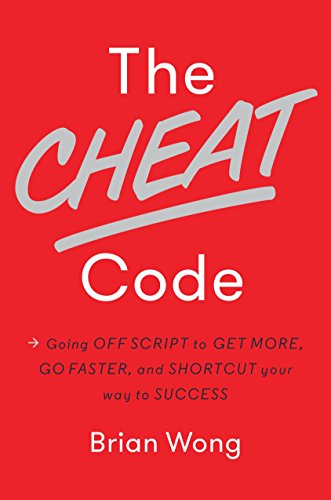
The Cheat Code: Going Off Script to Get More, Go Faster, and Shortcut Your Way to Success - Hardcover
Inhaltsangabe
Have you ever noticed that there are certain people who seem to get ahead just a bit faster than everyone else? You know, the types who always seem to be a bit ahead of the curve, to get noticed a bit more, and to achieve their goals a bit more quickly than the rest of the pack? And have you ever noticed how much this small edge can matter, and the outsized impact it can have on the trajectory of their careers?
Twenty-four year old entrepreneur Brian Wong is one of these people, having graduated from college by age 18, having raised $24 million in venture capital to start his own company before he turned 25, and having grown that company into a global mobile advertising giant in just 4 years. His secret? The Cheat Code.
Wong believes that most people -- even creative people -- have a tendency to follow a script; to do things the way others do them simply because that way works. But therein lies the secret at the heart of the Cheat Code: anyone can easily shortcut his or her way to success, simply by going slightly off script; by doing things just a little differently from everyone else. Here, Wong unlocks the power of the Cheat Code through 71 bite-sized and virtually effortless short-cuts to get a leg up on the competition, garner attention for ourselves and our ideas, and accelerate our success. For example:
Cheat #7: Don't Ask – Announce
Cheat #16: Know Your Superpower!
Cheat #32: Make Boldness Your Genius
Cheat #47: Know Who's the Boss
Cheat #49: Get a Trademark Haircut
Cheat #51: Use Exclamation Points
Cheat #55: Focus on What Won't Change
Cheat #71: Imagine, What If?
No matter where you aspire to go in your life or career, THE CHEAT CODE will help get you there - faster.
Die Inhaltsangabe kann sich auf eine andere Ausgabe dieses Titels beziehen.
Über die Autorin bzw. den Autor
Brian Wong is the co-founder and CEO of Kiip, a leading mobile advertising network that uses innovative reward systems to redefine how brands connect with consumers. Brian received his Bachelors Degree from the University of British Columbia at age 18 after skipping 4 grades, and shortly after became one of the youngest people to ever receive venture capital funding at the age of 19. He has been recognized with many awards for his creative and entrepreneurial achievements, including Forbes' 30 Under 30 three times, Business Insider's Top 25 Under 25 in Silicon Valley, Mashable's Top 5 Entrepreneurs to Watch, and the AdAge Creativity Top 50. He speaks routinely to corporations such as Kraft, Proctor & Gamble, Unilever, L’Oreal, MasterCard, Pepsi, and Deloitte, and has keynoted at SXSW, Cannes Lions, CES, Forbes Summits, TEDx events around the world, and more.
Kiip is reinventing how brands connect with consumers through mobile rewards. Kiip powers rewards in over 4,000 apps on iOS and Android, and works with 700+ of top brands in the world. The company has raised over $24mm in venture capital from American Express Ventures, Verizon Ventures, Relay Ventures, True Ventures, and Hummer Winblad Venture Partners, and has been named one of the world's 50 Most Innovative Companies by Fast Company.
Auszug. © Genehmigter Nachdruck. Alle Rechte vorbehalten.
BE BALLSY
LEARN HOW TO GET TO THE BOLDER VERSION OF YOURSELF.
Cheat 1
Appreciate What You’ve Got—and Kill Your Fear!
Today is an incredible time to be alive. Opportunity is everywhere, and people have so much. There’s never been a more level playing field, thanks to the Internet. Today anyone who can afford a cell phone has access to the Internet, and we all know that the Internet is crammed with knowledge, and that knowledge is power.
Access to knowledge is this century’s revolution. Think about it. Back in the day, the expense of education was always a barrier to a better life, but now facts are free. If you don’t know how to do something—literally anything, whether it’s code or design a website, learn Mandarin, master the flute, or anything else—you can just go to the Internet and teach yourself or be taught by someone halfway around the world.
Today you don’t even need a college education to be successful. Yes, college degrees are good, but today most employers care more about skills than degrees. On top of skills, smart employers care about drive, motivation, and balls—they’re looking for skilled people with bold goals and ambitions, and the courage to go out and make them real. Sure, the world isn’t perfect. And of course there are people with less access to opportunity than others. But in general, we are all surrounded by far more opportunities than ever before. It’s impossible not to feel grateful.
So how did I come to develop such an optimistic view of the world? Here’s the background. My dad grew up in a mud hut in China. His family struggled but was land-rich—certainly compared to everybody else. Then along came the Communists, and suddenly successful people who’d created something of value were considered enemies of the state. So he escaped to Hong Kong in the bottom of a fishing boat when he was five years old and grew up penniless, but he felt lucky to have the chance for a good life.
That’s how I felt too, growing up in Vancouver, British Columbia, far from the lap of luxury, hearing stories from my mother and father about how they didn’t know that rice was white or tomatoes were red until shortly before they came to Canada as young adults—because they’d been too poor to afford anything but brown rice and too poor to be able to wait for a tomato to ripen before they ate it.
They were tireless and courageous, never took the easy way out, and succeeded professionally while raising a happy family. And now they appreciate every single thing they have.
So which came first: enough courage to create a life worthy of appreciation, or enough appreciation of life to have the daring that success demands?
I think attitude comes first. A positive attitude breeds success even more than success breeds a positive attitude—and in my opinion that’s especially true when it comes to succeeding as an entrepreneur.
A law of behavioral psychology says that you can’t be in a state of appreciation and a state of fear at the same time, and since the most successful of entrepreneurs are almost fearless, they must have the ability to appreciate what they’ve got, the ability to be grateful to be doing something interesting and fun.
When you’re having fun, when you appreciate the things you have, you stop worrying about success and failure. This cool part of a Rudyard Kipling poem said it best: “If you can dream—and not make dreams your master; / If you can think—and not make thoughts your aim; / If you can meet with Triumph and Disaster / And treat those two impostors just the same . . . Yours is the Earth and everything that’s in it, / And—which is more—you’ll be a Man, my son.”
But, first, of course, you’ve got to have some balls. If you want to pursue your passions, you have to throw caution to the wind and take some risks.
I can speak from personal experience here. I came from an essentially unremarkable, middle-class background and had a business degree, but no fancy skills or credentials: no MBA, no specialized training in banking, advertising, or anything else.
But I have always been pretty fearless, which is why I had the initiative—at the ridiculously young age of nineteen—to jump into an industry that was gorged with incumbents, many of them huge, multinational advertising corporations, and many of whom had been in business since long before I was even born. And it’s why I had the balls to propose an entirely new concept in advertising.
It came from a simple concept: People don’t like ads. So why not create something they actually like?
Taking inspiration from the world of gaming, I thought what if, instead of just serving up annoying mobile ads that people would simply click away or ignore, we connected people with advertisers by offering them a free gift—like a moment of achievement in gaming when say, they leveled up or beat the boss? We later expanded that to other moments of achievement: for example, rewarding people serendipitously when they logged a run in their running app, or crossed off a to-do in their to-do list app. It was a radical concept, but what did I have to lose by trying to make it work? Nothing!
This fearlessness was the same attitude that drove my decision to skip four grades between kindergarten and high school and enroll in the University of British Columbia at age fourteen—a full four years ahead of my peers. Why did I do such a seemingly crazy thing? In the end, it all came back to fearless ambition. I felt ready to get out of school early and into the world and make things happen, rather than spend four more years sitting in a classroom—so I found a way to make that a reality. What did I have to lose then? Nothing! If it didn’t work, I was just back where I started.
But it did work, and in a big way.
And along the way I discovered that success isn’t about IQ. It’s not about academic pedigree. It’s not about who you know. It’s not about the money you have behind you.
It’s about you.
It’s about you throwing caution to the wind, working your ass off, and having fun while you do it. It’s about getting out there and acting like you’ve got nothing to lose.
Fuck fear. It’s irrelevant, and it’s the one great penalty that is completely self-imposed.
Steve Jobs once said: “Have the courage to follow your heart and intuition. They somehow already know what you truly want to become. Everything else is secondary.”
So don’t be afraid of what you can’t do. Appreciate what you’ve got—which is, by the way, more than most people have had since the dawn of civilization—and go from there. No matter what your dreams are, or what job or industry you’re in, you’ve got an incredible opportunity at your fingertips. Let go of your fear, and instead reach for the stars.
Cheat 2
Get In Over Your Head
They say that the best way to learn to swim is to jump into the deep end—as long as there’s a lifeguard on duty, that is.
It’s better than having somebody throw you in. Unfortunately, not everybody in the business world recognizes this. In the days when soft-drink maker PepsiCo was a notoriously tough company to work for, its unofficial motto was “There’s no lifeguard at the Pepsi pool,” with the corollary “What do they throw you if you’re drowning in the Pepsi pool? A rock.” In other words, the philosophy for how to succeed at many companies used to be “sink or swim.”
Most employers don’t celebrate...
„Über diesen Titel“ kann sich auf eine andere Ausgabe dieses Titels beziehen.
Suchergebnisse für The Cheat Code: Going Off Script to Get More, Go Faster,...

Beispielbild für diese ISBN
The Cheat Code: Going Off Script to Get More, Go Faster, and Shortcut Your Way to Success
Anbieter: World of Books (was SecondSale), Montgomery, IL, USA
Verkäuferbewertung 5 von 5 Sternen

Zustand: Very Good. Item in very good condition! Textbooks may not include supplemental items i.e. CDs, access codes etc. Artikel-Nr. 00095863601
Gebraucht kaufen
EUR 4,52
Versand gratis
Versand innerhalb von USA
Versand innerhalb von USA
Anzahl: 1 verfügbar
Beispielbild für diese ISBN
The Cheat Code: Going Off Script to Get More, Go Faster, and Shortcut Your Way to Success
Anbieter: World of Books (was SecondSale), Montgomery, IL, USA
Verkäuferbewertung 5 von 5 Sternen
Zustand: Good. Item in good condition. Textbooks may not include supplemental items i.e. CDs, access codes etc. Artikel-Nr. 00082294195
Gebraucht kaufen
EUR 4,52
Versand gratis
Versand innerhalb von USA
Versand innerhalb von USA
Anzahl: 1 verfügbar
Beispielbild für diese ISBN
The Cheat Code: Going Off Script to Get More, Go Faster, and Shortcut Your Way to Success
Verlag:
Crown Currency (edition ), 2016
ISBN 10: 1101904968
ISBN 13: 9781101904961
Gebraucht
Hardcover
Anbieter: BooksRun, Philadelphia, PA, USA
Verkäuferbewertung 5 von 5 Sternen
Hardcover. Zustand: Very Good. With dust jacket. It's a well-cared-for item that has seen limited use. The item may show minor signs of wear. All the text is legible, with all pages included. It may have slight markings and/or highlighting. Artikel-Nr. 1101904968-8-1-29
Gebraucht kaufen
EUR 4,67
Versand gratis
Versand innerhalb von USA
Versand innerhalb von USA
Anzahl: 1 verfügbar
Beispielbild für diese ISBN
The Cheat Code: Going Off Script to Get More, Go Faster, and Shortcut Your Way to Success
Verlag:
Crown Currency (edition ), 2016
ISBN 10: 1101904968
ISBN 13: 9781101904961
Gebraucht
Hardcover
Anbieter: BooksRun, Philadelphia, PA, USA
Verkäuferbewertung 5 von 5 Sternen
Hardcover. Zustand: Very Good. It's a well-cared-for item that has seen limited use. The item may show minor signs of wear. All the text is legible, with all pages included. It may have slight markings and/or highlighting. Artikel-Nr. 1101904968-11-1
Gebraucht kaufen
EUR 5,17
Versand gratis
Versand innerhalb von USA
Versand innerhalb von USA
Anzahl: 1 verfügbar
Beispielbild für diese ISBN
The Cheat Code : Going off Script to Get More, Go Faster, and Shortcut Your Way to Success
Anbieter: Better World Books: West, Reno, NV, USA
Verkäuferbewertung 5 von 5 Sternen
Zustand: Very Good. Former library copy. Pages intact with possible writing/highlighting. Binding strong with minor wear. Dust jackets/supplements may not be included. Includes library markings. Stock photo provided. Product includes identifying sticker. Better World Books: Buy Books. Do Good. Artikel-Nr. 14005692-6
Gebraucht kaufen
EUR 6,19
Versand gratis
Versand innerhalb von USA
Versand innerhalb von USA
Anzahl: 1 verfügbar
Beispielbild für diese ISBN
The Cheat Code : Going off Script to Get More, Go Faster, and Shortcut Your Way to Success
Anbieter: Better World Books, Mishawaka, IN, USA
Verkäuferbewertung 5 von 5 Sternen
Zustand: Good. Former library copy. Pages intact with minimal writing/highlighting. The binding may be loose and creased. Dust jackets/supplements are not included. Includes library markings. Stock photo provided. Product includes identifying sticker. Better World Books: Buy Books. Do Good. Artikel-Nr. 17425712-6
Gebraucht kaufen
EUR 6,19
Versand gratis
Versand innerhalb von USA
Versand innerhalb von USA
Anzahl: 1 verfügbar
Beispielbild für diese ISBN
The Cheat Code: Going Off Script to Get More, Go Faster, and Shortcut Your Way to Success
Anbieter: Wonder Book, Frederick, MD, USA
Verkäuferbewertung 5 von 5 Sternen
Zustand: As New. Like New condition. Like New dust jacket. A near perfect copy that may have very minor cosmetic defects. Artikel-Nr. M12N-00124
Gebraucht kaufen
EUR 6,43
Versand gratis
Versand innerhalb von USA
Versand innerhalb von USA
Anzahl: 1 verfügbar
Beispielbild für diese ISBN
The Cheat Code: Going Off Script to Get More, Go Faster, and Shortcut Your Way to Success
Anbieter: ThriftBooks-Dallas, Dallas, TX, USA
Verkäuferbewertung 5 von 5 Sternen
Hardcover. Zustand: Very Good. No Jacket. May have limited writing in cover pages. Pages are unmarked. ~ ThriftBooks: Read More, Spend Less. Artikel-Nr. G1101904968I4N00
Gebraucht kaufen
EUR 6,67
Versand gratis
Versand innerhalb von USA
Versand innerhalb von USA
Anzahl: 1 verfügbar
Foto des Verkäufers
The Cheat Code: Going Off Script to Get More, Go Faster, and Shortcut Your Way to Success
Anbieter: WeBuyBooks, Rossendale, LANCS, Vereinigtes Königreich
Verkäuferbewertung 5 von 5 Sternen
hardcover. Zustand: Very Good. Most items will be dispatched the same or the next working day. A copy that has been read, but is in excellent condition. Pages are intact and not marred by notes or highlighting. The spine remains undamaged. Signed by Author(Unverified). Artikel-Nr. rev2524180666
Gebraucht kaufen
EUR 15,51
EUR 6,97 Versand
Versand von Vereinigtes Königreich nach USA
Versand von Vereinigtes Königreich nach USA
Anzahl: 1 verfügbar
Beispielbild für diese ISBN
The Cheat Code: Going Off Script to Get More, Go Faster, and Shortcut Your Way to Success
Anbieter: Kennys Bookstore, Olney, MD, USA
Verkäuferbewertung 5 von 5 Sternen
Zustand: New. Artikel-Nr. V9781101904961
Neu kaufen
EUR 28,48
EUR 9,37 Versand
Versand innerhalb von USA
Versand innerhalb von USA
Anzahl: 15 verfügbar