Inhaltsangabe
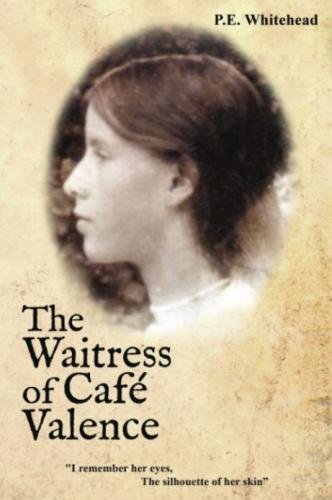
Some among you might consider this work [of 111,500 words] to be from a manuscript lost in the Paris of the 1920s and only recently discovered … interwoven as it is with the existential, the surreal, impressionism, social history, dark humour and intimations of the nature of reality, love [and its opposite], desire and the creative impulse.
Written between 2014 and 2016, in British English, it is not lost and found but we might imagine the words have been granted to us by an artist or writer, perhaps a poet, of those times, written neither for fame nor money; or by the young waitress of Café Valence, who flees Pontorson in her native Normandy [spelled "Normandie" in this work] for Paris in order to escape her past and present us with a compelling psychodrama.
Will she shake off the traumas she has suffered or, like the common-law wife [J.H.] of a dead artist, end her life by her own hand? Or did J.H., herself a painter of not little renown, die by accident, during a maelstrom of emotion in the depths of a winter night?
Making her presence felt across the century that separates her from us, she, J.H., is one of a number of named, real-life characters of note in this work, which is framed in part by actual events and circumstances.
The café is a refuge for souls lost and found. Bohemians love it. Members of the left bank intelligentsia attend to it. Artists, poets, novelists, feel for it. Writers of erotica might scribble at a table, creating a new world on paper. Survivors of the recent World War, and the waitress … the central character … have a need for it and face their demons there with success or failure.
The 1920s of Paris, “the crazy years”, were witness to artistic and literary madness, genius and outrage; the craziness an unavoidable side show? Within these pages they can be re-lived, with philosophies & etc for which France achieved fame.
“The Waitress of Café Valence” opens doors, to perception [or other things] that you might not wish to close.
Extracts: "The year is 1921. The War is over but here it rages on, when it decides to, in the heads of two former combatants. A conflict of another kind is playing out in the mind and heart of a young woman employed in the café, as it has since 1914..."
"Maurice [Utrillo] invited the passers-by to join him at his table for a tipple, un picoler. Embarrassed at a drunk exposing them this way, they nevertheless took up his offer, because a woman, a stranger to them, whispered, 'This is Maurice. He is a great artist and in desperate need of some company like yours. It might do him some good and you might gain an insight, given by him, into the nature of reality.'”
"Anaïs Nin and M’sieur Miller also moved to the city, gracing it with their heated, vehement love for each other. Yes, they had their famous fling here in Paris, starting in a café, it is said. A café is where they fell in love, I am sure. Their life in Paris laid the groundwork, was fertile soil, for their written words, which outraged some citizens while making others more than perfectly happy in their own way."
"Isobel did not return to school. She read, she cried, wept, less for herself, more at her teacher’s most kind words. And stayed in her room and in the end, many months later, decided to shed tears no more. 'Never, ever again, if I have my way.' Tears … they are, you might know, the silent language of grief. Or so Voltaire tells us."
P.E. Whitehead August 4th 2016, England.
Die Inhaltsangabe kann sich auf eine andere Ausgabe dieses Titels beziehen.
Über die Autorin bzw. den Autor
The author lives in England and has been a student of early 20th century European literature and ideas, and art, and a regular visitor to Normandy and Paris, and to Provence by train from Gare de Lyon, Paris; and once stayed in the hotel [in the Passage de l'Industrie] that is mentioned in this work. Originally a journalist, P.E. Whitehead is a published author with an imprint of Bloomsbury, and a professional writer and occasional poet who professes at times to live at the juncture of different realities created by art, literature, music, concepts and the past and the present.
„Über diesen Titel“ kann sich auf eine andere Ausgabe dieses Titels beziehen.
Suchergebnisse für The Waitress of Café Valence: Or Concatenation: Things...

Beispielbild für diese ISBN
The Waitress of Café Valence
Anbieter: MusicMagpie, Stockport, Vereinigtes Königreich
Verkäuferbewertung 5 von 5 Sternen

Zustand: Very Good. 1747359751. 5/16/2025 1:42:31 AM. Artikel-Nr. U9780995451902
Gebraucht kaufen
EUR 7,52
Versand:
EUR 6,28
Von Vereinigtes Königreich nach USA
Anzahl: 1 verfügbar
Beispielbild für diese ISBN
The Waitress of Café Valence: Volume 1
Anbieter: Revaluation Books, Exeter, Vereinigtes Königreich
Verkäuferbewertung 5 von 5 Sternen
Paperback. Zustand: Brand New. 1st edition. 308 pages. 9.00x6.00x0.77 inches. In Stock. Artikel-Nr. zk0995451907
Neu kaufen
EUR 16,10
Versand:
EUR 14,30
Von Vereinigtes Königreich nach USA
Anzahl: 1 verfügbar
Beispielbild für diese ISBN
The Waitress of Café Valence
Anbieter: Buchpark, Trebbin, Deutschland
Verkäuferbewertung 5 von 5 Sternen
Zustand: Sehr gut. Zustand: Sehr gut | Seiten: 308 | Sprache: Englisch | Produktart: Bücher | Keine Beschreibung verfügbar. Artikel-Nr. 29058812/2
Gebraucht kaufen
EUR 7,69
Versand:
EUR 105,00
Von Deutschland nach USA
Anzahl: 1 verfügbar