
Verwandte Artikel zu Socialization Trap : Protecting Your Children from
Inhaltsangabe
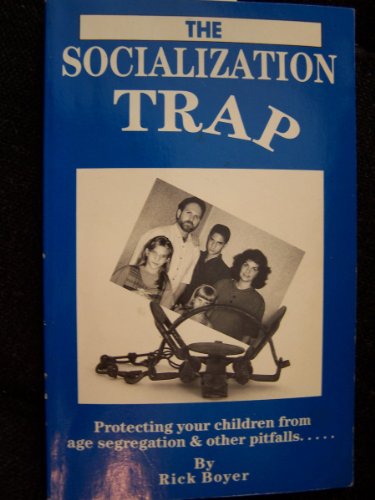
The Socialization Trap is the Boyer's answer to the common misconception that home taught children are socially deprived. This book analyzes Scripture, scientific research and personal experience to demonstrate that when it comes to the learning of healthy, effective social skills, there's no place like home!
Die Inhaltsangabe kann sich auf eine andere Ausgabe dieses Titels beziehen.
Über die Autorin bzw. den Autor
Rick and Marilyn Boyer are pioneers of the home education movement,having taught since 1980. Their family numbers 14 children, including five who have completed high school at home and one college graduate. They have authored several books and are frequent speakers at home school conventions. The "sure you can" philosophy has been warmly welcomed by parents who appreciate the message that home education does not have to be complicated, difficult, or tedious. Rick and Marilyn believe that learning at home is the most natural and therefore,the most effective method of educating children.
Auszug. © Genehmigter Nachdruck. Alle Rechte vorbehalten.
This book is both a cry from the heart and an answer to cries from other hearts. Since Marilyn and I decided thirteen years ago not to send our oldest son to kindergarten and shortly thereafter not to send our children to school at all, we have seen the home education movement grow from a tiny seed to a great tree. Because we were among the first in our part of the country to teach at home and because our family grew to a rather... er, noticeable size, we have attracted a certain amount of attention and eventually found ourselves in a position of counselors to other moms and dads who wanted to do the same for their children as we were trying to do for ours. Our search for answers to our questions and those of our friends led to the development of the Learning Parent home education seminar, now a nine-hour presentation. It's been interesting to note that parents share common concerns and, therefore, ask common questions.
In the early days, the first question most parents asked involved the issue of legality. Recent years have brought so much new legislation in response to the phenomenal growth of home education nationwide that nearly all of the fifty states make some legal provision for parents to teach at home. So now the number two question has moved into first place: Am I qualified to teach my children? Again, the widespread growth of the movement has made this issue less threatening as well. In some parts of the country it seems everybody's doing it. Most folks considering home education know someone who is doing it and appears no smarter than themselves. The question we hear perhaps third in order of frequency is the challenge that brought this book into existence: How will my child learn to get along with other people?
The socialization question now competes with competency to teach as the most common concern of new and prospective home educators. It is definitely the most common objection raised by detractors: "Oh, you're home schooling. Aren't you concerned about how all that isolation will affect your kids?" Translated, this means the assume home education is roughly equivalent to chaining the child to the basement wall and feeding him bones and bread crusts.
I don't see this question gradually resolving itself as have the other two. When someone asks, "How will these kids get along with others?" they mean, "How will these kids learn to get along with others if they don't grow up in school and the attendant age peer social structure?" Nine out of ten home educators and nearly everyone outside the movement would answer wrongly. They would say that home taught kids can compensate for the lack of peer exposure by being involved in youth activities at the church and neighborhood. They would say that the home teaching parent can (and presumably should) replace school socialization with a like product of a different brand. This answer is wrong and we believe it reflects a widely accepted myth which is killing the joy of home education for thousands of families. The purpose of this book is to show why this answer is wrong and that God has a better way.
„Über diesen Titel“ kann sich auf eine andere Ausgabe dieses Titels beziehen.
Suchergebnisse für Socialization Trap : Protecting Your Children from

Beispielbild für diese ISBN
The Socialization Trap
Verlag:
The Learning Parent (edition ), 1993
ISBN 10: 0970877005
ISBN 13: 9780970877000
Gebraucht
Paperback
Anbieter: BooksRun, Philadelphia, PA, USA
Verkäuferbewertung 5 von 5 Sternen

Paperback. Zustand: Fair. The item might be beaten up but readable. May contain markings or highlighting, as well as stains, bent corners, or any other major defect, but the text is not obscured in any way. Artikel-Nr. 0970877005-7-1
Gebraucht kaufen
EUR 4,80
Versand gratis
Versand innerhalb von USA
Versand innerhalb von USA
Anzahl: 1 verfügbar
Beispielbild für diese ISBN
The Socialization Trap
Anbieter: ThriftBooks-Reno, Reno, NV, USA
Verkäuferbewertung 5 von 5 Sternen
Paperback. Zustand: Fair. No Jacket. Readable copy. Pages may have considerable notes/highlighting. ~ ThriftBooks: Read More, Spend Less. Artikel-Nr. G0970877005I5N00
Gebraucht kaufen
EUR 6,76
Versand gratis
Versand innerhalb von USA
Versand innerhalb von USA
Anzahl: 1 verfügbar
Beispielbild für diese ISBN
The Socialization Trap
Anbieter: ThriftBooks-Atlanta, AUSTELL, GA, USA
Verkäuferbewertung 5 von 5 Sternen
Paperback. Zustand: Fair. No Jacket. Readable copy. Pages may have considerable notes/highlighting. ~ ThriftBooks: Read More, Spend Less. Artikel-Nr. G0970877005I5N00
Gebraucht kaufen
EUR 6,76
Versand gratis
Versand innerhalb von USA
Versand innerhalb von USA
Anzahl: 1 verfügbar
Beispielbild für diese ISBN
The Socialization Trap
Anbieter: ThriftBooks-Dallas, Dallas, TX, USA
Verkäuferbewertung 5 von 5 Sternen
Paperback. Zustand: Fair. No Jacket. Readable copy. Pages may have considerable notes/highlighting. ~ ThriftBooks: Read More, Spend Less. Artikel-Nr. G0970877005I5N00
Gebraucht kaufen
EUR 6,76
Versand gratis
Versand innerhalb von USA
Versand innerhalb von USA
Anzahl: 1 verfügbar
Beispielbild für diese ISBN
The Socialization Trap : Protecting Your Children from Age Segregation and Other Pitfalls
Anbieter: Better World Books, Mishawaka, IN, USA
Verkäuferbewertung 5 von 5 Sternen
Zustand: Good. Pages intact with minimal writing/highlighting. The binding may be loose and creased. Dust jackets/supplements are not included. Stock photo provided. Product includes identifying sticker. Better World Books: Buy Books. Do Good. Artikel-Nr. 8871468-6
Gebraucht kaufen
EUR 9,95
Versand gratis
Versand innerhalb von USA
Versand innerhalb von USA
Anzahl: 1 verfügbar
Foto des Verkäufers
Socialization Trap : Avoiding the pitfalls of age segregation.
Anbieter: books4less (Versandantiquariat Petra Gros GmbH & Co. KG), Welling, Deutschland
Verkäuferbewertung 5 von 5 Sternen
Broschiert. Zustand: Gut. 145 Seiten; Das Buch befindet sich in einem gut erhaltenen Zustand. In ENGLISCHER Sprache. Sprache: Englisch Gewicht in Gramm: 220. Artikel-Nr. 2303145
Gebraucht kaufen
EUR 6,45
EUR 9,95 Versand
Versand von Deutschland nach USA
Versand von Deutschland nach USA
Anzahl: 1 verfügbar
Beispielbild für diese ISBN
The Socialization Trap
Anbieter: Revaluation Books, Exeter, Vereinigtes Königreich
Verkäuferbewertung 5 von 5 Sternen
Paperback. Zustand: Brand New. 151 pages. 8.30x5.30x0.50 inches. In Stock. Artikel-Nr. 0970877005
Neu kaufen
EUR 210,29
EUR 11,63 Versand
Versand von Vereinigtes Königreich nach USA
Versand von Vereinigtes Königreich nach USA
Anzahl: 1 verfügbar