
Verwandte Artikel zu American Cancer Society Complete Guide to Nutrition...
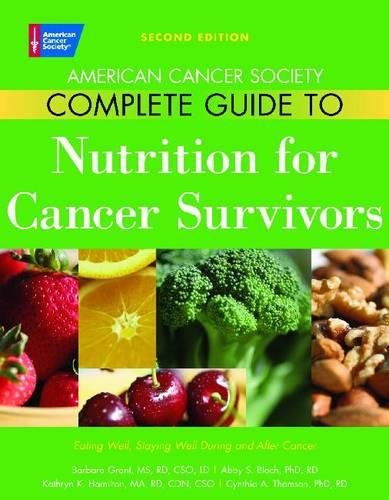
American Cancer Society Complete Guide to Nutrition for Cancer Survivors: Eating Well, Staying Well During and After Cancer - Softcover
Inhaltsangabe
Winner: 2011 American Medical Writers Association Award, Health Care Consumers; 2011 National Indie Excellence Award, Cancer; 2011 Mom's Choice Awards, Gold, Adult Books; Finalist:
2011 Next Generation Indie Book Award, Diet/Food/Nutrition ——— Written for consumers, patients, and families seeking reliable information about nutritional support for people with cancer, this comprehensive guide offers the latest information about using nutrition to optimal advantage during the cancer journey. Also discussed is the role of sound nutritional choices before, during, and after cancer therapy and how they can help bolster energy levels, strengthen the immune system, fight off infection, and minimize the side effects of treatment. Charts, information on special diets, and level-headed advice about dietary supplements make this a valuable tool for maintaining a healthy lifestyle.
Die Inhaltsangabe kann sich auf eine andere Ausgabe dieses Titels beziehen.
Über die Autorinnen und Autoren
Barbara Grant, MS, RD, CSO, LD, is the outpatient clinical nutritionist at the Saint Alphonsus Cancer Care Center and is a board-certified specialist in oncology nutrition. She lives in Boise, Idaho. Abby S. Bloch, PhD, RD, is executive director of programs and research for the Robert C. and Veronica Atkins Foundation, was on staff at Memorial Sloan-Kettering Cancer, and was chairperson for the American Cancer Society Advisory Committee on Nutrition and Physical Activity. She lives in New York City. Kathryn K. Hamilton, MA, RD, CDN, CSO, is an outpatient clinical oncology dietitian with the Carol G. Simon Cancer Center at the Morristown Memorial Hospital in Morristown, New Jersey; an assistant professor at College of St. Elizabeth in Morristown; and a board-certified specialist in oncology nutrition. She lives in Upper Saddle River, New Jersey. Cynthia A. Thomson, PhD, RD, is an associate professor at the University of Arizona department of nutritional sciences, a board-certified specialist in oncology nutrition, and was a nominee for the Sidney Salmon Memorial Award for Cancer Research in 2009. She lives in Tucson, Arizona.
Barbara Grant, MS, RD, CSO, LD, is the outpatient clinical nutritionist at the Saint Alphonsus Cancer Care Center and is a board-certified specialist in oncology nutrition. She lives in Boise, Idaho. Abby S. Bloch, PhD, RD, is executive director of programs and research for the Robert C. and Veronica Atkins Foundation, was on staff at Memorial Sloan-Kettering Cancer, and was chairperson for the American Cancer Society Advisory Committee on Nutrition and Physical Activity. She lives in New York City. Kathryn K. Hamilton, MA, RD, CDN, CSO, is an outpatient clinical oncology dietitian with the Carol G. Simon Cancer Center at the Morristown Memorial Hospital in Morristown, New Jersey; an assistant professor at College of St. Elizabeth in Morristown; and a board-certified specialist in oncology nutrition. She lives in Upper Saddle River, New Jersey. Cynthia A. Thomson, PhD, RD, is an associate professor at the University of Arizona department of nutritional sciences, a board-certified specialist in oncology nutrition, and was a nominee for the Sidney Salmon Memorial Award for Cancer Research in 2009. She lives in Tucson, Arizona.
Auszug. © Genehmigter Nachdruck. Alle Rechte vorbehalten.
American Cancer Society Complete Guide to Nutrition for Cancer Survivors
Eating Well, Staying Well During and After Cancer
By Barbara L. Grant, Abby S. Bloch, Kathryn K. Hamilton, Cynthia A. ThomsonAmerican Cancer Society / Health Promotions
Copyright © 2010 American Cancer Society
All rights reserved.
ISBN: 978-0-944235-78-2All rights reserved.
Contents
INTRODUCTION,
1. Healthy Eating,
2. Making Informed Decisions,
3. Hot Topics in Nutrition and Cancer,
4. How Food Is Grown and Treated,
5. Dietary Supplements: Vitamins, Minerals, and Herbs,
6. Diet and Nutrition Therapies Promoted as Treatments and Cures,
7. Preparing for Cancer Treatment,
8. Maintaining a Healthy Body Weight,
9. Coping with Treatment-Related Fatigue,
10. Strengthening Your Immune System,
11. Staying Hydrated,
12. Coping with Changes in Eating and Digestion,
13. Lifestyle Choices to Enhance Health for Cancer Survivorship,
14. Resource Guide,
Appendix: Special Diets,
Clear-Liquid Diet,
Full-Liquid Diet,
Mechanical Soft Diet,
Low-Fiber, Low-Residue Diet,
High-Fiber Diet,
GLOSSARY,
INDEX,
ABOUT THE AUTHORS,
CHAPTER 1
Healthy Eating
EATING WELL IS AN IMPORTANT PART OF A HEALTHY LIFESTYLE. But what is meant by "eating well"? Eating well is simply eating a balance of foods to help optimize your health. Along with avoiding tobacco, keeping a healthy weight, being physically active, and limiting the alcohol you drink, eating well helps your body stay strong before, during, and after cancer treatment.
Eating well is essential for people with cancer. Getting the foods and nutrients you need will help you be in the best health as you face the challenge of cancer and cancer treatment. In fact, several nutrients may actually slow the growth of some types of cancer. Cancer treatment lowers the body's immune response and can put you at greater risk for infection. Good nutrition can counteract these effects by boosting immune response and helping maintain healthful tissues and cells. Getting the nutrients you need also will help your body heal after the stress of therapy. More people are living long lives after cancer treatment, and eating a balanced, healthy diet and being physically active helps provide a solid foundation for a healthy life.
What Is a Healthy Diet?
Before treatment, your goal is to stay strong so treatment can have the most positive effects possible. As you prepare for treatment, talk to your health care team about whether and how your diet will need to change. The best place to start is to follow established guidelines for overall good health. The American Cancer Society publishes guidelines on nutrition and physical activity for cancer prevention to advise health care professionals and the public about making positive choices for their health (see page 4). These guidelines are consistent with those of the American Heart Association and the American Diabetes Association for the prevention of coronary heart disease and diabetes, as well as for general health promotion. They represent the most current scientific evidence related to dietary and activity patterns and cancer risk. These principles are also cited by the American Cancer Society Expert Committee report, Nutrition and Physical Activity During and After Cancer Treatment: A Guide for Informed Choices.
WHAT IS A SURVIVOR?
The word "survivor" can have many different meanings. Some people use the word to refer to anyone who has received a cancer diagnosis. Some people use it when referring to a person who has completed cancer treatment. And still others call a person a survivor if he or she has lived several years past a cancer diagnosis. The American Cancer Society believes that each individual has the right to define her or her own cancer experience, and considers a cancer survivor to be any person who chooses to define himself or herself that way.
American Cancer Society Guidelines for Cancer Prevention
• Maintain a healthy weight throughout life.
* Balance caloric intake with physical activity.
* Avoid excessive weight gain throughout the life cycle.
* Achieve and maintain a healthy weight if currently overweight or obese.
• Adopt a physically active lifestyle.
* Adults: Engage in at least thirty minutes of moderate-to-vigorous physical activity, above usual activities, on five or more days of the week. Forty-five to sixty minutes of intentional physical activity is preferable.
* Children and adolescents: Engage in at least sixty minutes of moderate-to-vigorous physical activity at least five days per week.
• Consume a healthy diet, with an emphasis on plant sources.
* Choose foods and beverages in amounts that help achieve and maintain a healthy weight.
* Eat at least five servings of a variety of vegetables and fruits each day.
* Choose whole grains in preference to processed (refined) grains.
* Limit consumption of processed and red meats.
• If you drink alcoholic beverages, limit consumption.
* Drink no more than one drink per day for women or two per day for men.
In general, these guidelines can be the basis for a nourishing diet throughout the cancer experience, with the counsel of your health care team. Remember, however, that your needs and abilities may be different during cancer treatment. For example, during cancer treatment you may need to consult with a registered dietitian to reach your goal weight. Your goal weight during treatment may be different from your goal after treatment. Staying active during treatment may be different from what one would expect after treatment. To meet activity goals, you might consider participating in planned exercise programs such as exercise and yoga classes, as well as adding physical activity into your daily life. Try to move more, sit less, go up and down stairs, and do household chores and yard work.
Maintaining a Healthy Weight
The way to achieve and maintain a healthy body weight is to balance food and drink intake with physical activity. Being overweight or obese is clearly linked with an increased risk for several types of cancer, such as breast, endometrial, prostate, pancreatic, and colorectal cancer. Some studies have shown a link between losing weight and lowering the risk for certain types of cancer, such as breast, endometrial, prostate, pancreatic, and colorectal cancer.
However, it is difficult to generalize about maintaining weight during cancer treatment. During treatment, goals for nutrition and weight are based on your specific needs or weight management issues. For example, if you are underweight and preparing for an intensive type of cancer treatment (such as chemotherapy and radiation therapy given at the same time), you may be more likely to experience significant treatment-related weight loss. People receiving this type of treatment will most likely be advised by their health care team to gain weight by eating high-protein, nutrient- and calorie-dense foods.
Most people are advised to maintain their current body weight during cancer treatment. There is some evidence that gaining weight during cancer treatment can have unfavorable effects on cancer outcomes. And weight gain during or after treatment can contribute to the risk of cancer, as well as other obesity-related problems such as diabetes, hypertension, or heart disease. If you...
„Über diesen Titel“ kann sich auf eine andere Ausgabe dieses Titels beziehen.
Suchergebnisse für American Cancer Society Complete Guide to Nutrition...

Beispielbild für diese ISBN
American Cancer Society Comple
Verlag:
American Cancer Society, 2010
ISBN 10: 0944235786
ISBN 13: 9780944235782
Gebraucht
Softcover
Anbieter: World of Books (was SecondSale), Montgomery, IL, USA
Verkäuferbewertung 5 von 5 Sternen

Zustand: Good. Item in good condition. Textbooks may not include supplemental items i.e. CDs, access codes etc. Artikel-Nr. 00096055118
Gebraucht kaufen
EUR 4,05
Versand gratis
Versand innerhalb von USA
Versand innerhalb von USA
Anzahl: 8 verfügbar
Beispielbild für diese ISBN
American Cancer Society Comple
Verlag:
American Cancer Society, 2010
ISBN 10: 0944235786
ISBN 13: 9780944235782
Gebraucht
Softcover
Anbieter: World of Books (was SecondSale), Montgomery, IL, USA
Verkäuferbewertung 5 von 5 Sternen
Zustand: Acceptable. Item in acceptable condition! Textbooks may not include supplemental items i.e. CDs, access codes etc. Artikel-Nr. 00102149963
Gebraucht kaufen
EUR 4,05
Versand gratis
Versand innerhalb von USA
Versand innerhalb von USA
Anzahl: 1 verfügbar
Beispielbild für diese ISBN
American Cancer Society Comple
Verlag:
American Cancer Society, 2010
ISBN 10: 0944235786
ISBN 13: 9780944235782
Gebraucht
Softcover
Anbieter: World of Books (was SecondSale), Montgomery, IL, USA
Verkäuferbewertung 5 von 5 Sternen
Zustand: Very Good. Item in very good condition! Textbooks may not include supplemental items i.e. CDs, access codes etc. Artikel-Nr. 00110887096
Gebraucht kaufen
EUR 4,05
Versand gratis
Versand innerhalb von USA
Versand innerhalb von USA
Anzahl: 1 verfügbar
Beispielbild für diese ISBN
American Cancer Society Complete Guide to Nutrition for Cancer Patients
Verlag:
American Cancer Society (edition 2), 2010
ISBN 10: 0944235786
ISBN 13: 9780944235782
Gebraucht
Paperback
Anbieter: BooksRun, Philadelphia, PA, USA
Verkäuferbewertung 5 von 5 Sternen
Paperback. Zustand: Fair. 2. The item might be beaten up but readable. May contain markings or highlighting, as well as stains, bent corners, or any other major defect, but the text is not obscured in any way. Artikel-Nr. 0944235786-7-1-13
Gebraucht kaufen
EUR 5,21
Versand gratis
Versand innerhalb von USA
Versand innerhalb von USA
Anzahl: 1 verfügbar
Beispielbild für diese ISBN
American Cancer Society Complete Guide to Nutrition for Cancer Patients
Verlag:
American Cancer Society (edition 2), 2010
ISBN 10: 0944235786
ISBN 13: 9780944235782
Gebraucht
Paperback
Anbieter: BooksRun, Philadelphia, PA, USA
Verkäuferbewertung 5 von 5 Sternen
Paperback. Zustand: Very Good. 2. It's a well-cared-for item that has seen limited use. The item may show minor signs of wear. All the text is legible, with all pages included. It may have slight markings and/or highlighting. Artikel-Nr. 0944235786-11-6
Gebraucht kaufen
EUR 5,92
Versand gratis
Versand innerhalb von USA
Versand innerhalb von USA
Anzahl: 1 verfügbar
Beispielbild für diese ISBN
American Cancer Society Complete Guide to Nutrition for Cancer Survivors: Eating Well, Staying Well During and After Cancer
Verlag:
American Cancer Society, 2010
ISBN 10: 0944235786
ISBN 13: 9780944235782
Gebraucht
Paperback
Anbieter: ThriftBooks-Phoenix, Phoenix, AZ, USA
Verkäuferbewertung 5 von 5 Sternen
Paperback. Zustand: Good. No Jacket. Pages can have notes/highlighting. Spine may show signs of wear. ~ ThriftBooks: Read More, Spend Less. Artikel-Nr. G0944235786I3N00
Gebraucht kaufen
EUR 5,99
Versand gratis
Versand innerhalb von USA
Versand innerhalb von USA
Anzahl: 1 verfügbar
Beispielbild für diese ISBN
American Cancer Society Complete Guide to Nutrition for Cancer Survivors: Eating Well, Staying Well During and After Cancer
Verlag:
American Cancer Society, 2010
ISBN 10: 0944235786
ISBN 13: 9780944235782
Gebraucht
Paperback
Anbieter: ThriftBooks-Reno, Reno, NV, USA
Verkäuferbewertung 5 von 5 Sternen
Paperback. Zustand: Good. No Jacket. Pages can have notes/highlighting. Spine may show signs of wear. ~ ThriftBooks: Read More, Spend Less. Artikel-Nr. G0944235786I3N00
Gebraucht kaufen
EUR 5,99
Versand gratis
Versand innerhalb von USA
Versand innerhalb von USA
Anzahl: 1 verfügbar
Beispielbild für diese ISBN
American Cancer Society Complete Guide to Nutrition for Cancer Survivors: Eating Well, Staying Well During and After Cancer
Verlag:
American Cancer Society, 2010
ISBN 10: 0944235786
ISBN 13: 9780944235782
Gebraucht
Paperback
Anbieter: ThriftBooks-Atlanta, AUSTELL, GA, USA
Verkäuferbewertung 5 von 5 Sternen
Paperback. Zustand: Good. No Jacket. Former library book; Pages can have notes/highlighting. Spine may show signs of wear. ~ ThriftBooks: Read More, Spend Less. Artikel-Nr. G0944235786I3N10
Gebraucht kaufen
EUR 5,99
Versand gratis
Versand innerhalb von USA
Versand innerhalb von USA
Anzahl: 1 verfügbar
Beispielbild für diese ISBN
American Cancer Society Complete Guide to Nutrition for Cancer Survivors: Eating Well, Staying Well During and After Cancer
Verlag:
American Cancer Society, 2010
ISBN 10: 0944235786
ISBN 13: 9780944235782
Gebraucht
Paperback
Anbieter: ThriftBooks-Dallas, Dallas, TX, USA
Verkäuferbewertung 5 von 5 Sternen
Paperback. Zustand: Good. No Jacket. Pages can have notes/highlighting. Spine may show signs of wear. ~ ThriftBooks: Read More, Spend Less. Artikel-Nr. G0944235786I3N00
Gebraucht kaufen
EUR 5,99
Versand gratis
Versand innerhalb von USA
Versand innerhalb von USA
Anzahl: 2 verfügbar
Beispielbild für diese ISBN
American Cancer Society Complete Guide to Nutrition for Cancer Survivors: Eating Well, Staying Well During and After Cancer
Verlag:
American Cancer Society, 2010
ISBN 10: 0944235786
ISBN 13: 9780944235782
Gebraucht
Paperback
Anbieter: ThriftBooks-Atlanta, AUSTELL, GA, USA
Verkäuferbewertung 5 von 5 Sternen
Paperback. Zustand: Good. No Jacket. Pages can have notes/highlighting. Spine may show signs of wear. ~ ThriftBooks: Read More, Spend Less. Artikel-Nr. G0944235786I3N00
Gebraucht kaufen
EUR 5,99
Versand gratis
Versand innerhalb von USA
Versand innerhalb von USA
Anzahl: 1 verfügbar