
Verwandte Artikel zu Chinese Calligraphy: From Pictograph to Ideogram: The...
Chinese Calligraphy: From Pictograph to Ideogram: The History of 214 Essential Chinese/Japanese Characters - Hardcover
Inhaltsangabe
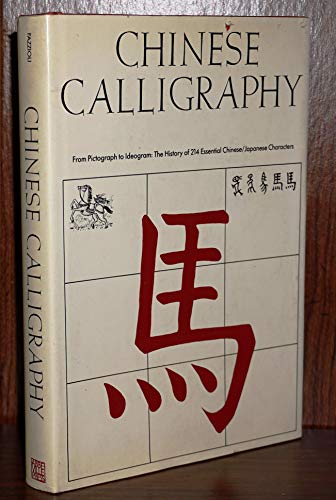
An illuminating history of the 214 Chinese symbols or radicals and how they provide a unique way to penetrate a rich, mysterious world and can reflect the history and philosophy of an entire culture.
Written Chinese can call upon some 40,000 characters, many of which originated about 6,000 years ago as little pictures of everyday objects used by the ancients to communicate with each other. This book, which introduces the Westerner to a rich and mysterious world, is based on a classic compilation of the Chinese language done in the 18th century, which determined that all the characters then in use were devised from 214 root pictographs or symbols. Each of these 214 key characters, called radicals is charmingly explored by the author, both for its etymology and for what it reveals about Chinese history and culture. Chinese characters are marvels of graphic design, and this book shows, stroke by stroke, how each radical is written and gives examples of how radicals are combined with other radicals and character elements to form new characters.
Written Chinese can call upon some 40,000 characters, many of which originated about 6,000 years ago as little pictures of everyday objects used by the ancients to communicate with each other. This book, which introduces the Westerner to a rich and mysterious world, is based on a classic compilation of the Chinese language done in the 18th century, which determined that all the characters then in use were devised from 214 root pictographs or symbols. Each of these 214 key characters, called radicals is charmingly explored by the author, both for its etymology and for what it reveals about Chinese history and culture. Chinese characters are marvels of graphic design, and this book shows, stroke by stroke, how each radical is written and gives examples of how radicals are combined with other radicals and character elements to form new characters.
Die Inhaltsangabe kann sich auf eine andere Ausgabe dieses Titels beziehen.
Über die Autorin bzw. den Autor
Edoardo Fazzioli, who has studied Chinese language and culture at Hong Kong University and is a member of the Italo–Chinese Institute for Economic and Cultural Exchange, has written newspaper articles and scholarly pieces on Chinese life and civilization.
Auszug. © Genehmigter Nachdruck. Alle Rechte vorbehalten.
Excerpt from Chinese Calligraphy:
A Living Language, Six Thousand Years Old
Many great civilizations have punctuated man’s presence on earth, but only the Chinese civilization has survived into modern times with its principal characteristics intact. Also—and this makes it unique—it retains a language more than 6,000 years old. This is undoubtedly the outcome of a series of happy coincidences but, first and foremost, it results from the Chinese system of writing: those fascinating, mysterious characters, each of which hides a snatch of history, literature, art and popular wisdom.
Never has the word calligraphy been so aptly used as here, even though it is still difficult for the Western eye to appreciate the full beauty and depth of this writing or to understand the aesthetic message contained in its lines. The nature of the written language and the use of the same instruments, brush and ink, has ensured that the writing of characters has formed an integral part of the history of Chinese painting.
Wáng Xi Zhi (321-379), the "calligrapher sage" who lived under the Eastern Jin (317-420), is regarded as the greatest master of all time and the model for all those wishing to become engaged in the art of character–writing. His rich poetical and imaginative style is conveyed in his portrayal of writing as a real battle. In his work The Calligraphic Strategy of the Lady Wèi, he writes: "The sheet of paper is a battleground; the brush: the lances and swords; the ink: the mind, the commander-in-chief; ability and dexterity: the deputies; the composition: the strategy. By grasping the brush the outcome of the battle is decided: the strokes and lines are the commanders orders; the curves and returns are the mortal blows." An exciting battle, but fortunately a bloodless one: one of the few that mankind can enjoy and be proud of.
The first characters were incised, using wooden sticks, pointed stones, jade knives or bronze styli. These are the marks we find on ceramics, on bones, inside vases and on bronze artefacts. The graphic transformation of characters was caused by changes in the implements used for writing or the introduction of new writing surfaces such as wood, silk and paper. On a Shang bronze (16th-11th century B.C.) we find a design for a pen with a reservoir; it takes the form of a cup–shaped container attached to one end of a hollow straw which deposited the colouring liquid on strips of bamboo. The result was a thick, uniform line. Around 213 B.C. widespread use appears to have been made of brushes with a fibrous tip suitable for writing on silk: these worked faster, but were still too rigid and gave a thick, square line.
During the same period a further advance was made by replacing the fibrous tip with one made of leather, which was softer and more flexible. It is to a general in the imperial army of the Qín dynasty (229-206 B.C.), however, that we owe a marked improvement in the quality of writing instruments. Méng Tián, who wielded the sword as skillfully as the brush, replaced the leather tip with a tuft of soft animal hairs. His intuitive innovation was linked to the discovery of a new writing material: paper. This quickly absorbed the water, making it possible to create lines of varying intensity. He maintained that the brush, with its very soft, pliable tip, could create every sort of effect when placed in the hands of a skilled calligrapher: everything from a thin, thread–like line to a thick one; from a full, rich stroke to a broken, fading one; from a squared line to a rounded one with either a sharp or blunted point. This moment marked the birth of calligraphy, which now entered the history of Chinese painting and was treated with the same honour and dignity accorded to figurative works.
Apart from the instrument and the writing surface, another important element was India ink, in fact a Chinese discovery, obtained from soot, or lampblack, mixed into a paste with glue and perfumed with camphor and musk. Shaped into tablets or small sticks, it was decorated with figures or extracts from famous calligraphers written in gold characters. It is one of the "treasures of the literate," together with the brush, the paper and the "ink–stone" (a type of Chinese ink–pot). These stones were carefully selected, then carved and finely decorated, with two wells hollowed out in their surface: one to act as a container for water; the other, larger, in which to rub the ink tablet to produce a fine black powder. This would then be diluted with water. Using the best stones, and skillfully mixing the powder with water, it is possible to obtain the shades known to the Chinese as "the five shades of black."
The history and mythology of a script
Knots tied in lengths of vegetable fiber, which represented a sort of calendar, marked the first attempts by Chinese man to establish records. Later on, notches scored on wooden laths acted as a means of recording harvests and other events; later still, sticks, stones and bones were used to make marks on clay objects. The Neolithic village of Bànpo, more than 6,000 years old—discovered in 1953 near Xian and the largest and most complete human settlement so far excavated—represents one of the most important sources of information on ancient Chinese writing. Two types of signs appear on red clay pots found there: the simplest ones are probably numerals, while other, more complex ones indicate names of clans and tribes (see page 12).
These are the forerunners of the characters as they are known today, even though they anticipate pictographs by several millennia; the latter require a degree of skill and manual dexterity those early Neolithic Chinese appear not to have possessed. The development of Chinese characters can be loosely subdivided into four chronological stages: the primitive period (8000–3000 B.C.), during which man expressed himself first in conventional signs that had a mnemonic function and later in designs that reproduced the world around him: pictographs. The archaic period (3000–c. 1600 B.C.) includes the pre–dynastic period and the Xià dynasty, during which there was a transition from pictographs to ideograms, from direct to indirect symbols, thus filling the gap left by early Chinese man when faced with abstract concepts. The historic period spanned 18 centuries—beginning with the Shang or Yin dynasty and ending with the fall of the Eastern Hàn (A.D. 220)—during which writing completed its evolution and took on its definitive form: the determinative characters and phonetics were born, the main styles were developed and form and meaning were established. Over the centuries that followed, the Chinese merely made use of what had already been invented and codified during the earlier period. Finally we come to the contemporary period, which began in 1949 with the founding of the Peoples Republic of China. This is an important age for the changes made to the writing and structure of characters, the result of a campaign to eradicate illiteracy. These modifications had three main aims: to simplify characters that were difficult but in common use; to achieve a common national pronunciation by means of the Putònghuà (common language); to be able to transcribe the characters in alphabetical letters in accordance with a system known as Pin yin, that is, combining the sounds with syllables, which gave uniformity to the earlier differences in transliteration. This programme of intensive "alphabetization" has clearly favoured a quantitative rather than qualitative knowledge of the written language, which is regarded as an inalienable part of the Chinese national heritage.
The mythological account is altogether more romantic and mysterious. This tells how the notion of...
„Über diesen Titel“ kann sich auf eine andere Ausgabe dieses Titels beziehen.
Suchergebnisse für Chinese Calligraphy: From Pictograph to Ideogram: The...

Beispielbild für diese ISBN
Chinese Calligraphy: From Pictograph to Ideogram: The History of 214 Essential Chinese/Japanese Characters
Verlag:
Abbeville Press Inc.,U.S., 1987
ISBN 10: 0896597741
ISBN 13: 9780896597747
Gebraucht
Hardcover
Anbieter: World of Books (was SecondSale), Montgomery, IL, USA
Verkäuferbewertung 5 von 5 Sternen

Hardback. Zustand: Fair. An illuminating history of the 214 Chinese symbols or radicals and how they provide a unique way to penetrate a rich, mysterious world and can reflect the history and philosophy of an entire culture. Written Chinese can call upon some 40,000 characters, many of which originated about 6,000 years ago as little pictures of everyday objects used by the ancients to communicate with each other. This book, which introduces the Westerner to a rich and mysterious world, is based on a classic compilation of the Chinese language done in the 18th century, which determined that all the characters then in use were devised from 214 root pictographs or symbols. Each of these 214 key characters, called radicals is charmingly explored by the author, both for its etymology and for what it reveals about Chinese history and culture. Chinese characters are marvels of graphic design, and this book shows, stroke by stroke, how each radical is written and gives examples of how radicals are combined with other radicals and character elements to form new characters. Artikel-Nr. CIN0896597741A
Gebraucht kaufen
EUR 6,40
Versand gratis
Versand innerhalb von USA
Versand innerhalb von USA
Anzahl: 1 verfügbar
Beispielbild für diese ISBN
Chinese Calligraphy: From Pictograph to Ideogram: The History of 214 Essential Chinese/Japanese Characters
Verlag:
Abbeville Press Inc.,U.S., 1987
ISBN 10: 0896597741
ISBN 13: 9780896597747
Gebraucht
Hardcover
Anbieter: World of Books (was SecondSale), Montgomery, IL, USA
Verkäuferbewertung 5 von 5 Sternen
Hardback. Zustand: Good. An illuminating history of the 214 Chinese symbols or radicals and how they provide a unique way to penetrate a rich, mysterious world and can reflect the history and philosophy of an entire culture. Written Chinese can call upon some 40,000 characters, many of which originated about 6,000 years ago as little pictures of everyday objects used by the ancients to communicate with each other. This book, which introduces the Westerner to a rich and mysterious world, is based on a classic compilation of the Chinese language done in the 18th century, which determined that all the characters then in use were devised from 214 root pictographs or symbols. Each of these 214 key characters, called radicals is charmingly explored by the author, both for its etymology and for what it reveals about Chinese history and culture. Chinese characters are marvels of graphic design, and this book shows, stroke by stroke, how each radical is written and gives examples of how radicals are combined with other radicals and character elements to form new characters. Artikel-Nr. 00110930208
Gebraucht kaufen
EUR 6,40
Versand gratis
Versand innerhalb von USA
Versand innerhalb von USA
Anzahl: 1 verfügbar
Beispielbild für diese ISBN
Chinese Calligraphy: From Pictograph to Ideogram: The History of 214 Essential Chinese/Japanese Characters
Verlag:
Abbeville Press Inc.,U.S., 1987
ISBN 10: 0896597741
ISBN 13: 9780896597747
Gebraucht
Hardcover
Anbieter: World of Books (was SecondSale), Montgomery, IL, USA
Verkäuferbewertung 5 von 5 Sternen
Hardback. Zustand: Very Good. An illuminating history of the 214 Chinese symbols or radicals and how they provide a unique way to penetrate a rich, mysterious world and can reflect the history and philosophy of an entire culture. Written Chinese can call upon some 40,000 characters, many of which originated about 6,000 years ago as little pictures of everyday objects used by the ancients to communicate with each other. This book, which introduces the Westerner to a rich and mysterious world, is based on a classic compilation of the Chinese language done in the 18th century, which determined that all the characters then in use were devised from 214 root pictographs or symbols. Each of these 214 key characters, called radicals is charmingly explored by the author, both for its etymology and for what it reveals about Chinese history and culture. Chinese characters are marvels of graphic design, and this book shows, stroke by stroke, how each radical is written and gives examples of how radicals are combined with other radicals and character elements to form new characters. Artikel-Nr. 00102930344
Gebraucht kaufen
EUR 6,40
Versand gratis
Versand innerhalb von USA
Versand innerhalb von USA
Anzahl: 2 verfügbar
Beispielbild für diese ISBN
Chinese Calligraphy: From Pictograph to Ideogram: The History of 214 Essential Chinese/Japanese Characters
Anbieter: Wonder Book, Frederick, MD, USA
Verkäuferbewertung 5 von 5 Sternen
Zustand: Good. Good condition. Good dust jacket. A copy that has been read but remains intact. May contain markings such as bookplates, stamps, limited notes and highlighting, or a few light stains. Artikel-Nr. L10B-04170
Gebraucht kaufen
EUR 6,46
Versand gratis
Versand innerhalb von USA
Versand innerhalb von USA
Anzahl: 1 verfügbar
Beispielbild für diese ISBN
Chinese Calligraphy: From Pictograph to Ideogram: The History of 214 Essential Chinese/Japanese Characters
Anbieter: Wonder Book, Frederick, MD, USA
Verkäuferbewertung 5 von 5 Sternen
Zustand: Very Good. Very Good condition. Very Good dust jacket. A copy that may have a few cosmetic defects. May also contain light spine creasing or a few markings such as an owner's name, short gifter's inscription or light stamp. Artikel-Nr. H06M-01364
Gebraucht kaufen
EUR 6,46
Versand gratis
Versand innerhalb von USA
Versand innerhalb von USA
Anzahl: 1 verfügbar
Beispielbild für diese ISBN
Chinese Calligraphy : From Pictograph to Ideogram - The History of 214 Essential Chinese/Japanese Characters
Verlag:
Abbeville Press, Incorporated, 1987
ISBN 10: 0896597741
ISBN 13: 9780896597747
Gebraucht
Hardcover
Anbieter: Better World Books: West, Reno, NV, USA
Verkäuferbewertung 5 von 5 Sternen
Zustand: Very Good. 1st American. Former library copy. Pages intact with possible writing/highlighting. Binding strong with minor wear. Dust jackets/supplements may not be included. Includes library markings. Stock photo provided. Product includes identifying sticker. Better World Books: Buy Books. Do Good. Artikel-Nr. 7982874-75
Gebraucht kaufen
EUR 6,49
Versand gratis
Versand innerhalb von USA
Versand innerhalb von USA
Anzahl: 1 verfügbar
Beispielbild für diese ISBN
Chinese Calligraphy : From Pictograph to Ideogram - The History of 214 Essential Chinese/Japanese Characters
Verlag:
Abbeville Press, Incorporated, 1987
ISBN 10: 0896597741
ISBN 13: 9780896597747
Gebraucht
Hardcover
Anbieter: Better World Books, Mishawaka, IN, USA
Verkäuferbewertung 5 von 5 Sternen
Zustand: Very Good. 1st American. Pages intact with possible writing/highlighting. Binding strong with minor wear. Dust jackets/supplements may not be included. Stock photo provided. Product includes identifying sticker. Better World Books: Buy Books. Do Good. Artikel-Nr. 7861485-6
Gebraucht kaufen
EUR 6,49
Versand gratis
Versand innerhalb von USA
Versand innerhalb von USA
Anzahl: 1 verfügbar
Beispielbild für diese ISBN
Chinese Calligraphy : From Pictograph to Ideogram - The History of 214 Essential Chinese/Japanese Characters
Verlag:
Abbeville Press, Incorporated, 1987
ISBN 10: 0896597741
ISBN 13: 9780896597747
Gebraucht
Hardcover
Anbieter: Better World Books, Mishawaka, IN, USA
Verkäuferbewertung 5 von 5 Sternen
Zustand: Good. 1st American. Former library copy. Pages intact with minimal writing/highlighting. The binding may be loose and creased. Dust jackets/supplements are not included. Includes library markings. Stock photo provided. Product includes identifying sticker. Better World Books: Buy Books. Do Good. Artikel-Nr. 5231164-6
Gebraucht kaufen
EUR 6,49
Versand gratis
Versand innerhalb von USA
Versand innerhalb von USA
Anzahl: 2 verfügbar
Beispielbild für diese ISBN
Chinese Calligraphy : From Pictograph to Ideogram - The History of 214 Essential Chinese/Japanese Characters
Verlag:
Abbeville Press, Incorporated, 1987
ISBN 10: 0896597741
ISBN 13: 9780896597747
Gebraucht
Hardcover
Anbieter: Better World Books, Mishawaka, IN, USA
Verkäuferbewertung 5 von 5 Sternen
Zustand: Good. 1st American. Pages intact with minimal writing/highlighting. The binding may be loose and creased. Dust jackets/supplements are not included. Stock photo provided. Product includes identifying sticker. Better World Books: Buy Books. Do Good. Artikel-Nr. 1165710-6
Gebraucht kaufen
EUR 6,49
Versand gratis
Versand innerhalb von USA
Versand innerhalb von USA
Anzahl: 1 verfügbar
Beispielbild für diese ISBN
Chinese Calligraphy: From Pictograph to Ideogram: The History of 214 Essential Chinese/Japanese Characters
Anbieter: ThriftBooks-Reno, Reno, NV, USA
Verkäuferbewertung 5 von 5 Sternen
Hardcover. Zustand: Very Good. No Jacket. May have limited writing in cover pages. Pages are unmarked. ~ ThriftBooks: Read More, Spend Less. Artikel-Nr. G0896597741I4N00
Gebraucht kaufen
EUR 6,51
Versand gratis
Versand innerhalb von USA
Versand innerhalb von USA
Anzahl: 1 verfügbar