
Verwandte Artikel zu The Juicing Book: A Complete Guide to the Juicing of...
The Juicing Book: A Complete Guide to the Juicing of Fruits and Vegetables for Maximum Health - Softcover
Inhaltsangabe
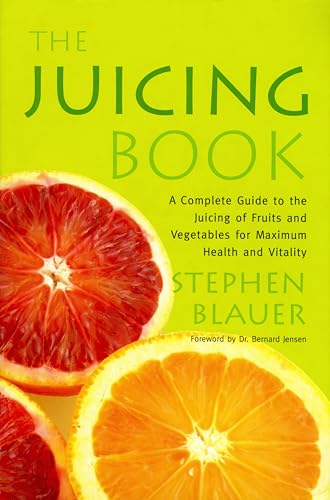
Complete guide to using juices to maximize health and vitality. Offers up-to-date information on the value of juices in relation to the body's needs. Included are comprehensive charts, delicious recipes and instructions on using various juicing equipment.
Die Inhaltsangabe kann sich auf eine andere Ausgabe dieses Titels beziehen.
Über die Autorin bzw. den Autor
Stephen Blauer attended the University of Massachusetts Amherst. After graduation, he traveled extensively throughout Europe, Asia, and the Middle East, observing the differences in cultures as they relate to health. Upon returning to the United States, Stephen joined the staff of the famed Hippocrates Health Institute of Boston, working under its founder, Ann Wigmore. He served as director of the institute for two years. Since leaving the institute, Stephen has continued to travel, observe, and learn. He has written five books in the field of holistic health and has coauthored the bestseller The Macrobiotic Way. Stephen and his family currently reside in a suburb of Boston, Massachusetts.
Auszug. © Genehmigter Nachdruck. Alle Rechte vorbehalten.
Preface
The Elements of a Long and Healthy Life
Fresh juices are fantastic! As Nature’s own nutrient-packed thirst quenchers, cleansers, and tonics, they can’t be beat. Yet, as good as fresh-squeezed juices are, they are but one aspect of a healthy lifestyle. The greatest benefits of fresh juices are derived by combining them with a wholesome diet and a regular exercise program.
Most of us are born with the potential to live long, healthy, and happy lives. Why then do some of us fall short? There are at least three reasons.
The first reason is our belief system. We believe that as we age we become helpless and sickly—even though we see examples of youthful and energetic seniors all around us. It is important to believe in the examples of people whose health and longevity at advanced age seems remarkable. Their vitality is not an anomaly. It is our birthright.
The second reason we fall short of our potential is our lack of consistency. By not adhering to a lifelong regimen of wholesome diet and regular exercise, we do little to foster our own health and longevity. It is not what we eat or drink occasionally, but rather what we consume on a daily basis, that determines our level of health. That’s why it is important to choose the freshest, most wholesome foods; those that are locally grown are best. It is equally important to find fresh, clean, spring water with which to drink and cook. And we must try to be active each day.
Our bodies thrive on moderate exercise, sunshine, and fresh air. That’s why we should try to go outdoors daily and, whenever possible, go to places where we can marvel at the wonders of Nature. We can walk, run, play tennis or basketball, swim, mountain climb, or ski. Or we can try gardening, chopping wood, building, or other active and enjoyable hobbies.
The third reason we may fall short of our potential is that many of us hold an unfocused picture of the quality of our lives. For as the quality of life becomes unfocused, often so does life itself. Therefore, being conscious of the quality of our life is essential if we wish it to improve. A life filled with quality in work, thoughts, companions, and activities can strengthen our natural immunity to germs, viruses, and negative hereditary influences.
Lessons on longevity and happiness can be found by studying the lives of modern-day peoples who live in traditional cultures. Perhaps the most prolific examples of long life are found among the Hunzakut of Pakistan, the Vilcabamban of Ecuador, and the Abhasian of the Soviet Union. As individual groups, these societies enjoy a greater degree of immunity from illnesses of almost every type. They live closer to Nature in the foods they eat, in their work, and in their play habits. Conversely, Western society has strayed from Nature and somewhat from the intuitive ability to choose the foods, work, and habits that will bring its members true health, happiness, and long life.
The return to wholesome foods and fresh juices can be your first step on the journey to a more healthy and happy life. I hope this book will help you to take that first step.
Foreword
Variety is Key
I am delighted with the publication of The Juicing Book.
During my more than fifty-eight years in the healing art as a clinical nutritionist, I have seen hundreds of dietary fads come and go. Juices were not among them. Why? Because juices are not a fad. Juices are here to stay.
The fresh juices of fruits and vegetables are a food—an important, nutrient-rich, health-enhancing food. I’ve recommended fresh juice to my patients from my earliest days, and I still recommend juices, for very good reasons.
In my professional experience, I consider nutritional deficiencies to be among the most common and least acknowledged contributors to the development of disease and illness in our time, because so many people are not using balanced food programs centered around whole, pure, and natural foods, as they should.
Fresh fruit and vegetable juices contain a broad array of vitamins, minerals, enzymes, and various co-factors that both enhance and complement individual nutrients, so your body gets the most good from them. Because juices are assimilated with very little effort on the part of the digestive system, their nutrients have a health-building impact at a relatively low cost in energy. What this means is that juices are excellent for you whether your health and energy are at a low ebb right now or whether you’ve never felt better in your life.
This is not to say that adding more fresh juices to your diet will compensate for poor day-to-day nutrition habits. Rather, by adding fresh juices to a balanced food regimen, you will help accelerate and enhance the process of restoring nutrients to chemically-starved tissues. It is on these very tissues that disease and illness thrive. In terms of prevention, therefore, the importance of juice cannot be overstressed.
I believe in fresh juices. I have always considered fresh juices to be a necessary part of my Health and Harmony Food Regimen, a nutrition program that has helped thousands of my patients get well and stay well.
Perhaps because I live in the heart of California’s citrus belt, people expect me to recommend orange juice over everything else. Let me share an important secret with you.
Variety is one of the most important, yet least practiced, food laws of Nature. We need to eat a variety of proteins, starches, fruits, vegetables, and juices to prevent disease and build health. Our bodies need a broad array of nutrients to defend against disease and to sustain well-being. We need a variety of juices!
My advice to you is this: enjoy reading this book, make practical use of this book, and use the many different varieties of fresh juices featured in this book to supplement and enhance your diet. You’ll be glad you did.
Dr. Bernard Jensen
Escondido, California
Introduction
Juice Fact and Fiction
Americans are well acquainted with juices. We begin our days with orange juice, or grapefruit juice, or maybe a taste of prune juice. Both canned and bottled juices are popular at snack time and meal time. Quality-conscious consumers have created a market for commercially produced, 100-percent-natural juices. To round out their juice lines, manufacturers now offer several all-natural fruit juice blends from concentrate.
With all this attention focused on juices, why write a book on them? And, for that matter, why read one? Because drinking fresh juices is an excellent health habit that cannot be reinforced enough. Fresh juice is more than an excellent source of vitamins, minerals, enzymes, purified water, proteins, carbohydrates, and chlorophyll. Because it is in liquid form, fresh juice supplies nutrition that is not wasted to fuel its own digestion as it is with whole fruits, vegetables, and grasses. As a result, the body can quickly and easily make maximum use of all the nutrition that fresh juice offers.
Most of us already know that fresh juices are far more healthful than soft drinks, coffee, tea, and alcoholic beverages. But consumers may not be aware that many canned, bottled, and cartoned juices are not what they appear to be.
Did you know, for example, that Beech-Nut Nutrition Corp. was recently indicted on charges of selling millions of bottles of flavored sugar-water labeled 100-percent apple juice between 1978 and 1983? Executives of the food company allege they did not know about the phony contents of thousands of imported barrels marked “apple concentrate.”
Or did you know that “Florida-Squeezed” juices may be made from fruit treated with banned pesticides? To save money, some juice manufacturers import cheap citrus fruit to the United...
„Über diesen Titel“ kann sich auf eine andere Ausgabe dieses Titels beziehen.
Suchergebnisse für The Juicing Book: A Complete Guide to the Juicing of...

Beispielbild für diese ISBN
The Juicing Book: A Complete Guide to the Juicing of Fruits and Vegetables for Maximum Health
Verlag:
Penguin Publishing Group, 1989
ISBN 10: 089529253X
ISBN 13: 9780895292537
Gebraucht
Softcover
Anbieter: World of Books (was SecondSale), Montgomery, IL, USA
Verkäuferbewertung 5 von 5 Sternen

Zustand: Acceptable. Item in acceptable condition! Textbooks may not include supplemental items i.e. CDs, access codes etc. Artikel-Nr. 00097063463
Gebraucht kaufen
EUR 3,66
Versand gratis
Versand innerhalb von USA
Versand innerhalb von USA
Anzahl: 3 verfügbar
Beispielbild für diese ISBN
The Juicing Book: A Complete Guide to the Juicing of Fruits and Vegetables for Maximum Health
Verlag:
Penguin Publishing Group, 1989
ISBN 10: 089529253X
ISBN 13: 9780895292537
Gebraucht
Softcover
Anbieter: World of Books (was SecondSale), Montgomery, IL, USA
Verkäuferbewertung 5 von 5 Sternen
Zustand: Good. Item in good condition. Textbooks may not include supplemental items i.e. CDs, access codes etc. Artikel-Nr. 00039668820
Gebraucht kaufen
EUR 3,66
Versand gratis
Versand innerhalb von USA
Versand innerhalb von USA
Anzahl: 20 verfügbar
Beispielbild für diese ISBN
The Juicing Book: A Complete Guide to the Juicing of Fruits and Vegetables for Maximum Health
Verlag:
Penguin Publishing Group, 1989
ISBN 10: 089529253X
ISBN 13: 9780895292537
Gebraucht
Softcover
Anbieter: World of Books (was SecondSale), Montgomery, IL, USA
Verkäuferbewertung 5 von 5 Sternen
Zustand: Very Good. Item in very good condition! Textbooks may not include supplemental items i.e. CDs, access codes etc. Artikel-Nr. 00097286210
Gebraucht kaufen
EUR 3,66
Versand gratis
Versand innerhalb von USA
Versand innerhalb von USA
Anzahl: 1 verfügbar
Beispielbild für diese ISBN
The Juicing Book: A Complete Guide to the Juicing of Fruits and Vegetables for Maximum Health
Verlag:
Penguin Publishing Group (edition ), 1989
ISBN 10: 089529253X
ISBN 13: 9780895292537
Gebraucht
Paperback
Anbieter: BooksRun, Philadelphia, PA, USA
Verkäuferbewertung 5 von 5 Sternen
Paperback. Zustand: Very Good. It's a well-cared-for item that has seen limited use. The item may show minor signs of wear. All the text is legible, with all pages included. It may have slight markings and/or highlighting. Artikel-Nr. 089529253X-11-6
Gebraucht kaufen
EUR 4,60
Versand gratis
Versand innerhalb von USA
Versand innerhalb von USA
Anzahl: 1 verfügbar
Beispielbild für diese ISBN
The Juicing Book: A Complete Guide to the Juicing of Fruits and Vegetables for Maximum Health
Verlag:
Penguin Publishing Group, 1989
ISBN 10: 089529253X
ISBN 13: 9780895292537
Gebraucht
Softcover
Anbieter: Wonder Book, Frederick, MD, USA
Verkäuferbewertung 5 von 5 Sternen
Zustand: As New. Like New condition. A near perfect copy that may have very minor cosmetic defects. Artikel-Nr. T07N-00336
Gebraucht kaufen
EUR 6,32
Versand gratis
Versand innerhalb von USA
Versand innerhalb von USA
Anzahl: 1 verfügbar
Beispielbild für diese ISBN
The Juicing Book: A Complete Guide to the Juicing of Fruits and Vegetables for Maximum Health
Verlag:
Penguin Publishing Group, 1989
ISBN 10: 089529253X
ISBN 13: 9780895292537
Gebraucht
Softcover
Anbieter: Wonder Book, Frederick, MD, USA
Verkäuferbewertung 5 von 5 Sternen
Zustand: Very Good. Very Good condition. A copy that may have a few cosmetic defects. May also contain light spine creasing or a few markings such as an owner's name, short gifter's inscription or light stamp. Artikel-Nr. R04A-03873
Gebraucht kaufen
EUR 6,32
Versand gratis
Versand innerhalb von USA
Versand innerhalb von USA
Anzahl: 3 verfügbar
Beispielbild für diese ISBN
The Juicing Book
Verlag:
Penguin Publishing Group, 1989
ISBN 10: 089529253X
ISBN 13: 9780895292537
Gebraucht
Paperback
Anbieter: ThriftBooks-Reno, Reno, NV, USA
Verkäuferbewertung 5 von 5 Sternen
Paperback. Zustand: As New. No Jacket. Pages are clean and are not marred by notes or folds of any kind. ~ ThriftBooks: Read More, Spend Less. Artikel-Nr. G089529253XI2N00
Gebraucht kaufen
EUR 6,44
Versand gratis
Versand innerhalb von USA
Versand innerhalb von USA
Anzahl: 1 verfügbar
Beispielbild für diese ISBN
The Juicing Book
Verlag:
Penguin Publishing Group, 1989
ISBN 10: 089529253X
ISBN 13: 9780895292537
Gebraucht
Paperback
Anbieter: ThriftBooks-Dallas, Dallas, TX, USA
Verkäuferbewertung 5 von 5 Sternen
Paperback. Zustand: As New. No Jacket. Pages are clean and are not marred by notes or folds of any kind. ~ ThriftBooks: Read More, Spend Less. Artikel-Nr. G089529253XI2N00
Gebraucht kaufen
EUR 6,44
Versand gratis
Versand innerhalb von USA
Versand innerhalb von USA
Anzahl: 1 verfügbar
Beispielbild für diese ISBN
The Juicing Book
Verlag:
Penguin Publishing Group, 1989
ISBN 10: 089529253X
ISBN 13: 9780895292537
Gebraucht
Paperback
Anbieter: ThriftBooks-Atlanta, AUSTELL, GA, USA
Verkäuferbewertung 5 von 5 Sternen
Paperback. Zustand: As New. No Jacket. Pages are clean and are not marred by notes or folds of any kind. ~ ThriftBooks: Read More, Spend Less. Artikel-Nr. G089529253XI2N00
Gebraucht kaufen
EUR 6,44
Versand gratis
Versand innerhalb von USA
Versand innerhalb von USA
Anzahl: 1 verfügbar
Beispielbild für diese ISBN
The Juicing Book
Verlag:
Penguin Publishing Group, 1989
ISBN 10: 089529253X
ISBN 13: 9780895292537
Gebraucht
Paperback
Anbieter: ThriftBooks-Phoenix, Phoenix, AZ, USA
Verkäuferbewertung 5 von 5 Sternen
Paperback. Zustand: As New. No Jacket. Pages are clean and are not marred by notes or folds of any kind. ~ ThriftBooks: Read More, Spend Less. Artikel-Nr. G089529253XI2N00
Gebraucht kaufen
EUR 6,44
Versand gratis
Versand innerhalb von USA
Versand innerhalb von USA
Anzahl: 1 verfügbar