
Verwandte Artikel zu Genesis (Lifechange Series)
Inhaltsangabe
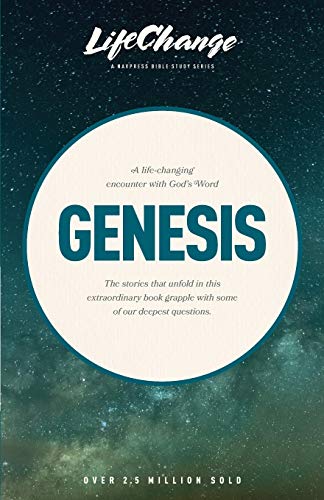
"Start from the Beginning The book of Genesis is all about beginnings. God creates the heavens, the earth, plants and animals, men and women. When rebellion breaks out, God begins the task of mending His relationship with humanity and all creation. The stories that unfold in this extraordinary book grapple with some of our deepest questions: Who am I? Why are we here? Is there a God? Does He love me? To answer these questions, start from the beginning. LifeChange LifeChange Bible studies will help you grow in Christlikeness through a life-changing encounter with God's Word. Filled with a wealth of ideas for going deeper so you can return to this study again and again. Features ¿Cover the entire book of Genesis in 19 lessons ¿Equip yourself to lead a Bible study ¿Imagine the Bible's historical world ¿Study word origins and definitions ¿Explore thoughtful questions on key themes ¿Go deeper with optional projects ¿Add your notes with extra space and wide margins ¿Find the flexibility to fit the time you have "
Die Inhaltsangabe kann sich auf eine andere Ausgabe dieses Titels beziehen.
Über die Autorin bzw. den Autor
Dr. J. P. Moreland is professor of philosophy at Talbot School of Theology, Biola University. He is the author of several books, including Love Your God with All Your Mind.
Dr. Klaus Issler is professor of Christian education and theology at Talbot School of Theology. Among his books are Wasting Time with God and How We Learn.
Dr. Klaus Issler is professor of Christian education and theology at Talbot School of Theology. Among his books are Wasting Time with God and How We Learn.
Von der hinteren Coverseite
GENESIS. The first book of God’s revelation to man is a book of genesis: beginnings. God creates the heavens. The earth. Man and woman. But rebellion breaks out, and God begins the task of mending His relationship with mankind. The events that unfold in this extraordinary book give form to the entire Bible, right to the end of Revelation and God’s plan for a new beginning. LifeChange Series: Christians have a lifelong goal: to become like Christ. This involves change, and change isn’t always easy. But the more you know of God’s purposes for you, the more you can experience His joy and participate in His plan. The LifeChange Series of Bible studies on books of the Bible can help you grow in Christlikeness through a life-changing encounter with God’s Word. You’ll benefit in these important ways: 1) You’ll gain a firm understanding of the book-its historical context, purpose, structure, and meaning; 2) You’ll apply its powerful, relevant wisdom to needs and issues you are currently working through; and 3) You’ll acquire personal study skills and a thirst to return to the book on your own-so you can keep going deeper into its life-transforming truths.
Auszug. © Genehmigter Nachdruck. Alle Rechte vorbehalten.
Genesis
By The NavigatorsNavPress
Copyright © 2013 The Navigators
All rights reserved.
ISBN: 978-0-89109-069-4All rights reserved.
Contents
How to Use This Study, 5,
PART I — PRIMEVAL HISTORY,
One — The Book of Beginnings (Introduction), 9,
Two — Heaven and Earth (1:1–2:3), 17,
Three — Male and Female (1:26-29; 2:4-25), 27,
Four — Paradise Lost (3:1-24), 37,
Five — Man in Exile (4:1–5:32), 49,
Six — The Flood (6:1–9:17), 63,
Map — Nations Descended from Noah's Sons, 76,
Seven — The Scattering of Noah's Descendants (9:18–11:26), 77,
Map — The Near East, 80,
PART II — PATRIARCHAL HISTORY,
Map — The Ancient Near East, 90,
Eight — Abram's Call (11:27–12:20), 91,
Map — The Land of Canaan, 94,
Nine — Abram's Righteousness (13:1–15:21), 101,
Map — The Battle in Genesis 14, 104,
Ten — Abram to Abraham (16:1–17:27), 117,
Eleven — God Visits (18:1–19:38), 125,
Twelve — Isaac At Last (20:1–21:34), 135,
Thirteen — Father and Sons (22:1–25:18), 143,
Fourteen — The Generations of Isaac (25:19–28:9), 151,
Fifteen — Jacob's Journey (28:10–31:55), 161,
Sixteen — Israel (32:1–36:43), 171,
Seventeen — Joseph: God in Control (37:1–50:26), 183,
Eighteen — The Generations of Jacob (37:1–50:26), 199,
Nineteen — God and Man (Review), 207,
Going On in Genesis, 217,
Study Aids, 219,
CHAPTER 1
Lesson One
INTRODUCTION
The Book of Beginnings
"In the beginning ..." Genesis 1:1
Genesis means "origin," "beginning," and the book of Genesis is about beginnings. In it, God lays the groundwork for the rest of Scripture, His revelation of Himself to man.
Genesis begins with God's creation of the world and its most blessed occupants, the human male and female. From this climax, the story follows man's plunge into rebellion and its consequences — shame, death, murder, rootlessness, tyranny, idolatry, and war. Two low points mark this account of primeval history (chapters 1–11): the Flood that wipes out an unsalvageable generation and the scattering of the nations who try to build the Tower of Babel. Each time, man seems bound for irredeemable corruption, yet God prevents disaster with merciful judgment.
After Babel, the story narrows to follow one family — Abraham's — through four generations (chapters 12–50). Through this family, God plans to offer salvation from the consequences of the Fall to the whole human race. God calls Abraham from Mesopotamia to Canaan and promises that his descendants will own that land. In the twists of life, God teaches Abraham, his son, his grandson, and his great-grandsons to trust their Lord's promises and obey His plans. By the close of Genesis, God has led seventy members of the chosen family into Egypt but has trained them to pin their hopes on a return to Canaan four hundred years in the future. The stage is set for God's greater acts of salvation and self-revelation in the Exodus, which itself will be only a shadow of mightier things to come. Genesis constantly reminds us that it is only the beginning of a story that will climax in the New Testament and not end until the vision of Revelation is accomplished.
Here is a brief outline showing the four main events of primeval history and the four generations of Abraham's family.
I. Primeval History (chapters 1–11)
A. Creation
B. Fall
C. Flood
D. Babel
II. Patriarchal History (chapters 12–50)
A. Abraham
B. Isaac
C. Jacob
D. Joseph
Genesis and the New Testament
The New Testament quotes Genesis more than any other Old Testament book except Psalms and Isaiah. The great themes of the New Testament all begin in Genesis, and many are scarcely mentioned again between Exodus and Malachi.
For instance, the garden of Genesis 2 with its river and tree of life return in Revelation where the serpent of Genesis 3 and the Babylon built in Genesis 10–11 finally fall. A series of prophecies from Genesis 3:15 through 49:10 point toward the Christ, who transforms the consequences of Adam's sin. The New Testament God — the One personal, perfect, just, merciful, all-powerful Creator and Savior — is the God of Genesis. Likewise, the New Testament view of man's high origin and mission, and his fall and predicament, are rooted in Genesis. Grace, election, free will, the covenant relationship, the substituted sacrifice that atones for sin, the transformation of the sinner, and the obedience of faith all figure in Genesis.
Focus on redemption
Genesis doesn't tell us everything we might like to know about the history of the universe and humankind, for much of that history lies outside God's purpose in giving us the book. Genesis focuses on God's acts as they bear on His plan to redeem man from sin. The book first explains God's perfect plan for humans and then begins to trace His response to their sin — the plan of salvation through a descendant of a chosen family. The origin of the universe is relevant only in that it reveals God's character and defines man's original nature. The nonchosen branches of the human race are not unimportant to God, but they stand outside the redemption story until in Christ they ultimately receive salvation through the chosen family.
Genesis and the Old Testament
Genesis is one of the five books of Moses (see Nehemiah 8:1; John 5:46; Luke 24:27), which the Jews called the Torah (Teaching, Law, Instruction — Psalm 119:174; Jeremiah 31:33). The English word Law does not quite describe the history and instruction about God that the Torah contains. God does give rules for living, but only after He has shown His love and power by delivering Israel (the descendants of Abraham through his grandson, Jacob-Israel) from slavery in Egypt.
The Torah tells how God made a covenant (a treaty between a lord and his subjects) with Israel. The rest of the Old Testament recounts Israel's repeated failures to live up to God's requirements and the repeated sufferings that rebellion causes. Over and over God allows His people to suffer and learn, but He protects a remnant of the chosen family, sends prophets to warn and teach His people, and assures them that one day the promised descendant of Abraham will come. Thus, the rest of the Old Testament tells how God continues the chosen family's training, the story begun in Genesis.
It takes roughly two thousand years to prepare Abraham's family to give birth to the Savior, Jesus.
Viewing the Old Testament as the story of how God shaped Israel to receive the Savior, we can see how Genesis fits into this framework:
1. The five books of Moses (Genesis, Exodus, Leviticus, Numbers, Deuteronomy) recount Israelite history from the people's beginnings until Moses' death, when the Israelites are poised on the border of the promised land (?–1400 BC). The books also give laws for living in the land under Israel's king, the Lord.
2. Nine books (Joshua–2 Chronicles) tell Israel's history from the start of the conquest of the land, through the climax of prosperity under David and Solomon, and finally to degeneration, conquest by enemies, and exile (about 1400–586 BC).
3. Three books (Ezra,...
„Über diesen Titel“ kann sich auf eine andere Ausgabe dieses Titels beziehen.
Suchergebnisse für Genesis (Lifechange Series)

Beispielbild für diese ISBN
LifeChange
Anbieter: World of Books (was SecondSale), Montgomery, IL, USA
Verkäuferbewertung 5 von 5 Sternen

Paperback. Zustand: Very Good. GENESIS. The first book of God's revelation to man is a book of genesis: beginnings. God creates the heavens. The earth. Man and woman. But rebellion breaks out, and God begins the task of mending His relationship with mankind. The events that unfold in this extraordinary book give form to the entire Bible, right to the end of Revelation and God's plan for a new beginning. LifeChange Series: Christians have a lifelong goal: to become like Christ. This involves change, and change isn't always easy. But the more you know of God's purposes for you, the more you can experience His joy and participate in His plan. The LifeChange Series of Bible studies on books of the Bible can help you grow in Christlikeness through a life-changing encounter with God's Word. You'll benefit in these important ways: 1) You'll gain a firm understanding of the book-its historical context, purpose, structure, and meaning; 2) You'll apply its powerful, relevant wisdom to needs and issues you are currently working through; and 3) You'll acquire personal study skills and a thirst to return to the book on your own-so you can keep going deeper into its life-transforming truths. Artikel-Nr. 00109059570
Gebraucht kaufen
EUR 3,68
Versand gratis
Versand innerhalb von USA
Versand innerhalb von USA
Anzahl: 1 verfügbar
Beispielbild für diese ISBN
LifeChange
Anbieter: World of Books (was SecondSale), Montgomery, IL, USA
Verkäuferbewertung 5 von 5 Sternen
Paperback. Zustand: Good. GENESIS. The first book of God's revelation to man is a book of genesis: beginnings. God creates the heavens. The earth. Man and woman. But rebellion breaks out, and God begins the task of mending His relationship with mankind. The events that unfold in this extraordinary book give form to the entire Bible, right to the end of Revelation and God's plan for a new beginning. LifeChange Series: Christians have a lifelong goal: to become like Christ. This involves change, and change isn't always easy. But the more you know of God's purposes for you, the more you can experience His joy and participate in His plan. The LifeChange Series of Bible studies on books of the Bible can help you grow in Christlikeness through a life-changing encounter with God's Word. You'll benefit in these important ways: 1) You'll gain a firm understanding of the book-its historical context, purpose, structure, and meaning; 2) You'll apply its powerful, relevant wisdom to needs and issues you are currently working through; and 3) You'll acquire personal study skills and a thirst to return to the book on your own-so you can keep going deeper into its life-transforming truths. Artikel-Nr. 00102204634
Gebraucht kaufen
EUR 3,68
Versand gratis
Versand innerhalb von USA
Versand innerhalb von USA
Anzahl: 16 verfügbar
Beispielbild für diese ISBN
Lc Genesis (19 Lessons) (LifeC
Anbieter: World of Books (was SecondSale), Montgomery, IL, USA
Verkäuferbewertung 5 von 5 Sternen
Zustand: Acceptable. Item in acceptable condition! Textbooks may not include supplemental items i.e. CDs, access codes etc. Artikel-Nr. 00104697481
Gebraucht kaufen
EUR 3,68
Versand gratis
Versand innerhalb von USA
Versand innerhalb von USA
Anzahl: 4 verfügbar
Beispielbild für diese ISBN
Genesis (LifeChange)
Verlag:
NavPress (edition Study Guide), 2018
ISBN 10: 089109069X
ISBN 13: 9780891090694
Gebraucht
Paperback
Anbieter: BooksRun, Philadelphia, PA, USA
Verkäuferbewertung 5 von 5 Sternen
Paperback. Zustand: Very Good. Study Guide. It's a well-cared-for item that has seen limited use. The item may show minor signs of wear. All the text is legible, with all pages included. It may have slight markings and/or highlighting. Artikel-Nr. 089109069X-11-1
Gebraucht kaufen
EUR 4,35
Versand gratis
Versand innerhalb von USA
Versand innerhalb von USA
Anzahl: 1 verfügbar
Beispielbild für diese ISBN
Genesis (LifeChange)
Verlag:
NavPress (edition Study Guide), 2018
ISBN 10: 089109069X
ISBN 13: 9780891090694
Gebraucht
Paperback
Anbieter: BooksRun, Philadelphia, PA, USA
Verkäuferbewertung 5 von 5 Sternen
Paperback. Zustand: Fair. Study Guide. The item might be beaten up but readable. May contain markings or highlighting, as well as stains, bent corners, or any other major defect, but the text is not obscured in any way. Artikel-Nr. 089109069X-7-18
Gebraucht kaufen
EUR 4,83
Versand gratis
Versand innerhalb von USA
Versand innerhalb von USA
Anzahl: 1 verfügbar
Beispielbild für diese ISBN
Genesis (LifeChange)
Verlag:
NavPress (edition Study Guide), 2018
ISBN 10: 089109069X
ISBN 13: 9780891090694
Gebraucht
Paperback
Anbieter: BooksRun, Philadelphia, PA, USA
Verkäuferbewertung 5 von 5 Sternen
Paperback. Zustand: Very Good. Study Guide. It's a well-cared-for item that has seen limited use. The item may show minor signs of wear. All the text is legible, with all pages included. It may have slight markings and/or highlighting. Artikel-Nr. 089109069X-8-6
Gebraucht kaufen
EUR 4,97
Versand gratis
Versand innerhalb von USA
Versand innerhalb von USA
Anzahl: 1 verfügbar
Beispielbild für diese ISBN
Genesis (LifeChange)
Verlag:
NavPress (edition Study Guide), 2018
ISBN 10: 089109069X
ISBN 13: 9780891090694
Gebraucht
Paperback
Anbieter: BooksRun, Philadelphia, PA, USA
Verkäuferbewertung 5 von 5 Sternen
Paperback. Zustand: Very Good. Study Guide. It's a well-cared-for item that has seen limited use. The item may show minor signs of wear. All the text is legible, with all pages included. It may have slight markings and/or highlighting. Artikel-Nr. 089109069X-8-18
Gebraucht kaufen
EUR 5,01
Versand gratis
Versand innerhalb von USA
Versand innerhalb von USA
Anzahl: 1 verfügbar
Beispielbild für diese ISBN
Genesis
Verlag:
NavPress Publishing Group, 2018
ISBN 10: 089109069X
ISBN 13: 9780891090694
Gebraucht
Paperback
Anbieter: ThriftBooks-Dallas, Dallas, TX, USA
Verkäuferbewertung 5 von 5 Sternen
Paperback. Zustand: As New. No Jacket. Pages are clean and are not marred by notes or folds of any kind. ~ ThriftBooks: Read More, Spend Less. Artikel-Nr. G089109069XI2N00
Gebraucht kaufen
EUR 5,90
Versand gratis
Versand innerhalb von USA
Versand innerhalb von USA
Anzahl: 1 verfügbar
Beispielbild für diese ISBN
Genesis
Verlag:
NavPress Publishing Group, 2018
ISBN 10: 089109069X
ISBN 13: 9780891090694
Gebraucht
Paperback
Anbieter: ThriftBooks-Dallas, Dallas, TX, USA
Verkäuferbewertung 5 von 5 Sternen
Paperback. Zustand: Very Good. No Jacket. May have limited writing in cover pages. Pages are unmarked. ~ ThriftBooks: Read More, Spend Less. Artikel-Nr. G089109069XI4N00
Gebraucht kaufen
EUR 5,90
Versand gratis
Versand innerhalb von USA
Versand innerhalb von USA
Anzahl: 1 verfügbar
Beispielbild für diese ISBN
Genesis
Verlag:
NavPress Publishing Group, 2018
ISBN 10: 089109069X
ISBN 13: 9780891090694
Gebraucht
Paperback
Anbieter: ThriftBooks-Atlanta, AUSTELL, GA, USA
Verkäuferbewertung 5 von 5 Sternen
Paperback. Zustand: Good. No Jacket. Former library book; Pages can have notes/highlighting. Spine may show signs of wear. ~ ThriftBooks: Read More, Spend Less. Artikel-Nr. G089109069XI3N10
Gebraucht kaufen
EUR 5,90
Versand gratis
Versand innerhalb von USA
Versand innerhalb von USA
Anzahl: 1 verfügbar