
Verwandte Artikel zu Bulbs
Inhaltsangabe
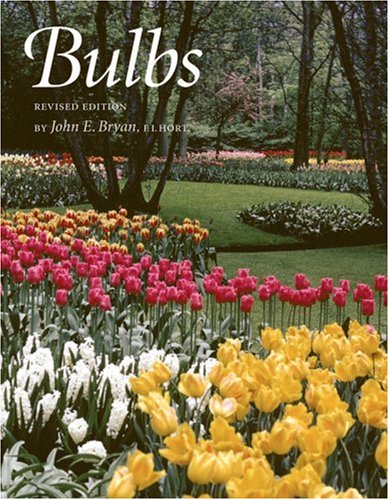
John Bryan's substantive revision to his original magnum opus published in 1989 — selected by the American Horticultural Society as one of the 75 great American gardening books— provides expanded coverage of some 230 genera and a staggering number of species, varieties, and cultivars. Genera are treated with detail appropriate to their importance, with information on history, classification, culture, propagation, pests and diseases, uses, and species and cultivars. Detailed encyclopedic plant listings are complemented by an equally comprehensive pictorial presentation. Not only are there more than 1100 color photographs — many showing the plants in their natural habitats — but there are also 43 color reproductions of botanical illustrations from 19th-century issues of Curtis's Botanical Magazine and other publications, taken from the author's extensive collection.
Die Inhaltsangabe kann sich auf eine andere Ausgabe dieses Titels beziehen.
Auszug. © Genehmigter Nachdruck. Alle Rechte vorbehalten.
Mention the word bulb to most people and a whole range of plants comes to mind, including dahlias, gladiolus, irises, lilies, tulips, crocuses, and many others commonly known by this term. But are they "true" bulbs? And just what is a true bulb?
A true bulb is composed of leaves modified for storage and attached to a basal plate that can be considered a squashed stem. Crocuses are regarded as bulbs; in fact, they are not true bulbs but corms. Here, the base of the stem is used to store food, as is also the case with the gladiolus, which is regarded (in the broad sense) as a bulb. In the genus Iris can be found true bulbs, as well as rhizomes, but a rhizome is actually a creeping stem swollen to enable foods to be stored. Many begonias are considered tuberous, the tuber being an underground branch modified for storage and capable of producing buds and roots. These are not true bulbs but, to the world at large, bulbs, corms, rhizomes, and tubers all fall under the umbrella term bulb.
The diversity of color, flower form, size, habitat, and desirable growing conditions of bulbous plants rivals all other forms of vegetation. The flowers of certain Crocus species just manage to peep above the ground, while the towering shoots of Dahlia imperialis often will reach more than 16 feet in one season of growth.
Bulbs are found all over the world. Nomocharis is found above 12,000 feet in southwestern Sichuan Province, China; Hyacinthoides non-scripta (English bluebell) in the wooded areas and glades of Great Britain; Watsonia at the southern tip of Africa. Camassia quamash is at home in the wet meadows of the Pacific Northwest. The principal areas of the world, however, that are the common natural habitats of a high percentage of these plants are the Mediterranean; South Africa; Western Asia, especially Turkey and Iran; Central Asia and Afghanistan; the area around the Black Sea and the Caucasus; and the Pacific coasts of North and South America. Fewer bulbous genera are indigenous to Japan, tropical and North Africa, Great Britain, and eastern North America.
A true bulb is composed of leaves modified for storage and attached to a basal plate that can be considered a squashed stem. Crocuses are regarded as bulbs; in fact, they are not true bulbs but corms. Here, the base of the stem is used to store food, as is also the case with the gladiolus, which is regarded (in the broad sense) as a bulb. In the genus Iris can be found true bulbs, as well as rhizomes, but a rhizome is actually a creeping stem swollen to enable foods to be stored. Many begonias are considered tuberous, the tuber being an underground branch modified for storage and capable of producing buds and roots. These are not true bulbs but, to the world at large, bulbs, corms, rhizomes, and tubers all fall under the umbrella term bulb.
The diversity of color, flower form, size, habitat, and desirable growing conditions of bulbous plants rivals all other forms of vegetation. The flowers of certain Crocus species just manage to peep above the ground, while the towering shoots of Dahlia imperialis often will reach more than 16 feet in one season of growth.
Bulbs are found all over the world. Nomocharis is found above 12,000 feet in southwestern Sichuan Province, China; Hyacinthoides non-scripta (English bluebell) in the wooded areas and glades of Great Britain; Watsonia at the southern tip of Africa. Camassia quamash is at home in the wet meadows of the Pacific Northwest. The principal areas of the world, however, that are the common natural habitats of a high percentage of these plants are the Mediterranean; South Africa; Western Asia, especially Turkey and Iran; Central Asia and Afghanistan; the area around the Black Sea and the Caucasus; and the Pacific coasts of North and South America. Fewer bulbous genera are indigenous to Japan, tropical and North Africa, Great Britain, and eastern North America.
„Über diesen Titel“ kann sich auf eine andere Ausgabe dieses Titels beziehen.
Suchergebnisse für Bulbs

Beispielbild für diese ISBN
Bulbs
Verlag:
Timber Press, Incorporated, 2002
ISBN 10: 0881925292
ISBN 13: 9780881925296
Gebraucht
Hardcover
Anbieter: World of Books (was SecondSale), Montgomery, IL, USA
Verkäuferbewertung 5 von 5 Sternen

Zustand: Good. Item in good condition. Textbooks may not include supplemental items i.e. CDs, access codes etc. Artikel-Nr. 00094877404
Gebraucht kaufen
EUR 5,32
Versand gratis
Versand innerhalb von USA
Versand innerhalb von USA
Anzahl: 1 verfügbar
Beispielbild für diese ISBN
Bulbs
Anbieter: ThriftBooks-Dallas, Dallas, TX, USA
Verkäuferbewertung 5 von 5 Sternen
Hardcover. Zustand: Fair. No Jacket. Readable copy. Pages may have considerable notes/highlighting. ~ ThriftBooks: Read More, Spend Less. Artikel-Nr. G0881925292I5N00
Gebraucht kaufen
EUR 7,15
Versand gratis
Versand innerhalb von USA
Versand innerhalb von USA
Anzahl: 1 verfügbar
Beispielbild für diese ISBN
Bulbs
Anbieter: ThriftBooks-Dallas, Dallas, TX, USA
Verkäuferbewertung 5 von 5 Sternen
Hardcover. Zustand: Fair. No Jacket. Former library book; Readable copy. Pages may have considerable notes/highlighting. ~ ThriftBooks: Read More, Spend Less. Artikel-Nr. G0881925292I5N10
Gebraucht kaufen
EUR 7,15
Versand gratis
Versand innerhalb von USA
Versand innerhalb von USA
Anzahl: 1 verfügbar
Beispielbild für diese ISBN
Bulbs
Verlag:
Timber Pr (edition Revised), 2002
ISBN 10: 0881925292
ISBN 13: 9780881925296
Gebraucht
Hardcover
Anbieter: BooksRun, Philadelphia, PA, USA
Verkäuferbewertung 5 von 5 Sternen
Hardcover. Zustand: Very Good. Revised. With dust jacket. It's a well-cared-for item that has seen limited use. The item may show minor signs of wear. All the text is legible, with all pages included. It may have slight markings and/or highlighting. Artikel-Nr. 0881925292-11-1-29
Gebraucht kaufen
EUR 7,47
Versand gratis
Versand innerhalb von USA
Versand innerhalb von USA
Anzahl: 1 verfügbar
Beispielbild für diese ISBN
Bulbs
Verlag:
Timber Press, Incorporated, 2002
ISBN 10: 0881925292
ISBN 13: 9780881925296
Gebraucht
Hardcover
Anbieter: Better World Books, Mishawaka, IN, USA
Verkäuferbewertung 5 von 5 Sternen
Zustand: Very Good. Former library copy. Pages intact with possible writing/highlighting. Binding strong with minor wear. Dust jackets/supplements may not be included. Includes library markings. Stock photo provided. Product includes identifying sticker. Better World Books: Buy Books. Do Good. Artikel-Nr. 9272449-6
Gebraucht kaufen
EUR 8,60
Versand gratis
Versand innerhalb von USA
Versand innerhalb von USA
Anzahl: 1 verfügbar
Beispielbild für diese ISBN
Bulbs
Anbieter: WorldofBooks, Goring-By-Sea, WS, Vereinigtes Königreich
Verkäuferbewertung 5 von 5 Sternen
Hardback. Zustand: Good. The book has been read but remains in clean condition. All pages are intact and the cover is intact. Some minor wear to the spine. Artikel-Nr. GOR012723397
Gebraucht kaufen
EUR 3,36
EUR 6,53 Versand
Versand von Vereinigtes Königreich nach USA
Versand von Vereinigtes Königreich nach USA
Anzahl: 1 verfügbar
Beispielbild für diese ISBN
Bulbs
Verlag:
Timber Press, Incorporated, 2002
ISBN 10: 0881925292
ISBN 13: 9780881925296
Gebraucht
Hardcover
Anbieter: Better World Books Ltd, Dunfermline, Vereinigtes Königreich
Verkäuferbewertung 5 von 5 Sternen
Zustand: Very Good. Pages intact with possible writing/highlighting. Binding strong with minor wear. Dust jackets/supplements may not be included. Stock photo provided. Product includes identifying sticker. Better World Books: Buy Books. Do Good. Artikel-Nr. 68081304-20
Gebraucht kaufen
EUR 6,65
EUR 5,83 Versand
Versand von Vereinigtes Königreich nach USA
Versand von Vereinigtes Königreich nach USA
Anzahl: 1 verfügbar
Beispielbild für diese ISBN
Bulbs
Verlag:
Timber Press, Incorporated, 2002
ISBN 10: 0881925292
ISBN 13: 9780881925296
Gebraucht
Hardcover
Anbieter: Better World Books Ltd, Dunfermline, Vereinigtes Königreich
Verkäuferbewertung 5 von 5 Sternen
Zustand: Good. Former library copy. Pages intact with minimal writing/highlighting. The binding may be loose and creased. Dust jackets/supplements are not included. Includes library markings. Stock photo provided. Product includes identifying sticker. Better World Books: Buy Books. Do Good. Artikel-Nr. 1130046-75
Gebraucht kaufen
EUR 6,65
EUR 5,83 Versand
Versand von Vereinigtes Königreich nach USA
Versand von Vereinigtes Königreich nach USA
Anzahl: 1 verfügbar
Beispielbild für diese ISBN
Bulbs
Verlag:
Timber Press, Incorporated, 2002
ISBN 10: 0881925292
ISBN 13: 9780881925296
Gebraucht
Hardcover
Anbieter: Wonder Book, Frederick, MD, USA
Verkäuferbewertung 5 von 5 Sternen
Zustand: Very Good. Very Good condition. Very Good dust jacket. Revised edition. A copy that may have a few cosmetic defects. May also contain light spine creasing or a few markings such as an owner's name, short gifter's inscription or light stamp. NOT AVAILABLE FOR SHIPMENT OUTSIDE OF THE UNITED STATES. Artikel-Nr. P12N-01164
Gebraucht kaufen
EUR 15,08
Versand gratis
Versand innerhalb von USA
Versand innerhalb von USA
Anzahl: 2 verfügbar
Beispielbild für diese ISBN
Bulbs
Anbieter: Reuseabook, Gloucester, GLOS, Vereinigtes Königreich
Verkäuferbewertung 5 von 5 Sternen
hardcover. Zustand: Used; Good. Dispatched, from the UK, within 48 hours of ordering. This book is in good condition but will show signs of previous ownership. Please expect some creasing to the spine and/or minor damage to the cover. Ripped/damaged jacket. The dust jacket of this book is slightly damaged/ripped, however, this does not affect the internal condition. Artikel-Nr. CHL10715105
Gebraucht kaufen
EUR 5,43
EUR 11,66 Versand
Versand von Vereinigtes Königreich nach USA
Versand von Vereinigtes Königreich nach USA
Anzahl: 1 verfügbar