
Verwandte Artikel zu Practical Computing for Biologists
Inhaltsangabe
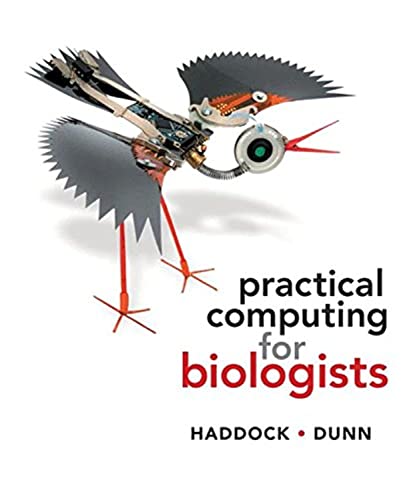
Shows how to use computing tools to work more powerfully and effectively
Die Inhaltsangabe kann sich auf eine andere Ausgabe dieses Titels beziehen.
Über die Autorin bzw. den Autor
STEVEN HADDOCK is a Research Scientist at the Monterey Bay Aquarium Research Institute and adjunct Associate Professor at the University of California, Santa Cruz, USA, studying bioluminescence and biodiversity of gelatinous zooplankton. He came with a programming background to his graduate studies in Marine Biology, where he quickly realized the advantages that computing skills offered and felt compelled to help foster these abilities in others. He has developed many utilities and devices for research, including instruments to monitor bioluminescence from fireflies, a freezer monitoring system, a web-based conference registration database, and a PCR calculator for smartphones. In addition to teaching invertebrate zoology and writing a booklet to teach the technique of blue-water scuba diving, he has given tutorials in computing to students and administrators. His interest in education extends to his Bioluminescence Web Page (http://lifesci.ucsb.edu/~biolum/) and the Jellywatch.org citizen-science website (www.jellywatch.org).
CASEY DUNN, an Assistant Professor at Brown University, USA, does research that has a large computational component but always in conjunction with work in the field and lab. His first interest in computers stemmed from building electronics, and he further developed his computational skills working in Silicon Valley while an undergraduate. As his data sets grew larger and larger during grad school and his postdoc, he found himself reaching back to his computer background more often. In the course of his own research and helping other biologists with their computational challenges, he became concerned about the mismatch between training opportunities and the real day-to-day computational problems biologists face. In addition to teaching invertebrate biology, evolution, and development, his educational activities include the websites siphonophores.org and creaturecast.org.
Von der hinteren Coverseite
Practical Computing for Biologists shows you how to use many freely available computing tools to work more powerfully and effectively. The book was born out of the authors' own experience in developing tools for their research and helping other biologists with their computational problems. Many of the techniques are relevant to molecular bioinformatics but the scope of the book is much broader, covering topics and techniques that are applicable to a range of scientific endeavours.
Twenty-two chapters organized into six parts address the following topics (and more; see Contents):
• Searching with regular expressions
• The Unix command line
• Python programming and debugging
• Creating and editing graphics
• Databases
• Performing analyses on remote servers
• Working with electronics
While the main narrative focuses on Mac OS X, most of the concepts and examples apply to any operating system. Where there are differences for Windows and Linux users, parallel instructions are provided in the margin and in an appendix. The book is designed to be used as a self-guided resource for researchers, a companion book in a course, or as a primary textbook. Practical Computing for Biologists will free you from the most frustrating and time-consuming aspects of data processing so you can focus on the pleasures of scientific inquiry.
„Über diesen Titel“ kann sich auf eine andere Ausgabe dieses Titels beziehen.
Suchergebnisse für Practical Computing for Biologists

Beispielbild für diese ISBN
Practical Computing for Biologists
Verlag:
Sinauer Associates Is an Imprint of Oxford Un, 2010
ISBN 10: 0878933913
ISBN 13: 9780878933914
Gebraucht
Paperback
Anbieter: ThriftBooks-Reno, Reno, NV, USA
Verkäuferbewertung 5 von 5 Sternen

Paperback. Zustand: Fair. No Jacket. Readable copy. Pages may have considerable notes/highlighting. ~ ThriftBooks: Read More, Spend Less. Artikel-Nr. G0878933913I5N00
Gebraucht kaufen
EUR 5,90
Versand gratis
Versand innerhalb von USA
Versand innerhalb von USA
Anzahl: 1 verfügbar
Beispielbild für diese ISBN
Practical Computing for Biologists
Verlag:
Sinauer Associates Is an Imprint of Oxford Un, 2010
ISBN 10: 0878933913
ISBN 13: 9780878933914
Gebraucht
Paperback
Anbieter: ThriftBooks-Atlanta, AUSTELL, GA, USA
Verkäuferbewertung 5 von 5 Sternen
Paperback. Zustand: Fair. No Jacket. Readable copy. Pages may have considerable notes/highlighting. ~ ThriftBooks: Read More, Spend Less. Artikel-Nr. G0878933913I5N00
Gebraucht kaufen
EUR 5,90
Versand gratis
Versand innerhalb von USA
Versand innerhalb von USA
Anzahl: 1 verfügbar
Beispielbild für diese ISBN
Practical Computing for Biologists
Verlag:
Sinauer Associates Is an Imprint of Oxford Un, 2010
ISBN 10: 0878933913
ISBN 13: 9780878933914
Gebraucht
Paperback
Anbieter: ThriftBooks-Reno, Reno, NV, USA
Verkäuferbewertung 5 von 5 Sternen
Paperback. Zustand: Good. No Jacket. Pages can have notes/highlighting. Spine may show signs of wear. ~ ThriftBooks: Read More, Spend Less. Artikel-Nr. G0878933913I3N00
Gebraucht kaufen
EUR 5,90
Versand gratis
Versand innerhalb von USA
Versand innerhalb von USA
Anzahl: 1 verfügbar
Beispielbild für diese ISBN
Practical Computing for Biologists
Verlag:
Sinauer Associates Is an Imprint of Oxford Un, 2010
ISBN 10: 0878933913
ISBN 13: 9780878933914
Gebraucht
Paperback
Anbieter: ThriftBooks-Atlanta, AUSTELL, GA, USA
Verkäuferbewertung 5 von 5 Sternen
Paperback. Zustand: Good. No Jacket. Pages can have notes/highlighting. Spine may show signs of wear. ~ ThriftBooks: Read More, Spend Less. Artikel-Nr. G0878933913I3N00
Gebraucht kaufen
EUR 5,90
Versand gratis
Versand innerhalb von USA
Versand innerhalb von USA
Anzahl: 1 verfügbar
Beispielbild für diese ISBN
Practical Computing for Biologists
Verlag:
Sinauer Associates Is an Imprint of Oxford Un, 2010
ISBN 10: 0878933913
ISBN 13: 9780878933914
Gebraucht
Paperback
Anbieter: ThriftBooks-Dallas, Dallas, TX, USA
Verkäuferbewertung 5 von 5 Sternen
Paperback. Zustand: Fair. No Jacket. Former library book; Readable copy. Pages may have considerable notes/highlighting. ~ ThriftBooks: Read More, Spend Less. Artikel-Nr. G0878933913I5N10
Gebraucht kaufen
EUR 5,90
Versand gratis
Versand innerhalb von USA
Versand innerhalb von USA
Anzahl: 1 verfügbar
Beispielbild für diese ISBN
Practical Computing for Biologists
Verlag:
Sinauer Associates Is an Imprint of Oxford Un, 2010
ISBN 10: 0878933913
ISBN 13: 9780878933914
Gebraucht
Paperback
Anbieter: ThriftBooks-Dallas, Dallas, TX, USA
Verkäuferbewertung 5 von 5 Sternen
Paperback. Zustand: Good. No Jacket. Pages can have notes/highlighting. Spine may show signs of wear. ~ ThriftBooks: Read More, Spend Less. Artikel-Nr. G0878933913I3N00
Gebraucht kaufen
EUR 5,90
Versand gratis
Versand innerhalb von USA
Versand innerhalb von USA
Anzahl: 1 verfügbar
Beispielbild für diese ISBN
Practical Computing for Biologists
Verlag:
Sinauer Associates Is an Imprint of Oxford Un, 2010
ISBN 10: 0878933913
ISBN 13: 9780878933914
Gebraucht
Paperback
Anbieter: ThriftBooks-Phoenix, Phoenix, AZ, USA
Verkäuferbewertung 5 von 5 Sternen
Paperback. Zustand: Good. No Jacket. Pages can have notes/highlighting. Spine may show signs of wear. ~ ThriftBooks: Read More, Spend Less. Artikel-Nr. G0878933913I3N00
Gebraucht kaufen
EUR 5,90
Versand gratis
Versand innerhalb von USA
Versand innerhalb von USA
Anzahl: 1 verfügbar
Beispielbild für diese ISBN
Practical Computing for Biologists
Verlag:
Oxford University Press, Incorporated, 2010
ISBN 10: 0878933913
ISBN 13: 9780878933914
Gebraucht
Softcover
Anbieter: Better World Books, Mishawaka, IN, USA
Verkäuferbewertung 5 von 5 Sternen
Zustand: Very Good. Pages intact with possible writing/highlighting. Binding strong with minor wear. Dust jackets/supplements may not be included. Stock photo provided. Product includes identifying sticker. Better World Books: Buy Books. Do Good. Artikel-Nr. 17787794-6
Gebraucht kaufen
EUR 8,96
Versand gratis
Versand innerhalb von USA
Versand innerhalb von USA
Anzahl: 1 verfügbar
Beispielbild für diese ISBN
Practical Computing for Biologists
Verlag:
Oxford University Press, Incorporated, 2010
ISBN 10: 0878933913
ISBN 13: 9780878933914
Gebraucht
Softcover
Anbieter: Better World Books, Mishawaka, IN, USA
Verkäuferbewertung 5 von 5 Sternen
Zustand: Good. Pages intact with minimal writing/highlighting. The binding may be loose and creased. Dust jackets/supplements are not included. Stock photo provided. Product includes identifying sticker. Better World Books: Buy Books. Do Good. Artikel-Nr. 5760540-6
Gebraucht kaufen
EUR 8,96
Versand gratis
Versand innerhalb von USA
Versand innerhalb von USA
Anzahl: 1 verfügbar
Beispielbild für diese ISBN
Practical Computing for Biologists
Verlag:
Oxford University Press, Incorporated, 2010
ISBN 10: 0878933913
ISBN 13: 9780878933914
Gebraucht
Softcover
Anbieter: Better World Books Ltd, Dunfermline, Vereinigtes Königreich
Verkäuferbewertung 5 von 5 Sternen
Zustand: Good. Former library copy. Pages intact with minimal writing/highlighting. The binding may be loose and creased. Dust jackets/supplements are not included. Includes library markings. Stock photo provided. Product includes identifying sticker. Better World Books: Buy Books. Do Good. Artikel-Nr. 16616552-20
Gebraucht kaufen
EUR 6,57
EUR 5,85 Versand
Versand von Vereinigtes Königreich nach USA
Versand von Vereinigtes Königreich nach USA
Anzahl: 2 verfügbar