
Verwandte Artikel zu Sai Baba: Man of Miracles
Inhaltsangabe
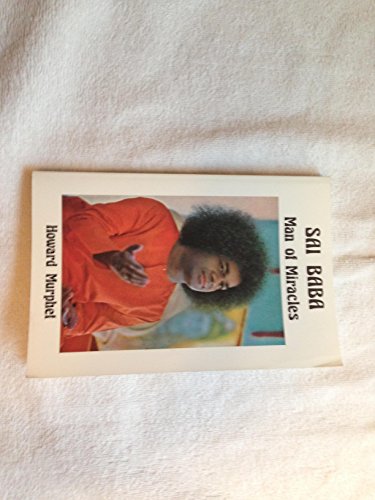
India has always nurtured true yoginsthose who have transcended the lower self, those in whom wonderworking powers of siddhis have flourished. These powers, or some of them, have been brought into the research laboratories of the parapsychologists who call them extrasensory perception and psychokinesis. Others call them miracles. Whatever the terminology, such powers and their practitioners demand sensible attention. This account relates some of the achievements of one of the most impressive men of miracles to appear in centuries. Satya Sai Babahis followers believe him to be a reincarnation of Sai Baba of Shirdi who died in 1918, appears to have been born with phenomenal powers, which he used in childhood and has employed constantly and openly ever since. They include all the varieties of E.S.P. and P.K. known to psychic science and more besides. The author, a Westerner devoted to science and logic, spent many months with Satya Said Baba--he claims to have found that his "unscientific," "illogical" miracles were, in fact, genuine yogic siddhis. He found, too, that along with Christlike miraculous powers went a Christlike love, compassion and the Godknowledge that opens the door to a new vision of life.
Die Inhaltsangabe kann sich auf eine andere Ausgabe dieses Titels beziehen.
Über die Autorin bzw. den Autor
Phyllis Krystal, born in England, was a practicing psychotherapist who developed a unique approach to therapy using symbols and visualization techniques to help clients detach from external authority figures and patterns. She taught people to rely on their own Higher Consciousness as guide and teacher. Phyllis lectured in the United States, Europe, Australia, New Zealand, and Tazmania, and was also a devotee of Sathya Sai Baba, the worldrenowned avatar living in India, whose teachings and personal influence offer her inspiration in her own work. Phyllis was the author of several bestselling books. She passed away in 2016.
Auszug. © Genehmigter Nachdruck. Alle Rechte vorbehalten.
SAI BABA
Man of Miracles
By Howard MurphetSamuel Weiser, Inc.
Copyright © 1971 Howard Murphet
All rights reserved.
ISBN: 978-0-87728-335-5All rights reserved.
Contents
| Author's Note | |
| Introduction | |
| 1 The Search | |
| 2 Satya Sai Baba | |
| 3 Abode of Peace and Many Wonders | |
| 4 O World Invisible | |
| 5 Birth and Childhood | |
| 6 The Two Sais | |
| 7 Echoes from the Early Years | |
| 8 With Baba in the Hills | |
| 9 Return to Brindavanam | |
| 10 A Place Apart | |
| 11 Drift of Pinions | |
| 12 More Wonder Cures | |
| 13 The Question of Saving from Death | |
| 14 Eternal Here and Now | |
| 15 The Same, but Different | |
| 16 A Word from the West | |
| 17 Two Pre-eminent Devotees | |
| 18 Reality and Significance of the Miraculous | |
| 19 Some Sai Teachings | |
| 20 Avatar | |
| Index |
CHAPTER 1
The Search
If therefore ye are intent upon wisdom, a lamp will not be wanting ......
ANON.
After spending some time in Europe, my wife and I decided to stop for a while in India onour way home to Australia. We had two purposes in view. One was to go more deeply intoTheosophy by attending the six-months' "School of the Wisdom" at the InternationalHeadquarters of (he Theosophical Society in Adyar, Madras. Let it be said, incidentally,and in case of misunderstanding, that this School does not pretend to offer a brief courseon how to be wise; its object is simply a study of the ageless wisdom, the perennialphilosophy found mainly in the ancient writings of the East.
Our second purpose was to travel through the country to discover if there was any deeperspiritual dimension in the life of modern India. Was there, we wondered, anything left ofthe mysterious India described in the pages of Paul Brunton, Yogananda, Kipling,Madame Blavatsky, Colonel H.S. Olcott and other writers? Were there still hiddenfountains of esoteric knowledge or had the ancient springs dried up? Would it be possibleto find somewhere, in ashram or jungle hermitage, a great Yogi of supernormal powerswho knew the secrets of life and death? We thought that about a year should suffice forthis programme.
The Theosophy School was enjoyable and enlightening. As a sortie into the wisdomteachings ranging from the ancient Vedas to The Secret Doctrine, published in 1888, itprepared our minds for our coming exploration "on the ground". We understood betterwhat we were looking for and felt better equipped to appreciate it should we find it.
Our search took us to several of the well-known ashrams throughout the length of India,and to a few little-known ones. We sat and talked with hermits and ascetics in their cavesin the Himalayas. We met a goodly variety of sadhus, sadhaks, and teachers of differenttypes of yoga.
From the hermitages of the Himalayas and ashrams along the sacred Ganges we cameback to New Delhi. There, at a leading social club, we met a top business executive whosaid, over his beer: "So you're looking for the spiritual life of India. There is none. That's allpast. We are looking for what you have in the West – material progress."
In another place a professor of history also tried to dampen our enthusiasm. "Believe me,"he said, "there is no spirituality left in this country. In the India of old there was, of course,but it died a thousand years ago."
However, we knew that the men who spoke this way, the men of the modern India with itsthirst for Western technology, were wrong about their own country. We had seen enoughand sensed enough to feel quite sure that the yogic treasures of old were still to be foundin her deep recesses.
We had sensed it; we had caught some drifts of its perfume on the breezes; we had metwith brotherly love in the ashrams; we had found men who were happy to teach, for thesake of teaching, the eternal truths of Hindu religio-philosophy. There was no dearth ofinspiring words and noble theories. But we had not yet met a man of real power; one whohad himself lived the yogic life long enough and truly enough to have broken through thelimitations that bind Man in his present unhappy state. But with all the promising materialthere was surely hope that one such might exist. Yet we also knew that spiritual treasuresare not handed out on a platter. There are always tapas, labours, austerities to beperformed.
Train and bus journeys on the plains of India in burning June were, we thought, austeritiesenough for anyone. From the oven that was Delhi we went to the fiery furnace ofDayalbagh on the outskirts of Agra. We wanted to see what had happened to the RadhaSoami religious colony there which Paul Brunton had admired so much thirty years before.
We found that its educational institutions had progressed and its factories and farmsseemed to be thriving, but that it had a weary air. There was none of the dynamism thatBrunton had found there. It was like an old tired man who had had rosy, optimistic dreamsin his youth which had never come true. Perhaps this was because the energetic, inspiringleader of the Brunton days, His Holiness Sahabji Maharaj, was dead. Just before dying hehad passed on the leadership to a retired engineer among his followers, one HazurMehtaji Maharaj. Now he was God incarnate on earth to the Dayalbaghites.
He proved to be a very elusive God. We tried to meet him but were not encouraged. Onone occasion we went out early in the morning with a large party that does a few hourswork in the fields before starting duty in office, school, or factory. The guru was with thegroup and we had great hopes of finally making the contact (in fact that was our reason forgoing), but he all the time managed to put a few acres between himself and us.
At last, however, on the day before we left, the secretary of the colony managed to pin himdown in his office long enough for us to have an interview. On the way to the interview wewere shown the house in which the leader lived. It was just one in a row, indistinguishablefrom its modest neighbours.
In the office we found a shy little man who seemed quite ashamed of the fact that therewas an air-conditioning unit in his simple room. This was not common in the colony, andhe made it clear to us that his followers had forced the exceptional luxury upon himbecause of the indifferent state of his health. He was friendly in a self-effacing way, but hesaid nothing of importance that I can recall. And we felt nothing, except that, if God is utterhumility, then this man might be God incarnate; but he was certainly a reluctantincarnation, and kept any other signs of his divinity well hidden – from us, at least.
The secretary, Babu Ram Jadoun, made up in open-hearted hospitality and helpfulnessany lack on the part of the modest leader. He spent the evenings sitting with us on easychairs in front of the small guest house talking about the Radha Soami faith and itsSabdha Yoga, in which one concentrates in meditation on listening for the inner anahatsounds. He also liked to recall the old days and tell us anecdotes about the two Englishwriters, Yeats-Brown and Paul Brunton, who had once stayed together at this same guesthousein the early...
„Über diesen Titel“ kann sich auf eine andere Ausgabe dieses Titels beziehen.
Suchergebnisse für Sai Baba: Man of Miracles

Beispielbild für diese ISBN
Sai Baba: Man of Miracles
Anbieter: World of Books (was SecondSale), Montgomery, IL, USA
Verkäuferbewertung 5 von 5 Sternen

Zustand: Acceptable. Item in acceptable condition! Textbooks may not include supplemental items i.e. CDs, access codes etc. Artikel-Nr. 00108914275
Gebraucht kaufen
EUR 5,33
Versand gratis
Versand innerhalb von USA
Versand innerhalb von USA
Anzahl: 1 verfügbar
Beispielbild für diese ISBN
Sai Baba: Man of Miracles
Anbieter: ThriftBooks-Dallas, Dallas, TX, USA
Verkäuferbewertung 5 von 5 Sternen
Paperback. Zustand: Good. No Jacket. Pages can have notes/highlighting. Spine may show signs of wear. ~ ThriftBooks: Read More, Spend Less. Artikel-Nr. G0877283354I3N00
Gebraucht kaufen
EUR 5,79
Versand gratis
Versand innerhalb von USA
Versand innerhalb von USA
Anzahl: 1 verfügbar
Beispielbild für diese ISBN
Sai Baba: Man of Miracles
Anbieter: ThriftBooks-Atlanta, AUSTELL, GA, USA
Verkäuferbewertung 5 von 5 Sternen
Paperback. Zustand: Good. No Jacket. Former library book; Pages can have notes/highlighting. Spine may show signs of wear. ~ ThriftBooks: Read More, Spend Less. Artikel-Nr. G0877283354I3N10
Gebraucht kaufen
EUR 5,79
Versand gratis
Versand innerhalb von USA
Versand innerhalb von USA
Anzahl: 1 verfügbar
Beispielbild für diese ISBN
Sai Baba: Man of Miracles
Anbieter: ThriftBooks-Dallas, Dallas, TX, USA
Verkäuferbewertung 5 von 5 Sternen
Paperback. Zustand: Very Good. No Jacket. May have limited writing in cover pages. Pages are unmarked. ~ ThriftBooks: Read More, Spend Less. Artikel-Nr. G0877283354I4N00
Gebraucht kaufen
EUR 5,79
Versand gratis
Versand innerhalb von USA
Versand innerhalb von USA
Anzahl: 1 verfügbar
Beispielbild für diese ISBN
Sai Baba : Man of Miracles
Anbieter: Better World Books, Mishawaka, IN, USA
Verkäuferbewertung 5 von 5 Sternen
Zustand: Good. Pages intact with minimal writing/highlighting. The binding may be loose and creased. Dust jackets/supplements are not included. Stock photo provided. Product includes identifying sticker. Better World Books: Buy Books. Do Good. Artikel-Nr. 3597627-6
Gebraucht kaufen
EUR 6,35
Versand gratis
Versand innerhalb von USA
Versand innerhalb von USA
Anzahl: 3 verfügbar
Beispielbild für diese ISBN
Sai Baba: Man of Miracles
Verlag:
Red Wheel / Weiser (edition ), 1977
ISBN 10: 0877283354
ISBN 13: 9780877283355
Gebraucht
Paperback
Anbieter: BooksRun, Philadelphia, PA, USA
Verkäuferbewertung 5 von 5 Sternen
Paperback. Zustand: Very Good. It's a well-cared-for item that has seen limited use. The item may show minor signs of wear. All the text is legible, with all pages included. It may have slight markings and/or highlighting. Artikel-Nr. 0877283354-11-1
Gebraucht kaufen
EUR 7,70
Versand gratis
Versand innerhalb von USA
Versand innerhalb von USA
Anzahl: 1 verfügbar
Foto des Verkäufers
SAI BABA: Man of Miracles
Anbieter: By The Way Books, Richmond, TX, USA
Verkäuferbewertung 5 von 5 Sternen
211 pages. Paperback in very good condition. Artikel-Nr. 31678
Gebraucht kaufen
EUR 6,23
EUR 5,18 Versand
Versand innerhalb von USA
Versand innerhalb von USA
Anzahl: 1 verfügbar
Foto des Verkäufers
Sai Baba: Man of Miracles
Anbieter: WeBuyBooks, Rossendale, LANCS, Vereinigtes Königreich
Verkäuferbewertung 5 von 5 Sternen
paperback. Zustand: Good. Most items will be dispatched the same or the next working day. A copy that has been read but remains in clean condition. All of the pages are intact and the cover is intact and the spine may show signs of wear. The book may have minor markings which are not specifically mentioned. Artikel-Nr. rev2444422421
Gebraucht kaufen
EUR 2,98
EUR 12,04 Versand
Versand von Vereinigtes Königreich nach USA
Versand von Vereinigtes Königreich nach USA
Anzahl: 1 verfügbar
Beispielbild für diese ISBN
Sai Baba, Man of Miracles
Anbieter: Revaluation Books, Exeter, Vereinigtes Königreich
Verkäuferbewertung 5 von 5 Sternen
Paperback. Zustand: Brand New. 216 pages. 8.25x5.25x0.75 inches. In Stock. Artikel-Nr. x-0877283354
Neu kaufen
EUR 20,50
EUR 11,69 Versand
Versand von Vereinigtes Königreich nach USA
Versand von Vereinigtes Königreich nach USA
Anzahl: 2 verfügbar
Beispielbild für diese ISBN
Sai Baba
Anbieter: Kennys Bookstore, Olney, MD, USA
Verkäuferbewertung 5 von 5 Sternen
Zustand: New. Num Pages: 216 pages, black & white illustrations. BIC Classification: HRA; HRG. Category: (G) General (US: Trade). Dimension: 210 x 140 x 15. Weight in Grams: 260. . 1977. New ed. Paperback. . . . . Books ship from the US and Ireland. Artikel-Nr. V9780877283355
Neu kaufen
EUR 24,37
EUR 9,07 Versand
Versand innerhalb von USA
Versand innerhalb von USA
Anzahl: 20 verfügbar