
Verwandte Artikel zu The Political Process and Economic Change
Inhaltsangabe
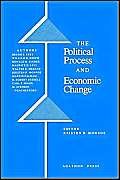
First published in 1983, The Political Process and Economic Change, edited by Kristen R. Monroe, brings together leading economists and political scientists to explain how politics shapes economic outcomes—and how economic conditions reshape politics in return.
Across eight chapters, the contributors tackle issues that are still remarkably current. Bruno S. Frey examines the “underground economy”—off‑the‑books work, tax evasion, and informal markets—and shows how government tax and regulatory choices drive activity into the shadows, with consequences for revenues, fairness, and official statistics. Martin Paldam focuses on wage dynamics and the labor market, asking why inflation and unemployment often move in politically driven cycles rather than in neat textbook patterns.
William R. Keech and Carl P. Simon use William Nordhaus’s political business cycle model to analyze how electoral calendars influence macroeconomic policy. They ask whether changing presidential term length could reduce short‑term economic manipulation and improve inflation–unemployment trade‑offs, and show that the “best” term length depends on how voters remember past performance. R. Robert Russell evaluates income policies—wage and price controls, guideposts, and standards—from the Kennedy “guideposts” through Nixon’s controls to Carter’s voluntary pay and price standards, assessing whether these programs actually slowed inflation or simply distorted markets.
On the political behavior side, Donald R. Kinder and Walter R. Mebane Jr. look at how ordinary Americans connect their personal finances and the national economy to their political judgments. Using survey evidence, they contrast “pocketbook” voters, who ask “What have you done for me lately?,” with “sociotropic” voters, who focus on how the country is doing overall. M. Stephen Weatherford brings class and party back into the story, analyzing how different occupational and class groups respond politically to recessions, inflation, and government policy.
The volume closes with Kristen R. Monroe and Maurice Levi’s analysis of presidential popularity from 1950 to 1975, emphasizing economic expectations and uncertainty. They test whether presidents gain when the economy outperforms expectations, and how fear about future inflation and unemployment can undermine support even in periods of relative growth.
Blending formal models, econometric evidence, and survey research, this book offers a clear window into the political economy tradition—from classical concerns about state intervention to modern debates over regulation, macroeconomic management, and public opinion. It is well suited for advanced undergraduates, graduate students, and researchers in political science, economics, and public policy, as well as practitioners interested in how institutions, elections, and public attitudes interact with economic performance.
Die Inhaltsangabe kann sich auf eine andere Ausgabe dieses Titels beziehen.
Suchergebnisse für The Political Process and Economic Change

Beispielbild für diese ISBN
The Political Process and Economic Change
Anbieter: Revaluation Books, Exeter, Vereinigtes Königreich
Verkäuferbewertung 5 von 5 Sternen

Paperback. Zustand: Brand New. illustrated edition. 252 pages. 9.12x6.20x0.65 inches. In Stock. Artikel-Nr. zk0875860621
Neu kaufen
EUR 43,94
EUR 11,63 Versand
Versand von Vereinigtes Königreich nach USA
Versand von Vereinigtes Königreich nach USA
Anzahl: 1 verfügbar
Beispielbild für diese ISBN
The Political Process and Economic Change.
Verlag:
New York, Algora Publishing., 1983
ISBN 10: 0875860621
ISBN 13: 9780875860626
Gebraucht
Paperback.
Anbieter: Antiquariat Thomas Haker GmbH & Co. KG, Berlin, Deutschland
Verkäuferbewertung 5 von 5 Sternen
Paperback. Zustand: Gut. 238 p. Good condition. Sprache: Englisch Gewicht in Gramm: 520. Artikel-Nr. 882314
Gebraucht kaufen
EUR 46,80
EUR 20,00 Versand
Versand von Deutschland nach USA
Versand von Deutschland nach USA
Anzahl: 1 verfügbar