
Verwandte Artikel zu Twenty-One Genres and How to Write Them
Inhaltsangabe
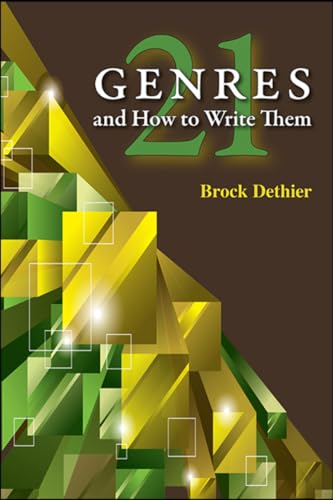
In this classroom-tested approach to writing, Brock Dethier teaches readers how to analyze and write twenty-one genres that students are likely to encounter in college and beyond. This practical, student-friendly, task-oriented text confidently guides writers through step-by-step processes, reducing the anxiety commonly associated with writing tasks.
> This approach to managing the complexity and challenge of writing in college strives to be useful, flexible, eclectic, and brief-a valuable resource for students learning to negotiate unfamiliar writing situations.
Die Inhaltsangabe kann sich auf eine andere Ausgabe dieses Titels beziehen.
Über die Autorin bzw. den Autor
Brock Dethier is Professor Emeritus of English at Utah State University, where he directs the composition program and teaches writing and pedagogy at several levels. He has won his college's Teacher of the Year Award twice in the last six years and has published four books for composition teachers, including First Time Up: An Insider's Guide for New Composition Instructors.
Auszug. © Genehmigter Nachdruck. Alle Rechte vorbehalten.
21 GENRES and How to Write Them
By BROCK DETHIERUniversity Press of Colorado
Copyright © 2013 University Press of Colorado
All rights reserved.
ISBN: 978-0-87421-911-1All rights reserved.
Contents
| Acknowledgments............................................................ | xix |
| Introduction: Genres, Moves, and Never Getting Stuck Again................. | 1 |
| Part I: Genres............................................................. | |
| 1. Abstract................................................................ | |
| 2. Annotated Bibliography.................................................. | |
| 3. Application Essay....................................................... | |
| 4. Application Letter...................................................... | |
| 5. Argument................................................................ | |
| 6. Blog.................................................................... | |
| 7. Email................................................................... | |
| 8. Gripe Letter............................................................ | |
| 9. Literary Analysis....................................................... | |
| 10. Literature Review...................................................... | |
| 11. Op-Ed Essay............................................................ | |
| 12. Personal Essay......................................................... | |
| 13. Profile................................................................ | |
| 14. Proposal............................................................... | |
| 15. Reflection............................................................. | |
| 16. Report................................................................. | |
| 17. Response to Reading.................................................... | |
| 18. Resume................................................................. | |
| 19. Review................................................................. | |
| 20. Rhetorical Analysis.................................................... | |
| 21. Wiki................................................................... | |
| Part II: Moves............................................................. | |
| 22. Solve Your Process Problems............................................ | |
| 23. Discover............................................................... | |
| 24. Develop................................................................ | |
| 25. Gather................................................................. | |
| 26. Integrate.............................................................. | |
| 27. Focus.................................................................. | |
| 28. Organize............................................................... | |
| 29. Draft.................................................................. | |
| 30. Revise................................................................. | |
| 31. Present................................................................ | |
| Appendix: Twenty Plays..................................................... | 267 |
| References................................................................. | 275 |
| Index...................................................................... | 277 |
| About the Author........................................................... | 282 |
Excerpt
<h2>CHAPTER 1</h2><p><b>Abstract</b></p><br><p>EXAMPLE: <b>Abstract of <i>Twenty-One Genres, Brock Dethier</i></b></p><br><p><i>Twenty-One Genres</i> strives to be the smallest, most inexpensive all-purposewriting text on the college composition market. Author Brock Dethier, directorof the composition program at Utah State University, offers descriptionsof twenty-one common genres, from abstract to wiki, and suggests for eachgenre a series of writing "moves." The book presents over two hundred such"moves"—thinking, writing, reading, and researching activities divided into tenchapters, from "Solve Your Process Problems" and "Discover" to "Revise" and"Present." The book is written to be useful to the individual writer, whether ornot the writer is currently in a writing class.</p><br><p><b><i>Questions about the example:</i></b></p><p>1. Does it show you anything new about the book or emphasize things thatyou didn't realize were so important?</p><p>2. What details tip you off that the book's author wrote the abstract?</p><p>3. Boiling hundreds of pages down into a paragraph as I did here is a specializedwriting skill. Can you think of other writing situations where such askill might be useful?</p><p>EXAMPLE: <b>Using Geophysical Methods to Study the ShallowSubsurface of a Sensitive Alpine Environment, Niwot Ridge,Colorado Front Range, USA, Matthias Leopold, David Dethier,Jõrg Võlkel, Thomas Raab, Tyler Corsonrickert, and Nel Caine</b></p><p>This example is the first part of a much longer article. It needs to explain to otherexperts what's new and interesting in the work discussed, but the authors alsohope to give even non-experts a window into the work. Consider the problemthese geologists face: how can they learn about the rock beneath the surface ofthe earth without digging holes or using other such "invasive" techniques?</p><br><p><b>Abstract</b></p><p>Shallow seismic refraction (SSR) and ground-penetrating radar (GPR) arenon-invasive geophysical techniques that enhance studies of the shallow subsurfacedeposits which control many geomorphic and biogeochemical processes.These techniques permit measuring the thickness and material propertiesof these deposits in sensitive alpine area without using extensive pitsand trenches that can impact current biogeospheric processes or distort themfor future research. Application of GPR and SSR along 1.5 km of geophysicallines shows that layers of fine to coarse, blocky deposits of periglacialorigin underlie alpine slopes in the vicinity of Niwot Ridge, Colorado FrontRange. Interpretation of geophysical and drilling data shows that depth tobedrock ranges from 4 to >10 m and is not simply related to local slope. Ourmeasurements suggest that ice lenses form seasonally beneath solifluctionlobes; ice was not present in adjacent areas. Ice lenses are associated withlocal ponded water and saturated sediments that result...
„Über diesen Titel“ kann sich auf eine andere Ausgabe dieses Titels beziehen.
Suchergebnisse für Twenty-One Genres and How to Write Them

Beispielbild für diese ISBN
Twenty-One Genres and How to Write Them
Verlag:
Utah State University Press, 2013
ISBN 10: 0874219116
ISBN 13: 9780874219111
Gebraucht
Paperback
Anbieter: ThriftBooks-Reno, Reno, NV, USA
Verkäuferbewertung 5 von 5 Sternen

Paperback. Zustand: Very Good. No Jacket. May have limited writing in cover pages. Pages are unmarked. ~ ThriftBooks: Read More, Spend Less. Artikel-Nr. G0874219116I4N00
Gebraucht kaufen
EUR 6,71
Versand gratis
Versand innerhalb von USA
Versand innerhalb von USA
Anzahl: 2 verfügbar
Beispielbild für diese ISBN
Twenty-One Genres and How to Write Them
Verlag:
Utah State University Press, 2013
ISBN 10: 0874219116
ISBN 13: 9780874219111
Gebraucht
Paperback
Anbieter: ThriftBooks-Reno, Reno, NV, USA
Verkäuferbewertung 5 von 5 Sternen
Paperback. Zustand: Good. No Jacket. Pages can have notes/highlighting. Spine may show signs of wear. ~ ThriftBooks: Read More, Spend Less. Artikel-Nr. G0874219116I3N00
Gebraucht kaufen
EUR 6,71
Versand gratis
Versand innerhalb von USA
Versand innerhalb von USA
Anzahl: 1 verfügbar
Beispielbild für diese ISBN
Twenty-One Genres and How to Write Them
Verlag:
Utah State University Press, 2013
ISBN 10: 0874219116
ISBN 13: 9780874219111
Gebraucht
Paperback
Anbieter: ThriftBooks-Phoenix, Phoenix, AZ, USA
Verkäuferbewertung 5 von 5 Sternen
Paperback. Zustand: Very Good. No Jacket. May have limited writing in cover pages. Pages are unmarked. ~ ThriftBooks: Read More, Spend Less. Artikel-Nr. G0874219116I4N00
Gebraucht kaufen
EUR 6,71
Versand gratis
Versand innerhalb von USA
Versand innerhalb von USA
Anzahl: 2 verfügbar
Beispielbild für diese ISBN
Twenty-One Genres and How to Write Them
Verlag:
Utah State University Press, 2013
ISBN 10: 0874219116
ISBN 13: 9780874219111
Gebraucht
Paperback
Anbieter: ThriftBooks-Phoenix, Phoenix, AZ, USA
Verkäuferbewertung 5 von 5 Sternen
Paperback. Zustand: Good. No Jacket. Pages can have notes/highlighting. Spine may show signs of wear. ~ ThriftBooks: Read More, Spend Less. Artikel-Nr. G0874219116I3N00
Gebraucht kaufen
EUR 6,71
Versand gratis
Versand innerhalb von USA
Versand innerhalb von USA
Anzahl: 1 verfügbar
Beispielbild für diese ISBN
Twenty-One Genres and How to Write Them
Verlag:
Utah State University Press, 2013
ISBN 10: 0874219116
ISBN 13: 9780874219111
Gebraucht
Paperback
Anbieter: ThriftBooks-Dallas, Dallas, TX, USA
Verkäuferbewertung 5 von 5 Sternen
Paperback. Zustand: Very Good. No Jacket. May have limited writing in cover pages. Pages are unmarked. ~ ThriftBooks: Read More, Spend Less. Artikel-Nr. G0874219116I4N00
Gebraucht kaufen
EUR 6,74
Versand gratis
Versand innerhalb von USA
Versand innerhalb von USA
Anzahl: 2 verfügbar
Beispielbild für diese ISBN
Twenty-One Genres and How to Write Them
Verlag:
Utah State University Press, 2013
ISBN 10: 0874219116
ISBN 13: 9780874219111
Gebraucht
Paperback
Anbieter: ThriftBooks-Atlanta, AUSTELL, GA, USA
Verkäuferbewertung 5 von 5 Sternen
Paperback. Zustand: Good. No Jacket. Pages can have notes/highlighting. Spine may show signs of wear. ~ ThriftBooks: Read More, Spend Less. Artikel-Nr. G0874219116I3N00
Gebraucht kaufen
EUR 6,74
Versand gratis
Versand innerhalb von USA
Versand innerhalb von USA
Anzahl: 1 verfügbar
Beispielbild für diese ISBN
Twenty-One Genres and How to Write Them
Verlag:
Utah State University Press, 2013
ISBN 10: 0874219116
ISBN 13: 9780874219111
Gebraucht
Paperback
Anbieter: ThriftBooks-Atlanta, AUSTELL, GA, USA
Verkäuferbewertung 5 von 5 Sternen
Paperback. Zustand: Very Good. No Jacket. May have limited writing in cover pages. Pages are unmarked. ~ ThriftBooks: Read More, Spend Less. Artikel-Nr. G0874219116I4N00
Gebraucht kaufen
EUR 6,74
Versand gratis
Versand innerhalb von USA
Versand innerhalb von USA
Anzahl: 2 verfügbar
Beispielbild für diese ISBN
Twenty-One Genres and How to Write Them
Verlag:
Utah State University Press, 2013
ISBN 10: 0874219116
ISBN 13: 9780874219111
Gebraucht
Paperback
Anbieter: ThriftBooks-Dallas, Dallas, TX, USA
Verkäuferbewertung 5 von 5 Sternen
Paperback. Zustand: Good. No Jacket. Pages can have notes/highlighting. Spine may show signs of wear. ~ ThriftBooks: Read More, Spend Less. Artikel-Nr. G0874219116I3N00
Gebraucht kaufen
EUR 6,74
Versand gratis
Versand innerhalb von USA
Versand innerhalb von USA
Anzahl: 1 verfügbar
Beispielbild für diese ISBN
Twenty-One Genres and How to Write Them
Verlag:
University Press of Colorado, 2013
ISBN 10: 0874219116
ISBN 13: 9780874219111
Gebraucht
Softcover
Anbieter: Better World Books: West, Reno, NV, USA
Verkäuferbewertung 5 von 5 Sternen
Zustand: Very Good. Pages intact with possible writing/highlighting. Binding strong with minor wear. Dust jackets/supplements may not be included. Stock photo provided. Product includes identifying sticker. Better World Books: Buy Books. Do Good. Artikel-Nr. 8802138-6
Gebraucht kaufen
EUR 7,33
Versand gratis
Versand innerhalb von USA
Versand innerhalb von USA
Anzahl: 1 verfügbar
Beispielbild für diese ISBN
Twenty-One Genres and How to Write Them
Verlag:
University Press of Colorado, 2013
ISBN 10: 0874219116
ISBN 13: 9780874219111
Gebraucht
Softcover
Anbieter: Better World Books: West, Reno, NV, USA
Verkäuferbewertung 5 von 5 Sternen
Zustand: Good. Pages intact with minimal writing/highlighting. The binding may be loose and creased. Dust jackets/supplements are not included. Stock photo provided. Product includes identifying sticker. Better World Books: Buy Books. Do Good. Artikel-Nr. 5480045-75
Gebraucht kaufen
EUR 7,33
Versand gratis
Versand innerhalb von USA
Versand innerhalb von USA
Anzahl: 1 verfügbar