
Verwandte Artikel zu Landscaping on the New Frontier: Waterwise Design for...
Inhaltsangabe
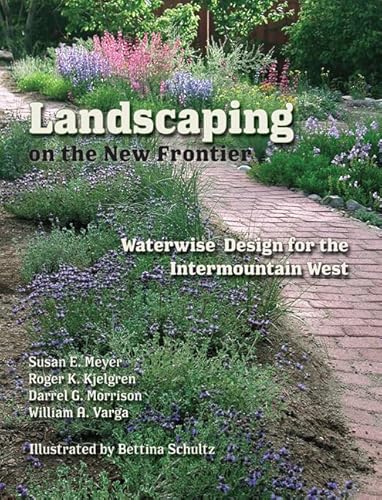
A practical volume for the home or business owner on landscaping with native, drought-tolerant plants in the Rocky Mountain West. Filled with color illustrations, photos, and design sketches, over 100 native species are described, while practical tips on landscape design, water-wise irrigation, and keeping down the weeds are provided.
In this book you will learn how to use natural landscapes to inspire your own designed landscape around your business or home and yard. Included are design principles, practical ideas, and strong examples of what some homeowners have already done to convert traditional "bluegrass" landscapes into ones that are more expressive of theWest. Landscaping on the new Frontier also offers an approach to irrigation that minimizes the use of supplemental water yet ensures the survival of plants during unusually dry periods. You will learn how to combine ecological principles with design principles to create beautiful home landscapes that require only minimal resources to maintain.Die Inhaltsangabe kann sich auf eine andere Ausgabe dieses Titels beziehen.
Über die Autorin bzw. den Autor
Dr. Susan Meyer works for the US Forest Service as a research ecologist at the Shrub Sciences Laboratory in Provo, Utah. She is Past Chair of the Utah Native Plant Society State Board of Directors and one of the founding members of the Intermountain Native Plant Growers Association.
Dr. Roger Kjelgren is Professor of Landscape Horticulture in the Department of Plants, Soils and Climate at Utah State University in Logan Utah. He is the Director of the Center for Water Efficient Landscaping, and contributing author and guiding force for Water Wise: Native Plants for Intermountain Landscapes Darrel Morrison is a nationally known landscape architect who specializes in landscape design that is in tune with the surrounding natural environment. He was the lead landscape architect for the Ladybird Johnson National Wildflower Center in Austin, Texas. He is a Professor and Dean Emeritus of the University of Georgia School of Environmental Design. William Varga is Extension Horticulturist at Utah State University, where he has statewide responsibilities for outreach in low-water landscaping design. Bettina Schultz is a stained glass artist whose work has been enriched by her experience with drawing, painting, printmaking, weaving, music, and calligraphy.Auszug. © Genehmigter Nachdruck. Alle Rechte vorbehalten.
Landscaping on the New Frontier
Waterwise Design for the Intermountain West By Susan E. Meyer Roger K. Kjelgren Darrel G. Morrison William A. VargaUTAH STATE UNIVERSITY PRESS
Copyright © 2009 Utah State University PressAll right reserved.
ISBN: 978-0-87421-709-4
Contents
Preface....................................................................................xiAcknowledgments............................................................................xiiiIntroduction...............................................................................1Chapter One Native Landscapes of the Intermountain West....................................5Desert Plant Communities...................................................................14Semi-desert Plant Communities..............................................................16Foothill Plant Communities.................................................................19Mountain Plant Communities.................................................................21Chapter Two How to Design Native Landscapes................................................24Getting Started on Design..................................................................25Design Features of Native Landscapes.......................................................27Step-by-step Native Landscape Design.......................................................32Chapter Three How to Water Native Landscapes...............................................71Water Harvesting...........................................................................72Adding Supplemental Water..................................................................74Chapter Four How to Install Native Landscapes..............................................96Planning the Installation..................................................................96Carrying out Site Modifications............................................................99Installing Hardscape.......................................................................105Installing the Watering System.............................................................108Preparing the Planting Areas...............................................................111Obtaining the Plants.......................................................................112Laying Out the Planting Plan on the Ground.................................................114Planting...................................................................................114Mulching...................................................................................116Watering to Establish......................................................................117Chapter Five How to Care for Native Landscapes.............................................119Hardscape and Watering System Maintenance..................................................120Long-term Watering.........................................................................120Staying Ahead of the Weeds.................................................................123Maintaining Mulch..........................................................................126Keeping Natives Looking Their Best.........................................................126Change in the Native Landscape.............................................................128Chapter Six Native Landscape Pioneers Tell Their Stories...................................131Return of the Natives - Phil and Judy Allen................................................131Sharing a Patch of Sagebrush - Jan Nachlinger..............................................136Accidental Journey into Native Plant Landscaping - Randall Nish............................140Tabula Rasa - Carl Dede and Angie Evenden..................................................144Starting Small, Becoming Emboldened - Ann DeBolt and Roger Rosentreter.....................148Learning by Trial and Error, or Life Is Change - Roger Kjelgren............................152Designing on the Native Plant Frontier - Bettina Schultz...................................155Chapter Seven The Plant Palette............................................................159Perennials: Minimal Water Use..............................................................166Perennials: Low Water Use..................................................................173Perennials: Medium Water Use...............................................................182Perennials: High Water Use.................................................................188Woody Plants: Minimal Water Use............................................................194Woody Plants: Low Water Use................................................................198Woody Plants: Medium Water Use.............................................................202Woody Plants: High Water Use...............................................................212Plant Attribute Tables.....................................................................219Plant Names Index..........................................................................221Appendix: Resources for Further Information................................................227About the Authors..........................................................................238Supporters.................................................................................240
Chapter One
Native Landscapes of the Intermountain West
To design beautiful and functional native landscapes, the first step is to learn to look at landscapes in nature and to begin to understand why they look the way they do. Even intuitively obvious truths about intermountain landscapes need to be given some thought. For example, all westerners know that, to escape the heat of summer, a picnic in the mountains is generally a good approach. In the winter, we know that we can head for the desert to escape from the snow. Plants respond to these climate differences at least as much as people do. The native plant communities in high mountain valleys are completely different from the plant communities in the desert country, where people often go to seek winter sunshine.
As you drive up into the mountains from towns nestled in the valleys at their feet, first the low sagebrush steppe vegetation gives way to foothill communities characterized by small trees like gambel oak and bigtooth maple, or to a pygmy evergreen forest made up of juniper and pinyon pine. Further up, patches of quaking aspen and white fir or lodgepole pine start to appear, interspersed with meadow communities of grasses, low shrubs, and an abundance of wildflowers. If you are driving up a canyon with a year-round stream, you will see the difference right away between the streamside vegetation, which is very green and lush, and the hillsides above, which support shrubs and grasses found in much drier environments. Often, arriving in the aspen/white-fir or lodgepole pine zone is enough to relieve the heat of summer, but if the road continues to wind upward, it will pass through evergreen forests of sub-alpine species of spruce and fir, until at last it reaches timberline and breaks out into alpine tundra, the dwarf community that lives on the high, windswept ridges that are too harsh to support trees.
Each of these plant communities represents a response to a set of environmental conditions that define the habitat for the species that occur in that community. By understanding how plants interact with environmental conditions in nature, you will begin to see how you might create...
„Über diesen Titel“ kann sich auf eine andere Ausgabe dieses Titels beziehen.
Suchergebnisse für Landscaping on the New Frontier: Waterwise Design for...

Beispielbild für diese ISBN
Landscaping on the New Frontier: Waterwise Design for the Intermountain West
Verlag:
Utah State University Press, 2009
ISBN 10: 0874217091
ISBN 13: 9780874217094
Gebraucht
Hardcover
Anbieter: ThriftBooks-Dallas, Dallas, TX, USA
Verkäuferbewertung 5 von 5 Sternen

Hardcover. Zustand: Good. No Jacket. Pages can have notes/highlighting. Spine may show signs of wear. ~ ThriftBooks: Read More, Spend Less. Artikel-Nr. G0874217091I3N00
Gebraucht kaufen
EUR 22,44
Versand gratis
Versand innerhalb von USA
Versand innerhalb von USA
Anzahl: 1 verfügbar
Beispielbild für diese ISBN
Landscaping on the New Frontier
Anbieter: Kennys Bookstore, Olney, MD, USA
Verkäuferbewertung 5 von 5 Sternen
Zustand: New. Num Pages: 256 pages, illustrations. BIC Classification: 1KBBW; G; WMD; WMQL. Category: (G) General (US: Trade). Dimension: 280 x 216 x 22. Weight in Grams: 1168. . 2009. Hardback. . . . . Books ship from the US and Ireland. Artikel-Nr. V9780874217094
Neu kaufen
EUR 49,69
EUR 9,33 Versand
Versand innerhalb von USA
Versand innerhalb von USA
Anzahl: 15 verfügbar
Beispielbild für diese ISBN
Landscaping on the New Frontier: Waterwise Design for the Intermountain West
Anbieter: Revaluation Books, Exeter, Vereinigtes Königreich
Verkäuferbewertung 5 von 5 Sternen
Hardcover. Zustand: Brand New. 1st edition. 256 pages. 11.00x8.50x0.75 inches. In Stock. Artikel-Nr. 0874217091
Neu kaufen
EUR 62,86
EUR 17,68 Versand
Versand von Vereinigtes Königreich nach USA
Versand von Vereinigtes Königreich nach USA
Anzahl: 1 verfügbar