
Verwandte Artikel zu Empires of Time: Calendars, Clocks, and Cultures, Revised...
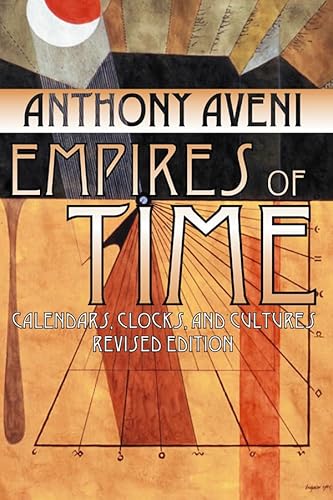
Inhaltsangabe
"Aveni . . . explores the interplay of culture and time in this edifying and readable cross-cultural study of timekeeping through the ages."
--The Sciences
Die Inhaltsangabe kann sich auf eine andere Ausgabe dieses Titels beziehen.
Über die Autorin bzw. den Autor
Anthony Aveni is the Russell Colgate Distinguished University Professor of Astronomy, Anthropolgy, and Native Amerifan Studies at Colgate University. He has researched and written about Maya Astronomy for more than four decades. He was named a U.S. National Professor of the year and has been awarded the H.B. Nicholson Medal for Excellence in Research in Mesoamerican Studies by Harvard's Peabody Museum.
Auszug. © Genehmigter Nachdruck. Alle Rechte vorbehalten.
EMPIRES OF TIME
CALENDARS, CLOCKS, AND CULTURESBy ANTHONY AVENIUNIVERSITY PRESS OF COLORADO
Copyright © 2002 Anthony AveniAll right reserved.
ISBN: 978-0-87081-672-7
Contents
List of Illustrations................................................viiAcknowledgments......................................................ixPreface to the Revised Edition.......................................xiIntroduction: Our Time-And Theirs....................................1I-SENSING AND MARKING TIME1. The Basic Rhythms.................................................13Tracking Down the Sense of TimeA Multitude of Inner RhythmsMechanism as Metaphor2. Early Time Reckoning..............................................33The Oral ModeThe Written ModeII-OUR TIME: THE IMPOSITION OF ORDER3. The Western Calendar..............................................75The Day and Its HoursThe Smallest Units of TimeThe Week and Its DaysThe Month and Its MoonThe Months and Their Politics4. The Year and Its Accumulation in History..........................105The Western YearLong-Time Reckoning and Great YearsOur Creation StoriesToday's Empire of the ClockIII-THEIR TIME: FOLLOWING THE ORDER OF THE SKIES5. Tribal Societies and Lunar-Social Time............................147The Ecological CycleStructural Time6. The Interlocking Calendars of the Maya............................163Introduction: Three American EmpiresThe Maya and the Body CountThe Cycles of VenusThe Maya DeclineCharacteristics of Maya Timekeeping7. The Aztecs and the Sun............................................225A Cycle of CelebrationsThe World DiagramThe Creation StoryRestructuring Time to Legitimize Aztec Rule8. The Incas and Their Orientation Calendar..........................247Sun WatchingCounting the Days9. Eastern Standard: Time Reckoning in China.........................271The Chinese World View and Sense of HistoryThe Chinese CalendarIV-A WORLD OF TIME10. Building on the Basic Rhythms....................................289Recurring CyclesThe Linearization of TimeControlling the RhythmsEpilogue.............................................................303Notes................................................................305Index................................................................321
Chapter One
THE BASIC RHYTHMS
First the tide rushes in, plants a kiss on the shore, Then rolls out to sea and the sea is very still once more. -"Ebb Tide"
Metaphor is a figure of speech by which the meaning of one word is transferred to another. Our era is dominated by computer and mechanical metaphors. We use terms like network, input, feedback, gridlock, and information flow to describe social situations and interactions as if to imply that society is a system that functions according to the laws of physics. But in the lyrics above from a popular song of the 1950s, the tide becomes the metaphor to describe the love one person experiences for another. Like our emotions, the tide waxes and wanes from one extreme to another. Or, is it like the feeling of being torn apart by circumstances after coming together? For artists and poets, the changeability of human feelings finds expression in the way the waters rise and fall, not just over a day, but even from moment to moment, for the beat of each wave that breaks upon the shore imitates in microcosm the slower rhythm of ebb and flow that makes up the eternal tidal harmony.
TRACKING DOWN THE SENSE OF TIME
I am engaging in this romantic talk to show that we use nature's behavior as a model to describe something we feel. In the passage from that old song, we feel time not only as an endless flow of metronomic beats but also as a kind of rhythmic surge, a recurring pattern we can trace to our very roots, to an age before we could even call ourselves human beings-when we came out of the sea.
It is well-known that the life cycles of marine organisms respond to the ebb and flow of the tides. The periodic inundation and exposure that results from tidal flow controls changes in temperature, pressure, agitation, salinity, and feeding conditions. Take oysters. When the sea is high, they open their shells for a longer period of time than when it is low: not much longer-it is too dangerous; only 3 or 4 minutes more per hour. Just enough longer to take safe advantage of the fresh source of nourishment brought in by the turning of the tide.
In the early 1950s, biologists pulled about a dozen oysters from New Haven harbor and shipped them to Northwestern University in Illinois for study. The oysters were submerged in their original harbor water and kept in total darkness. To explore their feeding patterns, the researchers tied to the shells fine threads that could activate recording pens every time the oysters' muscular movements caused the hinged shells to part or come together. Just as expected, the oysters continued to open and shut their shells as if they still were snug on the bottom of their home harbor, even though they had been displaced to another time zone more than a thousand miles to the west. Then, after about 2 weeks, something strange happened. Gradually the hour of maximal opening of the shells began to drift from day to day. Now, anyone who lives near the shore knows that the high- and low-water marks shift gradually from day to day. Tides are synchronized not with the place of the sun in the sky; rather it is the moon's schedule of appearance that matters, and the moon runs about 50 minutes, or eight-tenths of an hour, later than the sun's cycle. On the average, successive high and low tides occur nearly an hour later each day. We would expect all oysters to open and shut on a 24.8-hour schedule. But, the biologists in Illinois were witnessing a daily drift that corresponded to a different beat. After four weeks of recording and analyzing the data, they had determined beyond any doubt that the oysters had restabilized the rhythmic opening and closing of their shells to the tidal cycle that would occur in Evanston, Illinois, had there been an ocean in that location. For the rest of the time the oysters were observed, they continued to maintain this new cycle (figure 1.1). It was as if they had gradually adjusted their life's pace to correspond to the time when the moon was overhead as seen from Northwestern University rather than from New Haven harbor. Could this lowly form of life actually feel the moon's presence through the sealed walls of the laboratory? (Think of that the next time you start to douse a plate of oysters with the stinging pungency of a few drops of Louisiana hot sauce!)
If you are impressed with the sagacity of a brood of New England mollusks, consider the even lowlier potato. Experimental biologists have charted its metabolism by measuring the rate at which it uses oxygen. They removed the sprouting eyes of potatoes and placed them in hermetically sealed containers shielded from outside fluctuations in temperature, pressure, humidity, and light intensity. But the deprived spuds kept the same rhythmic cycles they had before they were snatched out of their natural environment. Peak consumption of oxygen occurred at 7 A.M., noon, and 6 P.M. every day. And when the unseen sun was gone from the sky, oxygen consumption fell to the standard nighttime low. There were annual changes, too. When it was summertime outside the container, the noontime peak was lessened; and in wintertime, it became enhanced.
As insignificant a...
„Über diesen Titel“ kann sich auf eine andere Ausgabe dieses Titels beziehen.
Suchergebnisse für Empires of Time: Calendars, Clocks, and Cultures, Revised...

Beispielbild für diese ISBN
Empires of Time : Calendars, Clocks, and Cultures, Revised Edition
Verlag:
University Press of Colorado, 2002
ISBN 10: 0870816721
ISBN 13: 9780870816727
Gebraucht
Softcover
Anbieter: Better World Books, Mishawaka, IN, USA
Verkäuferbewertung 5 von 5 Sternen

Zustand: Good. Former library copy. Pages intact with minimal writing/highlighting. The binding may be loose and creased. Dust jackets/supplements are not included. Includes library markings. Stock photo provided. Product includes identifying sticker. Better World Books: Buy Books. Do Good. Artikel-Nr. 1090864-6
Gebraucht kaufen
EUR 8,44
Versand gratis
Versand innerhalb von USA
Versand innerhalb von USA
Anzahl: 1 verfügbar
Beispielbild für diese ISBN
Empires of Time Calendars, Clocks, and Cultures, Revised Edition
Anbieter: Mooney's bookstore, Den Helder, Niederlande
Verkäuferbewertung 4 von 5 Sternen

Zustand: Very Good. Artikel-Nr. 59493F3D2A9512D
Gebraucht kaufen
EUR 39,01
EUR 14,95 Versand
Versand von Niederlande nach USA
Versand von Niederlande nach USA
Anzahl: 1 verfügbar
Beispielbild für diese ISBN
Empires of Time: Calendars, Clocks, and Cultures
Anbieter: Revaluation Books, Exeter, Vereinigtes Königreich
Verkäuferbewertung 5 von 5 Sternen
Paperback. Zustand: Brand New. revised subsequent edition. 368 pages. 9.00x6.00x1.00 inches. In Stock. Artikel-Nr. x-0870816721
Neu kaufen
EUR 49,68
EUR 11,66 Versand
Versand von Vereinigtes Königreich nach USA
Versand von Vereinigtes Königreich nach USA
Anzahl: 2 verfügbar
Foto des Verkäufers
Empires of Time : Calendars, Clocks, and Cultures, Revised Edition
Verlag:
Univ Of Chicago Behalf Of UP Colorado Okt 2002, 2002
ISBN 10: 0870816721
ISBN 13: 9780870816727
Neu
Taschenbuch
Anbieter: AHA-BUCH GmbH, Einbeck, Deutschland
Verkäuferbewertung 5 von 5 Sternen
Taschenbuch. Zustand: Neu. Neuware - 'Aveni . . . explores the interplay of culture and time in this edifying and readable cross-cultural study of timekeeping through the ages.' --The Sciences. Artikel-Nr. 9780870816727
Neu kaufen
EUR 50,88
EUR 35,00 Versand
Versand von Deutschland nach USA
Versand von Deutschland nach USA
Anzahl: 2 verfügbar
Foto des Verkäufers
Empires of Time
Anbieter: moluna, Greven, Deutschland
Verkäuferbewertung 5 von 5 Sternen
Zustand: New. Artikel-Nr. 898927425
Neu kaufen
EUR 39,66
EUR 48,99 Versand
Versand von Deutschland nach USA
Versand von Deutschland nach USA
Anzahl: Mehr als 20 verfügbar