
Verwandte Artikel zu Gender and Lifecycles (Oxfam Focus on Gender Series)
Inhaltsangabe
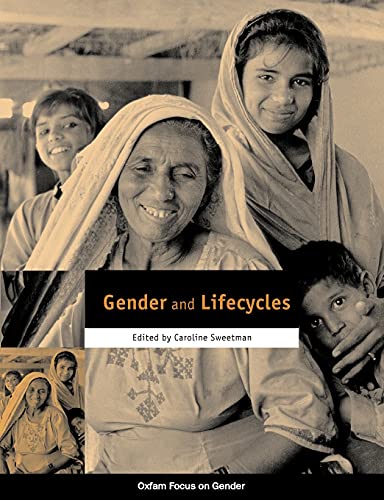
This book links gender issues to the life-courses of women and men. Gender-based discrimination is experienced differently according to age, generation, and status in the family. In particular, female children and elderly women perform an enormous amount of the world’s work. endure appalling abuse of the human rights, and receive disproportionately few benefits from development. Writers here call for development policy and practice to recognise this vast contribution, and enforce the rights of women of all ages to an equal share of development outcomes. Other topics included here are the use of life-histories in understanding social and economic change; the economic survival of older people and children in an era of AIDS; the vulnerability of older men to gender-based abuse; girl-trafficking and AIDS; educating adolescent girls and boys to eradicate gender inequality; and the role of employment in changing young women’s status in society. Countries featured include Bangladesh, Mexico, Jordan, Tanzania, and Nepal. Authors include Maribel Blasco and Ann Varley, Sabina Rashid, and Sylvia Beales.
Die Inhaltsangabe kann sich auf eine andere Ausgabe dieses Titels beziehen.
Über die Autorin bzw. den Autor
Caroline Sweetman is Editor of the international journal Gender & Development and works for Oxfam GB.
Auszug. © Genehmigter Nachdruck. Alle Rechte vorbehalten.
Gender, and Lifecycles
By Caroline SweetmanOxfam Publishing
Copyright © 2000 Oxfam GB
All rights reserved.
ISBN: 978-0-85598-450-2All rights reserved.
Contents
Editorial Caroline Sweetman, 2,
Why we should invest in older women and men: the experience of Help Age International Sylvia Beales, 9,
'At my age I should be sitting under that tree': the impact of AIDS on Tanzanian lakeshore communities Judith Appleton, 19,
Providing sex education to adolescents in rural Bangladesh: experiences from BRAC Sabina Faiz Rashid, 28,
Using life histories to explore change: women's urban struggles in Cape Town, South Africa Rachel Slater, 38,
Intact or in tatters? Family care of older women and men in urban Mexico Ann Varley and Maribel Blasco, 47,
Transitions and boundaries: research into the impact of paid work on young women's lives in Jordan Mary Kawar, 56,
Community research on older women in the Dominican Republic Jacquie Cheetham and Wendy Alba, 66,
Girl-trafficking, HIV/AIDS, and the position of women in Nepal Pratima Poudel and Jenny Carryer, 74,
Gender, age, and exclusion: a challenge to community organisations in Lima, Peru Fiona C Clark and Nina Laurie, 80,
Resources Compiled by Erin Murphy Graham, 89,
Publications, 89,
Organisations, 93,
Websites, 95,
Videos, 96,
CHAPTER 1
Why we should invest in older women and men: the experience of HelpAge International
Sylvia Beales
In this article, I explore the roles of older women and men in the developing world, and the barriers they encounter in the course of contributing to their families and communities. Older women face multiple disadvantages arising from gender-based prejudice, the heavy burden of manual and reproductive labour that they bear, and the longevity of females in comparison to males. Discrimination against women needs world-wide acknowledgement and action; yet, as is argued here, it is important to broaden our analysis of gender issues. Many men, too, face marginalisation, as the ageing process undermines their ability to provide for their families.
Currently, the world is undergoing profound demographic changes, which pose great challenges to development and social policy-makers. One of these changes is the growth in the number of older people in our societies. Old age has been typically seen as a phenomenon of developed countries, but, in fact, the great majority (two-thirds) of those over 60 years of age live in the developing world. This proportion is increasing steadily, due to improvements in health, hygiene, and basic services, and will reach nearly three-quarters by the 2030s (UNFPA and CBGS 1999). The US Bureau of the Census (Washington DC) calculates that by 2020 countries such as Cuba, Argentina, Thailand, and Sri Lanka will have higher proportions of older people than the US does today. By 2025, numbers of older people in the developing world are on course to double to 850 million, comprising 12 per cent of the global population.
The proportion of younger and older people is changing dramatically. Globally, the young still outnumbered the old by 7:1 in 1995, but this ratio is declining (UNFPA 1998, 13). In spite of the global challenge of HIV/AIDS, UN projections indicate that deaths from AIDS will change the young-old ratio in sub-Saharan Africa from 15:1 in 2000 to 4:1 in 2050 (UN 1996).
For many, old age is a period of chronic poverty and powerlessness. Throughout the world, older people are often economically poorer and suffer worse social and political exclusion than do other age groups. In developing countries, the problem is made worse, given that large numbers of people of all ages endure extreme poverty, which affects all aspects of their material and social existence. The cumulative effect of marginalisation and poverty throughout the life span is absolute poverty in old age.
While increased longevity is in many ways a triumph of social development, if it means that women and men are growing older without becoming any less poor, and that they undergo additional years of struggle for daily survival, can we really claim that this is social progress?
HelpAge International
The information in this article comes from research and programme experience in many developing countries, accumulated by HelpAge International (HAI). HAI is a world-wide network of local and national organisations in the developing and developed world, which works with disadvantaged older people on issues of poverty, rights, and exclusion. HAI aims to make a lasting improvement to the lives of older people, through supporting their empowerment, promoting their equality, and seeking to end discrimination against them. HAI is committed to the 18 United Nations Principles of Older Persons stated in UN Resolution 46/91, with their headings of Independence, Care, Self-Fulfilment, Dignity, and Participation.
Attention to the gender-based discrimination facing older women – and men – is an essential feature of HAI's programme and working practices. This means examining how cultural norms determine women's and men's social and economic power, and analysing how that power is inexorably reduced as people grow older. Deep-rooted negative attitudes towards older people are both the cause and the symptom of the problems routinely described by those we work with. Negative attitudes towards older people result in ageism, defined by HAI as a 'collective failure of individuals and organisations to provide a professional service to people because of their age'. The HAI definition continues: '[Ageism] can be detected in processes, attitudes, and behaviour which amount to discrimination through unwitting prejudice, ignorance, thoughtlessness and stereotyping which disadvantage older people' (HAI training course 1999). An example of this is the characterisation of older people as dependants. In fact, HelpAge International's participatory research in countries as different as St Lucia, Ghana, and South Africa has revealed that the majority of older people are net contributors to their families, rather than net recipients of support. It is only by understanding and valuing the contributions of women and men throughout their life-course that such attitudes and their related behaviours can be altered.
Issues faced by older women
Everyone cares for older relatives, but women do most of the work (Graham 2000)
The fact of women's greater longevity means that the world of older people is predominantly one of poor women, often widowed, who all too often face physical suffering, economic disadvantage, and social exclusion (Heslop 1999, De Haan 1998). Women currently outlive men in nearly all countries. The US Bureau of the Census forecasts that by 2025 the number of women aged over 60 in the developing world will increase by 150 per cent.
There are various theories to explain the growing difference between women and men's longevity, which is approximately 5-8 years in women's favour in the developed world, and 3-5 years in the developing world. Poverty studies in the West and parts of Eastern Europe argue that there are genetic differences, as well as socio-economic factors, that affect men's longevity more than women's, including men's greater exposure to industrial hazards, conflict-related deaths, and lifestyle choices such as alcoholism. Research (which comes in the main from the West) has established that older men are more likely to suffer from heart disease or a stroke than women, and are more likely to die from chronic respiratory disease than...
„Über diesen Titel“ kann sich auf eine andere Ausgabe dieses Titels beziehen.
Suchergebnisse für Gender and Lifecycles (Oxfam Focus on Gender Series)

Beispielbild für diese ISBN
Gender and Lifecycles Focus on Gender S
Anbieter: PBShop.store US, Wood Dale, IL, USA
Verkäuferbewertung 5 von 5 Sternen

PAP. Zustand: New. New Book. Shipped from UK. Established seller since 2000. Artikel-Nr. CX-9780855984502
Beispielbild für diese ISBN
Gender and Lifecycles
Anbieter: PBShop.store UK, Fairford, GLOS, Vereinigtes Königreich
Verkäuferbewertung 5 von 5 Sternen
PAP. Zustand: New. New Book. Shipped from UK. Established seller since 2000. Artikel-Nr. CX-9780855984502
Neu kaufen
EUR 15,77
EUR 4,88 Versand
Versand von Vereinigtes Königreich nach USA
Versand von Vereinigtes Königreich nach USA
Anzahl: 15 verfügbar
Beispielbild für diese ISBN
Gender and Lifecycles (International Development)
Anbieter: Ria Christie Collections, Uxbridge, Vereinigtes Königreich
Verkäuferbewertung 5 von 5 Sternen
Zustand: New. In English. Artikel-Nr. ria9780855984502_new
Neu kaufen
EUR 19,62
EUR 10,99 Versand
Versand von Vereinigtes Königreich nach USA
Versand von Vereinigtes Königreich nach USA
Anzahl: Mehr als 20 verfügbar
Beispielbild für diese ISBN
Gender and Lifecycles
Anbieter: Majestic Books, Hounslow, Vereinigtes Königreich
Verkäuferbewertung 4 von 5 Sternen

Zustand: New. pp. 80. Artikel-Nr. 95131856
Neu kaufen
EUR 26,81
EUR 7,63 Versand
Versand von Vereinigtes Königreich nach USA
Versand von Vereinigtes Königreich nach USA
Anzahl: 1 verfügbar
Beispielbild für diese ISBN
Gender and Lifecycles (Oxfam Focus on Gender Series)
Anbieter: Revaluation Books, Exeter, Vereinigtes Königreich
Verkäuferbewertung 5 von 5 Sternen
Paperback. Zustand: Brand New. 112 pages. 9.75x7.50x0.50 inches. In Stock. Artikel-Nr. x-0855984503
Neu kaufen
EUR 24,44
EUR 11,73 Versand
Versand von Vereinigtes Königreich nach USA
Versand von Vereinigtes Königreich nach USA
Anzahl: 2 verfügbar
Beispielbild für diese ISBN
Gender and Lifecycles
Anbieter: Buchpark, Trebbin, Deutschland
Verkäuferbewertung 5 von 5 Sternen
Zustand: Sehr gut. Zustand: Sehr gut | Sprache: Englisch | Produktart: Bücher | This book links gender issues to the life-courses of women and men. Writers here call for development policy and practice to recognise this vast contribution, and enforce the rights of women of all ages to an equal share of development outcomes. Artikel-Nr. 1394038/122
Gebraucht kaufen
EUR 19,47
EUR 105,00 Versand
Versand von Deutschland nach USA
Versand von Deutschland nach USA
Anzahl: 1 verfügbar