
Verwandte Artikel zu Alternatives to Animal Testing (Issues in Environmental...
Inhaltsangabe
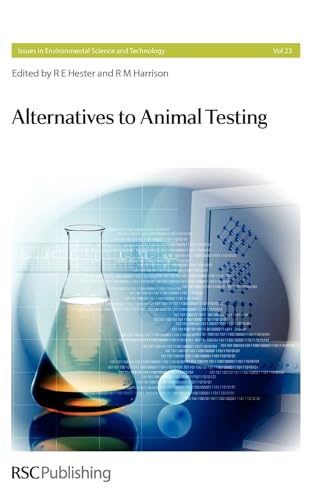
Animal experimentation has long been a controversial issue with impassioned arguments on both sides of the debate. Increasingly it has become more expedient and feasible to develop new methods that avoid the use of animals. There is agreement on both sides that reduction and refinement of experiments on animals should be an important goal for the industries involved. Alternatives to Animal Testing, written by leading experts in the field, discusses the issues involved and approaches that can be taken. Topics include; the safety evaluation of chemicals, international validation and barriers to the validation of alternative tests, in vitro testing for endocrine disruptors, intelligent approaches to safety evaluation of chemicals, alternative tests and the regulatory framework. The book provides an up-to-date discussion of the current state of development of alternatives to animal testing and is ideal for professionals and academics in the field. It would also be of use for graduate students wishing to pursue a career in the pharmaceutical and cosmetic industries.
Die Inhaltsangabe kann sich auf eine andere Ausgabe dieses Titels beziehen.
Über die Autorin bzw. den Autor
The series has been edited by Professors Hester and Harrison since it began in 1994.
Professor Roy Harrison OBE is listed by ISI Thomson Scientific (on ISI Web of Knowledge) as a Highly Cited Researcher in the Environmental Science/Ecology category. He has an h-index of 54 (i.e. 54 of his papers have received 54 or more citations in the literature). In 2004 he was appointed OBE for services to environmental science in the New Year Honours List. He was profiled by the Journal of Environmental Monitoring (Vol 5, pp 39N-41N, 2003). Professor Harrison’s research interests lie in the field of environment and human health. His main specialism is in air pollution, from emissions through atmospheric chemical and physical transformations to exposure and effects on human health. Much of this work is designed to inform the development of policy.
Now an emeritus professor, Professor Ron Hester's current activities in chemistry are mainly as an editor and as an external examiner and assessor. He also retains appointments as external examiner and assessor / adviser on courses, individual promotions, and departmental / subject area evaluations both in the UK and abroad.
Auszug. © Genehmigter Nachdruck. Alle Rechte vorbehalten.
Alternatives to Animal Testing
By R.E. Hester, R.M. HarrisonThe Royal Society of Chemistry
Copyright © 2006 The Royal Society of Chemistry
All rights reserved.
ISBN: 978-0-85404-211-1All rights reserved.
Contents
General Overview of the Safety Evaluation of Chemicals Paul Illing, 1,
International Validation and Barriers to the Validation of Alternative Tests Michael Balls, 28,
In Vitro Testing for Endocrine Disruptors Robert D. Combes, 53,
Intelligent Approaches to Safety Evaluation Derek J. Knight, 74,
Alternative Tests and the 7th Amendment to the Cosmetics Directive Carl Westmoreland, 95,
Subject Index, 119,
CHAPTER 1
General Overview of the Safety Evaluation of Chemicals
PAUL ILLING
1 Introduction
Society demands that chemicals be 'safe'. This requirement is exercised through legislation concerned with the safety of chemicals, usually introduced post hoc, in response either to disasters or to perceived inadequacies in the previous legislation. Public perceptions of risk drive priorities and legislative agendas. Generally legislatures are concerned with setting frameworks and setting up bodies to develop detailed requirements, evaluate the evidence and enforce the legislation.
When human health is the issue, the aim is to prevent ill health. In order to do this it is necessary to have means of predicting ill health. Ethically, it is difficult to justify predictive testing in humans unless a substance is intended for administration to humans. Thus tests are normally conducted in laboratory animals as surrogates for humans. Even when testing in humans is possible, preliminary testing in animals is usually required. The bodies concerned with evaluating safety therefore set minimum testing requirements for those who wish to place on the market a chemical substance or to market it for a specified use. These requirements include:
• when and what tests should be conducted (testing strategies);
• the protocols setting out how the tests should be conducted (test methods); and
• the audit procedures to ensure that tests have been properly conducted and reported ('Good Laboratory Practice'; GLP).
Furthermore, the bodies may either evaluate the results of the tests or set guidance as to how the results should be interpreted.
In the context of safety testing, chemicals includes natural products as well as synthetic chemicals. While the general public may consider 'natural' as good (less harmful) and 'synthetic' as bad (more harmful), there is no scientific reason to differentiate between 'natural' and 'synthetic' chemicals. Ricin (from castor beans), the toxins produced by Cl. botulinus and a number of mycotoxins are examples of natural materials of great potency as toxic agents. Generally, therefore, legislation does not differentiate between 'natural' and 'synthetic' chemicals.
One of the main tools used to predict what the potential ill health effects of chemicals might be is animal testing. A second societal demand, sometimes expressed with considerable force by groups within society who are against conducting work with animals, is associated with the welfare of animals used in experimental procedures. The aim is to prevent, or, at least, to minimize experiments on, usually, vertebrates. Generally, society has been less tolerant of animal testing for substances intended for use as cosmetics or cosmetic ingredients than for substances as a whole.
This clash between the demand for safety and the limitations on human experimentation is the reason why testing is undertaken in animals. The requirements concerning animal welfare dictate that, wherever possible, alternatives to animal testing should be sought.
2 Legislation and Regulatory Requirements
Predictive testing is best instigated when a licence or some other form of permission is required before a substance can be used. It may also be required in law prior to marketing even when there is no formal assessment of the data by a regulator. Thus, predictive testing is required for 'new substances' about to be placed on the market. It is also required prior to use for substances intended for specific uses, such as drugs, veterinary medicines, cosmetics/personal care products, food additives, plant-protection products and biocides. In these cases the person or corporate body desiring to market the substance carries out the required testing. Predictive testing almost always includes experiments in animals.
Legislation may also cover the presence of chemicals in air, water or soil. This legislation generally deals with evaluating existing situations rather than new ones and post hoc information from studies in humans should be available. Under these circumstances, predictive testing may be required for endpoints not easily addressed through studies in humans. However, in these cases it is usually Government that sponsors and finances this work.
Originally legislation concerning the safety of chemicals was based on the individual national government. Nowadays it is mostly based on regional (e.g. European Union [EU]) or international (Organization for Economic Co-operation and Development [OECD]; World Trade Organization [WTO] or United Nations [UN]) groupings.
Two areas of legislation are particularly pertinent to the current debate on alternatives to animal testing as the testing requirements associated with them are currently being revised. The first is that concerned with the placing on the market of chemicals generally. Currently this is governed by EU Council Directive 67/548/EEC. A Council Directive, implemented in the UK as the 'Notification of New Substances Regulations' deals with 'new substances', i.e. those placed on the market after 1981. Under the seventh amendment, a dossier, containing, inter alia, information on testing in animals, is required prior to placing the substance on the market. Testing is tiered, some testing being conducted before the substance is placed on the market and further testing being required as the amounts placed on the market increase. Currently testing strategies are given in Directive 92/32/EEC and in a technical guidance document and test protocols are given in Annex V of Directive 67/548/EEC. The test protocols are those set up by the OECD. Tests have to be conducted to these protocols and audited in accordance with the principles of good laboratory practice. Animal welfare considerations, set out in Directive 86/609/EC, should be taken into account when deciding on the need for a specific test.
Existing substances are still classified and labelled on the basis of existing information.
The Registration, Evaluation, Authorization and restriction of CHemicals (REACH) proposals currently before the EU Council and Parliament, intend to bring the regulation of both new and existing substances into a common scheme, and to require that specific information is available under specified conditions. For existing substances this implies those placing on the market the substance or preparations containing it may need to set up consortia to conduct testing to fill data gaps. The REACH proposals also have a testing strategy contained within them, and the test protocols are those set out in the OECD Guidelines. Although currently the classification is that for Directive 67/548/EEC, it is likely that the UNECE Globally Harmonized System (GHS) will be substituted before implementation of the proposals. It is claimed that the REACH proposals should encourage the use of alternatives to animal...
„Über diesen Titel“ kann sich auf eine andere Ausgabe dieses Titels beziehen.
Suchergebnisse für Alternatives to Animal Testing (Issues in Environmental...

Beispielbild für diese ISBN
Issues in Environmental Science and Technology: Alternatives to Animal Testing (Volume 23)
Verlag:
Royal Society Of Chemistry, 2006
ISBN 10: 0854042113
ISBN 13: 9780854042111
Gebraucht
Hardcover
Anbieter: Anybook.com, Lincoln, Vereinigtes Königreich
Verkäuferbewertung 5 von 5 Sternen

Zustand: Good. Volume 23. This is an ex-library book and may have the usual library/used-book markings inside.This book has hardback covers. In good all round condition. No dust jacket. Please note the Image in this listing is a stock photo and may not match the covers of the actual item,450grams, ISBN:9780854042111. Artikel-Nr. 5779565
Gebraucht kaufen
EUR 9,58
EUR 15,57 Versand
Versand von Vereinigtes Königreich nach USA
Versand von Vereinigtes Königreich nach USA
Anzahl: 1 verfügbar
Beispielbild für diese ISBN
Alternatives To Animal Testing (=Issues in Environmental Science & Technology, 23).
Anbieter: Antiquariat Thomas Haker GmbH & Co. KG, Berlin, Deutschland
Verkäuferbewertung 5 von 5 Sternen
Hardcover/Pappeinband. Zustand: Wie neu. 136 p. Like new. Shrink wrapped. / Wie neu. In Folie verschweißt. Sprache: Englisch Gewicht in Gramm: 430. Artikel-Nr. 863737
Gebraucht kaufen
EUR 11,20
EUR 15,00 Versand
Versand von Deutschland nach USA
Versand von Deutschland nach USA
Anzahl: 1 verfügbar
Beispielbild für diese ISBN
Issues in Environmental Science and Technology: 23, Alternatives to Animal Testing
Anbieter: Anybook.com, Lincoln, Vereinigtes Königreich
Verkäuferbewertung 5 von 5 Sternen
Zustand: Good. This is an ex-library book and may have the usual library/used-book markings inside.This book has hardback covers. In good all round condition. Please note the Image in this listing is a stock photo and may not match the covers of the actual item,450grams, ISBN:9780854042111. Artikel-Nr. 9559866
Gebraucht kaufen
EUR 11,44
EUR 15,57 Versand
Versand von Vereinigtes Königreich nach USA
Versand von Vereinigtes Königreich nach USA
Anzahl: 1 verfügbar
Beispielbild für diese ISBN
Alternatives to Animal Testing (Volume 23)
Anbieter: Anybook.com, Lincoln, Vereinigtes Königreich
Verkäuferbewertung 5 von 5 Sternen
Zustand: Good. Volume 23. This is an ex-library book and may have the usual library/used-book markings inside.This book has hardback covers. In good all round condition. No dust jacket. Please note the Image in this listing is a stock photo and may not match the covers of the actual item,450grams, ISBN:9780854042111. Artikel-Nr. 9310574
Gebraucht kaufen
EUR 19,90
EUR 15,57 Versand
Versand von Vereinigtes Königreich nach USA
Versand von Vereinigtes Königreich nach USA
Anzahl: 1 verfügbar
Beispielbild für diese ISBN
Alternatives to Animal Testing (Volume 23)
Verlag:
Royal Society Of Chemistry, 2006
ISBN 10: 0854042113
ISBN 13: 9780854042111
Gebraucht
Hardcover
Anbieter: Anybook.com, Lincoln, Vereinigtes Königreich
Verkäuferbewertung 5 von 5 Sternen
Zustand: Good. Volume 23. This is an ex-library book and may have the usual library/used-book markings inside.This book has hardback covers. Clean from markings. In good all round condition. Please note the Image in this listing is a stock photo and may not match the covers of the actual item,450grams, ISBN:9780854042111. Artikel-Nr. 8986270
Gebraucht kaufen
EUR 27,18
EUR 15,57 Versand
Versand von Vereinigtes Königreich nach USA
Versand von Vereinigtes Königreich nach USA
Anzahl: 1 verfügbar
Beispielbild für diese ISBN
Alternatives To Animal Testing
Anbieter: Romtrade Corp., STERLING HEIGHTS, MI, USA
Verkäuferbewertung 5 von 5 Sternen
Zustand: New. This is a Brand-new US Edition. This Item may be shipped from US or any other country as we have multiple locations worldwide. Artikel-Nr. ABBB-183349
Beispielbild für diese ISBN
Alternatives To Animal Testing
Anbieter: Majestic Books, Hounslow, Vereinigtes Königreich
Verkäuferbewertung 4 von 5 Sternen

Zustand: New. pp. 136 Illus. Artikel-Nr. 7547690
Neu kaufen
EUR 59,10
EUR 7,76 Versand
Versand von Vereinigtes Königreich nach USA
Versand von Vereinigtes Königreich nach USA
Anzahl: 1 verfügbar
Beispielbild für diese ISBN
Alternatives To Animal Testing
Anbieter: PBShop.store US, Wood Dale, IL, USA
Verkäuferbewertung 5 von 5 Sternen
HRD. Zustand: New. New Book. Shipped from UK. Established seller since 2000. Artikel-Nr. CX-9780854042111
Beispielbild für diese ISBN
Alternatives To Animal Testing
Anbieter: PBShop.store UK, Fairford, GLOS, Vereinigtes Königreich
Verkäuferbewertung 5 von 5 Sternen
HRD. Zustand: New. New Book. Shipped from UK. Established seller since 2000. Artikel-Nr. CX-9780854042111
Neu kaufen
EUR 82,05
EUR 4,97 Versand
Versand von Vereinigtes Königreich nach USA
Versand von Vereinigtes Königreich nach USA
Anzahl: 15 verfügbar
Beispielbild für diese ISBN
Alternatives To Animal Testing (Issues in Environmental Science and Technology, Volume 23)
Anbieter: Ria Christie Collections, Uxbridge, Vereinigtes Königreich
Verkäuferbewertung 5 von 5 Sternen
Zustand: New. In English. Artikel-Nr. ria9780854042111_new
Neu kaufen
EUR 99,90
EUR 11,19 Versand
Versand von Vereinigtes Königreich nach USA
Versand von Vereinigtes Königreich nach USA
Anzahl: Mehr als 20 verfügbar