
Inhaltsangabe
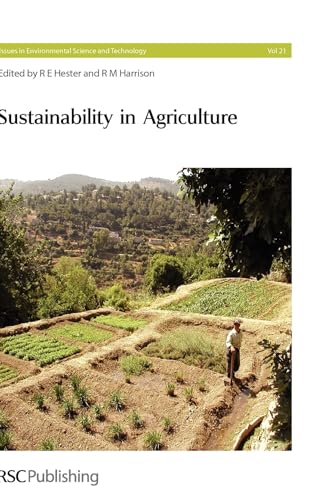
World trade in agriculture, with its massive subsidies, restrictive barriers, international collaboration and competition, and the livelihoods of millions of farmers worldwide at stake, is an emotive subject that often provokes heated debate. So how can sustainability in agriculture be addressed whilst taking these issues into account? Sustainability in Agriculture presents an authoritative and balanced overview of many of the key factors that impact upon world agricultural practices. The aim is to throw light on the subject and so generate informed and rational discussion of the topics which so often generate powerful emotions. Fully referenced, and with sources of further reading given, the contributions from experts from around the globe cover: *Free trade *Fair and unfair trade *GM crops *The use of pesticides *Change in land use and sustainable development *Economic consequences of recent changes in the Common Agricultural Policy of the European Union A balanced analysis of risks and benefits is also provided, taking into account the economic and social impacts as well as the science of the novel practices discussed. The timeliness of this book, discussing as it does many hotly debated issues, make it essential reading for all those having an interest in the future of agriculture worldwide, but especially farmers and students of farming, environmental scientists, government agencies and policy makers. Cover image courtesy of Professor Jules Pretty.
Die Inhaltsangabe kann sich auf eine andere Ausgabe dieses Titels beziehen.
Über die Autorin bzw. den Autor
The series has been edited by Professors Hester and Harrison since it began in 1994.
Professor Roy Harrison OBE is listed by ISI Thomson Scientific (on ISI Web of Knowledge) as a Highly Cited Researcher in the Environmental Science/Ecology category. He has an h-index of 54 (i.e. 54 of his papers have received 54 or more citations in the literature). In 2004 he was appointed OBE for services to environmental science in the New Year Honours List. He was profiled by the Journal of Environmental Monitoring (Vol 5, pp 39N-41N, 2003). Professor Harrison’s research interests lie in the field of environment and human health. His main specialism is in air pollution, from emissions through atmospheric chemical and physical transformations to exposure and effects on human health. Much of this work is designed to inform the development of policy.
Now an emeritus professor, Professor Ron Hester's current activities in chemistry are mainly as an editor and as an external examiner and assessor. He also retains appointments as external examiner and assessor / adviser on courses, individual promotions, and departmental / subject area evaluations both in the UK and abroad.
Auszug. © Genehmigter Nachdruck. Alle Rechte vorbehalten.
Sustainability in Agriculture
By R.E. Hester, R.M. HarrisonThe Royal Society of Chemistry
Copyright © 2005 The Royal Society of Chemistry
All rights reserved.
ISBN: 978-0-85404-201-2All rights reserved.
Contents
Sustainability in Agriculture: Recent Progress and Emergent Challenges Jules Pretty, 1,
Ecological Risks of Transgenic Plants: A Framework for Assessment and Conceptual Issues Paul B. Thompson, 16,
GM Pest-resistant Crops: Assessing Environmental Impacts on Non-target Organisms A.N.E. Birch and R.E. Wheatley, 31,
Sustainable Land Management: A Challenge for Modern Agriculture Daniel Osborn, 58,
UK Environmental–Economic Consequences of Decoupled CAP Payments Ian Dickie and Anna Shiel, 66,
Globalising Vulnerability: The Impacts of Unfair Trade on Developing Country Agriculture James Smith, 81,
Free Trade in Food: Moral and Physical Hazards Colin D. Butler, 103,
Subject Index, 126,
CHAPTER 1
Sustainability in Agriculture: Recent Progress and Emergent Challenges
JULES PRETTY
1 Recent Progress on Food Production
There have been startling increases in food production across the world since the beginning of the 1960s. Since then, aggregate world food production has grown by 145%. In Africa, it rose by 140%, in Latin America by almost 200%, and in Asia by a remarkable 280%. The greatest increases have been in China – an extraordinary five-fold increase, mostly occurring in the 1980s and 1990s. In the industrialised regions, production started from a higher base – yet it still doubled in the USA over 40 years, and grew by 68% in western Europe.
Over the same period, world population has grown from three to six billion. Again, though, per capita agricultural production has outpaced population growth. For each person today, there is an extra 25% more food compared with people in 1960. These aggregate figures, however, hide important differences between regions. In Asia and Latin America, per capita food production increased by 76% and 28%, respectively. Africa, though, has fared badly, with food production per person 10% less today than in 1960. China performs best, with a trebling of food production per person over the same period. These agricultural production gains have lifted millions out of poverty and provided a platform for economic growth in many parts of the world.
However, these advances in aggregate productivity have not brought reductions in incidence of hunger for all. In the early 21st century, there are still some 800 million people hungry and lacking adequate access to food. A third are in East and South-East Asia, another third in South Asia, a quarter in Sub-Saharan Africa, and 5% each in Latin America/Caribbean and in North Africa/Near East. Nonetheless, there has been progress, as incidence of under-nourishment stood at 960 million in 1970, comprising a third of people in developing countries at the time. Since then, average per capita consumption of food has increased by 17% to 2,760 kilocalories per day–good as an average, but still hiding a great many people surviving on less: 33 countries, mostly in Sub-Saharan Africa, still have per capita food consumption under 2,200 kcal/day.
Despite great progress, things will probably get worse for many people before they get better. As total population continues to increase, until at least the mid 21st century, so the absolute demand for food will also increase. Increasing incomes will also mean people will have more purchasing power, and this will increase demand for food. But as diets change, so demand for the types of food will also shift radically. In particular, increasing urbanisation means people are more likely to adopt new diets, particularly consuming more meat and fewer traditional cereals and other foods, what has been called the nutrition transition.
One of the most important changes in the world food system will come from an increase in consumption of livestock products. Meat demand is expected to rise rapidly, and this will change many farming systems. Livestock are important in mixed production systems, using foods and by-products that would not have been consumed by humans. But increasingly farmers are finding it easier to raise animals intensively, and feed them with cheap, though energetically-inefficient, cereals and oils. Currently, per capita annual food demand in industrialised countries is 550 kg of cereal and 78 kg of meat. By contrast, in developing countries it is only 260 kg of cereal and 30 kg of meat. These food consumption disparities between people in industrialised and developing countries are expected to persist.
2 What is Agricultural Sustainability?
What do we understand by agricultural sustainability? Many different terms have come to be used to imply greater sustainability in some agricultural systems over prevailing ones (both pre-industrial and industrialised). These include sustainable, ecoagriculture, permaculture, organic, ecological, low-input, biodynamic, environmentally-sensitive, community-based, wise-use, farm-fresh and extensive. There is continuing and intense debate about whether agricultural systems using some of these terms qualify as sustainable.
Systems high in sustainability are making the best use of nature's goods and services whilst not damaging these assets. The key principles are to:
i. integrate natural processes such as nutrient cycling, nitrogen fixation, soil regeneration and natural enemies of pests into food production processes;
ii. minimise the use of non-renewable inputs that damage the environment or harm the health of farmers and consumers;
iii. make productive use of the knowledge and skills of farmers, so improving their self-reliance and substituting human capital for costly inputs;
iv. make productive use of people's capacities to work together to solve common agricultural and natural resource problems, such as for pest, watershed, irrigation, forest and credit management.
The idea of agricultural sustainability does not mean ruling out any technologies or practices on ideological grounds. If a technology works to improve productivity for farmers, and does not harm the environment, then it is likely to be beneficial on sustainability grounds. Agricultural systems emphasising these principles are also multi-functional within landscapes and economies. They jointly produce food and other goods for farm families and markets, but also contribute to a range of valued public goods, such as clean water, wildlife, carbon sequestration in soils, flood protection, groundwater recharge and landscape amenity value.
As a more sustainable agriculture seeks to make the best use of nature's goods and services, so technologies and practices must be locally adapted and fitted into place. These are most likely to emerge from new configurations of social capital, comprising relations of trust embodied in new social organisations, new horizontal and vertical partnerships between institutions, and human capital comprising leadership, ingenuity, management skills and capacity to innovate. Agricultural systems with high levels of social and human assets are more able to innovate in the face of uncertainty.
A common, though erroneous, assumption has been that agricultural sustainability approaches imply a net reduction in input use, and so are essentially extensive (they require more land to produce the same amount of food). All recent empirical evidence shows that successful agricultural sustainability initiatives and projects arise from changes...
„Über diesen Titel“ kann sich auf eine andere Ausgabe dieses Titels beziehen.
Suchergebnisse für Sustainability in Agriculture (Issues in Environmental...

Beispielbild für diese ISBN
Sustainability in Agriculture
Anbieter: Majestic Books, Hounslow, Vereinigtes Königreich
Verkäuferbewertung 4 von 5 Sternen

Zustand: New. pp. 146 Illus. Artikel-Nr. 7547689
Neu kaufen
EUR 28,77
EUR 7,63 Versand
Versand von Vereinigtes Königreich nach USA
Versand von Vereinigtes Königreich nach USA
Anzahl: 4 verfügbar
Beispielbild für diese ISBN
Sustainability in Agriculture
Anbieter: Romtrade Corp., STERLING HEIGHTS, MI, USA
Verkäuferbewertung 5 von 5 Sternen

Zustand: New. This is a Brand-new US Edition. This Item may be shipped from US or any other country as we have multiple locations worldwide. Artikel-Nr. ABBB-67435
Beispielbild für diese ISBN
Sustainability in Agriculture
Anbieter: Romtrade Corp., STERLING HEIGHTS, MI, USA
Verkäuferbewertung 5 von 5 Sternen
Zustand: New. This is a Brand-new US Edition. This Item may be shipped from US or any other country as we have multiple locations worldwide. Artikel-Nr. ABBB-37077
Beispielbild für diese ISBN
Sustainability In Agriculture Volume 21
Anbieter: Romtrade Corp., STERLING HEIGHTS, MI, USA
Verkäuferbewertung 5 von 5 Sternen
Zustand: New. This is a Brand-new US Edition. This Item may be shipped from US or any other country as we have multiple locations worldwide. Artikel-Nr. ABBB-189306
Foto des Verkäufers
Air Pollutants and the Respiratory Tract: 204 (Lung Biology in Health and Disease)
Anbieter: WeBuyBooks, Rossendale, LANCS, Vereinigtes Königreich
Verkäuferbewertung 5 von 5 Sternen
Zustand: Good. Most items will be dispatched the same or the next working day. A copy that has been read but remains in clean condition. All of the pages are intact and the cover is intact and the spine may show signs of wear. The book may have minor markings which are not specifically mentioned. Ex library copy with usual stamps & stickers. Artikel-Nr. rev6017064439
Gebraucht kaufen
EUR 59,22
EUR 9,96 Versand
Versand von Vereinigtes Königreich nach USA
Versand von Vereinigtes Königreich nach USA
Anzahl: 1 verfügbar
Beispielbild für diese ISBN
Sustainability in Agriculture
Anbieter: PBShop.store US, Wood Dale, IL, USA
Verkäuferbewertung 5 von 5 Sternen
HRD. Zustand: New. New Book. Shipped from UK. Established seller since 2000. Artikel-Nr. CX-9780854042012
Beispielbild für diese ISBN
Sustainability in Agriculture
Anbieter: PBShop.store UK, Fairford, GLOS, Vereinigtes Königreich
Verkäuferbewertung 5 von 5 Sternen
HRD. Zustand: New. New Book. Shipped from UK. Established seller since 2000. Artikel-Nr. CX-9780854042012
Neu kaufen
EUR 80,98
EUR 6,89 Versand
Versand von Vereinigtes Königreich nach USA
Versand von Vereinigtes Königreich nach USA
Anzahl: 15 verfügbar
Beispielbild für diese ISBN
Sustainability in Agriculture (Issues in Environmental Science and Technology, Volume 21)
Anbieter: Ria Christie Collections, Uxbridge, Vereinigtes Königreich
Verkäuferbewertung 5 von 5 Sternen
Zustand: New. In. Artikel-Nr. ria9780854042012_new
Neu kaufen
EUR 89,17
EUR 14,05 Versand
Versand von Vereinigtes Königreich nach USA
Versand von Vereinigtes Königreich nach USA
Anzahl: Mehr als 20 verfügbar
Beispielbild für diese ISBN
Sustainability in Agriculture
Anbieter: Revaluation Books, Exeter, Vereinigtes Königreich
Verkäuferbewertung 5 von 5 Sternen
Hardcover. Zustand: Brand New. 1st edition. 130 pages. 9.25x6.25x0.50 inches. In Stock. Artikel-Nr. x-0854042016
Neu kaufen
EUR 112,33
EUR 14,66 Versand
Versand von Vereinigtes Königreich nach USA
Versand von Vereinigtes Königreich nach USA
Anzahl: 2 verfügbar
Foto des Verkäufers
Sustainability in Agriculture
Anbieter: moluna, Greven, Deutschland
Verkäuferbewertung 5 von 5 Sternen
Zustand: New. An authoritative and balanced overview of the key factors that impact upon world agricultural practices.Über den AutorrnrnThe series has been edited by Professors Hester and Harrison since it began in 1994. nProfessor Roy Harr. Artikel-Nr. 898906910
Neu kaufen
EUR 88,23
EUR 48,99 Versand
Versand von Deutschland nach USA
Versand von Deutschland nach USA
Anzahl: Mehr als 20 verfügbar