
Verwandte Artikel zu Miniaturization and Mass Spectrometry
Inhaltsangabe
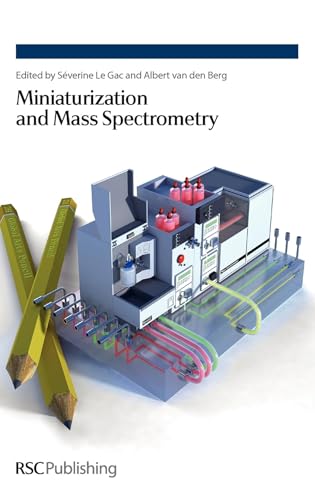
The recent explosion in the use of analytical chemistry, particularly in the biological sciences, has led to a need for fast, reliable and highly sensitive tools able to handle small sample sizes. This book illustrates how microfluidics and lab-on-a-chip devices can satisfy the growing need for miniaturized and enhanced analysis. They lend themselves well to mass spectrometric detection as they use samples in the low microlitre range and are handled on a chip. Miniaturization and Mass Spectrometry focuses on one particular technique, mass spectrometry, whose popularity has increased dramatically in the last two decades with the increase in use of biological analysis and the development of two "soft" ionization techniques, ESI and MALDI. These enable the analysis of large but fragile biological molecules such as DNA, proteins and oligosaccharides. The book starts with an introduction to the coupling of microfluidics to mass spectrometry techniques. It then goes on demonstrate the advantages of such a coupling: the MS analysis benefits from improved sample preparation when performed on a chip while MS yields more information on the sample handled on the chip compared to conventional optical detection. A history on the developments in this field, starting from the off-chip coupling to the on-chip ionization, is also provided. Daniel Figeys, a pioneer in the development of microfluidic systems for MS analysis, describes the early beginnings of this hyphenated analysis technique. Solutions to couple microfluidic systems to the two most popular ionization methods, ESI and MALDI, are presented throughout the chapters. Various examples are given of the application of this microfluidics-MS hyphenated analysis technique to proteomics, metabolomics, organic chemistry and forensics. Coverage is not limited to academic research. The development of commercialized systems and their current use for routine biological analysis are also presented. Lastly, a future vision of the integration of the mass spectrometer on the chip is raised, as a last step to yield fully portable systems for on-site analysis.
Die Inhaltsangabe kann sich auf eine andere Ausgabe dieses Titels beziehen.
Über die Autorin bzw. den Autor
SÚverine Le Gac got her Ph.D. at the University of Sciences and Technologies of Lille (France) in 2004 on the topic of microfluidic systems for mass spectrometry analysis and proteomics applications. Since 2005 she has been working in BIOS, The Lab-on-a-Chip group led by Pr. Van den Berg at the University of Twente. Her current research focuses on microfluidics applications of cell analysis. Since January 2008 she has been appointed as assistant professor in the ame group to lead the research topic "from cell on a chip towards lab-in-a-cell applications. Albert van den Berg leads The Lab-on-a-Chip Group at the University of Twente. His current research interests focus on microanalysis systems and nanosensors, nanofluidics and single cells on chips. He received the Simon Stevin Master award from the Dutch Technical Science foundation (STW) in 2002 and, in the following year, was appointed captain of the Nanofluidics Flagship within the national nanotechnology program, Nanoned.
Von der hinteren Coverseite
The recent explosion in the use of analytical chemistry, particularly in the biological sciences, has led to a need for fast, reliable and highly sensitive tools able to handle small sample sizes. This book illustrates how microfluidics and lab-on-a-chip devices can fulfill the requirement for miniaturized and enhanced analysis. It focuses on one particular technique, mass spectrometry, whose popularity has increased dramatically in the last two decades. The book starts with an introduction to the coupling of microfluidics to mass spectrometry techniques. It then goes on demonstrate the advantages of such a coupling: the MS analysis benefits from improved sample preparation when performed on a chip while MS yields more information on the sample handled on the chip compared to conventional optical detection. A history on the developments in this field, starting from the off-chip coupling to the on-chip ionization, is also provided. Daniel Figeys, a pioneer in the development of microfluidic systems for MS analysis, describes the early beginnings of this hyphenated analysis technique. Solutions to couple microfluidic systems to the two most popular ionization methods, ESI and MALDI, are presented throughout the chapters. Various examples are given of the application of this microfluidics-MS hyphenated analysis technique to proteomics, metabolomics, organic chemistry and forensics. Coverage is not limited to academic research. The development of commercialized systems and their current use for routine biological analysis are also presented. Lastly, a future vision of the integration of the mass spectrometer on the chip is raised, as a last step to yield fully portable systems for on-site analysis.
Auszug. © Genehmigter Nachdruck. Alle Rechte vorbehalten.
Miniaturization and Mass Spectrometry
By Séverine Le Gac, Albert van den BergThe Royal Society of Chemistry
Copyright © 2009 Royal Society of Chemistry
All rights reserved.
ISBN: 978-0-85404-129-9All rights reserved.
Contents
Chapter 1 Introduction Séverine Le Gac and Albert van den Berg,
Section 1 ESI-MS,
Early Couplings,
Chapter 2 The Coupling of Microfabricated Fluidic Devices with Electrospray Ionization Mass Spectrometers Daniel Figeys and Ruedi Aebersold,
Micromachined Source,
Chapter 3 A Silicon-based ESI Chip with Integrated Counter Electrode and its Applications Combined with Mass Spectrometry Gary A. Schultz,
Chapter 4 Microfabricated Multichannel Electrospray Ionization Emitters on Polydimethylsiloxane (PDMS) Microfluidic Devices Jin-Sung Kim and Daniel R. Knapp,
Chapter 5 Microfabricated Nanoelectrospray Emitter Tips based on a Microfluidic Capillary Slot Séverine Le Gac, Steve Arscott and Christian Rolando,
Chapter 6 Microfabricated Parylene Electrospray Tips Integrated with Cyclo-Olefin Microchips for ESI-MS Yanou Yang, Jack D. Henion and H. G. Craighead,
Proteomics Applications of Microfluidics to ESI-MS Coupling,
Chapter 7 Microfluidic Bioanalytical Platforms with Mass Spectrometry Detection for Biomarker Discovery and Screening Iulia M. Lazar,
Chapter 8 Modular Microfluidics Devices Combining Multidimensional Separations: Applications to Targeted Proteomics Analyses of Complex Cellular Extracts Mihaela Ghitun, Eric Bonneil, Christelle Pomiès, Maria Marcantonio, Hongfeng Yin, Kevin Killeen and Pierre Thibault,
On-line Chemical Investigations,
Chapter 9 Simple Chip-based Interfaces for On-line Nanospray Mass Spectrometry Monica Brivio, Willem Verboom and David N. Reinhoudt,
Section 2 MALDI-MS,
Chapter 10 On-line and Off-line MALDI from a Microfluidic Device Harrison K. Musyimi, Steven A. Soper and Kermit K. Murray,
Chapter 11 Lab-on-a-Chip Devices Enabling (Bio)chemical Reactions with On-line Analysis by MALDI-TOF Mass Spectrometry Monica Brivio, Willem Verboom and David N. Reinhoudt,
Chapter 12 MALDI-TOF Mass Spectrometry and Digital Microfluidics for the Investigation of Pre-steady State Enzyme Kinetics Kevin P. Nichols and Han J. G. E. Gardeniers,
Section 3 Towards the Integration of Mass Spectrometers on Chips,
Chapter 13 Development of Miniaturized MALDI Time-of-Flight Mass Spectrometers for Homeland Security and Clinical Diagnostics Robert J. Cotter, Sara McGrath, Christine Jelinek and Theresa Evans-Nguyen,
Subject Index, 311,
CHAPTER 1
Introduction
SÉVERINE LE GAC AND ALBERT VAN DEN BERG
BIOS the Lab-on-a-Chip Group, University of Twente, PO Box 217, 7500 AE Enschede, The Netherlands
The development of miniaturized analytical or chemical processing systems for both biological and chemical applications is a fast growing field because such systems enable the performance of a series of successive operations at scales which are not easily handled by human experimenters. A key challenge arising from this continuous system miniaturization towards the micrometer scale, or even smaller, lies in the ability to sensitively detect low molecular concentrations in reduced sample volumes. Additionally, such analytical systems must be coupled to microfluidic devices with minimal loss of analytes and information. The last issue is the scalability of the detection technique, as the detection is performed on small sample sizes. The ideal technique for microfluidic detection would therefore present an enhanced sensitivity upon downscaling. The dream of the users in the (bio)chemical field would be a fully integrated and portable device that includes (micro)systems for sample handling, preparation and detection. Conventional detection systems are still bulky instruments, resulting in the paradox of coupling a smaller and smaller analytical or processing device to room-sized instrumentation for the detection.
On-chip detection firstly relied on optical techniques, such as ultraviolet (UV) absorbance, fluorescence or laser-induced fluorescence (LIF). The latter technique in particular has a sensitivity in the (sub)micromolar range which is suitable for microfluidic applications. Besides optical techniques, electrical-based techniques are also widely used for on-chip detection due to their sensitivity, e.g. detection based on conductivity, electrochemistry, electro-chemiluminescence, etc. The main advantage of these techniques is that they are fully integrated on the microdevice via the introduction of electrodes; they do not rely on the use of complex and bulky instrumentation as is the case for optical techniques. More exotic techniques are also used in combination with microfluidics, such as nuclear magnetic resonance (NMR) and Raman spectroscopy. These techniques are less popular but are currently developing at a rapid rate. Since the late 1990s mass spectrometry (MS) has also been used for the detection stage for microfluidic processing systems; this combination is particularly striking if one considers the size of a mass spectrometer compared to that of a microchip! MS has rapidly replaced other techniques due to its very high sensitivity and other advantages such as a high selectivity compared to optical-based techniques, for instance. Consequently, it turned out that MS analysis could also benefit from the use of microfluidic systems for sample preparation prior to analysis. As a consequence, the field of microfluidics and MS has been rapidly growing with the appearance of dedicated products within the last decade.
In the first part of this introductory chapter, we briefly introduce the technique of mass spectrometry as well as two ionization methods, namely ESI (electrospray ionization) and MALDI (matrix-assisted laser desorption ionization), commonly used for the analysis of biological/biochemical samples or for organic chemistry purposes. The second part highlights the advantages brought by the miniaturization and coupling of microfabricated devices to MS, and how this marriage benefits both on-chip detection and the MS analysis. The third part of this chapter focuses on the different approaches adopted for coupling microfabricated systems to ESI-MS or MALDI-MS and on the miniaturization of the mass spectrometer itself. In the final part different fields of applications of miniaturization for MS analysis are presented. Moreover, the different technological developments and applications that are treated in greater detail in separate chapters in this book about miniaturization and mass spectrometry are reviewed.
1.1 Brief Introduction to MS Techniques and the ESI and MALDI Ionization Techniques
Mass spectrometry is an analysis technique that detects substances as a function of their molecular weight, or, more precisely, that detects substances as ions as a function of their mass-to-charge ratio (m/z). The analysis starts with the ionization of the molecules, which are subsequently separated in an analyzer according to their size (m/z ratio) before they reach the detector. A mass spectrum is composed of a series of peaks at given m/z values, indicating the presence of ionic species characterized by these mass-to-charge ratio values.
The key part of the connection between microfabricated/microfluidic devices and a mass spectrometer is the ionization of the analyte, as molecules are introduced as ions for the analysis. Subsequently, they must be ionized on the chip or at the outlet of the chip to be detected. Ionization is...
„Über diesen Titel“ kann sich auf eine andere Ausgabe dieses Titels beziehen.
Suchergebnisse für Miniaturization and Mass Spectrometry

Beispielbild für diese ISBN
Miniaturization and Mass Spectrometry
Verlag:
Royal Society of Chemistry, The, 2008
ISBN 10: 085404129X
ISBN 13: 9780854041299
Gebraucht
Hardcover
Erstausgabe
Anbieter: Better World Books Ltd, Dunfermline, Vereinigtes Königreich
Verkäuferbewertung 5 von 5 Sternen

Zustand: Very Good. 1st Edition. Former library copy. Pages intact with possible writing/highlighting. Binding strong with minor wear. Dust jackets/supplements may not be included. Includes library markings. Stock photo provided. Product includes identifying sticker. Better World Books: Buy Books. Do Good. Artikel-Nr. 18377873-75
Gebraucht kaufen
EUR 5,64
EUR 5,84 Versand
Versand von Vereinigtes Königreich nach USA
Versand von Vereinigtes Königreich nach USA
Anzahl: 1 verfügbar
Beispielbild für diese ISBN
Miniaturization and Mass Spectrometry
Verlag:
Royal Society of Chemistry, The, 2008
ISBN 10: 085404129X
ISBN 13: 9780854041299
Gebraucht
Hardcover
Erstausgabe
Anbieter: Better World Books, Mishawaka, IN, USA
Verkäuferbewertung 5 von 5 Sternen
Zustand: Good. 1st Edition. Former library copy. Pages intact with minimal writing/highlighting. The binding may be loose and creased. Dust jackets/supplements are not included. Includes library markings. Stock photo provided. Product includes identifying sticker. Better World Books: Buy Books. Do Good. Artikel-Nr. 45719990-6
Gebraucht kaufen
EUR 16,10
Versand gratis
Versand innerhalb von USA
Versand innerhalb von USA
Anzahl: 1 verfügbar
Beispielbild für diese ISBN
Miniaturization and Mass Spectrometry
Anbieter: Romtrade Corp., STERLING HEIGHTS, MI, USA
Verkäuferbewertung 5 von 5 Sternen
Zustand: New. This is a Brand-new US Edition. This Item may be shipped from US or any other country as we have multiple locations worldwide. Artikel-Nr. ABBB-37075
Beispielbild für diese ISBN
Miniaturization and Mass Spectrometry
Anbieter: Majestic Books, Hounslow, Vereinigtes Königreich
Verkäuferbewertung 4 von 5 Sternen

Zustand: New. pp. 250 Illus. Artikel-Nr. 7348789
Neu kaufen
EUR 107,42
EUR 7,59 Versand
Versand von Vereinigtes Königreich nach USA
Versand von Vereinigtes Königreich nach USA
Anzahl: 4 verfügbar
Beispielbild für diese ISBN
Miniaturization and Mass Spectrometry
Anbieter: PBShop.store US, Wood Dale, IL, USA
Verkäuferbewertung 5 von 5 Sternen
HRD. Zustand: New. New Book. Shipped from UK. Established seller since 2000. Artikel-Nr. CX-9780854041299
Neu kaufen
EUR 174,94
Versand gratis
Versand innerhalb von USA
Versand innerhalb von USA
Anzahl: 15 verfügbar
Beispielbild für diese ISBN
Miniaturization and Mass Spectrometry
Anbieter: PBShop.store UK, Fairford, GLOS, Vereinigtes Königreich
Verkäuferbewertung 5 von 5 Sternen
HRD. Zustand: New. New Book. Shipped from UK. Established seller since 2000. Artikel-Nr. CX-9780854041299
Neu kaufen
EUR 172,39
EUR 5,86 Versand
Versand von Vereinigtes Königreich nach USA
Versand von Vereinigtes Königreich nach USA
Anzahl: 15 verfügbar
Beispielbild für diese ISBN
Miniaturization and Mass Spectrometry
Anbieter: Ria Christie Collections, Uxbridge, Vereinigtes Königreich
Verkäuferbewertung 5 von 5 Sternen
Zustand: New. In English. Artikel-Nr. ria9780854041299_new
Neu kaufen
EUR 189,94
EUR 13,18 Versand
Versand von Vereinigtes Königreich nach USA
Versand von Vereinigtes Königreich nach USA
Anzahl: 1 verfügbar
Foto des Verkäufers
Miniaturization and Mass Spectrometry
Anbieter: moluna, Greven, Deutschland
Verkäuferbewertung 5 von 5 Sternen
Gebunden. Zustand: New. Artikel-Nr. 595097950
Neu kaufen
EUR 184,91
EUR 48,99 Versand
Versand von Deutschland nach USA
Versand von Deutschland nach USA
Anzahl: Mehr als 20 verfügbar
Beispielbild für diese ISBN
Miniaturization and Mass Spectrometry
Anbieter: Revaluation Books, Exeter, Vereinigtes Königreich
Verkäuferbewertung 5 von 5 Sternen
Hardcover. Zustand: Brand New. 1st edition. 250 pages. 9.50x6.50x1.00 inches. In Stock. Artikel-Nr. x-085404129X
Neu kaufen
EUR 244,49
EUR 14,60 Versand
Versand von Vereinigtes Königreich nach USA
Versand von Vereinigtes Königreich nach USA
Anzahl: 2 verfügbar