
Verwandte Artikel zu Connecting Christ: How to Discuss Jesus in a World...
Inhaltsangabe
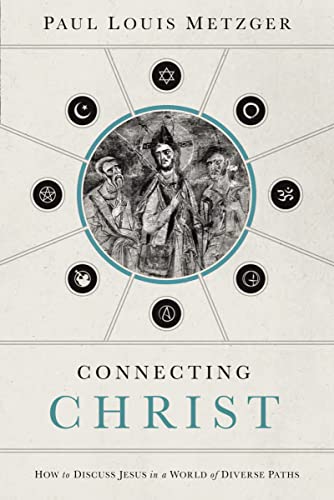
We live in a multifaith society: an ever-growing, diverse cultural climate, where no religion is viewed as having a monopoly on truth. It is important when that Christ-followers not only share the Word of God but also listen and learn how to interact meaningfully with those of diverse perspectives as we engage in life’s most important conversations.
Connecting Christ encourages believers to be not only better communicators and witnesses but also listeners to people of other worldviews and traditions―skills that are crucial in defending against today’s negative connotations and ineffective approaches associated with Christian evangelism.
With extensive commentary from leaders of various walks of faith and life ― from Judaism to Islam and Buddhism to atheism ―theologian and author Dr. Paul Louis Metzger offers a spiritual compass to help navigate the intimidating yet critical dialogue of conveying our faith in Christ. Filled with practical guidance and insight into controversial topics, such as hell, fascism, and homosexuality, Connecting Christ reveals that there is a way of evangelizing that is neither disengaging monologue nor silent, lifestyle ministry but is, instead, an approach for evangelism and dialogue to go hand-in-hand.
We must remove ourselves as the stumbling block to salvation for others and embrace a way to proclaim the uncommon, compassionate God revealed in Jesus Christ―the Savior this world is dying to know.
Die Inhaltsangabe kann sich auf eine andere Ausgabe dieses Titels beziehen.
Über die Autorin bzw. den Autor
Dr. Paul Louis Metzger is the founder and director of the Institute for Cultural Engagement: New Wine, New Wineskins, and Professor of Christian Theology and Theology of Culture at Multnomah University and Seminary. Dr. Metzger is also the editor of New Wine's journal Cultural Encounters: A Journal for the Theology of Culture. Integrating theology and spirituality with cultural sensitivity stands at the center of Dr. Metzger's ministry vision. He and his wife, Mariko, a native of Japan, have been active in intercultural ministry in churches in the United States, Japan, and England. Dr. Metzger is the author of Beatitudes, Not Platitudes: Jesus' Invitation to the Good Life (Cascade, 2018); Evangelical Zen: A Christian's Spiritual Travels With a Buddhist Friend (2015); Connecting Christ: How to Discuss Jesus in a World of Diverse Paths (2012); The Gospel of John: When Love Comes to Town (2010); Exploring Ecclesiology: An Evangelical and Ecumenical Introduction (co-authored with Brad Harper; 2009); and Consuming Jesus: Beyond Race and Class Divisions in a Consumer Church (2007). He is co-editor of A World for All?: Global Civil Society in Political Theory and Trinitarian Theology (co-edited with William F. Storrar and Peter J. Casarella; 2011); and editor of Trinitarian Soundings in Systematic Theology (2005). Dr. Metzger is a member of the Center of Theological Inquiry, Princeton, New Jersey, and Senior Mission Scholar in Residence, Spring 2018, at the Overseas Ministries Study Center, New Haven, Connecticut. The Metzgers have two children and one grandchild. He has a keen interest in the art of Katsushika Hokusai and Georges Rouault, the writings of John Steinbeck, and the music of Johnny Cash, The Doors, and Nirvana. Dr. Metzger blogs frequently at ""Uncommon God, Common Good."" Dr. Metzger's present research projects include a forthcoming volume on social ethics inspired by Dr. Martin Luther King, Jr.'s personalist philosophy and public theology, most notably Dr. King's prophetic critique of the Vietnam War.
Auszug. © Genehmigter Nachdruck. Alle Rechte vorbehalten.
CONNECTING CHRIST
How to Discuss Jesus in a World of Diverse PathsBy Paul Louis MetzgerThomas Nelson
Copyright © 2012 Paul Louis MetzgerAll right reserved.
ISBN: 978-0-8499-4724-7
Contents
Acknowledgments.................................................................................................xiiiIntroduction: Wired for Relationships...........................................................................xvi1. What Is Relational-Incarnational Apologetics?................................................................32. What Are We Making an Apology for Anyway?....................................................................133. Who's the Stumbling Block—You and Me or Jesus?.........................................................224. Why Should We Apologize?.....................................................................................355. How Is Christ's Church God's Apologetic?.....................................................................506. The Jewish Question (Judaism)................................................................................637. Whack Jobs (Islam)...........................................................................................808. The Jesus Box (Hinduism).....................................................................................969. The Dewdrop World (Buddhism).................................................................................10610. Will the real Jesus Please Stand Up—and Sit Down? (Unitarian Universalism)............................11511. The Burning Bosom (Mormonism)...............................................................................12612. All In (Nietzschean Atheism)................................................................................14313. Avatar (Neo-Paganism).......................................................................................15514. All Roads Lead to Wall Street...............................................................................17515. Dead Metaphors and Living Hell..............................................................................18616. The Missing Link............................................................................................19817. Homosexuality, Holy Matrimony, and Hospitality..............................................................21118. Beyond Ned Flanders and the Fascists........................................................................22819. Response to "The Jewish Question" by Adam Gregerman.........................................................23920. Response to "Whack Jobs" by Richard Reno....................................................................24321. Response to "The Jesus Box" by Prema Raghunath..............................................................24522. Response to "The Dewdrop World" by Kyogen Carlson...........................................................24723. Response to "Will the Real Jesus Please Stand Up—and Sit Down?" by Marilyn Sewell.....................24924. Response to "The Burning Bosom" by Robert L. Millet.........................................................25125. Responses to "All In" by Thomas W. Clark and Austin Dacey...................................................25326. Response to "Avatar" by Gus diZerega........................................................................257Afterword: An Apology for Prayer................................................................................261Notes...........................................................................................................268About the Author................................................................................................328
Chapter One
What Is Relational-Incarnational Apologetics?
Have you ever seen the movie As Good as It Gets, starring Jack Nicholson and Helen Hunt? Nicholson plays Melvin Udall, a man who pursues "Carol the Waitress," played by hunt. Until he falls in love, Melvin is rude, insensitive, racially bigoted, homophobic, and severely obsessive-compulsive. As his gay neighbor Simon Bishop explains, Melvin is the worst kind of human. As difficult as it is to deal with Melvin, it is perhaps even more difficult to imagine that this man is a best-selling author of romance novels. In fact, when the female receptionist at his publishing house asks him how he is able to portray women so accurately in his works, Melvin tells her that women are like men, only without reason and accountability.
But what does all this have to do with apologetics? everything. everything, that is, if you want to engage people truthfully and relationally—and not treat them dismissively. That's what this chapter and this book are about. But it's easier said than done. So often I am like Melvin. I talk about romance novels—usually God's love letter to us recorded as the Bible—but I'll never understand the depth of his love. I talk about relationships with people, but I rarely develop them myself. I lecture on incarnational, life-on-life apologetic engagement, but I often fail to respond to people life-on-life, keeping them at a distance. And I know I am not alone in this social indifference.
Conservative Christians often approach people as Melvin Udall does. We can wax eloquent on romance and relationships, but we rarely experience them. We approach Mormons, Buddhists, and homosexuals as Melvin does: categorizing and dehumanizing them until we are forced to deal with them face-to-face. Only then do we see that they are humans and not stereotypes. We may be able to articulate a homosexual worldview in order to dismantle it or set forth the homosexual demographic of a given locale, accounting for their tastes, educational backgrounds, vocations, hobbies, everything except who they are in terms of their deepest values and life stories. In other words, we can know about homosexuals or Buddhists or Mormons as groups, but never really know or engage the individuals. Instead we simply lump them all into one category, as Melvin unceremoniously labels Carol as a waitress and Simon as a fag. But it isn't so easy to label others once we find out who they really are.
People are complex, mysterious, inconsistent, contradictory, wart-infested, and wondrous to behold. in keeping with how Simon views the matter, the longer you gaze at someone, the more human the individual becomes. And if you stare at someone long enough, that individual becomes more than just his or her worldview or demographic. Like God, in whose image everyone is created, each human is too complex to be classified. True understanding requires what Atticus Finch says in To Kill a Mockingbird: "If you can learn a simple trick, ... you'll get along a lot better with all kinds of folks. You never really understand a person until you consider things from his point of view ... until you climb into his skin and walk around in it."
What will lead us to take the risk to climb outside our shells, peel away the pretense of false skin, climb into someone else's skin, and walk around in it? Usually it takes a crisis to justify such a risk. Melvin does not get close to Carol until she's suddenly gone from his life: she quits her waitressing job for the sake of her sick child, Spencer. Melvin finds a top-notch doctor to care for "Spence" (as Melvin will later affectionately refer to him) so that she can return to her job. At first, Melvin selfishly wants Carol to remain his waitress at his favorite restaurant, but his interest in her deepens as his contact with her increases.
Melvin's crisis with...
„Über diesen Titel“ kann sich auf eine andere Ausgabe dieses Titels beziehen.
Suchergebnisse für Connecting Christ: How to Discuss Jesus in a World...

Beispielbild für diese ISBN
Connecting Christ: How to Discuss Jesus in a World of Diverse Paths
Anbieter: World of Books (was SecondSale), Montgomery, IL, USA
Verkäuferbewertung 5 von 5 Sternen

Zustand: Very Good. Item in very good condition! Textbooks may not include supplemental items i.e. CDs, access codes etc. Artikel-Nr. 00075682456
Gebraucht kaufen
EUR 3,70
Versand gratis
Versand innerhalb von USA
Versand innerhalb von USA
Anzahl: 2 verfügbar
Beispielbild für diese ISBN
Connecting Christ: How to Discuss Jesus in a World of Diverse Paths
Anbieter: World of Books (was SecondSale), Montgomery, IL, USA
Verkäuferbewertung 5 von 5 Sternen
Zustand: Good. Item in good condition. Textbooks may not include supplemental items i.e. CDs, access codes etc. Artikel-Nr. 00086820290
Gebraucht kaufen
EUR 3,70
Versand gratis
Versand innerhalb von USA
Versand innerhalb von USA
Anzahl: 3 verfügbar
Beispielbild für diese ISBN
Connecting Christ: How to Discuss Jesus in a World of Diverse Paths
Verlag:
Nelson Incorporated, Thomas, 2012
ISBN 10: 0849947243
ISBN 13: 9780849947247
Gebraucht
Softcover
Anbieter: Better World Books: West, Reno, NV, USA
Verkäuferbewertung 5 von 5 Sternen
Zustand: Very Good. Pages intact with possible writing/highlighting. Binding strong with minor wear. Dust jackets/supplements may not be included. Stock photo provided. Product includes identifying sticker. Better World Books: Buy Books. Do Good. Artikel-Nr. 18469827-75
Gebraucht kaufen
EUR 6,38
Versand gratis
Versand innerhalb von USA
Versand innerhalb von USA
Anzahl: 1 verfügbar
Beispielbild für diese ISBN
Connecting Christ: How to Discuss Jesus in a World of Diverse Paths
Verlag:
Nelson Incorporated, Thomas, 2012
ISBN 10: 0849947243
ISBN 13: 9780849947247
Gebraucht
Softcover
Anbieter: Better World Books, Mishawaka, IN, USA
Verkäuferbewertung 5 von 5 Sternen
Zustand: Good. Former library copy. Pages intact with minimal writing/highlighting. The binding may be loose and creased. Dust jackets/supplements are not included. Includes library markings. Stock photo provided. Product includes identifying sticker. Better World Books: Buy Books. Do Good. Artikel-Nr. 4196062-6
Gebraucht kaufen
EUR 6,38
Versand gratis
Versand innerhalb von USA
Versand innerhalb von USA
Anzahl: 2 verfügbar
Beispielbild für diese ISBN
A Connecting Christ: How to Discuss Jesus in a World of Diverse Paths
Anbieter: ThriftBooks-Dallas, Dallas, TX, USA
Verkäuferbewertung 5 von 5 Sternen
Paperback. Zustand: Very Good. No Jacket. May have limited writing in cover pages. Pages are unmarked. ~ ThriftBooks: Read More, Spend Less. Artikel-Nr. G0849947243I4N00
Gebraucht kaufen
EUR 6,91
Versand gratis
Versand innerhalb von USA
Versand innerhalb von USA
Anzahl: 1 verfügbar
Beispielbild für diese ISBN
Connecting Christ: How to Discuss Jesus in a World of Diverse Paths
Anbieter: Windows Booksellers, Eugene, OR, USA
Verkäuferbewertung 5 von 5 Sternen
Paperback. Wrappers are slightly edge worn and bumped. 328 pages. 328 pp. Artikel-Nr. 532220
Gebraucht kaufen
EUR 8,93
EUR 6,50 Versand
Versand innerhalb von USA
Versand innerhalb von USA
Anzahl: 1 verfügbar
Beispielbild für diese ISBN
Connecting Christ: How to Discuss Jesus in a World of Diverse Paths
Anbieter: Windows Booksellers, Eugene, OR, USA
Verkäuferbewertung 5 von 5 Sternen
Paperback. Wrappers are slightly edge worn and bumped. Scant ink underlining. 328 pages. 328 pp. Artikel-Nr. 532221
Gebraucht kaufen
EUR 8,93
EUR 6,50 Versand
Versand innerhalb von USA
Versand innerhalb von USA
Anzahl: 1 verfügbar
Beispielbild für diese ISBN
Connecting Christ: How to Discuss Jesus in a World of Diverse Paths
Anbieter: Ria Christie Collections, Uxbridge, Vereinigtes Königreich
Verkäuferbewertung 5 von 5 Sternen
Zustand: New. In English. Artikel-Nr. ria9780849947247_new
Neu kaufen
EUR 20,76
EUR 13,18 Versand
Versand von Vereinigtes Königreich nach USA
Versand von Vereinigtes Königreich nach USA
Anzahl: Mehr als 20 verfügbar
Beispielbild für diese ISBN
Connecting Christ
Anbieter: Kennys Bookstore, Olney, MD, USA
Verkäuferbewertung 5 von 5 Sternen
Zustand: New. Connecting Christ encourages believers to be not only better communicators and witnesses but also listeners to people of other worldviews and traditions---skills that are crucial in defending against today's negative connotations and ineffective approaches associated with Christian evangelism. Num Pages: 352 pages, black & white illustrations. BIC Classification: HRCV. Category: (G) General (US: Trade). Dimension: 229 x 152 x 25. Weight in Grams: 389. . 2012. Paperback. . . . . Books ship from the US and Ireland. Artikel-Nr. V9780849947247
Neu kaufen
EUR 25,70
EUR 9,10 Versand
Versand innerhalb von USA
Versand innerhalb von USA
Anzahl: 15 verfügbar