
Inhaltsangabe
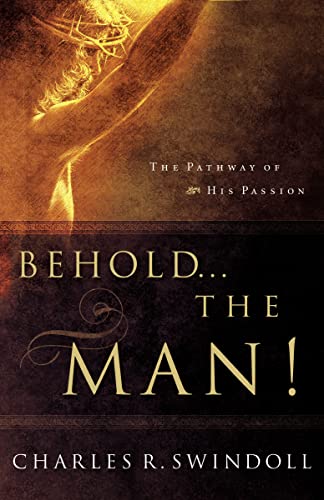
The truthful Man . . . falsely accused. The innocent Man . . . illegally tried and wrongly convicted. The gentle Man . . . who suffered punishment few could imagine, much less endure. The murdered Man . . . who forgave His own merciless killers. The divine Man . . . who died as a common criminal. The willing Man . . . who gave His life for others. The ordinary Man . . . who was, in fact, the extraordinary Son of God.
The pathway Jesus took to the cross of Calvary is commonly called "the Passion." This sorrowful path weaved through soul-wrenching prayers and illicit deals made in shadowy darkness. It descended into corrupted courts bereft of justice and circled by prejudiced rulers stripped of power. On this pathway of His passion, Jesus paused for a torturous scourging and plodded on doggedly to a horrific death on a hillside called the Skull. But why?
In this incredible, historically accurate account, you will come face to face with Jesus-the Man of Sorrows. If you're honest, you'll find the amazing answer to why . . . and you'll change. When you stop long enough to look, to think, to imagine, and to truly Behold the Man, you'll never be the same again.
Chuck Swindoll leads us through a detailed examination of the events surrounding Jesus as he follows the winding pathway of his passion to the cross. This story-based investigation of the last week of Jesus's life-from the Last Supper to his death-focuses on "Why?" And in his Epilogue to this powerful, insightful book, Swindoll clearly explains to the unchurched and non-Christian reader why Jesus was willing to walk this sacrificial path to die-he did it for them.
Releasing simultaneously with Mel Gibson's stirring movie The Passion of The Christ, Swindoll's book provides Christians an excellent evangelistic follow-up tool to give to their unchurched or non-Christian friends and families who see the film. As Chuck said after a private viewing of the movie, "You'll never be the same again." And Behold . . . the Man will help ensure that fact.
Die Inhaltsangabe kann sich auf eine andere Ausgabe dieses Titels beziehen.
Über die Autorin bzw. den Autor
Pastor Charles R. Swindoll has devoted his life to the accurate, practical teaching and application of God's Word. He is the founding pastor of Stonebriar Community Church in Frisco, Texas, as well as the founder of Insight for Living, a leading program in Christian broadcasting since 1979 that airs around the world. Chuck has also served as president and now chancellor emeritus at Dallas Theological Seminary and has contributed more than 100 titles to a worldwide reading audience, books for which he has received the Gold Medallion Lifetime Achievement Award, twelve Gold Medallion Awards, and the Christian Book Award for Bible of the Year.
Auszug. © Genehmigter Nachdruck. Alle Rechte vorbehalten.
Behold ... the Man
The Pathway of His PassionBy CHARLES R. SWINDOLLW Publishing Group
Copyright © 2007 Charles R. SwindollAll right reserved.
ISBN: 978-0-8499-4532-8
Contents
Acknowledgments.....................................viiPrologue............................................ix1 The Cup of Sacrifice..............................12 Midnight in the Garden............................133 Three O' Clock in the Morning.....................254 The Six Trials of Jesus...........................395 The Man Who Missed His Cross......................676 The Way of the Cross..............................817 The Darkest of All Days...........................93Epilogue............................................101Endnotes............................................111
Chapter One
The Cup of Sacrifice
The night before he felt the nails, he gathered twelve friends together around a table ... and ate.
I've had some pretty amazing meals in my lifetime. They span the extremes, from the sublime to the sensational, from the most primitive to the most formal, fashionable, and elegant. I've been invited to banquets in governors' mansions and have sat at the captain's table on ocean cruises. I've also eaten in rugged missionary huts and around campfires with my family, enjoying delicious fresh-caught fish, and I've tried to choke down hospital meals that tasted like a mixture of wet plaster and soggy cardboard.
Having done more than my share of eating (!) in my more than six decades, I can tell you that, if given a choice, I much prefer a small, intimate setting to a large, impersonal gathering. As a matter of fact, the more I study the New Testament and examine how the people of that era ate their meals, the more I think I would have felt right at home with them, especially among Jesus and His disciples. Almost without exception, they kept their meals simple, and they kept the group small. No five- or six-course feasts. No elegant banquets or flashy decorations. And no formal, sophisticated protocol. Nowhere was this more evident than when they ate the Passover meal together.
Centuries have passed since the evening Jesus sat in the upper room and shared that last simple meal with His disciples. Simple, yet extremely important. During those centuries, that meal has taken on enormous significance. Unfortunately, it has also taken on the trappings of religion-the "extras" of complicated rituals and denominational distinctives. In doing so, it has lost, I believe, some of the profound simplicity that surrounded the table when Jesus and His men met together for supper that final night.
First of all, let's consider why they were together.
It was almost time for the Feast of Unleavened Bread, called the Passover Feast. The leading priests and teachers of the law were trying to find a way to kill Jesus, because they were afraid of the people. The Day of Unleavened Bread came when the Passover lambs had to be sacrificed. Jesus said to Peter and John, "Go and prepare the Passover meal for us to eat." -Luke 22:1-2, 7-8
Every year, on the fourth Thursday of November, many Americans prepare a lavish meal. We invite our nearest and dearest-family and friends-and celebrate the Thanksgiving meal. This is the holiday that remains my all-time favorite of the year. It is a time when we gather for two simple reasons: to have a meal and to remember.
Passover might be considered the Thanksgiving celebration of the Jews. It's not a Thanksgiving with turkey and trimmings, pilgrims and Plymouth Rock, but a time of remembrance of something far more significant.
When the Hebrews were in Egypt, God called Moses to lead them out of slavery and into the Promised Land. On the night of that great Exodus, God told His servant, in effect, "Moses, give these instructions to the Hebrews. Tell each household to choose a perfect lamb-one that is unblemished, without scars or imperfections. They are to take that spotless lamb, kill it in the way I have specified, and drain the blood into a pan. Take that blood and smear it on the doorway of their homes. For tonight, Moses, the Angel of the Lord will visit Egypt. Any home with blood on the door, he will 'pass over' that home and leave it untouched. But if he finds no blood on the door, death will enter that home, and the oldest son will die. There will be no exception, Moses. The Destroyer will 'pass over' only when he sees the blood." (See Exodus 12:1-29.)
That began the single most important of all the Jewish observances. Appropriately, it is called "Passover." God made it clear that they were to remember that epochal night from then on; and when they did, they were to explain its significance to their children. The meal became the Jews' most important celebration.
On His last night with His disciples, Jesus celebrated the Passover, as devout Jews had been doing for centuries. Appropriately, He used that meal of remembrance to turn their attention to His own approaching death.
The Menu
And they prepared the Passover meal. -Luke 22:13
As the Jews celebrated their annual Passover Feast of remembrance and thanksgiving, the required ingredients of that feast were passed down from generation to generation in the traditional teachings of the six hundred thirteen Laws of the Torah. This included the slaughtering and preparing of "the Paschal lamb" (Exodus 12:6); the obligation to eat the Paschal lamb-that is, to participate in the Passover Seder (Exodus 12:8); the proper preparation of the lamb-it must be roasted (Exodus 12:9); the prohibition against leaving any remains of the Lamb (Exodus 12:10); the requirement to eat matzah (unleavened bread) during Passover (Exodus 12:18); the obligation to tell one's child the story of the liberation from Egypt (Exodus 13:8). These are just a few of the specific instructions from the Torah regarding Passover. Nothing was all that complicated, but what was stated was to be followed to the letter.
The Feast of Passover was centered around three items: roasted lamb, bitter herbs, and unleavened bread. The roasted lamb was central. It was to remind them of the sacrifice of the spotless lamb and the blood spread on the doorposts of believing Hebrew homes. The bitter herbs were a mixture of lettuce, endive, roots, peppermint, and dandelion. As the sting of those bitter herbs touched the tongue, they offered a vivid taste of the stinging years that their Hebrew ancestors had spent in slavery. The unleavened bread was to remind them of the haste with which the Hebrews had to prepare to leave with Moses, their deliverer.
But this night, Jesus created a new tradition: He turned familiar foods into foreboding symbols.
The Meal
And when the hour had come, He reclined at the table, and the apostles with Him. -Luke 22:14, NASB
At the risk of losing favor with those who are lovers of great works of art, I need to say something that some may not appreciate, and that is this: Leonardo da Vinci did Christianity a great disservice with his painting The Last Supper. Not to the world of art, you understand; artistically his painting is a masterpiece. But historically and biblically the masterpiece is far from authentic.
In da Vinci's painting, Jesus and His disciples are sitting on one...
„Über diesen Titel“ kann sich auf eine andere Ausgabe dieses Titels beziehen.
Suchergebnisse für Behold... the Man!: The Pathway of His Passion

Beispielbild für diese ISBN
Behold. the Man!: The Pathway of His Passion
Anbieter: World of Books (was SecondSale), Montgomery, IL, USA
Verkäuferbewertung 5 von 5 Sternen

Zustand: Good. Item in good condition. Textbooks may not include supplemental items i.e. CDs, access codes etc. Artikel-Nr. 00089120250
Gebraucht kaufen
EUR 3,35
Versand gratis
Versand innerhalb von USA
Versand innerhalb von USA
Anzahl: 19 verfügbar
Beispielbild für diese ISBN
Behold. the Man!: The Pathway of His Passion
Anbieter: World of Books (was SecondSale), Montgomery, IL, USA
Verkäuferbewertung 5 von 5 Sternen
Zustand: Acceptable. Item in acceptable condition! Textbooks may not include supplemental items i.e. CDs, access codes etc. Artikel-Nr. 00101567835
Gebraucht kaufen
EUR 3,35
Versand gratis
Versand innerhalb von USA
Versand innerhalb von USA
Anzahl: 1 verfügbar
Beispielbild für diese ISBN
Behold. the Man!: The Pathway of His Passion
Anbieter: World of Books (was SecondSale), Montgomery, IL, USA
Verkäuferbewertung 5 von 5 Sternen
Zustand: Very Good. Item in very good condition! Textbooks may not include supplemental items i.e. CDs, access codes etc. Artikel-Nr. 00102520681
Gebraucht kaufen
EUR 3,35
Versand gratis
Versand innerhalb von USA
Versand innerhalb von USA
Anzahl: 1 verfügbar
Beispielbild für diese ISBN
Behold. the Man!: The Pathway of His Passion
Anbieter: ThriftBooks-Dallas, Dallas, TX, USA
Verkäuferbewertung 5 von 5 Sternen
Paperback. Zustand: Very Good. No Jacket. Former library book; May have limited writing in cover pages. Pages are unmarked. ~ ThriftBooks: Read More, Spend Less. Artikel-Nr. G0849945321I4N10
Gebraucht kaufen
EUR 5,68
Versand gratis
Versand innerhalb von USA
Versand innerhalb von USA
Anzahl: 1 verfügbar
Beispielbild für diese ISBN
Behold. the Man!: The Pathway of His Passion
Anbieter: ThriftBooks-Atlanta, AUSTELL, GA, USA
Verkäuferbewertung 5 von 5 Sternen
Paperback. Zustand: Very Good. No Jacket. May have limited writing in cover pages. Pages are unmarked. ~ ThriftBooks: Read More, Spend Less. Artikel-Nr. G0849945321I4N00
Gebraucht kaufen
EUR 5,68
Versand gratis
Versand innerhalb von USA
Versand innerhalb von USA
Anzahl: 1 verfügbar
Beispielbild für diese ISBN
Behold. the Man!: The Pathway of His Passion
Anbieter: ThriftBooks-Dallas, Dallas, TX, USA
Verkäuferbewertung 5 von 5 Sternen
Paperback. Zustand: Very Good. No Jacket. May have limited writing in cover pages. Pages are unmarked. ~ ThriftBooks: Read More, Spend Less. Artikel-Nr. G0849945321I4N00
Gebraucht kaufen
EUR 5,68
Versand gratis
Versand innerhalb von USA
Versand innerhalb von USA
Anzahl: 1 verfügbar
Beispielbild für diese ISBN
Behold. the Man!: The Pathway of His Passion
Anbieter: ThriftBooks-Dallas, Dallas, TX, USA
Verkäuferbewertung 5 von 5 Sternen
Paperback. Zustand: Good. No Jacket. Pages can have notes/highlighting. Spine may show signs of wear. ~ ThriftBooks: Read More, Spend Less. Artikel-Nr. G0849945321I3N00
Gebraucht kaufen
EUR 5,68
Versand gratis
Versand innerhalb von USA
Versand innerhalb von USA
Anzahl: 1 verfügbar
Beispielbild für diese ISBN
Behold. the Man!
Verlag:
Nelson Incorporated, Thomas, 2004
ISBN 10: 0849945321
ISBN 13: 9780849945328
Gebraucht
Softcover
Anbieter: Better World Books, Mishawaka, IN, USA
Verkäuferbewertung 5 von 5 Sternen
Zustand: Very Good. Later Printing. Pages intact with possible writing/highlighting. Binding strong with minor wear. Dust jackets/supplements may not be included. Stock photo provided. Product includes identifying sticker. Better World Books: Buy Books. Do Good. Artikel-Nr. 13662015-75
Gebraucht kaufen
EUR 5,75
Versand gratis
Versand innerhalb von USA
Versand innerhalb von USA
Anzahl: 4 verfügbar
Beispielbild für diese ISBN
Behold. the Man!: The Pathway of His Passion
Verlag:
Thomas Nelson (edition ), 2004
ISBN 10: 0849945321
ISBN 13: 9780849945328
Gebraucht
Paperback
Anbieter: BooksRun, Philadelphia, PA, USA
Verkäuferbewertung 5 von 5 Sternen
Paperback. Zustand: Fair. The item might be beaten up but readable. May contain markings or highlighting, as well as stains, bent corners, or any other major defect, but the text is not obscured in any way. Artikel-Nr. 0849945321-7-1
Gebraucht kaufen
EUR 5,77
Versand gratis
Versand innerhalb von USA
Versand innerhalb von USA
Anzahl: 3 verfügbar
Beispielbild für diese ISBN
Behold. the Man!
Verlag:
Nelson Incorporated, Thomas, 2004
ISBN 10: 0849945321
ISBN 13: 9780849945328
Gebraucht
Softcover
Anbieter: Better World Books, Mishawaka, IN, USA
Verkäuferbewertung 5 von 5 Sternen
Zustand: Good. Later Printing. Former library copy. Pages intact with minimal writing/highlighting. The binding may be loose and creased. Dust jackets/supplements are not included. Includes library markings. Stock photo provided. Product includes identifying sticker. Better World Books: Buy Books. Do Good. Artikel-Nr. GRP85873209
Gebraucht kaufen
EUR 5,81
Versand gratis
Versand innerhalb von USA
Versand innerhalb von USA
Anzahl: 1 verfügbar