
Verwandte Artikel zu Dancing with Fire: A Mindful Way to Loving Relationships
Inhaltsangabe
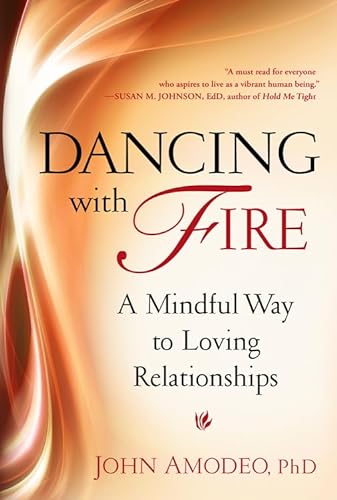
Winner of the 2014 Silver Independent Publisher Book Award in the relationship category and winner of the Spirituality and Practice Award as one of the best spiritual books of 2013!
The search for inner peace is often met with what seems like a conflicting path- the irresistible pull of love and connection with others to which we are drawn.
Reconciling these opposites, John Amodeo shows how spirituality and vibrant relationships are identical. He says that Buddha's concept of the root of suffering is misunderstood. It is not desire that causes suffering; desire is the fire that springs from the basic life force. Drawing upon the science of attachment theory, Amodeo illuminates how the root of our suffering is disconnection from ourselves and others, which is fueled by clinging to what doesn't serve us
In a conversational tone, Amodeo presents relationship as sacred experience. He teaches how to welcome desire mindfully rather than suppress it and how to overcome fear of failure in relating. He also discusses meditation as self-intimacy and holding ourselves with loving-kindness. Lastly, he explores the role of community in spiritual awakening and the issue of whom to trust--our guru or ourselves?
Die Inhaltsangabe kann sich auf eine andere Ausgabe dieses Titels beziehen.
Über die Autorinnen und Autoren
John Amodeo, PhD, a licensed marriage and family therapist for over 30 years, has been engaged in Buddhism and spiritual practice for 40 years. He is author of The Authentic Heart and Love and Betrayal, and he was a writer and contributing editor for Yoga Journal. He is also a Focusing Trainer and has trained in Somatic Experiencing for trauma. He lectures internationally on love and relationships, and has been a featured guest on CNN, CNBC, Donahue, and New Dimensions Radio. He has been interviewed or written articles for publications that include the Chicago Tribune, The Dallas Morning News, and The Rocky Mountain News. He lives in the San Francisco Bay Area.
John Amodeo, PhD, a licensed marriage and family therapist for over 30 years, has been engaged in Buddhism and spiritual practice for 40 years. He is author of The Authentic Heart and Love and Betrayal, and he was a writer and contributing editor for Yoga Journal. He is also a Focusing Trainer and has trained in Somatic Experiencing for trauma. He lectures internationally on love and relationships, and has been a featured guest on CNN, CNBC, Donahue, and New Dimensions Radio. He has been interviewed or written articles for publications that include the Chicago Tribune, The Dallas Morning News, and The Rocky Mountain News. He lives in the San Francisco Bay Area.
Auszug. © Genehmigter Nachdruck. Alle Rechte vorbehalten.
Dancing with Fire
A Mindful Way to Loving Relationships
By John AmodeoTheosophical Publishing House
Copyright © 2013 John Amodeo
All rights reserved.
ISBN: 978-0-8356-0914-2All rights reserved.
Contents
Dedication,
Acknowledgments,
Introduction,
Part 1 The Root of Suffering: Disconnection and Isolation,
1. Off the Cushion and Into Life,
2. Sacred Longing: A Doorway to Connection,
3. We Exist in Relationship,
4. Clinging to What Disconnects Us: The Root of Suffering,
5. The Anatomy of Clinging,
6. Making Friends with Clinging and Craving,
Part 2 Intimacy with Others,
7. Spirituality Meets Attachment Theory: Is Suffering Caused by Attachment or Non-Attachment?,
8. A Psychology of Liberation: Living with Longing,
9. Embracing the Pleasures of Relating,
10. The Perils of Positive Thinking: Embracing the Non-Rational Forces within Us,
11. Relishing Life's Pleasures and Embracing Our Humanity,
Part 3 Intimacy with Ourselves,
12. Turning Toward Ourselves,
13. Intimacy as a Sacred Experience,
14. Meditation as Self-Intimacy,
15. Interdependence with Others and Nature,
16. The Romance of Enlightenment,
17. Embracing Feelings—Embracing Life,
18. Focusing: Loving-Kindness toward Ourselves,
Part 4 Intimacy with Community,
19. Friendship: Awakening in Community,
20. Finding Refuge in Community,
21. Teachers and Spiritual Communities: Trust Your Guru or Yourself?,
Conclusion,
Self-Inquiry or Discussion Questions,
Notes,
Bibliography,
A Guide to Resources,
About the Author,
CHAPTER 1
Off the Cushion and Into Life
* * *
I have never been a great meditator. A great meditator can sit for one hour in the morning and one hour in the evening—very still, back straight. A great meditator rises at dawn, bright-eyed and alert, eager to hit the cushion before a grueling day at the office. There is no grumbling when mornings are cold, traffic is bumper to bumper, and the hot coffee is not ready upon arrival. Everything is an opportunity for spiritual practice.
If you are a great meditator, then all day long you watch your thoughts, and you don't let them interfere with being here now. You never have judgments about other people, including your boss, who just promoted a younger, less-qualified employee to the position you wanted. Any disappointment is brief because you know that desire and ambition cause suffering. Besides, you are so compassionate that you're happy for him, as you figure that he needs the raise more than you do! Your life is blessedly serene—no worries that the polar ice caps are melting and that your elderly parents are running out of money and want to move in with you. After all, it's just the workings of karma—all part of the grand illusion.
Most notably, great meditators never slip out for pizza during a meditation retreat. Did I say pizza? Yes, I must humbly confess that I once committed that grievous breach of retreat protocol.
There we were, at a ten-day meditation course in the woods during a brutal New England winter. We arose before the birds and meditated well past their bedtime. All day long we watched our breath, which I discovered is much easier to do in the dead of winter because you can actually see it!
While attempting to observe the breath, we were instructed to notice any stray thoughts that were coming and going in our minds. One cold, lonely night, mine were straying toward pizza. I was having a thought that came but was reluctant to get going. I knew that I was a total meditation failure when not only did I notice this thought, I also felt compelled to act upon it!
Now, I must further confess that my desire wasn't limited to flaunting the rules and indulging in that pizza all by myself. I fully intended to corrupt an innocent retreatant, the friend I came with. Fortunately, I was saved from that perilous karma.
It just so happened that my friend and I were thinking of pizza at the same time. Endless hours of meditation must have connected our minds on some mysterious level. I'm not sure how the contact was made, but suddenly we found ourselves in his Volkswagen Bug headed for the local pizzeria. Was it a moment of shared illumination or a shared delusion that this expedition would somehow satisfy us? Whatever it was, that pizza sure hit the spot ... and even more so, our conversation.
I don't remember exactly what we talked about, but the usual suspects would, of course, be women, our careers, and our complaints, including sitting and watching our breath for days on end in the middle of winter.
What a Little Pizza and Conversation Can Do
Fast-forward thirty-five years. How can I still maintain that slinking away for a late-night snack was an acceptable diversion amidst the serious undertaking of a meditation retreat? Well, maybe it wasn't. Maybe I was guilty of poor discipline, youthful rebellion, or unadorned self-indulgence. Perhaps I succumbed to the greed, aversion, and delusion that divert us from the spiritual path.
But another possibility is that there was something I needed that only comes through human contact. What lingers in my memory is not the quality of the pizza, although true to my heritage, I am fond of Italian food. More than the illicit food, it was something about the human connection that nurtured me. I felt less alone and less isolated. Something inside me was soothed.
But wait! The meditation practice is about sitting with the isolation, right? Just notice the aloneness, be mindful of it, maybe feel it a bit—and then let it go. We are not supposed to act upon anything but instead notice how experiences come and go without getting attached to any of them. Well, like I said, perhaps I'm a terrible meditator. Or maybe there is something to be said for not getting too attached to our familiar frame of reference or trying to fit ourselves neatly into some model of how we are supposed to be or what spiritual practice is supposed to look like. Maybe there's value in honoring all of our experience—and when it feels right, allowing ourselves to be moved by that experience into some mindful action. What would it be like if our life was our meditation?
When I returned to the retreat, something in me felt more settled. A certain longing for human contact was satisfied. I was glad that I listened to myself and honored the part of me that wanted to connect with another human being. But something else is profoundly true as well. The connection wouldn't have felt as rich if I had not been meditating. The stillness and presence cultivated by mindfulness practice allowed my friend and me to be more present and open with each other. Connecting more deeply with ourselves allowed a conversation that was slow-paced, poignant, and connecting.
I've been pleased to notice that since that time, many retreats now feature group interviews. One teacher even invited people to make eye contact during walking meditation. Meditation leaders, including Vietnamese meditation teacher Thich Nhat Hanh, have added periods of interpersonal sharing to their retreats. These teachers encourage mindfulness in daily living, rather than replicating the experience of monks.
On the Cushion, Off the Cushion
Having developed what philosopher Friedrich Schleiermacher calls a "sense and taste for the infinite," I was drawn to spiritual life. I recognized a longing to experience something more than my...
„Über diesen Titel“ kann sich auf eine andere Ausgabe dieses Titels beziehen.
Suchergebnisse für Dancing with Fire: A Mindful Way to Loving Relationships

Beispielbild für diese ISBN
Dancing with Fire: A Mindful Way to Loving Relationships
Anbieter: World of Books (was SecondSale), Montgomery, IL, USA
Verkäuferbewertung 5 von 5 Sternen

Zustand: Very Good. Item in very good condition! Textbooks may not include supplemental items i.e. CDs, access codes etc. Artikel-Nr. 00104967567
Gebraucht kaufen
EUR 5,32
Versand gratis
Versand innerhalb von USA
Versand innerhalb von USA
Anzahl: 1 verfügbar
Beispielbild für diese ISBN
Dancing with Fire: A Mindful Way to Loving Relationships
Anbieter: ThriftBooks-Dallas, Dallas, TX, USA
Verkäuferbewertung 5 von 5 Sternen
Paperback. Zustand: Good. No Jacket. Pages can have notes/highlighting. Spine may show signs of wear. ~ ThriftBooks: Read More, Spend Less. Artikel-Nr. G0835609146I3N00
Gebraucht kaufen
EUR 5,88
Versand gratis
Versand innerhalb von USA
Versand innerhalb von USA
Anzahl: 1 verfügbar
Beispielbild für diese ISBN
Dancing with Fire: A Mindful Way to Loving Relationships
Anbieter: ThriftBooks-Atlanta, AUSTELL, GA, USA
Verkäuferbewertung 5 von 5 Sternen
Paperback. Zustand: Very Good. No Jacket. May have limited writing in cover pages. Pages are unmarked. ~ ThriftBooks: Read More, Spend Less. Artikel-Nr. G0835609146I4N00
Gebraucht kaufen
EUR 5,88
Versand gratis
Versand innerhalb von USA
Versand innerhalb von USA
Anzahl: 1 verfügbar
Beispielbild für diese ISBN
Dancing with Fire: A Mindful Way to Loving Relationships
Anbieter: ThriftBooks-Atlanta, AUSTELL, GA, USA
Verkäuferbewertung 5 von 5 Sternen
Paperback. Zustand: Good. No Jacket. Pages can have notes/highlighting. Spine may show signs of wear. ~ ThriftBooks: Read More, Spend Less. Artikel-Nr. G0835609146I3N00
Gebraucht kaufen
EUR 5,88
Versand gratis
Versand innerhalb von USA
Versand innerhalb von USA
Anzahl: 1 verfügbar
Beispielbild für diese ISBN
Dancing with Fire: A Mindful Way to Loving Relationships
Anbieter: ThriftBooks-Dallas, Dallas, TX, USA
Verkäuferbewertung 5 von 5 Sternen
Paperback. Zustand: Very Good. No Jacket. May have limited writing in cover pages. Pages are unmarked. ~ ThriftBooks: Read More, Spend Less. Artikel-Nr. G0835609146I4N00
Gebraucht kaufen
EUR 5,88
Versand gratis
Versand innerhalb von USA
Versand innerhalb von USA
Anzahl: 1 verfügbar
Beispielbild für diese ISBN
Dancing with Fire: A Mindful Way to Loving Relationships
Anbieter: ThriftBooks-Dallas, Dallas, TX, USA
Verkäuferbewertung 5 von 5 Sternen
Paperback. Zustand: As New. No Jacket. Pages are clean and are not marred by notes or folds of any kind. ~ ThriftBooks: Read More, Spend Less. Artikel-Nr. G0835609146I2N00
Gebraucht kaufen
EUR 5,88
Versand gratis
Versand innerhalb von USA
Versand innerhalb von USA
Anzahl: 1 verfügbar
Beispielbild für diese ISBN
Dancing with Fire : A Mindful Way to Loving Relationships
Verlag:
Theosophical Publishing House, 2013
ISBN 10: 0835609146
ISBN 13: 9780835609142
Gebraucht
Softcover
Anbieter: Better World Books, Mishawaka, IN, USA
Verkäuferbewertung 5 von 5 Sternen
Zustand: Very Good. Former library copy. Pages intact with possible writing/highlighting. Binding strong with minor wear. Dust jackets/supplements may not be included. Includes library markings. Stock photo provided. Product includes identifying sticker. Better World Books: Buy Books. Do Good. Artikel-Nr. 14896738-6
Gebraucht kaufen
EUR 5,97
Versand gratis
Versand innerhalb von USA
Versand innerhalb von USA
Anzahl: 1 verfügbar
Beispielbild für diese ISBN
Dancing with Fire: A Mindful Way to Loving Relationships
Anbieter: WorldofBooks, Goring-By-Sea, WS, Vereinigtes Königreich
Verkäuferbewertung 5 von 5 Sternen
Paperback. Zustand: Very Good. The book has been read, but is in excellent condition. Pages are intact and not marred by notes or highlighting. The spine remains undamaged. Artikel-Nr. GOR008881299
Gebraucht kaufen
EUR 11,08
EUR 6,53 Versand
Versand von Vereinigtes Königreich nach USA
Versand von Vereinigtes Königreich nach USA
Anzahl: 2 verfügbar
Beispielbild für diese ISBN
Dancing With Fire: A Mindful Way to Loving Relationships
Anbieter: Revaluation Books, Exeter, Vereinigtes Königreich
Verkäuferbewertung 5 von 5 Sternen
Paperback. Zustand: Brand New. 288 pages. 9.00x6.00x1.00 inches. In Stock. Artikel-Nr. __0835609146
Neu kaufen
EUR 18,91
EUR 11,66 Versand
Versand von Vereinigtes Königreich nach USA
Versand von Vereinigtes Königreich nach USA
Anzahl: 2 verfügbar
Beispielbild für diese ISBN
Dancing with Fire
Anbieter: Kennys Bookstore, Olney, MD, USA
Verkäuferbewertung 5 von 5 Sternen
Zustand: New. 2013. Paperback. Num Pages: 288 pages. BIC Classification: HRLK; VFVG; VSP. Category: (G) General (US: Trade). Dimension: 229 x 155 x 20. Weight in Grams: 442. . . . . . Books ship from the US and Ireland. Artikel-Nr. V9780835609142
Neu kaufen
EUR 26,87
EUR 9,05 Versand
Versand innerhalb von USA
Versand innerhalb von USA
Anzahl: Mehr als 20 verfügbar