
Verwandte Artikel zu With a Little Help from Our Friends: Creating Community...
Inhaltsangabe
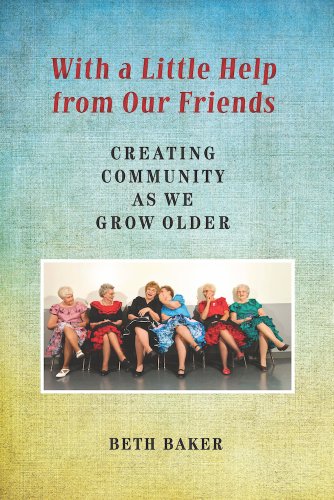
In this book, an award-winning journalist tells the story of people devising innovative ways to live as they approach retirement, options that ensure they are surrounded by a circle of friends, family, and neighbors. Based on visits and interviews at many communities around the country, Beth Baker weaves a rich tapestry of grassroots alternatives, some of them surprisingly affordable:
- a mobile home cooperative in small-town Oregon- a senior artists colony in Los Angeles
- neighbors helping neighbors in "Villages" or "naturally occurring retirement communities"
- intentional cohousing communities
- best friends moving in together
- multigenerational families that balance togetherness and privacy
> Drawing on new research showing the importance of social support to healthy aging and the risks associated with loneliness and isolation, the author encourages the reader to plan for a future with strong connections. Baker explores whether individuals in declining health can really stay rooted in their communities through the end of life and concludes by examining the challenge of expanding the home-care workforce and the potential of new technologies like webcams and assistive robots. This book is the recipient of the annual Norman L. and Roselea J. Goldberg Prize for the best project in the area of medicine.
Die Inhaltsangabe kann sich auf eine andere Ausgabe dieses Titels beziehen.
Über die Autorin bzw. den Autor
A former hospital worker herself, Beth Baker is a freelance journalist and a regular contributor to the Washington Post Health Section and the AARP Bulletin. Baker is the winner of two Gold National Mature Media Awards for her reporting on aging.
Aus dem Klappentext
Experiments from across the country with new living arrangements that balance independence and community as one grows older
Auszug. © Genehmigter Nachdruck. Alle Rechte vorbehalten.
With a Little Help from Our Friends
Creating Community as We Grow Older
By Beth BakerVanderbilt University Press
Copyright © 2014 Beth Baker
All rights reserved.
ISBN: 978-0-8265-1988-7All rights reserved.
Contents
Acknowledgments, ix,
Prologue: The Oncoming Train, 1,
PART I A Time Like No Other,
1 The End of Denial: Taking Charge of How We Live, 7,
2 Interdependence: Reconsidering "Aging in Place", 19,
PART II A Wealth of Options,
3 The Village: Neighbors Helping Neighbors, 29,
4 Cohousing: Creating Community from the Ground Up, 40,
5 Cooperatives: Living Affordably, 56,
6 NORCs: Retiring Naturally, 67,
7 Community Without Walls: Weaving a Web of Friendship, 86,
8 Generations of Hope: Living Well by Doing Good, 99,
9 Affinity Groups: Settling with Your Tribe, 109,
10 Housesharing: Finding Companionship with Friends—or Strangers, 131,
11 The New Family: Balancing Togetherness and Privacy, 144,
PART III Getting from Here to There,
12 Design for Life: Building Homes and Neighborhoods that Serve Us, 159,
13 How Will We Pay?: Planning for the Unknown, 170,
14 Who Will Help Us?: Advocating for Direct Care Workers, 178,
15 Is There a Robot in Your Future?: Accepting Non-Human Help, 186,
16 "What If?": Mapping Our Plan B, 197,
Epilogue, 217,
Appendix A: Glossary of Alternative Models, 219,
Appendix B: Questions to Help Guide Our Choices, 221,
Notes, 223,
Index, 233,
CHAPTER 1
The End of Denial Taking Charge of How We Live
Lynne, a fifty-something dietician in Port Gibson, Mississippi, has had a fantasy for years. When she grows older, rather than move to a retirement community or live alone, she and a handful of close friends will find a way to be together. "We talked about buying a piece of property and building us a place to live," she said. "We envisioned maybe a round building, where everyone had their own apartment, to come and go as they please, but also a central living area. We would be some place we had chosen as a group. We would hire someone to cook and clean for us. That would be a way of taking care of each other, but still have privacy."
Conversations like this are happening all over the United States, as my generation of baby boomers realizes that middle age will soon be in the rearview mirror. And then what?
That question often arises as we struggle to assist our parents, now very old, as they lose mobility, lose memory, lose independence. We see them, whether resistant or acquiescent, cheerfully accepting or refusing "to go gentle," and it is troubling, even terrifying, to imagine ourselves in their shoes. Can it really be that in a blink of an eye we will be the ones our own children fret about? Will we face the same limited choices as our parents?
And will we continue the age-old practice of denial? The SCAN Foundation, which focuses on transforming health care, including long-term care, in ways that foster independence, dignity, and choice as we grow older, has held focus groups around the country of people who are forty to sixty-five years old and who have been family caregivers. What these conversations revealed was that participants of all ethnic and class backgrounds were unable to imagine themselves as growing frail and needing help. "They can describe the experience of caregiving very accurately," said foundation CEO Bruce Chernof, MD, in an interview. "People acknowledge it was a lot of work. Generally people were caring for someone who was a family member or close friend and they felt a lot of pride in what they had done. Even though they could intellectually describe it, when they applied that knowledge to themselves, they couldn't do it." It's almost as if we are hard-wired to not imagine our own vulnerability.
Many of us have said our last good-byes to parents, and suddenly, there at family gatherings and funerals, we turn around and realize to our surprise we are the old ones. The torch is ours, whether or not we are ready to accept it.
"The very cultural and technological forces that protect us from early death are also redrawing the social maps we need to find our way through life," wrote geriatrician William H. (Bill) Thomas, MD, a pioneer in transformative eldercare. "Long-settled ideas about how life is to be lived are remade in less than a lifetime."
Our nation and indeed the world are undergoing unprecedented demographic change. In 1900, 4 percent of Americans were over sixty-five. Today that figure is 13 percent; it will be 17 percent by 2020 and continue to grow over the next twenty years or more, fueled by seventy-two million baby boomers. "Those may not seem like big differences, but they're huge," said Margaret Perkinson, a gerontological researcher at St. Louis University.
Throughout human history, cultures have taken a similar trajectory, she explained. Preindustrial societies have a high birth rate and a high death rate. People die from infectious diseases, poor sanitation, and lack of food. In the next stage people start to live longer but the birth rate is still high, with families counting on children to help in the fields. "With improvements in public health, you tend to have a population still relatively young, but increasing in size," she said. "In the next stage, the birth rate starts to decline because you get to a point where there are a lot of cultural changes, shifting from an agricultural to an industrial economy, where it's no longer as advantageous to have huge families." Labor laws prohibit children working in factories, and as women join the workforce, caring for large families becomes expensive and difficult. With both a declining birth rate and a declining death rate, the population grows relatively older.
These sweeping changes have very real consequences for individuals and families, said Perkinson. As recently as 1900, the average US life expectancy was just forty-five (in part due to high infant mortality, not only to people dying at a younger age). "The demands of caring for older adults are much more significant than they were before," she said. "In the past, in a typical family, the father would die before the children left home. The whole notion of empty nest is a modern concept. The notion of retirement is a modern concept. These are hugely significant developments."
Despite changing demographics, elders have always yearned for independence and control, said Andrew Achenbaum, professor of history and social work at University of Houston. Society as a whole has voiced ambivalence about the meaning of old age. In his book, Old Age in the New Land, Achenbaum wrote, "Philosophers, poets and other writers for millennia have pondered the aged's strengths and weaknesses and alternately affirmed the potential and despaired the decline that comes with age."
On one hand, older people were seen as wise counselors with a highly developed sense of morality. The loss and frailty that accompanies old age were understood to give elders more compassion and wisdom than younger people who had not yet faced life's trials, and older people were viewed with respect and admiration. This view was most commonly held in the United States before the Civil War, according to Achenbaum's research, when retirement was not mandatory and people worked as long as they were able.
But the view of old people as somehow different from the rest of the population was a mixed blessing. Eventually their status was undermined, and the shift to labeling old people as "the other"...
„Über diesen Titel“ kann sich auf eine andere Ausgabe dieses Titels beziehen.
Suchergebnisse für With a Little Help from Our Friends: Creating Community...

Beispielbild für diese ISBN
With a Little Help from Our Friends: Creating Community as We Grow Older
Verlag:
Vanderbilt University Press, 2014
ISBN 10: 0826519881
ISBN 13: 9780826519887
Gebraucht
Paperback
Anbieter: World of Books (was SecondSale), Montgomery, IL, USA
Verkäuferbewertung 5 von 5 Sternen

Paperback. Zustand: Very Good. In this book, an award-winning journalist tells the story of people devising innovative ways to live as they approach retirement, options that ensure they are surrounded by a circle of friends, family and neighbours. Based on visits and interviews at communities around the US, Beth Baker weaves a rich tapestry of grassroots alternatives, some of them surprisingly affordable. Artikel-Nr. 00105143484
Gebraucht kaufen
EUR 4,79
Versand gratis
Versand innerhalb von USA
Versand innerhalb von USA
Anzahl: 2 verfügbar
Beispielbild für diese ISBN
With a Little Help from Our Friends: Creating Community as We Grow Older
Verlag:
Vanderbilt University Press, 2014
ISBN 10: 0826519881
ISBN 13: 9780826519887
Gebraucht
Paperback
Anbieter: World of Books (was SecondSale), Montgomery, IL, USA
Verkäuferbewertung 5 von 5 Sternen
Paperback. Zustand: Good. In this book, an award-winning journalist tells the story of people devising innovative ways to live as they approach retirement, options that ensure they are surrounded by a circle of friends, family and neighbours. Based on visits and interviews at communities around the US, Beth Baker weaves a rich tapestry of grassroots alternatives, some of them surprisingly affordable. Artikel-Nr. 00089853398
Gebraucht kaufen
EUR 4,79
Versand gratis
Versand innerhalb von USA
Versand innerhalb von USA
Anzahl: 2 verfügbar
Beispielbild für diese ISBN
With a Little Help from Our Friends: Creating Community as We Grow Older
Verlag:
Vanderbilt University Press (edition 1), 2014
ISBN 10: 0826519881
ISBN 13: 9780826519887
Gebraucht
Paperback
Anbieter: BooksRun, Philadelphia, PA, USA
Verkäuferbewertung 5 von 5 Sternen
Paperback. Zustand: Very Good. 1. It's a well-cared-for item that has seen limited use. The item may show minor signs of wear. All the text is legible, with all pages included. It may have slight markings and/or highlighting. Artikel-Nr. 0826519881-11-6
Gebraucht kaufen
EUR 5,00
Versand gratis
Versand innerhalb von USA
Versand innerhalb von USA
Anzahl: 1 verfügbar
Beispielbild für diese ISBN
With a Little Help from Our Friends: Creating Community as We Grow Older
Verlag:
Vanderbilt University Press, 2014
ISBN 10: 0826519881
ISBN 13: 9780826519887
Gebraucht
Paperback
Anbieter: ThriftBooks-Reno, Reno, NV, USA
Verkäuferbewertung 5 von 5 Sternen
Paperback. Zustand: Very Good. No Jacket. May have limited writing in cover pages. Pages are unmarked. ~ ThriftBooks: Read More, Spend Less. Artikel-Nr. G0826519881I4N00
Gebraucht kaufen
EUR 6,07
Versand gratis
Versand innerhalb von USA
Versand innerhalb von USA
Anzahl: 1 verfügbar
Beispielbild für diese ISBN
With a Little Help from Our Friends: Creating Community as We Grow Older
Verlag:
Vanderbilt University Press, 2014
ISBN 10: 0826519881
ISBN 13: 9780826519887
Gebraucht
Paperback
Anbieter: ThriftBooks-Phoenix, Phoenix, AZ, USA
Verkäuferbewertung 5 von 5 Sternen
Paperback. Zustand: Very Good. No Jacket. May have limited writing in cover pages. Pages are unmarked. ~ ThriftBooks: Read More, Spend Less. Artikel-Nr. G0826519881I4N00
Gebraucht kaufen
EUR 6,07
Versand gratis
Versand innerhalb von USA
Versand innerhalb von USA
Anzahl: 1 verfügbar
Beispielbild für diese ISBN
With a Little Help from Our Friends : Creating Community As We Grow Older
Verlag:
University of Chicago Press, 2026
ISBN 10: 0826519881
ISBN 13: 9780826519887
Gebraucht
Softcover
Anbieter: Better World Books, Mishawaka, IN, USA
Verkäuferbewertung 5 von 5 Sternen
Zustand: Good. Pages intact with minimal writing/highlighting. The binding may be loose and creased. Dust jackets/supplements are not included. Stock photo provided. Product includes identifying sticker. Better World Books: Buy Books. Do Good. Artikel-Nr. 15506196-6
Gebraucht kaufen
EUR 6,09
Versand gratis
Versand innerhalb von USA
Versand innerhalb von USA
Anzahl: 1 verfügbar
Beispielbild für diese ISBN
With a Little Help from Our Friends : Creating Community As We Grow Older
Verlag:
University of Chicago Press, 2026
ISBN 10: 0826519881
ISBN 13: 9780826519887
Gebraucht
Softcover
Anbieter: Better World Books, Mishawaka, IN, USA
Verkäuferbewertung 5 von 5 Sternen
Zustand: Very Good. Pages intact with possible writing/highlighting. Binding strong with minor wear. Dust jackets/supplements may not be included. Stock photo provided. Product includes identifying sticker. Better World Books: Buy Books. Do Good. Artikel-Nr. 5113345-6
Gebraucht kaufen
EUR 6,09
Versand gratis
Versand innerhalb von USA
Versand innerhalb von USA
Anzahl: 2 verfügbar
Beispielbild für diese ISBN
With a Little Help from Our Friends: Creating Community as We Grow Older
Verlag:
Vanderbilt University Press, 2014
ISBN 10: 0826519881
ISBN 13: 9780826519887
Gebraucht
Paperback
Anbieter: ThriftBooks-Dallas, Dallas, TX, USA
Verkäuferbewertung 5 von 5 Sternen
Paperback. Zustand: Very Good. No Jacket. May have limited writing in cover pages. Pages are unmarked. ~ ThriftBooks: Read More, Spend Less. Artikel-Nr. G0826519881I4N00
Gebraucht kaufen
EUR 6,10
Versand gratis
Versand innerhalb von USA
Versand innerhalb von USA
Anzahl: 2 verfügbar
Beispielbild für diese ISBN
With a Little Help from Our Friends: Creating Community as We Grow Older
Verlag:
Vanderbilt University Press, 2014
ISBN 10: 0826519881
ISBN 13: 9780826519887
Gebraucht
Paperback
Anbieter: ThriftBooks-Dallas, Dallas, TX, USA
Verkäuferbewertung 5 von 5 Sternen
Paperback. Zustand: As New. No Jacket. Pages are clean and are not marred by notes or folds of any kind. ~ ThriftBooks: Read More, Spend Less. Artikel-Nr. G0826519881I2N00
Gebraucht kaufen
EUR 6,10
Versand gratis
Versand innerhalb von USA
Versand innerhalb von USA
Anzahl: 1 verfügbar
Beispielbild für diese ISBN
With a Little Help from Our Friends: Creating Community as We Grow Older
Verlag:
Vanderbilt University Press, 2014
ISBN 10: 0826519881
ISBN 13: 9780826519887
Gebraucht
Paperback
Anbieter: ThriftBooks-Atlanta, AUSTELL, GA, USA
Verkäuferbewertung 5 von 5 Sternen
Paperback. Zustand: Very Good. No Jacket. May have limited writing in cover pages. Pages are unmarked. ~ ThriftBooks: Read More, Spend Less. Artikel-Nr. G0826519881I4N00
Gebraucht kaufen
EUR 6,10
Versand gratis
Versand innerhalb von USA
Versand innerhalb von USA
Anzahl: 1 verfügbar