
Verwandte Artikel zu Healing Invisible Wounds: Paths to Hope and Recovery...
Inhaltsangabe
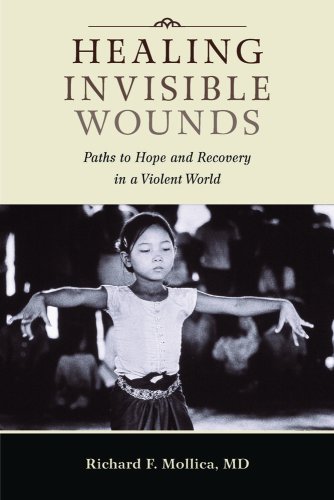
In these personal reflections on his thirty years of clinical work with victims of genocide, torture, and abuse in the United States, Cambodia, Bosnia, and other parts of the world, Richard Mollica describes the surprising capacity of traumatized people to heal themselves.
Healing Invisible Wounds reveals how trauma survivors, through the telling of their stories, teach all of us how to deal with the tragic events of everyday life. Mollica's important discovery that humiliation—an instrument of violence that also leads to anger and despair—can be transformed through his therapeutic project into solace and redemption is a remarkable new contribution to survivors and clinicians.
This book reveals how in every society we have to move away from viewing trauma survivors as "broken people" and "outcasts" to seeing them as courageous people actively contributing to larger social goals. When violence occurs, there is damage not only to individuals but to entire societies, and to the world. Through the journey of self-healing that survivors make, they enable the rest of us not only as individuals but as entire communities to recover from injury in a violent world.
Die Inhaltsangabe kann sich auf eine andere Ausgabe dieses Titels beziehen.
Über die Autorin bzw. den Autor
Richard F. Mollica, MD, Professor of Psychiatry at Harvard Medical School, directs the Harvard Program in Refugee Trauma. He is the recipient of the Human Rights Award from the American Psychiatric Association.
Von der hinteren Coverseite
A classic work on healing from trauma. In these personal reflections on his thirty years of clinical work with victims of genocide, torture, and abuse in the United States, Cambodia, Bosnia, and other parts of the world, Richard Mollica describes the surprising capacity of traumatized people to heal themselves.
Auszug. © Genehmigter Nachdruck. Alle Rechte vorbehalten.
Healing Invisible Wounds
Paths to Hope and Recovery in a Violent World
By Richard F. MollicaVanderbilt University Press
Copyright © 2006 Richard F. Mollica
All rights reserved.
ISBN: 978-0-8265-1641-1All rights reserved.
Contents
Prologue, 1,
Chapter 1: Striking Out on a New Pathway, 7,
Chapter 2: The Trauma Story, 34,
Chapter 3: Humiliation, 62,
Chapter 4: The Power of Self-Healing, 88,
Chapter 5: Storytelling as a Healing Art, 110,
Chapter 6: Good Dreams and Bad Dreams, 134,
Chapter 7: Social Instruments of Healing, 157,
Chapter 8: The Call to Health, 188,
Chapter 9: Society As Healer, 214,
Epilogue, 241,
Acknowledgments, 249,
Endnotes, 253,
Bibliography, 261,
Index, 269,
CHAPTER 1
Striking Out on a New Pathway
Although we all know that suffering is a universal human experience, the modern world still does not know how to speak about and understand the terrible experiences that human beings inflict on each other every day. Because of the horror and disbelief associated with human-on-human violence, it is easy to slide into a cynical attitude that nothing can be done to prevent this violence or to recover from it. One reason for this is that the major harms caused by human aggression are invisible wounds. While physical scars can be identified and accounted for by medical science, psychological, spiritual, and existential injuries remain hidden.
I have spent the past twenty-five years caring for people who have experienced human aggression on a societal scale, as refugees, victims of torture or terrorism, and survivors of war. My experiences reveal a new way of thinking about human aggression and the healing of the physical and emotional damage caused by violence. Major insights, which I call scientific epiphanies or revelations, occurred as I interacted with my patients. I proceeded to investigate these conclusions scientifically and, when they were proven valid, to integrate them into my clinical care. These revelations form the basis for the healing practices advocated in this book.
My pathway to this work was a circuitous one. Educated in a technical high school with an engineering curriculum of physics, chemistry, and math, I discovered early on that science does not address the moral and humanistic issues of society. These matters are better addressed by the humanities and arts. Although I had never met a doctor except during routine physical examinations, in college I majored in chemistry and religion, fantasizing that in medicine I could apply my interests in science, religion, philosophy, and the arts to better the human condition. While in medical school in New Mexico, I worked in the remote Hispanic villages of northern New Mexico and the Indian reservations of Zuni and Jemez Pueblo, serving poor patients within a rich cultural and natural environment. Subsequently I undertook residency training in psychiatry while simultaneously pursuing an advanced degree in religion and philosophy. Divinity school provided the moral compass for my medical and scientific skills, as well as for my future work with survivors of extreme violence. My interests in the arts and literature have also informed my work, yielding metaphorical insights to mysteries that are beyond the abilities of science and medicine to explain.
A NEW CLINIC
When I arrived at Harvard as a young doctor in the early 1980s, I knew that I wanted to provide the highest quality of medical and psychiatric care to the poorest people in my community, in spite of financial and political barriers. Looking around the Greater Boston area for those who most needed help, I found that newly arrived refugees from Southeast Asia were both extremely poor and almost totally excluded from the existing public, private, and academic medical systems. With the help of James Lavelle, a young idealistic social worker already working for the refugee community, we decided to set up a small free clinic for them in the Brighton section of Boston, initially called the Indochinese Psychiatry Clinic, later the Harvard Program in Refugee Trauma. Our little group unknowingly became one of the first refugee mental health clinics in America.
During this time, medicine and psychiatry were still color- and gender-biased, in spite of the work of individuals such as my mentor, Fritz Redlich, a Yale professor of psychiatry. Redlich showed in a study in the early 1950s that although mental illness was more prevalent in the poor, they received a radically different type of psychiatric care than middle-class and rich patients. Poor patients were often given drugs and rarely psychotherapy because they were considered incapable of psychological insights into their mental health problems. Psychiatrists rarely treated these patients; instead they received treatment primarily from paraprofessionals, that is, mental health workers with limited clinical training. Twenty-five years later, I revealed in a follow-up study that treatment biases toward the poor and African Americans remained unchanged, in spite of enormous efforts by the federal government to rectify the situation by providing easy access to community mental health centers. Newly arrived Southeast Asian refugees were still thrown into a large group of low-status patients receiving a low level of health care and mental health care, because they were poor, overwhelmed by social problems, nonwhite, and unfamiliar with American mental health practices, especially psychotherapy.
All refugees entering America have a basic health screening in a government-funded primary health care center. Tens of thousands of Southeast Asian refugees, victims from the war in Vietnam, were flooding through these centers to start their new lives in America. Our team of medical pioneers was waiting in the Brighton clinic to help them with their emotional distress, which was often readily apparent to the primary care doctors who referred them to our clinic. Our staff included Jim Lavelle; Ter Yang, a Hmong chief from the animistic tribes of Laos; Binh Tu, a Vietnamese ex-soldier who had been the "Frank Sinatra" of the Vietnamese army; and Rosa Lek, a young Cambodian woman whose job was drawing blood in a medical laboratory.
The mental health clinic was initially open one half-day a week. Our services were free and none of us were paid. Referrals came flooding in from our medical colleagues at the rate of sometimes twenty refugee patients in a single afternoon. The refugees did not have to be convinced of the value of the clinic; they immediately felt comfortable being greeted by a medical doctor, a social worker, and respected members of their own communities. Our Indo-Chinese colleagues were never used as interpreters; they always functioned as integral elements of our treatment team, in a bicultural partnership that was key to our clinical success.
As I listened to the story of Leakana, an elderly Cambodian woman who was one of the first patients in our clinic, I realized that the conventional psychiatric tools I had been taught would not be sufficient to help her:
During the year of the snake, the God of the Sun came to stay in my body. It made my body shaky all over—and I fainted. Upon awakening, I can remember as I opened my eyes that it was very dark. I then went to the rice fields to find someone to ask them what time it was. A voice shouted 10 o'clock. Suddenly, the owls began to cry and all the animals that represented death were howling all around me. I could also barely see a small group of people whispering to each other in the...
„Über diesen Titel“ kann sich auf eine andere Ausgabe dieses Titels beziehen.
Suchergebnisse für Healing Invisible Wounds: Paths to Hope and Recovery...

Beispielbild für diese ISBN
Healing Invisible Wounds: Paths to Hope and Recovery in a Violent World
Verlag:
Vanderbilt University Press, 2008
ISBN 10: 0826516416
ISBN 13: 9780826516411
Gebraucht
Paperback
Anbieter: World of Books (was SecondSale), Montgomery, IL, USA
Verkäuferbewertung 5 von 5 Sternen

Paperback. Zustand: Very Good. In these personal reflections on his thirty years of clinical work with victims of genocide, torture, and abuse in the United States, Cambodia, Bosnia, and other parts of the world, Richard Mollica describes the surprising capacity of traumatized people to heal themselves. Healing Invisible Wounds reveals how trauma survivors, through the telling of their stories, teach all of us how to deal with the tragic events of everyday life. Mollica's important discovery that humiliation--an instrument of violence that also leads to anger and despair--can be transformed through his therapeutic project into solace and redemption is a remarkable new contribution to survivors and clinicians. This book reveals how in every society we have to move away from viewing trauma survivors as "broken people" and "outcasts" to seeing them as courageous people actively contributing to larger social goals. When violence occurs, there is damage not only to individuals but to entire societies, and to the world. Through the journey of self-healing that survivors make, they enable the rest of us not only as individuals but as entire communities to recover from injury in a violent world. Artikel-Nr. 00108442841
Gebraucht kaufen
EUR 3,85
Versand gratis
Versand innerhalb von USA
Versand innerhalb von USA
Anzahl: 1 verfügbar
Beispielbild für diese ISBN
Healing Invisible Wounds: Paths to Hope and Recovery in a Violent World
Verlag:
Vanderbilt University Press, 2008
ISBN 10: 0826516416
ISBN 13: 9780826516411
Gebraucht
Paperback
Anbieter: World of Books (was SecondSale), Montgomery, IL, USA
Verkäuferbewertung 5 von 5 Sternen
Paperback. Zustand: Good. In these personal reflections on his thirty years of clinical work with victims of genocide, torture, and abuse in the United States, Cambodia, Bosnia, and other parts of the world, Richard Mollica describes the surprising capacity of traumatized people to heal themselves. Healing Invisible Wounds reveals how trauma survivors, through the telling of their stories, teach all of us how to deal with the tragic events of everyday life. Mollica's important discovery that humiliation--an instrument of violence that also leads to anger and despair--can be transformed through his therapeutic project into solace and redemption is a remarkable new contribution to survivors and clinicians. This book reveals how in every society we have to move away from viewing trauma survivors as "broken people" and "outcasts" to seeing them as courageous people actively contributing to larger social goals. When violence occurs, there is damage not only to individuals but to entire societies, and to the world. Through the journey of self-healing that survivors make, they enable the rest of us not only as individuals but as entire communities to recover from injury in a violent world. Artikel-Nr. 00106756206
Gebraucht kaufen
EUR 3,85
Versand gratis
Versand innerhalb von USA
Versand innerhalb von USA
Anzahl: 4 verfügbar
Foto des Verkäufers
Healing Invisible Wounds: Paths to Hope and Recovery in a Violent World
Verlag:
Vanderbilt University Press, 2008
ISBN 10: 0826516416
ISBN 13: 9780826516411
Gebraucht
Softcover
Anbieter: Dream Books Co., Denver, CO, USA
Verkäuferbewertung 5 von 5 Sternen
Zustand: acceptable. This copy has clearly been enjoyedâ"expect noticeable shelf wear and some minor creases to the cover. Binding is strong, and all pages are legible. May contain previous library markings or stamps. Artikel-Nr. DBV.0826516416.A
Gebraucht kaufen
EUR 5,09
Versand gratis
Versand innerhalb von USA
Versand innerhalb von USA
Anzahl: 1 verfügbar
Beispielbild für diese ISBN
Healing Invisible Wounds: Paths to Hope and Recovery in a Violent World
Verlag:
Vanderbilt University Press (edition 1), 2008
ISBN 10: 0826516416
ISBN 13: 9780826516411
Gebraucht
Paperback
Anbieter: BooksRun, Philadelphia, PA, USA
Verkäuferbewertung 5 von 5 Sternen
Paperback. Zustand: Very Good. 1. It's a well-cared-for item that has seen limited use. The item may show minor signs of wear. All the text is legible, with all pages included. It may have slight markings and/or highlighting. Artikel-Nr. 0826516416-8-1
Gebraucht kaufen
EUR 6,06
Versand gratis
Versand innerhalb von USA
Versand innerhalb von USA
Anzahl: 1 verfügbar
Beispielbild für diese ISBN
Healing Invisible Wounds: Paths to Hope and Recovery in a Violent World
Verlag:
Vanderbilt University Press, 2008
ISBN 10: 0826516416
ISBN 13: 9780826516411
Gebraucht
Softcover
Signiert
Anbieter: Wonder Book, Frederick, MD, USA
Verkäuferbewertung 5 von 5 Sternen
Zustand: Good. Signed Copy . Signed by author on title page. Slightly dampstained. Artikel-Nr. F07OS-01451
Gebraucht kaufen
EUR 6,42
Versand gratis
Versand innerhalb von USA
Versand innerhalb von USA
Anzahl: 1 verfügbar
Beispielbild für diese ISBN
Healing Invisible Wounds : Paths to Hope and Recovery in a Violent World
Verlag:
Vanderbilt University Press, 2008
ISBN 10: 0826516416
ISBN 13: 9780826516411
Gebraucht
Softcover
Erstausgabe
Anbieter: Better World Books, Mishawaka, IN, USA
Verkäuferbewertung 5 von 5 Sternen
Zustand: Very Good. 1st Edition. Former library copy. Pages intact with possible writing/highlighting. Binding strong with minor wear. Dust jackets/supplements may not be included. Includes library markings. Stock photo provided. Product includes identifying sticker. Better World Books: Buy Books. Do Good. Artikel-Nr. 10518586-6
Gebraucht kaufen
EUR 6,56
Versand gratis
Versand innerhalb von USA
Versand innerhalb von USA
Anzahl: 1 verfügbar
Beispielbild für diese ISBN
Healing Invisible Wounds : Paths to Hope and Recovery in a Violent World
Verlag:
Vanderbilt University Press, 2008
ISBN 10: 0826516416
ISBN 13: 9780826516411
Gebraucht
Softcover
Erstausgabe
Anbieter: Better World Books, Mishawaka, IN, USA
Verkäuferbewertung 5 von 5 Sternen
Zustand: Good. 1st Edition. Former library copy. Pages intact with minimal writing/highlighting. The binding may be loose and creased. Dust jackets/supplements are not included. Includes library markings. Stock photo provided. Product includes identifying sticker. Better World Books: Buy Books. Do Good. Artikel-Nr. 11629039-75
Gebraucht kaufen
EUR 6,56
Versand gratis
Versand innerhalb von USA
Versand innerhalb von USA
Anzahl: 1 verfügbar
Beispielbild für diese ISBN
Healing Invisible Wounds : Paths to Hope and Recovery in a Violent World
Verlag:
Vanderbilt University Press, 2008
ISBN 10: 0826516416
ISBN 13: 9780826516411
Gebraucht
Softcover
Erstausgabe
Anbieter: Better World Books, Mishawaka, IN, USA
Verkäuferbewertung 5 von 5 Sternen
Zustand: Good. 1st Edition. Pages intact with minimal writing/highlighting. The binding may be loose and creased. Dust jackets/supplements are not included. Stock photo provided. Product includes identifying sticker. Better World Books: Buy Books. Do Good. Artikel-Nr. 18720614-6
Gebraucht kaufen
EUR 6,56
Versand gratis
Versand innerhalb von USA
Versand innerhalb von USA
Anzahl: 1 verfügbar
Beispielbild für diese ISBN
Healing Invisible Wounds: Paths to Hope and Recovery in a Violent World
Verlag:
Vanderbilt University Press, 2008
ISBN 10: 0826516416
ISBN 13: 9780826516411
Gebraucht
Paperback
Anbieter: ThriftBooks-Reno, Reno, NV, USA
Verkäuferbewertung 5 von 5 Sternen
Paperback. Zustand: Good. No Jacket. Pages can have notes/highlighting. Spine may show signs of wear. ~ ThriftBooks: Read More, Spend Less. Artikel-Nr. G0826516416I3N00
Gebraucht kaufen
EUR 7,14
Versand gratis
Versand innerhalb von USA
Versand innerhalb von USA
Anzahl: 1 verfügbar
Beispielbild für diese ISBN
Healing Invisible Wounds: Paths to Hope and Recovery in a Violent World
Verlag:
Vanderbilt University Press, 2008
ISBN 10: 0826516416
ISBN 13: 9780826516411
Gebraucht
Paperback
Anbieter: ThriftBooks-Atlanta, AUSTELL, GA, USA
Verkäuferbewertung 5 von 5 Sternen
Paperback. Zustand: Very Good. No Jacket. May have limited writing in cover pages. Pages are unmarked. ~ ThriftBooks: Read More, Spend Less. Artikel-Nr. G0826516416I4N00
Gebraucht kaufen
EUR 7,14
Versand gratis
Versand innerhalb von USA
Versand innerhalb von USA
Anzahl: 1 verfügbar