
Verwandte Artikel zu Flyboy 2: The Greg Tate Reader
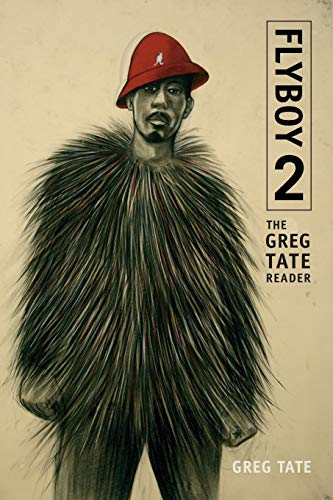
Inhaltsangabe
Since launching his career at the Village Voice in the early 1980s Greg Tate has been one of the premiere critical voices on contemporary Black music, art, literature, film, and politics. Flyboy 2 provides a panoramic view of the past thirty years of Tate's influential work. Whether interviewing Miles Davis or Ice Cube, reviewing an Azealia Banks mixtape or Suzan-Lori Parks's Topdog/Underdog, discussing visual artist Kara Walker or writer Clarence Major, or analyzing the ties between Afro-futurism, Black feminism, and social movements, Tate's resounding critical insights illustrate how race, gender, and class become manifest in American popular culture. Above all, Tate demonstrates through his signature mix of vernacular poetics and cultural theory and criticism why visionary Black artists, intellectuals, aesthetics, philosophies, and politics matter to twenty-first-century America.
Die Inhaltsangabe kann sich auf eine andere Ausgabe dieses Titels beziehen.
Über die Autorin bzw. den Autor
Greg Tate is a music and popular culture critic and journalist whose work has appeared in many publications, including the Village Voice, Vibe, Spin, the Wire, and Downbeat. He is the author of Flyboy in the Buttermilk: Essays on Contemporary America and Midnight Lightning: Jimi Hendrix and the Black Experience and the editor of Everything but the Burden: What White People Are Taking from Black Culture. Tate, via guitar and baton, also leads the conducted improvisation ensemble Burnt Sugar the Arkestra Chamber, who tour internationally.
Auszug. © Genehmigter Nachdruck. Alle Rechte vorbehalten.
Flyboy 2
The Greg Tate Reader
By Greg TateDuke University Press
Copyright © 2016 Greg Tate
All rights reserved.
ISBN: 978-0-8223-6196-1All rights reserved.
Contents
Introduction: Lust, of All Things (Black),
1. The Black Male Show,
2. She Laughing Mean and Impressive Too,
3. Hello Darknuss My Old Meme,
4. Screenings,
5. Race, Sex, Politricks, and Belles Lettres,
Sources,
Index,
CHAPTER 1
The Black Male Show
Amiri Baraka
1934–2014
I think about a time when I will be relaxed. When flames and non-specific passions wear themselves away. And my eyes and hands and mind can turn and soften and my songs will be softer and lightly weight the air. — AMIRI BARAKA
Nabokov told us that all a writer has to leave behind is his or her style. Amiri Baraka made the reading populace deal with a rowdy, robust gang of style. Miles Davis (whose powers of concentration, condensation, and cool Baraka emulated in his poetics) once said he only had use for musicians who could play a style — stone-cold-bold originals. Originality, like style, is generally what's left after artists eliminate all excess from their repertoire — all the corny stuff that seems better suited for somebody else.
Born October 7, 1934, in Newark, New Jersey, Everett Leroi Jones shed hosts of styles, skins, friends, foes, and belief systems on the way to becoming Amiri Baraka, the iconic legend of literary and political lore. Like Miles, he got beaten bloody upside the head by upsouth redneck cops for being a model of uppity nigra defiance. Like Miles, Baraka walked away with brains, cojones, and swagger intact ... intensified, even.
I'm Everett LeRoi Jones thirty years old. A Black nigger in the universe. A longer breath singer, would-be dancer, strong from years of fantasy and study.
LeRoi Jones is the byline the world first came to know him by (simultaneously) as a poet, jazz critic, playwright, essayist, and fiction writer. As Langston Hughes biographer Arnold Rampersad notes, Baraka and Hughes are the only writers in the Black American canon to distinguish themselves in four genres of writing: poetry, fiction, drama, and the essay. (Ntozake Shange belongs on that list too in our humble — more fodder for diatribes to come.)
Every writer can tell you about the one book that changed their life, changed their mind, made becoming a writer a fait accompli. For this writer here, that book was Baraka's Black Music. His Blues People is standard reading for anyone wanting to know the history and socio-cultural-political significance of The Music to The Struggle, but Black Music is The One by freedom-swing musicologist Baraka that turned your boyee out. Made him leap overnight from being a fourteen-year-old Marvel Comics / sci-fi nerd to a precocious warrior nerd for the cause of freakishly-rad jazz improv.
Black Music introduced superheroic otherworldly entities calling themselves Sun Ra, Ornette Coleman, John Coltrane, Cecil Taylor, and Pharoah Sanders. And did so deploying a style that was as incandescent, indelible, and whiplash smarting as the music itself. Laid down like grammatical law in Black Music is the mandate that music journalism seem as possessed by furies as The Music. Count this reporter among those writers who owe their adult vocation to being swept up by Baraka's elegant prose juju at a tender, volatile age.
The fledgling career of LeRoi Jones became noteworthy in 1959 with publication of his chapbook, Preface to a Twenty Volume Suicide Note, which contains the poem of the same name now known as a much-anthologized classic. In a scant eighteen lines, a gothic young Jones parses dissonant melody from his sorrows and hallucinations, confesses alienated harmony with everyday chaos, then achieves spiritual renewal observing the mysteries of infant curiosity.
At that moment, Euro-American poetry and fiction was being resuscitated by the bebop-inspired artistic offspring of the so-called Black Mountain and Beat Generations; Jones, then ensconced in Gotham's East Village, swiftly bonded with the inner circle (Charles Olson, William Carlos Williams, Robert Duncan, Robert Creeley, Allen Ginsburg, William Burroughs, Frank O'Hara, Willem de Kooning, Larry Rivers, et al.) via books or bars. Jumped onboard their drunken boat like 'twas lifesaver, barnacled onto their methods and milieu until they became his own.
Jones arrived in the East Village as a refugee of the U.S. Air Force and of Howard University — where he served time with homecoming queen Toni Morrison, studied the blues with Sterling Brown, sociology with E. Franklin Frazier, and Dante's Inferno with the great Afro-Classicist Nathan Scott. (Bombardier training was his metier in the Air Force, or the "Error Farce" in Jonesology.) Soon after arriving on the Lower East Side he became betrothed to the former Hettie Cohen, also a poet, and within scant years also became the father of two darling daughters, Kellie and Lisa — who rolling stonishly gained stepsister Dominique DiPrima in this period.
By the time Preface was published, Jones had become a promising fixture of the Village's modern art–damaged bohemia. Hardly content simply hobnobbing with the Beats' pale male star chamber, the energetic and ambitious Jones read, wrote, and edited like a fiend, thought very deeply upon all things poetical, personal, and darkly sonorous, and while sipping cocktails, dashed off his own jazz and come-what-may-tales accordingly.
This proto-fly-brother in the ointment also devoted as much time as humanly possible going out to hear music of the great Black modernists who further ignited his literary passions — John Coltrane, Thelonious Monk, Ornette Coleman, Cecil Taylor. These giants, among others, would provoke him to conjure his two aforementioned seminal classics of Black musicology, Blues People and Black Music.
By 1965, a barely thirty-years-old Jones had published the five now-canonical works that would forevermore ensure his presence on Africana syllabi across the land and guarantee his dramatic works would become mainstays of off-Broadway and regional theater well into the twenty-first century: Blues People (once again, church sez Amen); The System of Dante's Hell (a broken-beat fictive odyssey through his childhood, adolescence, and young manhood); The Dead Lecturer, his rapturously mordant second volume of death-obsessed née death-defying poems; Home, a book of cultural essays and belles lettres; and that first bevy of earth-scorching plays — Dutchman, The Toilet, and The Slave.
In 1959, the year twenty-five-year-old Jones published his Suicide Note, a thirty-three-year-old Fidel Castro and a thirty-one-year-old Che Guevara took over Havana with a rebel army that overturned the U.S.-supported and Mafia-friendly Batista regime. In 1961, Jones accepts an invitation to join a delegation of upstart American artists for a visit to postrevolutionary Cuba. In Havana he gets to rap with Castro and Guevara. The Cuba voyage, essayed on in Home, documents Jones's slow turn away from poetic disengagement with tings politique. This gradual 180 will later be propelled into r/evolutionary overdrive by the assassination of Malcolm X in 1965.
That catastrophic event will provoke Jones's 1966 exodus from the East Village (and his young family) up to Harlem for race-man/race-manic repurposing and action. Treating the...
„Über diesen Titel“ kann sich auf eine andere Ausgabe dieses Titels beziehen.
Suchergebnisse für Flyboy 2: The Greg Tate Reader

Beispielbild für diese ISBN
Flyboy 2 : The Greg Tate Reader
Anbieter: Better World Books, Mishawaka, IN, USA
Verkäuferbewertung 5 von 5 Sternen

Zustand: Good. Former library copy. Pages intact with minimal writing/highlighting. The binding may be loose and creased. Dust jackets/supplements are not included. Includes library markings. Stock photo provided. Product includes identifying sticker. Better World Books: Buy Books. Do Good. Artikel-Nr. 17503249-6
Gebraucht kaufen
EUR 22,34
Versand gratis
Versand innerhalb von USA
Versand innerhalb von USA
Anzahl: 1 verfügbar
Beispielbild für diese ISBN
Flyboy 2: The Greg Tate Reader
Anbieter: Books From California, Simi Valley, CA, USA
Verkäuferbewertung 4 von 5 Sternen

paperback. Zustand: Fine. Artikel-Nr. mon0004108456
Gebraucht kaufen
EUR 18,16
EUR 4,39 Versand
Versand innerhalb von USA
Versand innerhalb von USA
Anzahl: 1 verfügbar
Beispielbild für diese ISBN
Flyboy 2
Anbieter: PBShop.store UK, Fairford, GLOS, Vereinigtes Königreich
Verkäuferbewertung 5 von 5 Sternen
PAP. Zustand: New. New Book. Shipped from UK. Established seller since 2000. Artikel-Nr. FW-9780822361961
Neu kaufen
EUR 24,98
EUR 5,83 Versand
Versand von Vereinigtes Königreich nach USA
Versand von Vereinigtes Königreich nach USA
Anzahl: 15 verfügbar
Beispielbild für diese ISBN
Flyboy 2: The Greg Tate Reader
Anbieter: Roundabout Books, Greenfield, MA, USA
Verkäuferbewertung 4 von 5 Sternen
paperback. Zustand: New. Condition Notes: New from the publisher. Artikel-Nr. 1561052
Beispielbild für diese ISBN
Flyboy 2: The Greg Tate Reader
Anbieter: Majestic Books, Hounslow, Vereinigtes Königreich
Verkäuferbewertung 4 von 5 Sternen
Zustand: New. pp. 368. Artikel-Nr. 372232817
Neu kaufen
EUR 33,31
EUR 7,55 Versand
Versand von Vereinigtes Königreich nach USA
Versand von Vereinigtes Königreich nach USA
Anzahl: 3 verfügbar
Beispielbild für diese ISBN
Flyboy: The Greg Tate Reader: Vol 2
Anbieter: Revaluation Books, Exeter, Vereinigtes Königreich
Verkäuferbewertung 5 von 5 Sternen
Paperback. Zustand: Brand New. 356 pages. 9.00x6.25x0.75 inches. In Stock. Artikel-Nr. x-0822361965
Neu kaufen
EUR 32,55
EUR 14,52 Versand
Versand von Vereinigtes Königreich nach USA
Versand von Vereinigtes Königreich nach USA
Anzahl: 2 verfügbar
Beispielbild für diese ISBN
Flyboy 2: The Greg Tate Reader
Anbieter: Ria Christie Collections, Uxbridge, Vereinigtes Königreich
Verkäuferbewertung 5 von 5 Sternen
Zustand: New. In English. Artikel-Nr. ria9780822361961_new
Neu kaufen
EUR 35,52
EUR 13,11 Versand
Versand von Vereinigtes Königreich nach USA
Versand von Vereinigtes Königreich nach USA
Anzahl: Mehr als 20 verfügbar
Beispielbild für diese ISBN
Flyboy 2: The Greg Tate Reader
Anbieter: Kennys Bookstore, Olney, MD, USA
Verkäuferbewertung 5 von 5 Sternen
Zustand: New. Flyboy 2 provides a panoramic view of the last thirty years of Greg Tate's influential cultural criticism of contemporary Black music, art, literature, film, and politics. These essays, interviews, and reviews cover everything from Miles Davis, Ice Cube, and Suzan Lori Parks to Afro-futurism, Kara Walker, and Amiri Baraka. Num Pages: 368 pages. BIC Classification: 1KBB; 3JJ; 3JM; AVGN; BGF; JFCA; JFSL3. Category: (G) General (US: Trade). Dimension: 154 x 229 x 22. Weight in Grams: 544. . 2016. Paperback. . . . . Books ship from the US and Ireland. Artikel-Nr. V9780822361961
Neu kaufen
EUR 40,38
EUR 9,23 Versand
Versand innerhalb von USA
Versand innerhalb von USA
Anzahl: Mehr als 20 verfügbar
Foto des Verkäufers
Flyboy 2 | The Greg Tate Reader
Anbieter: preigu, Osnabrück, Deutschland
Verkäuferbewertung 5 von 5 Sternen
Taschenbuch. Zustand: Neu. Flyboy 2 | The Greg Tate Reader | Greg Tate | Taschenbuch | Einband - flex.(Paperback) | Englisch | 2016 | Duke University Press | EAN 9780822361961 | Verantwortliche Person für die EU: Mare Nostrum Group B.V., Doelen 72, 4831 GR BREDA, NIEDERLANDE, gpsr[at]mare-nostrum[dot]co[dot]uk | Anbieter: preigu. Artikel-Nr. 104086928
Neu kaufen
EUR 27,10
EUR 70,00 Versand
Versand von Deutschland nach USA
Versand von Deutschland nach USA
Anzahl: 5 verfügbar