
Verwandte Artikel zu The Children of 1965: On Writing, and Not Writing,...
Inhaltsangabe
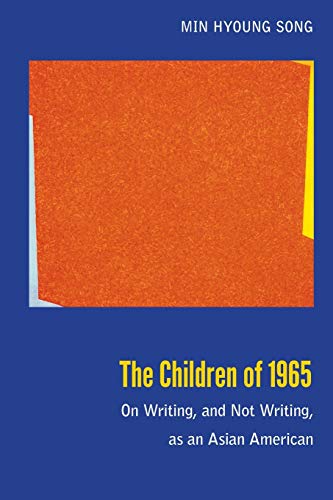
Since the 1990s, a new cohort of Asian American writers has garnered critical and popular attention. Many of its members are the children of Asians who came to the United States after the Immigration and Nationality Act of 1965 lifted long-standing restrictions on immigration. This new generation encompasses writers as diverse as the graphic novelists Adrian Tomine and Gene Luen Yang, the short story writer Nam Le, and the poet Cathy Park Hong. Having scrutinized more than one hundred works by emerging Asian American authors and having interviewed several of these writers, Min Hyoung Song argues that collectively, these works push against existing ways of thinking about race, even as they demonstrate how race can facilitate creativity. Some of the writers eschew their identification as ethnic writers, while others embrace it as a means of tackling the uncertainty that many people feel about the near future. In the literature that they create, a number of the writers that Song discusses take on pressing contemporary matters such as demographic change, environmental catastrophe, and the widespread sense that the United States is in national decline.
Die Inhaltsangabe kann sich auf eine andere Ausgabe dieses Titels beziehen.
Über die Autorin bzw. den Autor
Min Hyoung Song is Associate Professor of English at Boston College. He is the author of Strange Future: Pessimism and the 1992 Los Angeles Riots, also published by Duke University Press, and editor of the Journal of Asian American Studies.
Auszug. © Genehmigter Nachdruck. Alle Rechte vorbehalten.
The Children of 1965
On Writing, and Not Writing, as an Asian American
By MIN HYOUNG SONGDuke University Press
Copyright © 2013 Duke University Press
All rights reserved.
ISBN: 978-0-8223-5451-2All rights reserved.
Contents
| INTRODUCTION "We All Have Our Reasons"..................................... | 1 |
| Part I Impositions of Form................................................. | |
| 1 Theorizing Expectations.................................................. | 29 |
| 2 The Trope of the Lost Manuscript......................................... | 59 |
| 3 Not Ethnic Literature.................................................... | 81 |
| 4 American Personhood...................................................... | 104 |
| Part II Lines of Flight.................................................... | |
| 5 Comics and the Changing Meaning of Race.................................. | 127 |
| 6 Allegory and the Child in Jhumpa Lahiri's Fiction........................ | 152 |
| 7 Becoming Planetary....................................................... | 179 |
| 8 Desert-Orient-Nomad...................................................... | 197 |
| CONCLUSION World-Making.................................................... | 220 |
| ACKNOWLEDGMENT............................................................. | 239 |
| Appendix Contemporary Asian American Literature 101........................ | 241 |
| NOTES...................................................................... | 245 |
| WORKS CITED................................................................ | 261 |
| INDEX...................................................................... | 271 |
Excerpt
CHAPTER 1
Theorizing Expectations
Everyone is invested with expectations of various kinds, to one degreeor another, and some of these undoubtedly bear striking similarities tothe ones that most frequently adhere to discourses about Asian Americans.Still, specific expectations pose challenges for Asian Americans thatothers, who are differently raced, do not face. The young in particular haveoften been reminded of how young they are and of what awaits them oncethey reach maturity. Harold Bloom, one of the most venerable Americanliterary scholars of the postwar era, provides a vivid illustration of thispoint when he observes:
One of my growing convictions, founded upon the last 20 years or soof my more than 40 years of teaching at Yale University, is that thelife of the mind and the spirit in the United States will be dominatedby Asian Americans in the opening decades of the 21st century. Theintellectuals ... are emerging from the various Asian-Americanpeoples. In this displacement, the roles once played in American cultureand society by the children of Jewish immigrants to the UnitedStates are passing to the children of Asian immigrants, and a newphase of American literature will be one of the consequences.
While it is now a commonplace to compare Jewish Americans of anearlier era with contemporary Asian Americans, as in this passage, theformer were not compared to another group when they were first leavingtheir mark on American society. This means that the former were not confrontedwith the same demographic expectations that now confront thelatter, namely that they will follow the path laid out by another groupin a kind of rite of ethnic succession. This succession begins with "thechildren of Jewish immigrants" and has as its only successor "the childrenof Asian immigrants." This does not mean that comparisons betweenAsian and Jewish Americans cannot be made. They are often made and canprove highly informative. It does suggest, however, that there is somethingsalient about Asian Americans and their relationship to the imaginationof the future that can bring them into proximate discussions withother groups that might not be as immediately obvious. In this instanceproduced by Bloom's self-assured prediction, focusing on expectationsbrings into relief what is particular about "the children of 1965": that theyhave become a potent representative of a future America, one which willno longer be majority white but will nonetheless keep alive a contiguousnational character.
As the root word of expectation suggests, having "to look out for" thefuture as Asian Americans do is fraught with ambivalence. From the Latinverb ex-spectare, the word conjures two intertwined feelings that are simultaneouslyat odds with but inseparable from each other: "to hope for" and"to dread." These feelings succinctly capture the relationship many AsianAmerican writers working within the last decade of the twentieth centuryand the early years of the twentieth-first century have with the future. Theylook with both hope and dread on what they are trying to accomplish withtheir work and on how their work will be received. In their myriad ways,they carefully and creatively wrestle with the specific racial expectationsthat condition, surround, enable, and possibly choke the lives their worksseek to imagine. While they each focus explicitly on individual characters,as individuals these characters are stymied by hopes and dread intimatelyrelated to the topic of race that exceed attempts at self-definition, agency,and autonomy. By struggling with such expectations, their works also givetexture to the ways in which race both affects and does not affect lived experiences,personal longings, and aspirations for meaningful existence.
This chapter begins with a discussion on how such expectations havecome to shape the experiences of Asian Americans and how Asian Americanwriters have sought to negotiate their forceful and often contradictoryimpositions. It does so by theorizing the concept of expectations, consideringalong the way how such expectations keep bringing Asian Americansinto surprisingly intimate juxtaposition with other discourses aboutpersonhood, including those that directly shape cultural understandingsof children and queers. While the connections between the latter two havebeen richly explored, critics have yet to consider in an equally rich wayhow the racialization of Asian Americans might also be linked. The chapterthen turns to the work of theory itself, explaining how the use of writingsby the philosopher Gilles Deleuze and the psychotherapist Felíx Guattariseeks to respond—perhaps paradoxically—to the need for publishedwork in the humanities to be at once accessible and engaging at a timewhen the humanities itself is under fire.
After the 1965 Immigration and Nationality Act
To query how Asian Americans, especially those of a specific generation,have come to be vested with the kind of expectations that Bloom singlesout is to take seriously the claim made by many in Asian American studiesthat it is difficult to overstate the importance of the 1965 Immigration andNationality Act. Publically available U.S. census data from 1960 to 2000provide a dramatic sense of this act's importance for a population thatgrew more numerous and more heterogeneous with each passing decadeof the second half of the twentieth century. This data is obviously limited.The categories the census uses to record its findings have not remainedconsistent through the years and, like all data, they must be interpreted.Nevertheless, their use provides at...
„Über diesen Titel“ kann sich auf eine andere Ausgabe dieses Titels beziehen.
Suchergebnisse für The Children of 1965: On Writing, and Not Writing,...

Beispielbild für diese ISBN
The Children of 1965: On Writing, and Not Writing, as an Asian American
Anbieter: The Paper Hound Bookshop, Vancouver, BC, Kanada
Verkäuferbewertung 4 von 5 Sternen

Soft cover. Zustand: Near Fine. Octavo, trade format paperback. Artikel-Nr. 236864
Gebraucht kaufen
EUR 16,12
EUR 8,03 Versand
Versand von Kanada nach USA
Versand von Kanada nach USA
Anzahl: 1 verfügbar
Beispielbild für diese ISBN
The Children of 1965
Anbieter: PBShop.store UK, Fairford, GLOS, Vereinigtes Königreich
Verkäuferbewertung 5 von 5 Sternen

PAP. Zustand: New. New Book. Shipped from UK. Established seller since 2000. Artikel-Nr. FW-9780822354512
Neu kaufen
EUR 33,99
EUR 4,92 Versand
Versand von Vereinigtes Königreich nach USA
Versand von Vereinigtes Königreich nach USA
Anzahl: 2 verfügbar
Beispielbild für diese ISBN
The Children of 1965: On Writing, and Not Writing, as an Asian American
Anbieter: Ria Christie Collections, Uxbridge, Vereinigtes Königreich
Verkäuferbewertung 5 von 5 Sternen
Zustand: New. In English. Artikel-Nr. ria9780822354512_new
Neu kaufen
EUR 38,73
EUR 13,34 Versand
Versand von Vereinigtes Königreich nach USA
Versand von Vereinigtes Königreich nach USA
Anzahl: 2 verfügbar
Beispielbild für diese ISBN
Children 1965
Anbieter: Kennys Bookstore, Olney, MD, USA
Verkäuferbewertung 5 von 5 Sternen
Zustand: New. Artikel-Nr. V9780822354512
Neu kaufen
EUR 48,29
EUR 9,37 Versand
Versand innerhalb von USA
Versand innerhalb von USA
Anzahl: 1 verfügbar
Beispielbild für diese ISBN
The Children of 1965
Anbieter: Majestic Books, Hounslow, Vereinigtes Königreich
Verkäuferbewertung 4 von 5 Sternen
Zustand: New. pp. 296 7 Figures, 13 Illus., Artikel-Nr. 58046539
Neu kaufen
EUR 52,74
EUR 7,68 Versand
Versand von Vereinigtes Königreich nach USA
Versand von Vereinigtes Königreich nach USA
Anzahl: 1 verfügbar
Beispielbild für diese ISBN
The Children of 1965 On Writing, and Not Writing, as an Asian American
Anbieter: Revaluation Books, Exeter, Vereinigtes Königreich
Verkäuferbewertung 5 von 5 Sternen
Paperback. Zustand: Brand New. 284 pages. 9.50x6.25x0.75 inches. In Stock. Artikel-Nr. x-0822354519
Neu kaufen
EUR 53,10
EUR 11,82 Versand
Versand von Vereinigtes Königreich nach USA
Versand von Vereinigtes Königreich nach USA
Anzahl: 2 verfügbar