
Verwandte Artikel zu Intimate Activism: The Struggle for Sexual Rights in...
Inhaltsangabe
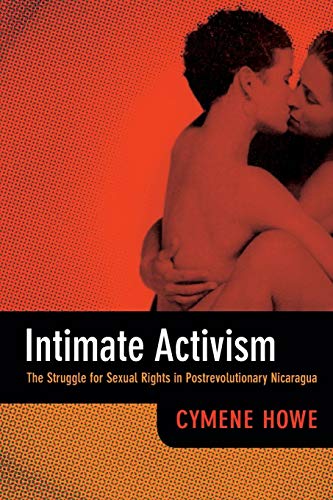
Intimate Activism tells the story of Nicaraguan sexual-rights activists who helped to overturn the most repressive antisodomy law in the Americas. The law was passed shortly after the Sandinistas lost power in 1990 and, to the surprise of many, was repealed in 2007. In this vivid ethnography, Cymene Howe analyzes how local activists balanced global discourses regarding human rights and identity politics with the contingencies of daily life in Nicaragua. Though they were initially spurred by the antisodomy measure, activists sought to change not only the law but also culture. Howe emphasizes the different levels of intervention where activism occurs, from mass-media outlets and public protests to meetings of clandestine consciousness-raising groups. She follows the travails of queer characters in a hugely successful telenovela, traces the ideological tensions within the struggle for sexual rights, and conveys the voices of those engaged in "becoming" lesbianas and homosexuales in contemporary Nicaragua.
Die Inhaltsangabe kann sich auf eine andere Ausgabe dieses Titels beziehen.
Über die Autorin bzw. den Autor
Cymene Howe is Assistant Professor of Anthropology and Core Faculty in the Center for the Study of Women, Gender, and Sexuality at Rice University. She is coeditor, with Gilbert Herdt, of 21st Century Sexualities: Contemporary Issues in Health, Education, and Rights.
Auszug. © Genehmigter Nachdruck. Alle Rechte vorbehalten.
Intimate Activism
The Struggle for Sexual Rights in Postrevolutionary Nicaragua
By CYMENE HOWEDuke University Press
Copyright © 2013 Duke University Press
All rights reserved.
ISBN: 978-0-8223-5450-5All rights reserved.
Contents
| ACKNOWLEDGMENTS............................................................ | ix |
| INTRODUCTION The Struggle................................................. | 1 |
| 1. A History of Sexuality.................................................. | 23 |
| 2. Intimate Pedagogies..................................................... | 61 |
| 3. Pride and Prejudice..................................................... | 92 |
| 4. Mediating Sexual Subjectivities......................................... | 128 |
| CONCLUSION Getting the Word Out........................................... | 160 |
| NOTES...................................................................... | 173 |
| REFERENCES................................................................. | 197 |
| INDEX...................................................................... | 221 |
CHAPTER 1
A History of Sexuality
How to overturn Things
The heat of the afternoon seemed to be retreating as Migueland I finished off our last gulp of sugary coffee. In the working-classneighborhood of Managua where Miguel lived, thewoman in charge of the fritanga (outdoor eatery) down thestreet was heating the grill for pollo asado while one of herdaughters arranged little plastic chairs around tables in thestreet for the night's dining. As the usual evening rituals unfolded,Miguel began to narrate how he had become involvedin the lucha for sexual rights and how this articulated with hisparticipation in the revolutionary project. After years of commitmentto the Sandinista cause and of performing his dutiesas a loyal soldier, Miguel was summarily dismissed from theSandinista army. Although the Contra war demanded massivetroop deployments and the continuation of an unpopular militarydraft, Miguel's superiors were dismayed by his behaving"like a cochón." According to Miguel, the officers thought hewas "too broken-wristed"—or, in North American terms, tooeffeminate for military service. They were worried about hisimpact on the other men in his unit and therefore asked him to resignhis post. Even after he was castigated and discharged, Miguel continuedto actively support Nicaragua's revolutionary party, the Frente Sandinistade Liberación Nacional (FSLN). He also became one of the earliest andmost declarado (declared, out) advocates for what he called derechos homosexuales(homosexual rights). Miguel understood his revolutionary commitments,whether Sandinista or within the struggle for sexual rights, asintimately linked processes. Indeed, he drew very explicit parallels betweenthese two political projects. "What the battle against the dictatorshipand the revolutionary struggle taught us here in Nicaragua," he explained,"was how to overturn things."
The history that led Nicaragua from decades of dictatorship to the Sandinistarevolution and finally to the lucha for sexual rights is marked bya series of "overturnings." Peasant revolutionaries at the beginning of thecentury, Marxist university students in the 1960s, feminists in the 1990s,and sexual rights advocates in the contemporary era have all faced bothtensions and triumphs in their political struggles. In this chapter, I describehow sexuality as a concept has been used to legitimate differentkinds of moral paradigms and political projects in Nicaragua, from theera of Somocismo (1937–79) through the Sandinista revolutionary period(1979–90) and into the neoliberal climate of the early twenty-first century.Contemporary sexual rights activism, I argue, has been fundamentallyshaped by three overlapping and sometimes competing phenomena: theSandinista revolutionary project; Nicaraguan feminism and gender advocacy;and U.S. economic, political, and military intervention. The variousways in which sexual rights advocates have grappled with these politicaldynamics illustrate how activists engage with their country's past,and present, place in the world. As political histories are rememberedand reconstructed in particular ways, significant political events and erascan provide opportunities for advocates to situate sexual rights as ethicalprojects. Activists' work in the contemporary moment is necessarilyinformed by the politics of the past, and a vital aspect of activists' interventionsis to evaluate, mediate, and craft the chronoscape of Nicaragua'spolitical history.
In different ways, and to different degrees, revolution, feminism, andthe specter of imperialism all have contributed to the shape of sexualrights in Nicaragua. It would be impossible, for example, to narrate a politicalhistory of Nicaragua without accounting for the massive influenceof U.S. intrusions in the country from the colonial era to the present. Justas U.S. intervention spurred many revolutionaries to action, the legacy ofimperialism continues to motivate sexual rights activists, in the wake ofrevolution, to emphasize their national heritage of social transformation.Political exchanges between the global North and Nicaragua do explain,in part, how liberal discourses have made their way into sexual rightsstruggles in Nicaragua. However, at the same time, the legacy of U.S. imperialismcompels Nicaraguan activists to be wary of Northern politicalforms, including liberal individualism and identity politics. Partly in responseto this history of intervention, activists have been cautious aboutadopting the sexual identities, categories, and political strategies that areoften associated with the United States.
The fall of the dictatorship and the ensuing Sandinista project providedpractical experience for a generation of sexual rights activists. Butit also—and, perhaps, more importantly—furnished a political modelthat combined diverse ideological forms, blending them into a relativelyunified vision for social transformation. Even as contemporary activistsengage with politically liberal notions of sexual subjectivity and humanrights, they draw from a national political history based on communitarianideals and a hybrid approach to social justice. Sexual rights advocateshave also been very aware of the ways in which Sandinismo failed toprovide for a full range of rights, particularly for women and sexual minorities.During the Sandinista era, political participation among Nicaraguanwomen increased dramatically. As the Nicaraguan feminist intellectualSofia Montenegro put it, women became "protagonists in their own history"(quoted in Field 1999: 132), and greater numbers of women becamemore explicitly engaged with national politics. Although some womenhad been politically active before the revolution, the new opportunitiesafforded by the Sandinista era allowed women to more fully negotiate thepolitical and bureaucratic nuances of the Nicaraguan state. As they soughtto remediate the particular forms of discrimination that women faced—includinglegal barriers and structural inequalities, as well as those seen tobe cultural, such as the abuses of machismo—many Nicaraguan womengained skills that would prove invaluable in their work with internationalallies and development agencies in the decades to come. Feminism andwomen's politicization were critical to the development of lesbian...
„Über diesen Titel“ kann sich auf eine andere Ausgabe dieses Titels beziehen.
Suchergebnisse für Intimate Activism: The Struggle for Sexual Rights in...

Beispielbild für diese ISBN
Intimate Activism: The Struggle for Sexual Rights in Postrevolutionary Nicaragua
Anbieter: ThriftBooks-Atlanta, AUSTELL, GA, USA
Verkäuferbewertung 5 von 5 Sternen

Paperback. Zustand: As New. No Jacket. Pages are clean and are not marred by notes or folds of any kind. ~ ThriftBooks: Read More, Spend Less. Artikel-Nr. G0822354500I2N00
Gebraucht kaufen
EUR 11,75
Versand gratis
Versand innerhalb von USA
Versand innerhalb von USA
Anzahl: 1 verfügbar
Foto des Verkäufers
Intimate Activism: The Struggle for Sexual Rights in Postrevolutionary Nicaragua
Anbieter: The Haunted Bookshop, LLC, Iowa City, IA, USA
Verkäuferbewertung 5 von 5 Sternen
Paperback. Zustand: Very Good. Crisp, clean pages except for a prior owner's name on the first (half-title) page and a short crease at the right edges of the first three leaves; square, uncreased spine, soft cover only mildly shelfworn at spine ends, otherwise excellent. xii, 236pp. incl. index. Artikel-Nr. 00086319
Gebraucht kaufen
EUR 9,95
EUR 4,83 Versand
Versand innerhalb von USA
Versand innerhalb von USA
Anzahl: 1 verfügbar
Beispielbild für diese ISBN
Intimate Activism : The Struggle for Sexual Rights in Postrevolutionary Nicaragua
Anbieter: Better World Books: West, Reno, NV, USA
Verkäuferbewertung 5 von 5 Sternen
Zustand: Very Good. Pages intact with possible writing/highlighting. Binding strong with minor wear. Dust jackets/supplements may not be included. Stock photo provided. Product includes identifying sticker. Better World Books: Buy Books. Do Good. Artikel-Nr. 21353065-75
Gebraucht kaufen
EUR 16,34
Versand gratis
Versand innerhalb von USA
Versand innerhalb von USA
Anzahl: 1 verfügbar
Beispielbild für diese ISBN
Intimate Activism
Anbieter: Majestic Books, Hounslow, Vereinigtes Königreich
Verkäuferbewertung 4 von 5 Sternen

Zustand: New. pp. 256. Artikel-Nr. 58024924
Neu kaufen
EUR 36,07
EUR 7,56 Versand
Versand von Vereinigtes Königreich nach USA
Versand von Vereinigtes Königreich nach USA
Anzahl: 3 verfügbar
Beispielbild für diese ISBN
Intimate Activism: The Struggle for Sexual Rights in Postrevolutionary Nicaragua
Anbieter: Ria Christie Collections, Uxbridge, Vereinigtes Königreich
Verkäuferbewertung 5 von 5 Sternen
Zustand: New. In English. Artikel-Nr. ria9780822354505_new
Neu kaufen
EUR 34,59
EUR 13,13 Versand
Versand von Vereinigtes Königreich nach USA
Versand von Vereinigtes Königreich nach USA
Anzahl: 3 verfügbar
Beispielbild für diese ISBN
Intimate Activism: The Struggle for Sexual Rights in Postrevolutionary Nicaragua
Anbieter: Kennys Bookstore, Olney, MD, USA
Verkäuferbewertung 5 von 5 Sternen
Zustand: New. 2013. Paperback. . . . . . Books ship from the US and Ireland. Artikel-Nr. V9780822354505
Neu kaufen
EUR 43,28
EUR 9,23 Versand
Versand innerhalb von USA
Versand innerhalb von USA
Anzahl: 1 verfügbar
Beispielbild für diese ISBN
Intimate Activism The Struggle for Sexual Rights in Postrevolutionary Nicaragua
Anbieter: Revaluation Books, Exeter, Vereinigtes Königreich
Verkäuferbewertung 5 von 5 Sternen
Paperback. Zustand: Brand New. 256 pages. 9.20x6.10x0.60 inches. In Stock. Artikel-Nr. x-0822354500
Neu kaufen
EUR 47,60
EUR 11,63 Versand
Versand von Vereinigtes Königreich nach USA
Versand von Vereinigtes Königreich nach USA
Anzahl: 2 verfügbar