
Verwandte Artikel zu Cumbia!: Scenes of a Migrant Latin American Music Genre
Inhaltsangabe
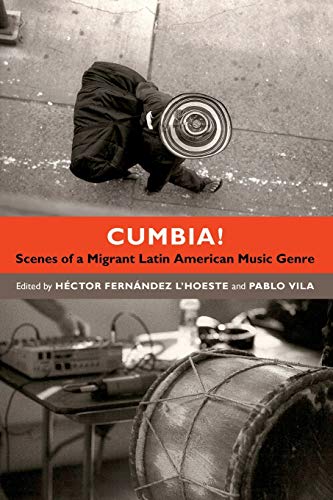
Cumbia is a musical form that originated in northern Colombia and then spread throughout Latin America and wherever Latin Americans travel and settle. It has become one of the most popular musical genre in the Americas. Its popularity is largely due to its stylistic flexibility. Cumbia absorbs and mixes with the local musical styles it encounters. Known for its appeal to workers, the music takes on different styles and meanings from place to place, and even, as the contributors to this collection show, from person to person. Cumbia is a different music among the working classes of northern Mexico, Latin American immigrants in New York City, Andean migrants to Lima, and upper-class Colombians, who now see the music that they once disdained as a source of national prestige. The contributors to this collection look at particular manifestations of cumbia through their disciplinary lenses of musicology, sociology, history, anthropology, linguistics, and literary criticism. Taken together, their essays highlight how intersecting forms of identity-such as nation, region, class, race, ethnicity, and gender-are negotiated through interaction with the music.
Contributors. Cristian Alarcón, Jorge Arévalo Mateus, Leonardo D'Amico, Héctor Fernández L'Hoeste, Alejandro L. Madrid, Kathryn Metz, José Juan Olvera Gudiño, Cathy Ragland, Pablo Semán, Joshua Tucker, Matthew J. Van Hoose, Pablo Vila
Die Inhaltsangabe kann sich auf eine andere Ausgabe dieses Titels beziehen.
Über die Autorin bzw. den Autor
Héctor Fernández L'Hoeste is Professor in the Department of Modern and Classical Languages and Director of the Center for Latin American and Latino/a Studies at Georgia State University. He is coeditor, with Deborah Pacini Hernandez and Eric Zolov, of Rockin' Las Américas: The Global Politics of Rock in Latin/o America.
Pablo Vila is Professor of Sociology at Temple University. He is coauthor, with Pablo Semán, of Troubling Gender: Youth and Cumbia in Argentina's Music Scene.
Auszug. © Genehmigter Nachdruck. Alle Rechte vorbehalten.
CUMBIA!
Scenes of a Migrant Latin American Music Genre
By HCTOR FERNNDEZ L'HOESTE, PABLO VILADuke University Press
Copyright © 2013 Duke University Press
All rights reserved.
ISBN: 978-0-8223-5433-8All rights reserved.
Contents
| Acknowledgments............................................................ | ix |
| Introduction HÉCTOR FERNÁNDEZ L'HOESTE AND PABLO VILA..................... | 1 |
| Chapter 1. Cumbia Music in Colombia: Origins, Transformations, and Evolution of a Coastal Music Genre LEONARDO D'AMICO....................... | 29 |
| Chapter 2. ¿Pa dónde vas Marioneta? ¿Pa' dónde va la gaita? La Cumbiamba Eneyé Returns to San Jacinto JORGE ARÉVALO MATEUS WITH MARTÍN VEJARANO.... | 49 |
| Chapter 3. Cumbia in Mexico's Northeastern Region JOSÉ JUAN OLVERA GUDIÑO..................................................................... | 87 |
| Chapter 4. Rigo Tovar, Cumbia, and the Transnational Grupero Boom ALEJANDRO L. MADRID........................................................ | 105 |
| Chapter 5. Communicating the Collective Imagination: The Sociospatial World of the Mexican Sonidero in Puebla, New York, and New Jersey CATHY RAGLAND.................................................................... | 119 |
| Chapter 6. From The World of the Poor to the Beaches of Eisha: Chicha, Cumbia, and the Search for a Popular Subject in Peru JOSHUA TUCKER........ | 138 |
| Chapter 7. Pandillar in the Jungle: Regionalism and Tecno-cumbia in Amazonian Peru KATHRYN METZ............................................... | 168 |
| Chapter 8. Gender Tensions in Cumbia Villera's Lyrics PABLO SEMÁN AND PABLO VILA................................................................. | 188 |
| Chapter 9. Feliz, feliz CRISTIAN ALARCÓN.................................. | 213 |
| Chapter 10. El "Tú" Tropical, el "Vos" Villero, and Places in Between: Language, Ideology, Music, and the Spatialization of Difference in Uruguayan Tropical Music MATTHEW J. VAN HOOSE............................. | 226 |
| Chapter 11. On Music and Colombianness: Toward a Critique of the History of Cumbia HÉCTOR FERNÁNDEZ L'HOESTE....................................... | 248 |
| References................................................................. | 269 |
| Contributors............................................................... | 285 |
| Index...................................................................... | 289 |
Excerpt
CHAPTER 1
Cumbia Music in Colombia
Origins, Transformations, and Evolution ofa Coastal Music Genre
Costeño Music and Its Sociocultural Context
The Caribbean coastal region of Colombia is called the Costa, and its inhabitantsare referred to as costeños. The música costeña (coastal music) is a productof tri-ethnic syncretic cultural traditions including Amerindian, Spanish,and African elements (List 1980b, 1983), a merging that begins with thecolonial period and continues into the republican period on the CaribbeanCoast. Traditional music from the Colombian Caribbean coast expressesits tri-ethnic costeño identity in various vocal styles and musical forms andthrough its type of instruments and the way they are played. In this chapterI describe the aspects and circumstances under which cumbia, a coastalmusical genre and dance form of peasant origins characterized by an African-derivedstyle, has spread from its local origins in the valley of the MagdalenaRiver to acquire a Colombian national identity, becoming in a few years atransnational musical phenomenon.
Through its heterogeneity, coastal ethno-organology reflects the differentethnic and cultural contributions that shape costeño culture. Instrumental ensemblesare the product of this process of hybridization. They usually combineinstruments of indigenous origin, such as the gaita (vertical duct flute) andthe maraca (rattle); African origin, such as the tambor alegre and the llamador,single-headed drums of different sizes, the tambora (double-headed drum), thecaña de millo (a millet-cane transverse clarinet), the marímbula (a large wooden-boxlamellaphone), and the marimba de napa (musical bow); and European origin,such as the accordion and the wind instruments of the brass bands.
Most of the ritmos (as the musical genres for dancing are called) of Colombia'sAtlantic coastal region—such as tambora, bullerengue, chandé, mapalé,cumbia, porro, puya, fandango—show some "Africanisms" present in theirmusical structure:
The basic concept operative in most cases is the underlying reiterated cycleof pulses or time-span.... African influence is therefore to be found in thecomplex framework built above this foundation, involving pervasive offbeatphrasing, overlapping of call and response patterns, specific uses of thehemiola, and the employment of both disjunct and irregular cycles in the realizationof the underlying time-span. These traits plus the density of rhythmicstructure displayed in the performances of percussion ensembles relate costeñomusic to that of sub-Saharan Africa. (List 1980a: 16-17)
There are various occasions during the year when music is traditionally performed:during Catholic festivities, such as Christmas and Easter, on patronsaints days, and at carnivals and folk festivals (e.g., Festival Nacional de laCumbia at El Banco, Festival de Gaita in San Jacinto, Festival de la Tamborain Tamalameque, Festival del Porro in San Pelayo, and Festival de la LeyendaVallenata in Valledupar).
On the Caribbean coast, musical groups, or conjuntos (small instrumentalsets with four to five elements), represent a further metamorphosis or evolutionof the earlier tambora, which, spread among the black communitiesalong the Magdalena River, stands as an archetype. The tambora ensembleconsists of percussion and vocals only, including a conical drum with a singlehead (currulao), a cylindrical drum with a double head (tambora), and chantin the form of a call-and-response pattern performed by a male or female solosinger alternating with a chorus of women (cantadoras) and accompanied bythe palmoteo (hand-clapping) or beating of the tablitas or palmetas (woodenpaddles) of a chorus of women singing the refrain (Carbó Ronderos 2003). Itsrepertoire includes the bailes cantados (sung dances) — such as bullerengue,tambora, chandé, berroche, guacherna—and songs in call-and-response form(with a solo singer and chorus), accompanied by drums and handclap.
As an expression of Afro-Colombian music culture, tamboras are quitecommon in the region considered the birthplace of cumbia, the Mompoxarea. Between the sixteenth and eighteenth centuries, many palenques, villagesformed by fugitive slaves (cimarrones) during the colonial period, sprangup in this area. In fact, from the organological point of view, the line-up ofcoastal conjuntos consists of drums that make up the tambora, to which thetransverse clarinet, the caña de millo (cane of millet), or two vertical...
„Über diesen Titel“ kann sich auf eine andere Ausgabe dieses Titels beziehen.
Suchergebnisse für Cumbia!: Scenes of a Migrant Latin American Music Genre

Beispielbild für diese ISBN
Cumbia!: Scenes of a Migrant Latin American Music Genre
Anbieter: Ria Christie Collections, Uxbridge, Vereinigtes Königreich
Verkäuferbewertung 5 von 5 Sternen

Zustand: New. In English. Artikel-Nr. ria9780822354338_new
Neu kaufen
EUR 34,73
EUR 13,17 Versand
Versand von Vereinigtes Königreich nach USA
Versand von Vereinigtes Königreich nach USA
Anzahl: 2 verfügbar
Beispielbild für diese ISBN
Cumbia!
Anbieter: PBShop.store UK, Fairford, GLOS, Vereinigtes Königreich
Verkäuferbewertung 5 von 5 Sternen
PAP. Zustand: New. New Book. Shipped from UK. Established seller since 2000. Artikel-Nr. FW-9780822354338
Neu kaufen
EUR 45,34
EUR 4,85 Versand
Versand von Vereinigtes Königreich nach USA
Versand von Vereinigtes Königreich nach USA
Anzahl: 2 verfügbar
Beispielbild für diese ISBN
Cumbia!: Scenes of a Migrant Latin American Music Genre
Anbieter: Kennys Bookstore, Olney, MD, USA
Verkäuferbewertung 5 von 5 Sternen
Zustand: New. 2013. Paperback. . . . . . Books ship from the US and Ireland. Artikel-Nr. V9780822354338
Neu kaufen
EUR 46,07
EUR 9,14 Versand
Versand innerhalb von USA
Versand innerhalb von USA
Anzahl: 1 verfügbar
Beispielbild für diese ISBN
Cumbia! Scenes of a Migrant Latin American Music Genre
Anbieter: Revaluation Books, Exeter, Vereinigtes Königreich
Verkäuferbewertung 5 von 5 Sternen
Paperback. Zustand: Brand New. 336 pages. 9.29x5.98x0.79 inches. In Stock. Artikel-Nr. x-0822354330
Neu kaufen
EUR 52,85
EUR 11,66 Versand
Versand von Vereinigtes Königreich nach USA
Versand von Vereinigtes Königreich nach USA
Anzahl: 2 verfügbar
Foto des Verkäufers
Cumbia!: Scenes of a Migrant Latin American Music Genre
Anbieter: moluna, Greven, Deutschland
Verkäuferbewertung 5 von 5 Sternen
Zustand: New. Cumbia! shows how cumbia, a music that originated in Colombia and was formerly denigrated by its upper classes, has become one of the most popular musics in Latin America and a source of national pride in Colombia.InhaltsverzeichnisA. Artikel-Nr. 595069991
Neu kaufen
EUR 41,81
EUR 48,99 Versand
Versand von Deutschland nach USA
Versand von Deutschland nach USA
Anzahl: Mehr als 20 verfügbar
Foto des Verkäufers
Cumbia! : Scenes of a Migrant Latin American Music Genre
Verlag:
Duke University Press Mai 2013, 2013
ISBN 10: 0822354330
ISBN 13: 9780822354338
Neu
Taschenbuch
Anbieter: AHA-BUCH GmbH, Einbeck, Deutschland
Verkäuferbewertung 5 von 5 Sternen
Taschenbuch. Zustand: Neu. Neuware - Cumbia is a musical form that originated in northern Colombia and then spread throughout Latin America and wherever Latin Americans travel and settle. It has become one of the most popular musical genre in the Americas. Its popularity is largely due to its stylistic flexibility. Cumbia absorbs and mixes with the local musical styles it encounters. Known for its appeal to workers, the music takes on different styles and meanings from place to place, and even, as the contributors to this collection show, from person to person. Cumbia is a different music among the working classes of northern Mexico, Latin American immigrants in New York City, Andean migrants to Lima, and upper-class Colombians, who now see the music that they once disdained as a source of national prestige. The contributors to this collection look at particular manifestations of cumbia through their disciplinary lenses of musicology, sociology, history, anthropology, linguistics, and literary criticism. Taken together, their essays highlight how intersecting forms of identity-such as nation, region, class, race, ethnicity, and gender-are negotiated through interaction with the music.Contributors. Cristian AlarcÓn, Jorge ArÉvalo Mateus, Leonardo D'Amico, HÉctor FernÁndez L'Hoeste, Alejandro L. Madrid, Kathryn Metz, JosÉ Juan Olvera GudiÑo, Cathy Ragland, Pablo SemÁn, Joshua Tucker, Matthew J. Van Hoose, Pablo Vila. Artikel-Nr. 9780822354338
Neu kaufen
EUR 76,45
EUR 30,50 Versand
Versand von Deutschland nach USA
Versand von Deutschland nach USA
Anzahl: 1 verfügbar