
Verwandte Artikel zu Sex and Disability
Inhaltsangabe
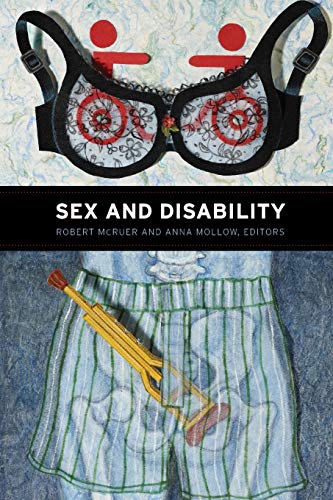
The title of this collection of essays, Sex and Disability, unites two terms that the popular imagination often regards as incongruous. The major texts in sexuality studies, including queer theory, rarely mention disability, and foundational texts in disability studies do not discuss sex in much detail. What if "sex" and "disability" were understood as intimately related concepts? And what if disabled people were seen as both subjects and objects of a range of erotic desires and practices? These are among the questions that this collection's contributors engage. From multiple perspectives-including literary analysis, ethnography, and autobiography-they consider how sex and disability come together and how disabled people negotiate sex and sexual identities in ableist and heteronormative culture. Queering disability studies, while also expanding the purview of queer and sexuality studies, these essays shake up notions about who and what is sexy and sexualizable, what counts as sex, and what desire is. At the same time, they challenge conceptions of disability in the dominant culture, queer studies, and disability studies. Contributors. Chris Bell, Michael Davidson, Lennard J. Davis, Michel Desjardins, Lezlie Frye, Rachael Groner, Kristen Harmon, Michelle Jarman, Alison Kafer, Riva Lehrer, Nicole Markoti¿, Robert McRuer, Anna Mollow, Rachel O'Connell, Russell Shuttleworth, David Serlin, Tobin Siebers, Abby L. Wilkerson
Die Inhaltsangabe kann sich auf eine andere Ausgabe dieses Titels beziehen.
Über die Autorin bzw. den Autor
Robert McRuer is Professor of English at the George Washington University. He is the author of Crip Theory: Cultural Signs of Queerness and Disability and The Queer Renaissance: Contemporary American Literature and the Reinvention of Lesbian and Gay Identities.
Anna Mollow is a PhD candidate in English at the University of California, Berkeley.
Auszug. © Genehmigter Nachdruck. Alle Rechte vorbehalten.
SEX AND DISABILITY
DUKE UNIVERSITY PRESS
Copyright © 2012 Duke University PressAll right reserved.
ISBN: 978-0-8223-5154-2
Contents
Acknowledgments............................................................................................................................................................ixIntroduction ANNA MOLLOW AND ROBERT MCRUER................................................................................................................................11 A Sexual Culture for Disabled People TOBIN SIEBERS......................................................................................................................372 Bridging Theory and Experience: A Critical-Interpretive Ethnography of Sexuality and Disability RUSSELL SHUTTLEWORTH....................................................543 The Sexualized Body of the Child: Parents and the Politics of "Voluntary" Sterilization of People Labeled Intellectually Disabled MICHEL DESJARDINS.....................694 Dismembering the Lynch Mob: Intersecting Narratives of Disability, Race, and Sexual Menace MICHELLE JARMAN..............................................................895 "That Cruel Spectacle": The Extraordinary Body Eroticized in Lucas Malet's The History of Sir Richard Calmady RACHEL O'CONNELL..........................................1086 Pregnant Men: Modernism, Disability, and Biofuturity MICHAEL DAVIDSON...................................................................................................1237 Touching Histories: Personality, Disability, and Sex in the 1930s DAVID SERLIN..........................................................................................1458 Leading with Your Head: On the Borders of Disability, Sexuality, and the Nation NICOLE MARKOTIC AND ROBERT MCRUER.......................................................1659 Normate Sex and Its Discontents ABBY L. WILKERSON.......................................................................................................................18310 I'm Not the Man I Used to Be: Sex, HIV, and Cultural "Responsibility" CHRIS BELL.......................................................................................20811 Golem Girl Gets Lucky RIVA LEHRER......................................................................................................................................23112 Fingered LEZLIE FRYE...................................................................................................................................................25613 Sex as "Spock": Autism, Sexuality, and Autobiographical Narrative RACHAEL GRONER.......................................................................................26314 Is Sex Disability? Queer Theory and the Disability Drive ANNA MOLLOW...................................................................................................28515 An Excess of Sex: Sex Addiction as Disability LENNARD J. DAVIS.........................................................................................................31316 Desire and Disgust: My Ambivalent Adventures in Devoteeism ALISON KAFER................................................................................................33117 Hearing Aid Lovers, Pretenders, and Deaf Wannabes: The Fetishizing of Hearing KRISTEN HARMON...........................................................................355Works Cited................................................................................................................................................................373Contributors...............................................................................................................................................................393Index......................................................................................................................................................................399
Chapter One
TOBIN SIEBERS
A SEXUAL CULTURE FOR DISABLED PEOPLE
Sexuality is not a right which must be earned or a possession that must be purchased, but a state of being accessible to all individuals. Even those who sometimes have to fight for that access. —Lucy Grealy, "In the Realm of the Senses"
The emergence in recent decades of people who define their identities based on sexual preferences and practices is transforming the landscape of minority politics. Sexual minorities are fighting for the rights and privileges accorded to majority populations on many legal and political fronts. The fight over gay marriage is only the most public and contentious of current struggles for full and equal rights by a sexual minority. Proponents of minority sexual identity attack the neat division between the private and public spheres, the relevance of the traditional family and its institutions of marriage and child rearing, and the moral certainty that sexuality is better controlled or repressed than set free. Claims that sexuality is a major part of a person's identity, that sexual liberation is a good in itself, and that sexual expression is a civil right crucial to human happiness have led to new conceptions of civic life linked to sex. Jeffrey Weeks argues that attention to sexual identity gives birth to the "sexual citizen." For him, sexual citizenship remedies "limitations of earlier notions of citizenship" (39), focuses attention on "sexualized identities" (38), and blunts "forces that inhibit" the "free, consensual development" of human relationships "in a democratic polity committed to full and equal citizenship" (38). Kenneth Plummer also represents the new sexual identities as a form of citizenship, defining "intimate citizenship" as "the control (or not) over one's body, feelings, relationships: access (or not) to representations, relationships, public spaces, etc; and socially grounded choices (or not) about identities, gender experiences" (14). Finally, Abby Wilkerson notes that oppressed groups tend to share the experience of sexual repression, explaining that sexual agency is central to political agency and that "sexual democracy should be recognized as a key political struggle" ("Disability" 35).
The emphasis on control over one's body, access to public spaces, and political agency will sound familiar to disability rights activists. Disabled people have long struggled to take control of their bodies from medical authorities and to gain access to built environments and public institutions. Like the sexual minorities described by Weeks, Plummer, and Wilkerson, disabled people experience sexual repression, possess little or no sexual autonomy, and tolerate institutional and legal restrictions on their intimate conduct. Moreover, legal and institutional forces inhibit their ability to express their sexuality freely and to develop consensual relationships with sexual partners.
It would be an exaggeration to define the oppression of disabled people exclusively in the sexual context; not many people with disabilities consider themselves a sexual minority. Nevertheless, I want to argue that disabled people do constitute a significant sexual minority and that recognizing their status as sexual citizens will advance the cause of other sexually oppressed groups. "Sexuality is often," Anne Finger explains about people with disabilities, "the source of our deepest oppression; it is also often the source of our deepest pain. It's easier for us to talk about—and formulate strategies for changing—discrimination in employment, education, and housing than to talk about our exclusion from...
„Über diesen Titel“ kann sich auf eine andere Ausgabe dieses Titels beziehen.
Suchergebnisse für Sex and Disability

Beispielbild für diese ISBN
Sex and Disability
Anbieter: World of Books (was SecondSale), Montgomery, IL, USA
Verkäuferbewertung 5 von 5 Sternen

Paperback. Zustand: Very Good. This collection brings together scholars and artists in disability studies, sexuality, queer theory, and feminism, to show how much sexuality studies and disability studies have to learn from each other. Artikel-Nr. 00109199265
Gebraucht kaufen
EUR 7,17
Versand gratis
Versand innerhalb von USA
Versand innerhalb von USA
Anzahl: 1 verfügbar
Beispielbild für diese ISBN
Sex and Disability
Anbieter: Anybook.com, Lincoln, Vereinigtes Königreich
Verkäuferbewertung 5 von 5 Sternen
Zustand: Fair. This is an ex-library book and may have the usual library/used-book markings inside.This book has soft covers. In fair condition, suitable as a study copy. Please note the Image in this listing is a stock photo and may not match the covers of the actual item,650grams, ISBN:9780822351542. Artikel-Nr. 4345029
Gebraucht kaufen
EUR 15,44
EUR 15,41 Versand
Versand von Vereinigtes Königreich nach USA
Versand von Vereinigtes Königreich nach USA
Anzahl: 1 verfügbar
Beispielbild für diese ISBN
Sex and Disability
Anbieter: Anybook.com, Lincoln, Vereinigtes Königreich
Verkäuferbewertung 5 von 5 Sternen
Zustand: Fair. This is an ex-library book and may have the usual library/used-book markings inside.This book has soft covers. Clean from markings. In fair condition, suitable as a study copy. Please note the Image in this listing is a stock photo and may not match the covers of the actual item,650grams, ISBN:9780822351542. Artikel-Nr. 9293955
Gebraucht kaufen
EUR 15,93
EUR 15,41 Versand
Versand von Vereinigtes Königreich nach USA
Versand von Vereinigtes Königreich nach USA
Anzahl: 1 verfügbar
Beispielbild für diese ISBN
Sex and Disability
Anbieter: WorldofBooks, Goring-By-Sea, WS, Vereinigtes Königreich
Verkäuferbewertung 5 von 5 Sternen
Paperback. Zustand: Very Good. The book has been read, but is in excellent condition. Pages are intact and not marred by notes or highlighting. The spine remains undamaged. Artikel-Nr. GOR009762752
Gebraucht kaufen
EUR 24,83
EUR 6,62 Versand
Versand von Vereinigtes Königreich nach USA
Versand von Vereinigtes Königreich nach USA
Anzahl: 1 verfügbar
Beispielbild für diese ISBN
Sex and Disability
Anbieter: Roundabout Books, Greenfield, MA, USA
Verkäuferbewertung 4 von 5 Sternen

paperback. Zustand: New. Condition Notes: New from the publisher. Artikel-Nr. 1683584
Beispielbild für diese ISBN
Sex and Disability
Anbieter: Majestic Books, Hounslow, Vereinigtes Königreich
Verkäuferbewertung 4 von 5 Sternen
Zustand: New. pp. 432 3 Figures, 11 Illus. Artikel-Nr. 57139349
Neu kaufen
EUR 33,57
EUR 7,68 Versand
Versand von Vereinigtes Königreich nach USA
Versand von Vereinigtes Königreich nach USA
Anzahl: 3 verfügbar
Beispielbild für diese ISBN
Sex and Disability
Anbieter: Ria Christie Collections, Uxbridge, Vereinigtes Königreich
Verkäuferbewertung 5 von 5 Sternen
Zustand: New. In English. Artikel-Nr. ria9780822351542_new
Neu kaufen
EUR 35,14
EUR 13,34 Versand
Versand von Vereinigtes Königreich nach USA
Versand von Vereinigtes Königreich nach USA
Anzahl: 10 verfügbar
Beispielbild für diese ISBN
Sex and Disability
Anbieter: Kennys Bookstore, Olney, MD, USA
Verkäuferbewertung 5 von 5 Sternen
Zustand: New. This collection brings together scholars and artists in disability studies, sexuality, queer theory, and feminism, to show how much sexuality studies and disability studies have to learn from each other. Editor(s): McRuer, Robert; Mollow, Anna. Num Pages: 432 pages, 11 illustrations, 3 figures. BIC Classification: JFFG; JHBK5. Category: (P) Professional & Vocational. Dimension: 231 x 157 x 25. Weight in Grams: 592. . 2012. Paperback. . . . . Books ship from the US and Ireland. Artikel-Nr. V9780822351542
Neu kaufen
EUR 43,24
EUR 9,37 Versand
Versand innerhalb von USA
Versand innerhalb von USA
Anzahl: 1 verfügbar
Beispielbild für diese ISBN
Sex and Disability: Sex and Disability
Anbieter: Revaluation Books, Exeter, Vereinigtes Königreich
Verkäuferbewertung 5 von 5 Sternen
Paperback. Zustand: Brand New. 417 pages. 9.50x6.00x1.25 inches. In Stock. Artikel-Nr. x-0822351544
Neu kaufen
EUR 51,53
EUR 14,77 Versand
Versand von Vereinigtes Königreich nach USA
Versand von Vereinigtes Königreich nach USA
Anzahl: 2 verfügbar
Foto des Verkäufers
Sex and Disability
Anbieter: moluna, Greven, Deutschland
Verkäuferbewertung 5 von 5 Sternen
Zustand: New. This collection brings together scholars and artists in disability studies, sexuality, queer theory, and feminism, to show how much sexuality studies and disability studies have to learn from each other.Über den AutorRob. Artikel-Nr. 447089891
Neu kaufen
EUR 33,18
EUR 48,99 Versand
Versand von Deutschland nach USA
Versand von Deutschland nach USA
Anzahl: 3 verfügbar