
Verwandte Artikel zu A Different Light: The Photography of Sebastião Salgado
Inhaltsangabe
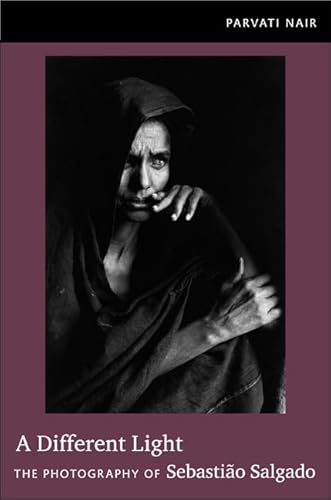
A Different Light is the first in-depth study of the work of Sebastião Salgado, widely considered the greatest documentary photographer of our time. For more than three decades, Salgado has produced thematic photo-essays depicting the massive human displacement brought about by industrialization and conflict. These projects usually take years to complete and include pictures from dozens of countries. Parvati Nair offers detailed analyses of Salgado's best-known photo-essays, including Workers (1993) and Migrations (2000), as well as Genesis, which he began in 2004. With Genesis, Salgado has turned his lens from human turmoil to those parts of the planet not yet ravaged by modernity. Interpreting the photographer's oeuvre, Nair engages broad questions about aesthetics, history, ethics, and politics in documentary photography. At the same time, she draws on conversations with Salgado and his wife and partner, Lélia Wanick Salgado, to explain the significance of the photographer's life history, including his roots in Brazil and his training as an economist; his perspectives; and his artistic method. Underpinning all of Salgado's major projects is a concern with displacement, exploitation, and destruction--of people, communities, and land. Salgado's images exalt reality, compelling viewers to look and, according to Nair, to envision the world otherwise.
Die Inhaltsangabe kann sich auf eine andere Ausgabe dieses Titels beziehen.
Auszug. © Genehmigter Nachdruck. Alle Rechte vorbehalten.
A Different Light
THE PHOTOGRAPHY of SEBASTIÃO SALGADO By PARVATI NAIRDuke University Press
Copyright © 2011PARVATI NAIRAll right reserved.
ISBN: 978-0-8223-5048-4
Contents
ACKNOWLEDGMENTS.......................................................................ixINTRODUCTION Photo-Trajectory.........................................................11 The Moving Lens Abiding Concerns and Photographic Projects.........................492 Engaging Photography Between the Aesthetic and the Documentary.....................1193 Eye Witness On Photography and Historiography......................................1674 Just Regard On Photography, Aesthetics, and Ethics.................................2175 The Practice of Photography Toward a Polity of the Planet..........................264NOTES.................................................................................315BIBLIOGRAPHY..........................................................................341INDEX.................................................................................351
Chapter One
The Moving LensAbiding Concerns and Photographic Projects
In the end I discovered that the stories that gave me the most pleasure were the same stories I did before, not as a photographer, but as an economist, as a student. SEBASTIÃO SALGADO, in interview with the author, Gallery 32, London, September 10, 2007
INTERVIEWS AND CONVERSATIONS with Salgado tend to shift seamlessly from a focus on his photography to the global economic picture. Salgado will often talk in terms of statistics, facts, and figures, revealing a pragmatic mode of thinking that directs his practices as a photographer. Underpinning all his major projects is a concern with the changes and displacements to mankind, to land, and to communities that are brought about in the course of modernity. The focus of his work is most often on those who survive on the peripheries and underbelly of such major processes. In representing such displacement, Salgado's work brings to the fore major questions about modernity as lived in terms of industrialization and globalization.
In this chapter, I outline, analyse, and contextualize his major photographic projects to highlight their main features and uncover the links that connect them. In the process, both the diversity of his photographic work and the singularity of his ideological impetus as a photographer will become clear. An understanding of the concerns, methodology, and impact of Salgado's work is necessary for a consideration of his photography in the light of the theoretical frameworks contained in the chapters that follow. Equally important is an understanding of the connections between each of the major photographic projects and larger social contexts, as well as of the abiding concerns that link the different projects together. My aim here is also to bring into view the wide canvas of Salgado's work, so that its relevance—theoretical, ethical, and political—as photography of and from the global south can come into focus.
Salgado's work is massive in volume, spanning principally Asia, Africa, and Latin America and highlighting key aspects of the social, economic, and political histories of the twentieth century and early twenty-first as experienced beyond the boundaries of the Western hegemony. To date, Salgado's work can be said to cover seven major themes: rural Latin America; the famine in the Sahel of the mid-1980s; workers and the modern displacement from natural means of production that has accompanied industrialization; landlessness in Brazil; global migrations triggered by economic and political forces; children affected by forced migrations, poverty, and other social problems; and the campaign against polio. Connecting these themes is the underlying concern with man's alienation from nature and the environment, a preoccupation that comes into distinct focus in his latest project, Genesis.
Salgado has undertaken these themes through a series of long-term photographic projects, typically involving extensive travel and several years in the making. The worldwide tours of Salgado's photographs take place periodically, and often, as with the Exodus exhibition in 2003, simultaneously in diverse global capitals. In travelling exhibitions, his photographs have been shown in most of Europe's main cities, as well as in North America and Latin America. He has also exhibited in Asia. On a smaller scale, his work can be viewed at any time in the numerous volumes that have been published mainly with Phaidon, Aperture, and other major photography presses. Most of these photo-essays have appeared in dedicated volumes of photography, such as Workers, Terra, Migrations, The Children, and The End of Polio, while An Uncertain Grace, published by Aperture in 1990, brings together photographs from the different thematic projects that Salgado was concerned with in the 1970s and 1980s. His current project, Genesis, said to be the last major photo-essay of his career, was initially released in parts every three months or so in the Guardian newspaper's Saturday review and continues to feature either in small-scale exhibitions or else in the press.
This chapter considers Salgado's major photographic projects in considerable detail and in the order in which he undertook them. It does not, however, dwell on his commissioned work done for commercial purposes, although this work shares many stylistic, aesthetic, political, and other aspects with the projects that he has embarked on personally. Of course, this is a somewhat arbitrary line that I am drawing: Salgado's images of Parma ham or of Malpensa airport in Milan, for example, share tonality and visual style with the rest of his work. Such endeavours also help to sustain financially what he calls his "personal projects." Moreover, in considering the work of an engaged photographer, such as Salgado, it is impossible to demarcate personal projects that reflect such engagement from commercial work that supports the former; it is also impossible to make such demarcations within the field of photography as a whole, for photography is at once commercial, documentary, and aesthetic. Yet, Salgado's commercial projects are too many and too dispersed to consider in close detail here. Suffice it to say that commercial work has provided Salgado with key financial means of pursuing those projects that he holds closer to heart and for which he is best known. Also, many of his commercial images share the tonality, the compositional structures, and the aesthetic of his personal projects. Indeed, all of Salgado's work is mutually implicated, in style as well as in content.
This is a reminder that photography as a medium straddles and connects economic, cultural, ethical, and political circuits. Furthermore, such is the fluidity and versatility of still photography that any single image can, of course, be slotted into diverse contexts. Salgado's work also appears often in collections, and as such is widely disseminated and often dispersed. Collections of Salgado's work, such as An Uncertain Grace, are well known and easy to locate, but I shall not analyse them specifically, although interesting readings can be made from the juxtaposition of images found therein. Nor shall I consider, save in passing, photographic volumes that...
„Über diesen Titel“ kann sich auf eine andere Ausgabe dieses Titels beziehen.
Suchergebnisse für A Different Light: The Photography of Sebastião Salgado

Beispielbild für diese ISBN
A Different Light: The Photography of Sebastião Salgado
Anbieter: ThriftBooks-Dallas, Dallas, TX, USA
Verkäuferbewertung 5 von 5 Sternen

Paperback. Zustand: Very Good. No Jacket. Former library book; May have limited writing in cover pages. Pages are unmarked. ~ ThriftBooks: Read More, Spend Less. Artikel-Nr. G0822350483I4N10
Gebraucht kaufen
EUR 15,42
Versand gratis
Versand innerhalb von USA
Versand innerhalb von USA
Anzahl: 1 verfügbar
Beispielbild für diese ISBN
A Different Light : The Photography of Sebastião Salgado
Anbieter: Better World Books: West, Reno, NV, USA
Verkäuferbewertung 5 von 5 Sternen
Zustand: Very Good. Former library copy. Pages intact with possible writing/highlighting. Binding strong with minor wear. Dust jackets/supplements may not be included. Includes library markings. Stock photo provided. Product includes identifying sticker. Better World Books: Buy Books. Do Good. Artikel-Nr. 5112002-6
Gebraucht kaufen
EUR 18,18
Versand gratis
Versand innerhalb von USA
Versand innerhalb von USA
Anzahl: 1 verfügbar
Beispielbild für diese ISBN
A Different Light: The Photography of Sebastiao Salgado: The Photography of Sebastiao Salgado
Anbieter: AwesomeBooks, Wallingford, Vereinigtes Königreich
Verkäuferbewertung 5 von 5 Sternen
Paperback. Zustand: Very Good. A Different Light: The Photography of Sebastiao Salgado: The Photography of Sebastiao Salgado This book is in very good condition and will be shipped within 24 hours of ordering. The cover may have some limited signs of wear but the pages are clean, intact and the spine remains undamaged. This book has clearly been well maintained and looked after thus far. Money back guarantee if you are not satisfied. See all our books here, order more than 1 book and get discounted shipping. Artikel-Nr. 7719-9780822350484
Gebraucht kaufen
EUR 28,12
EUR 4,80 Versand
Versand von Vereinigtes Königreich nach USA
Versand von Vereinigtes Königreich nach USA
Anzahl: 2 verfügbar
Beispielbild für diese ISBN
A Different Light: The Photography of Sebastiao Salgado: The Photography of Sebastiao Salgado
Anbieter: Bahamut Media, Reading, Vereinigtes Königreich
Verkäuferbewertung 5 von 5 Sternen
Paperback. Zustand: Very Good. This book is in very good condition and will be shipped within 24 hours of ordering. The cover may have some limited signs of wear but the pages are clean, intact and the spine remains undamaged. This book has clearly been well maintained and looked after thus far. Money back guarantee if you are not satisfied. See all our books here, order more than 1 book and get discounted shipping. Artikel-Nr. 6545-9780822350484
Gebraucht kaufen
EUR 27,63
EUR 8,14 Versand
Versand von Vereinigtes Königreich nach USA
Versand von Vereinigtes Königreich nach USA
Anzahl: 2 verfügbar
Beispielbild für diese ISBN
A Different Light
Anbieter: Majestic Books, Hounslow, Vereinigtes Königreich
Verkäuferbewertung 4 von 5 Sternen

Zustand: New. pp. 376. Artikel-Nr. 3570252
Neu kaufen
EUR 33,79
EUR 7,58 Versand
Versand von Vereinigtes Königreich nach USA
Versand von Vereinigtes Königreich nach USA
Anzahl: 3 verfügbar
Beispielbild für diese ISBN
A Different Light
Anbieter: PBShop.store UK, Fairford, GLOS, Vereinigtes Königreich
Verkäuferbewertung 5 von 5 Sternen
PAP. Zustand: New. New Book. Shipped from UK. Established seller since 2000. Artikel-Nr. GB-9780822350484
Neu kaufen
EUR 36,00
EUR 5,85 Versand
Versand von Vereinigtes Königreich nach USA
Versand von Vereinigtes Königreich nach USA
Anzahl: 3 verfügbar
Beispielbild für diese ISBN
A Different Light The Photography of Sebastião Salgado
Anbieter: Revaluation Books, Exeter, Vereinigtes Königreich
Verkäuferbewertung 5 von 5 Sternen
Paperback. Zustand: Brand New. 376 pages. 9.50x6.25x1.00 inches. In Stock. Artikel-Nr. __0822350483
Neu kaufen
EUR 28,82
EUR 14,58 Versand
Versand von Vereinigtes Königreich nach USA
Versand von Vereinigtes Königreich nach USA
Anzahl: 1 verfügbar
Beispielbild für diese ISBN
A Different Light: The Photography of Sebastião Salgado
Anbieter: Ria Christie Collections, Uxbridge, Vereinigtes Königreich
Verkäuferbewertung 5 von 5 Sternen
Zustand: New. In English. Artikel-Nr. ria9780822350484_new
Neu kaufen
EUR 31,50
EUR 13,17 Versand
Versand von Vereinigtes Königreich nach USA
Versand von Vereinigtes Königreich nach USA
Anzahl: 7 verfügbar
Foto des Verkäufers
A different light : the photography of Sebastião Salgado.
Anbieter: Kloof Booksellers & Scientia Verlag, Amsterdam, Niederlande
Verkäuferbewertung 4 von 5 Sternen
Zustand: as new. Durham : Duke University Press, 2011. Paperback. 365 pp. - A Different Light is the first in-depth study of the work of Sebastião Salgado, widely considered the greatest documentary photographer of our time. For more than three decades, Salgado has produced thematic photo-essays depicting the massive human displacement brought about by industrialization and conflict. These projects usually take years to complete and include pictures from dozens of countries. Parvati Nair offers detailed analyses of Salgado's best-known photo-essays, including Workers (1993) and Migrations (2000), as well as Genesis, which he began in 2004. With Genesis, Salgado has turned his lens from human turmoil to those parts of the planet not yet ravaged by modernity. Interpreting the photographer's oeuvre, Nair engages broad questions about aesthetics, history, ethics, and politics in documentary photography. At the same time, she draws on conversations with Salgado and his wife and partner, Lélia Wanick Salgado, to explain the significance of the photographer's life history, including his roots in Brazil and his training as an economist; his perspectives; and his artistic method. Underpinning all of Salgado's major projects is a concern with displacement, exploitation, and destructionof people, communities, and land. Salgado's images exalt reality, compelling viewers to look and, according to Nair, to envision the world otherwise. Condition : as new copy. ISBN 9780822350484. Keywords : PHOTOGRAPHY, Artikel-Nr. 299983
Gebraucht kaufen
EUR 16,95
EUR 30,00 Versand
Versand von Niederlande nach USA
Versand von Niederlande nach USA
Anzahl: 1 verfügbar
Beispielbild für diese ISBN
A Different Light: The Photography of Sebastião Salgado
Anbieter: Kennys Bookstore, Olney, MD, USA
Verkäuferbewertung 5 von 5 Sternen
Zustand: New. The popular documentary photographer Sebastiao Salgado was born in Brazil (part of the global south) but his work has been criticized for the way it aestheticizes his subaltern subjects. This title describes the painstaking work on individual prints done by the artist and his wife. Num Pages: 376 pages, 21 photographs. BIC Classification: AJB; AJCR. Category: (P) Professional & Vocational. Dimension: 155 x 237 x 23. Weight in Grams: 722. . 2012. Paperback. . . . . Books ship from the US and Ireland. Artikel-Nr. V9780822350484
Neu kaufen
EUR 41,09
EUR 9,14 Versand
Versand innerhalb von USA
Versand innerhalb von USA
Anzahl: 1 verfügbar