
Verwandte Artikel zu Metal Rules the Globe: Heavy Metal Music Around The...
Inhaltsangabe
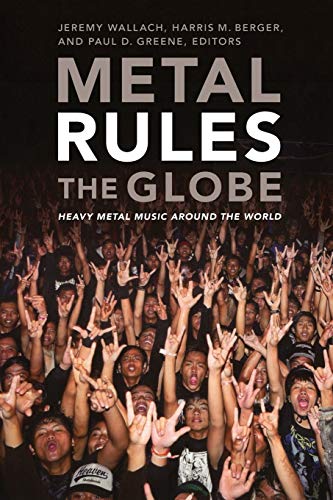
During the past three decades, heavy metal music has gone global, becoming a potent source of meaning and identity for fans around the world. In Metal Rules the Globe, ethnographers and some of the foremost authorities in the burgeoning field of metal studies analyze this dramatic expansion of heavy metal music and culture. They take readers inside metal scenes in Brazil, Canada, China, Easter Island, Indonesia, Israel, Japan, Malaysia, Malta, Nepal, Norway, Singapore, Slovenia, and the United States, describing how the sounds of heavy metal and the meanings that metalheads attribute to them vary across cultures. The contributors explore the dynamics of masculinity, class, race, and ethnicity in metal scenes; the place of metal in the music industry; and the ways that disenfranchised youth use metal to negotiate modernity and social change. They reveal heavy metal fans as just as likely to criticize the consumerism, class divisiveness, and uneven development of globalization as they are to reject traditional cultural norms. Crucially, they never lose sight of the sense of community and sonic pleasure to be experienced in the distorted, pounding sounds of local metal scenes.
Contributors. Idelber Avelar, Albert Bell, Dan Bendrups, Harris M. Berger, Paul D. Greene, Ross Hagen, Sharon Hochhauser, Shuhei Hosokawa, Keith Kahn-Harris, Kei Kawano, Rajko MurŠi¿,Steve Waksman, Jeremy Wallach, Robert Walser, Deena Weinstein, Cynthia P. Wong
Die Inhaltsangabe kann sich auf eine andere Ausgabe dieses Titels beziehen.
Über die Autorin bzw. den Autor
Jeremy Wallach is Associate Professor in the Department of Popular Culture at Bowling Green State University in Ohio. He is the author of Modern Noise, Fluid Genres: Popular Music in Indonesia, 1997-2001.
Harris M. Berger is Professor of Music at Texas A&M University. He is the author of Stance: Ideas about Emotion, Style, and Meaning for the Study of Expressive Culture and Metal, Rock, and Jazz: Perception and the Phenomenology of Musical Experience.
Paul D. Greene is Associate Professor of Ethnomusicology and Integrative Arts at Pennsylvania State University, Brandywine. He is a co-editor of Wired for Sound: Engineering and Technologies in Sonic Cultures.
Auszug. © Genehmigter Nachdruck. Alle Rechte vorbehalten.
METAL RULES THE GLOBE
HEAVY METAL MUSIC AROUND THE WORLDDUKE UNIVERSITY PRESS
Copyright © 2011 Duke University PressAll right reserved.
ISBN: 978-0-8223-4733-0
Contents
Affective Overdrive, Scene Dynamics, and Identity in the Global Metal Scene Jeremy Wallach, Harris M. Berger, and Paul D. Greene..........................................3The Globalization of Metal Deena Weinstein................................................................................................................................34"A Dream Return to Tang Dynasty": Masculinity, Male Camaraderie, and Chinese Heavy Metal in the 1990s Cynthia P. Wong.....................................................63Unleashed in the East: Metal Music, Masculinity, and "Malayness" in Indonesia, Malaysia, and Singapore Jeremy Wallach.....................................................86Electronic and Affective Overdrive: Tropes of Transgression in Nepal's Heavy Metal Scene Paul D. Greene...................................................................109Otherwise National: Locality and Power in the Art of Sepultura Idelber Avelar.............................................................................................135The Marketing of Anglo- Identity in the North American Hatecore Metal Industry Sharon Hochhauser..........................................................................161Musical Style, Ideology, and Mythology in Norwegian Black Metal Ross Hagen................................................................................................180"You Are from Israel and That Is Enough to Hate You Forever": Racism, Globalization, and Play within the Global Extreme Metal Scene Keith Kahn-Harris.....................200Arenas of the Imagination: Global Tours and the Heavy Metal Concert in the 1970s Steve Waksman............................................................................227Thunder in the Far East: The Heavy Metal Industry in 1990s Japan Kei Kawano and Shuhei Hosokawa...........................................................................247Metal in a Micro Island State: An Insider's Perspective Albert Bell.......................................................................................................271Noisy Crossroads: Metal Scenes in Slovenia Rajko Mur?ic..............................................................................................................294Nako: The Metal in the Marrow of Easter Island Music Dan Bendrups.........................................................................................................313AFTERWORD Robert Walser...................................................................................................................................................333ACKNOWLEDGMENTS............................................................................................................................................................337WORKS CITED................................................................................................................................................................339CONTRIBUTORS...............................................................................................................................................................367INDEX......................................................................................................................................................................371
Chapter One
AFFECTIVE OVERDRIVE, SCENE DYNAMICS, AND IDENTITY IN THE GLOBAL METAL SCENEJeremy Wallach, Harris M. Berger, and Paul D. Greene
We would like to thank all our fans and friends all over the world, from Jakarta to Moscow!!—Sepultura, 1993 (liner notes for the album Chaos A.D.)
We are here because we cannot live without our music. Every drumbeat I hear reminds me of the beat of my heart.—Sameh Youssef, a twenty-three-year-old computer science student attending a heavy metal concert outside Cairo (quoted in "Rockin' in the Islamic World," 2006)
Come! Bang your heads to the Dark Rock N' Roll!!!—Holy Flesh Records press release for Dark, a cassette by the Indonesian black metal band Bealiah (ca. 2000)
The band takes the stage and launches into its first song. The music is distorted, pounding, and brutal, and it is so loud that it seems to fill in the space between the musicians and the audience members. Sweat pours down the singer's face as he bellows the lyrics in a voice that is half rasp, half scream. The instrumentalists— bass guitarist, electric guitarist, and drummer—gnash their teeth and grimace as if in pain as they concentrate on bashing out their parts. Some in the predominantly, but not exclusively, male audience respond to the music with moshing (a dance involving intentional collisions with other dancers) and headbanging (rhythmic up-and-down movements of the head and neck), their flailing bodies contorting to the beat. Performers and audience are dressed alike—jeans, T-shirts, and long hair or buzz cuts—and they play their roles at the concert as though their lives depended on it. And perhaps, in a sense, they do. Metal around the world has become a viable mode of resistance, of identity assertion, and of self-empowerment, often in the face of powerful, totalizing, and even life-threatening forces.
The concert described above took place in 2002 in Cleveland's Grog Shop, the venerable rock club in that city's trendy Coventry Village section, but it could easily have taken place in Tokyo, Kathmandu, Jakarta, Tel Aviv, Rio de Janeiro, Beijing, Oslo, or any number of other sites the world over in the last fifteen years. Yet the fact that metal music, fashion, and behavior exist in all these places does not necessarily imply that they mean the same things in these quite different cultural contexts. The chapters in this book demonstrate that in every setting, metal is embedded in local cultures and histories and is experienced as part of a complex and historically specific encounter with the forces of modernity. The globalization of metal is well upon us, and with this book we hope to both investigate the specific, variable meanings of heavy metal music and culture for metalheads around the world and contribute insights into the large-scale social processes that have facilitated the music's dramatic worldwide expansion.
METAL GOES GLOBAL
The term heavy metal has come to denote a cluster of rock music styles that emphasize loud, distorted guitars; prominent and aggressive drums; emotionally extreme singing techniques; and musical complexity and esotericism (unlike punk, for instance). Frequently misunderstood and maligned in its countries of origin, heavy metal music has in the last four decades become a potent source of meaning and identity for young and no-longer-so-young people across the planet. These fans have stayed loyal to the music despite societal disapproval, occasional moral panics, censorship, and even government harassment and violence. Metal Rules the Globe is the first academic book to explore the broad swath of metal's worldwide growth and examine why this often devalued, censored, and ridiculed music genre has attracted so many devoted fans in far-flung locales. Fans and musicians initially developed connections across vast distances through transnational networks of photocopied fanzines, paper correspondence, audiocassette trading, concert tours big and small (see Waksman, this volume), and a loosely shared canon of "classic" metal albums; now they use e-mail, Web sites, blogs, YouTube, and...
„Über diesen Titel“ kann sich auf eine andere Ausgabe dieses Titels beziehen.
Suchergebnisse für Metal Rules the Globe: Heavy Metal Music Around The...

Beispielbild für diese ISBN
Metal Rules the Globe : Heavy Metal Music Around the World
Anbieter: Better World Books, Mishawaka, IN, USA
Verkäuferbewertung 5 von 5 Sternen

Zustand: Good. Former library copy. Pages intact with minimal writing/highlighting. The binding may be loose and creased. Dust jackets/supplements are not included. Includes library markings. Stock photo provided. Product includes identifying sticker. Better World Books: Buy Books. Do Good. Artikel-Nr. 4088548-6
Gebraucht kaufen
EUR 9,92
Versand gratis
Versand innerhalb von USA
Versand innerhalb von USA
Anzahl: 1 verfügbar
Beispielbild für diese ISBN
Metal Rules the Globe : Heavy Metal Music Around the World
Anbieter: Better World Books, Mishawaka, IN, USA
Verkäuferbewertung 5 von 5 Sternen
Zustand: Very Good. Pages intact with possible writing/highlighting. Binding strong with minor wear. Dust jackets/supplements may not be included. Stock photo provided. Product includes identifying sticker. Better World Books: Buy Books. Do Good. Artikel-Nr. 38225072-6
Gebraucht kaufen
EUR 9,92
Versand gratis
Versand innerhalb von USA
Versand innerhalb von USA
Anzahl: 1 verfügbar
Beispielbild für diese ISBN
Metal Rules the Globe: Heavy Metal Music Around The World
Anbieter: WorldofBooks, Goring-By-Sea, WS, Vereinigtes Königreich
Verkäuferbewertung 5 von 5 Sternen
Paperback. Zustand: Very Good. The book has been read, but is in excellent condition. Pages are intact and not marred by notes or highlighting. The spine remains undamaged. Artikel-Nr. GOR006628972
Gebraucht kaufen
EUR 29,72
EUR 6,63 Versand
Versand von Vereinigtes Königreich nach USA
Versand von Vereinigtes Königreich nach USA
Anzahl: 1 verfügbar
Beispielbild für diese ISBN
Metal Rules the Globe
Anbieter: PBShop.store UK, Fairford, GLOS, Vereinigtes Königreich
Verkäuferbewertung 5 von 5 Sternen
PAP. Zustand: New. New Book. Shipped from UK. Established seller since 2000. Artikel-Nr. DB-9780822347330
Neu kaufen
EUR 40,37
EUR 5,94 Versand
Versand von Vereinigtes Königreich nach USA
Versand von Vereinigtes Königreich nach USA
Anzahl: 1 verfügbar
Beispielbild für diese ISBN
Metal Rules the Globe: Heavy Metal Music around the World
Anbieter: Ria Christie Collections, Uxbridge, Vereinigtes Königreich
Verkäuferbewertung 5 von 5 Sternen
Zustand: New. In English. Artikel-Nr. ria9780822347330_new
Neu kaufen
EUR 43,64
EUR 13,36 Versand
Versand von Vereinigtes Königreich nach USA
Versand von Vereinigtes Königreich nach USA
Anzahl: 1 verfügbar
Beispielbild für diese ISBN
Metal Rules the Globe: Heavy Metal Music around the World
Anbieter: Kennys Bookstore, Olney, MD, USA
Verkäuferbewertung 5 von 5 Sternen
Zustand: New. Heavy metal might not have been the most likely popular music genre to become global, but it has. This collection brings together cultural studies and pop music accounts of metal around the world, including Indonesia, Malaysia, Singapore, Nepal, Brazil, Malta, Slovenia, China, Japan, Norway, Israel, Easter Island, and more. Editor(s): Wallach, Jeremy; Berger, Harris M.; Greene, Paul D. Num Pages: 392 pages, 14 illustrations. BIC Classification: AVGT. Category: (P) Professional & Vocational. Dimension: 233 x 157 x 23. Weight in Grams: 540. . 2011. Paperback. . . . . Books ship from the US and Ireland. Artikel-Nr. V9780822347330
Neu kaufen
EUR 53,07
EUR 9,37 Versand
Versand innerhalb von USA
Versand innerhalb von USA
Anzahl: 1 verfügbar
Beispielbild für diese ISBN
Metal Rules the Globe Heavy Metal Music around the World
Anbieter: Revaluation Books, Exeter, Vereinigtes Königreich
Verkäuferbewertung 5 von 5 Sternen
Paperback. Zustand: Brand New. 392 pages. 9.00x6.10x1.00 inches. In Stock. Artikel-Nr. x-0822347334
Neu kaufen
EUR 62,18
EUR 14,79 Versand
Versand von Vereinigtes Königreich nach USA
Versand von Vereinigtes Königreich nach USA
Anzahl: 2 verfügbar
Beispielbild für diese ISBN
Metal Rules the Globe
Anbieter: Majestic Books, Hounslow, Vereinigtes Königreich
Verkäuferbewertung 4 von 5 Sternen

Zustand: New. pp. 392 14 Illus. Artikel-Nr. 57967208
Neu kaufen
EUR 87,64
EUR 7,69 Versand
Versand von Vereinigtes Königreich nach USA
Versand von Vereinigtes Königreich nach USA
Anzahl: 1 verfügbar
Foto des Verkäufers
Metal Rules the Globe | Heavy Metal Music around the World
Anbieter: preigu, Osnabrück, Deutschland
Verkäuferbewertung 5 von 5 Sternen
Taschenbuch. Zustand: Neu. Metal Rules the Globe | Heavy Metal Music around the World | Jeremy Wallach | Taschenbuch | Einband - flex.(Paperback) | Englisch | 2011 | Duke University Press | EAN 9780822347330 | Verantwortliche Person für die EU: Libri GmbH, Europaallee 1, 36244 Bad Hersfeld, gpsr[at]libri[dot]de | Anbieter: preigu. Artikel-Nr. 121981165
Neu kaufen
EUR 30,95
EUR 70,00 Versand
Versand von Deutschland nach USA
Versand von Deutschland nach USA
Anzahl: 1 verfügbar
Foto des Verkäufers
Metal Rules the Globe
Verlag:
Duke University Press Dez 2011, 2011
ISBN 10: 0822347334
ISBN 13: 9780822347330
Neu
Taschenbuch
Anbieter: Books-by-Floh, Paderborn, Deutschland
Verkäuferbewertung 4 von 5 Sternen
Taschenbuch. Zustand: Neu. Neuware -During the past three decades, heavy metal music has gone global, becoming a potent source of meaning and identity for fans around the world. In Metal Rules the Globe, ethnographers and some of the foremost authorities in the burgeoning field of metal studies analyze this dramatic expansion of heavy metal music and culture. They take readers inside metal scenes in Brazil, Canada, China, Easter Island, Indonesia, Israel, Japan, Malaysia, Malta, Nepal, Norway, Singapore, Slovenia, and the United States, describing how the sounds of heavy metal and the meanings that metalheads attribute to them vary across cultures. The contributors explore the dynamics of masculinity, class, race, and ethnicity in metal scenes; the place of metal in the music industry; and the ways that disenfranchised youth use metal to negotiate modernity and social change. They reveal heavy metal fans as just as likely to criticize the consumerism, class divisiveness, and uneven development of globalization as they are to reject traditional cultural norms. Crucially, they never lose sight of the sense of community and sonic pleasure to be experienced in the distorted, pounding sounds of local metal scenes.Contributors. Idelber Avelar, Albert Bell, Dan Bendrups, Harris M. Berger, Paul D. Greene, Ross Hagen, Sharon Hochhauser, Shuhei Hosokawa, Keith Kahn-Harris, Kei Kawano, Rajko Muri¿,Steve Waksman, Jeremy Wallach, Robert Walser, Deena Weinstein, Cynthia P. Wong 392 pp. Englisch. Artikel-Nr. 9780822347330
Neu kaufen
EUR 55,74
EUR 105,00 Versand
Versand von Deutschland nach USA
Versand von Deutschland nach USA
Anzahl: 1 verfügbar