
Verwandte Artikel zu Reggaeton (Refiguring American Music)
Inhaltsangabe
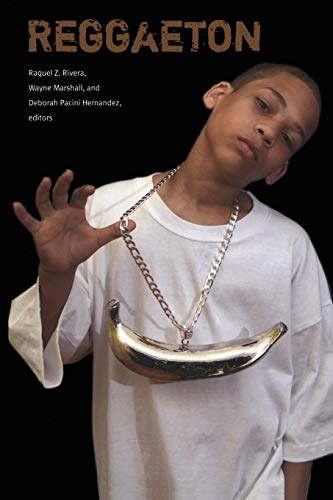
A hybrid of reggae and rap, reggaeton is a music with Spanish-language lyrics and Caribbean aesthetics that has taken Latin America, the United States, and the world by storm. Superstars-including Daddy Yankee, Don Omar, and Ivy Queen-garner international attention, while aspiring performers use digital technologies to create and circulate their own tracks. Reggaeton brings together critical assessments of this wildly popular genre. Journalists, scholars, and artists delve into reggaeton's local roots and its transnational dissemination; they parse the genre's aesthetics, particularly in relation to those of hip-hop; and they explore the debates about race, nation, gender, and sexuality generated by the music and its associated cultural practices, from dance to fashion.
The collection opens with an in-depth exploration of the social and sonic currents that coalesced into reggaeton in Puerto Rico during the 1990s. Contributors consider reggaeton in relation to that island, Panama, Jamaica, and New York; Cuban society, Miami's hip-hop scene, and Dominican identity; and other genres including reggae en español, underground, and dancehall reggae. The reggaeton artist Tego Calderón provides a powerful indictment of racism in Latin America, while the hip-hop artist Welmo Romero Joseph discusses the development of reggaeton in Puerto Rico and his refusal to embrace the upstart genre. The collection features interviews with the DJ/rapper El General and the reggae performer Renato, as well as a translation of "Chamaco's Corner," the poem that served as the introduction to Daddy Yankee's debut album. Among the volume's striking images are photographs from Miguel Luciano's series Pure Plantainum, a meditation on identity politics in the bling-bling era, and photos taken by the reggaeton videographer Kacho López during the making of the documentary Bling'd: Blood, Diamonds, and Hip-Hop.
Contributors. Geoff Baker, Tego Calderón, Carolina Caycedo, Jose Davila, Jan Fairley, Juan Flores, Gallego (José Raúl González), Félix Jiménez, Kacho López, Miguel Luciano, Wayne Marshall, Frances Negrón-Muntaner, Alfredo Nieves Moreno, Ifeoma C. K. Nwankwo, Deborah Pacini Hernandez, Raquel Z. Rivera, Welmo Romero Joseph, Christoph Twickel, Alexandra T. Vazquez
Die Inhaltsangabe kann sich auf eine andere Ausgabe dieses Titels beziehen.
Über die Autorin bzw. den Autor
Raquel Z. Rivera is a Researcher at the Center for Puerto Rican Studies at Hunter College, City University of New York. She is the author of New York Ricans from the Hip Hop Zone and many articles for magazines and newspapers including Vibe, Urban Latino, El Diario/La Prensa, El Nuevo Día, and Claridad. She blogs at reggaetonica.blogspot.com.
Wayne Marshall is the Florence Levy Kay Fellow in Ethnomusicology at Brandeis University. He blogs at wayneandwax.com, from which a post on reggaeton was selected for the Da Capo Best Music Writing 2006 anthology.
Deborah Pacini Hernandez is Associate Professor of Anthropology at Tufts University. The author of Bachata: A Social History of a Dominican Popular Music and a co-editor of Rockin' Las Americas: The Global Politics of Rock in Latin/o America, she has written many articles on Spanish Caribbean and U.S. Latino popular music.
Von der hinteren Coverseite
"The kinetic contributions in "Reggaeton" melt false borders--ones wrapped like straitjackets around peoples, knowledges, and cultures--and move the crowd. More than an exciting, exhaustive treatment of this vital musical culture, this anthology is a fine blueprint for engaged cultural scholarship right now."--Jeff Chang, author of "Can't Stop Won't Stop: A History of the Hip-Hop Generation"
Auszug. © Genehmigter Nachdruck. Alle Rechte vorbehalten.
REGGAETON
Duke University Press
Copyright © 2009 DUKE UNIVERSITY PRESSAll right reserved.
ISBN: 978-0-8223-4383-7
Contents
Illustrations........................................................................................................................................viiForeword: What's All the Noise About? Juan Flores...................................................................................................ixAcknowledgments......................................................................................................................................xiiiIntroduction: Reggaeton's Socio-Sonic Circuitry Wayne Marshall, Raquel Z. Rivera, and Deborah Pacini Hernandez......................................1From Msica Negra to Reggaeton Latino: The Cultural Politics of Nation, Migration, and Commercialization Wayne Marshall.............................19Placing Panama in the Reggaeton Narrative: Editor's Notes Wayne Marshall............................................................................79Reggae in Panama: Bien Tough Christoph Twickel......................................................................................................81The Panamanian Origins of Reggae en Espaol: Seeing History through "Los Ojos Caf" of Renato Interview by Ifeoma C. K. Nwankwo.....................89Muvelo (Move It!): From Panama to New York and Back Again, the Story of El General Interview by Christoph Twickel..................................99Policing Morality, Mano Dura Stylee: The Case of Underground Rap and Reggae in Puerto Rico in the Mid-1990s Raquel Z. Rivera........................111Dominicans in the Mix: Reflections on Dominican Identity, Race, and Reggaeton Deborah Pacini Hernandez..............................................135The Politics of Dancing: Reggaetn and Rap in Havana, Cuba Geo Baker................................................................................165You Got Your Reggaetn in my Hip-Hop: Crunkiao and "Spanish Music" in the Miami Urban Scene Jose Davila.............................................200Visualizing Reggaeton: Editors' Notes Wayne Marshall and Raquel Z. Rivera...........................................................................215Images by Miguel Luciano.............................................................................................................................218Images by Carolina Caycedo...........................................................................................................................221Images by Kacho Lpez................................................................................................................................222(W)rapped in Foil: Glory at Twelve Words a Minute Flix Jimnez.....................................................................................229A Man Lives Here: Reggaeton's Hypermasculine Resident Alfredo Nieves Moreno.........................................................................252How to Make Love with Your Clothes On: Dancing Regeton, Gender, and Sexuality in Cuba Jan Fairley...................................................280Chamaco's Corner Gallego (Jos Ral Gonzlez).......................................................................................................297Salon Philosophers: Ivy Queen and Surprise Guests Take Reggaetn Aside Alexandra T. Vazquez.........................................................300From Hip-Hop to Reggaeton: Is There Only a Step? Welmo E. Romero Joseph.............................................................................312Black Pride Tego Caldern...........................................................................................................................324Poetry of Filth: The (Post) Reggaetonic Lyrics of Calle 13 Frances Negrn-Muntaner..................................................................327Bibliography: Selected Sources for Reading Reggaeton.................................................................................................341Contributors.........................................................................................................................................345Index................................................................................................................................................349
Chapter One
WAYNE MARSHALL
From Msica Negra to Reggaeton Latino The Cultural Politics of Nation, Migration, and Commercialization
When Daddy Yankee's "Gasolina" galloped up the charts on a catchy chorus, some shifty snares, and a riff befitting a bullfight, it expressed as much a sense of where reggaeton had come from as where it might go. Though some detractors heard it as little more than the latest quasi-Caribbean commercial confection (and a rather sexist bit of ear and eye candy at that),8 a closer listen, with ears attuned to the genre's aesthetic history, reveals a number of ways that the song embodies a complex history of social and sonic circuitry. In particular, if one attends more carefully to the pista, or track, propelling the lexically and musically suggestive vocals of Daddy Yankee and his eager foil, Glory, one can hear Luny Tunes' sleek, powerful production not only as a quintessential example of contemporary, commercial reggaeton style but as a musical text engaging with a long history of circulating sounds, people, and ideas about self and other, race and place.
One might hear such social and sonic circuitry in the explicitly electronic sounds of "Gasolina," which include brittle, chintzy, "preset" virtual instruments from such popular music software as Fruity Loops (or, as it has rebranded itself, FL Studio) as well as more sophisticated "synth patches" offering sounds, such as orchestral strings, with a greater verisimilitude. Ranging from bright and needling to low and buzzy, the track's interwoven synthesizer lines evoke engagements with contemporary hip-hop, pop and R&B, dancehall reggae, and even techno as they provide a dense harmonic texture for Yankee's sing-song, rapid-fire rap. Conjuring club culture, the track's crescendoing kick drums and periodic "breakdowns" seem more clearly borrowed from "trance" and dance anthems than from any of reggaeton's more typically cited "tropical" sources. The harmonic movement of the track, shifting a semitone or half-step every other measure-especially with its galloping figures, adding 32nd note flourishes to propel the pista forward-may suggest to some, including listeners who first heard such clichs via the producers' namesake (i.e., Looney Tunes cartoons), the classic contours of bullfight music or pasodoble, as typified by Pascual Marquina Narro's well-worn sporting anthem, "Espaa Ca." Appearing to affirm such associations, Yankee boasts, "En la pista nos llaman los matadores" (On the track they call us the matadors). Figuring Spain in this manner, or Spanish colonial legacies (as mediated by pop culture fantasies), "Gasolina" not only features the harmonic movement and marchlike figures associated with bullfight music, it also employs, as do many contemporary reggaeton productions, a I-V or "oompah" style bassline, hence gesturing as well to the polka and other social dance forms that have long resounded across the colonial Americas (as can also be heard in Mexican banda).
Daddy Yankee's vocal style similarly embodies a range of forebears, from the nasally tinged projections of salsa soneros (or, for that matter, of bomba singers), to the double-time deliveries and lilting melodies of dancehall DJS, to the more complex rhyme...
„Über diesen Titel“ kann sich auf eine andere Ausgabe dieses Titels beziehen.
Suchergebnisse für Reggaeton (Refiguring American Music)

Beispielbild für diese ISBN
Reggaeton
Anbieter: World of Books (was SecondSale), Montgomery, IL, USA
Verkäuferbewertung 5 von 5 Sternen

Zustand: Good. Item in good condition. Textbooks may not include supplemental items i.e. CDs, access codes etc. Artikel-Nr. 00108752733
Gebraucht kaufen
EUR 14,44
Versand gratis
Versand innerhalb von USA
Versand innerhalb von USA
Anzahl: 2 verfügbar
Beispielbild für diese ISBN
Reggaeton
Anbieter: Ria Christie Collections, Uxbridge, Vereinigtes Königreich
Verkäuferbewertung 5 von 5 Sternen
Zustand: New. In English. Artikel-Nr. ria9780822343837_new
Neu kaufen
EUR 31,44
EUR 13,14 Versand
Versand von Vereinigtes Königreich nach USA
Versand von Vereinigtes Königreich nach USA
Anzahl: 2 verfügbar
Beispielbild für diese ISBN
Reggaeton
Anbieter: PBShop.store UK, Fairford, GLOS, Vereinigtes Königreich
Verkäuferbewertung 5 von 5 Sternen
PAP. Zustand: New. New Book. Shipped from UK. Established seller since 2000. Artikel-Nr. FW-9780822343837
Neu kaufen
EUR 40,77
EUR 5,84 Versand
Versand von Vereinigtes Königreich nach USA
Versand von Vereinigtes Königreich nach USA
Anzahl: 2 verfügbar
Beispielbild für diese ISBN
Reggaeton
Anbieter: Kennys Bookstore, Olney, MD, USA
Verkäuferbewertung 5 von 5 Sternen
Zustand: New. This collection offers the first critical assessment of the music and culture of reggaeton, a popular genre that blends reggae and rap, Spanish-language lyrics, and Latin-Caribbean aesthetics. Editor(s): Rivera, Raquel Z.; Marshall, Wayne; Pacini Hernandez, Deborah. Series: Refiguring American Music. Num Pages: 36 illustrations. BIC Classification: AVGR; AVGS. Category: (G) General (US: Trade). Dimension: 235 x 155 x 30. Weight in Grams: 674. . 2009. Paperback. . . . . Books ship from the US and Ireland. Artikel-Nr. V9780822343837
Neu kaufen
EUR 40,74
EUR 9,15 Versand
Versand innerhalb von USA
Versand innerhalb von USA
Anzahl: 1 verfügbar
Beispielbild für diese ISBN
Reggaeton
Anbieter: Revaluation Books, Exeter, Vereinigtes Königreich
Verkäuferbewertung 5 von 5 Sternen
Paperback. Zustand: Brand New. 392 pages. 9.25x6.00x1.25 inches. In Stock. Artikel-Nr. x-0822343835
Neu kaufen
EUR 49,69
EUR 14,55 Versand
Versand von Vereinigtes Königreich nach USA
Versand von Vereinigtes Königreich nach USA
Anzahl: 2 verfügbar
Foto des Verkäufers
Reggaeton
Anbieter: moluna, Greven, Deutschland
Verkäuferbewertung 5 von 5 Sternen
Zustand: New. This collection offers the first critical assessment of the music and culture of reggaeton, a popular genre that blends reggae and rap, Spanish-language lyrics, and Latin-Caribbean aesthetics.Über den AutorRaquel Z. Rivera, Wayn. Artikel-Nr. 898844579
Neu kaufen
EUR 40,11
EUR 48,99 Versand
Versand von Deutschland nach USA
Versand von Deutschland nach USA
Anzahl: Mehr als 20 verfügbar
Foto des Verkäufers
Reggaeton
Verlag:
Duke University Press Apr 2009, 2009
ISBN 10: 0822343835
ISBN 13: 9780822343837
Neu
Taschenbuch
Anbieter: AHA-BUCH GmbH, Einbeck, Deutschland
Verkäuferbewertung 5 von 5 Sternen
Taschenbuch. Zustand: Neu. Neuware - A hybrid of reggae and rap, reggaeton is a music with Spanish-language lyrics and Caribbean aesthetics that has taken Latin America, the United States, and the world by storm. Superstars-including Daddy Yankee, Don Omar, and Ivy Queen-garner international attention, while aspiring performers use digital technologies to create and circulate their own tracks. Reggaeton brings together critical assessments of this wildly popular genre. Journalists, scholars, and artists delve into reggaeton's local roots and its transnational dissemination; they parse the genre's aesthetics, particularly in relation to those of hip-hop; and they explore the debates about race, nation, gender, and sexuality generated by the music and its associated cultural practices, from dance to fashion.The collection opens with an in-depth exploration of the social and sonic currents that coalesced into reggaeton in Puerto Rico during the 1990s. Contributors consider reggaeton in relation to that island, Panama, Jamaica, and New York; Cuban society, Miami's hip-hop scene, and Dominican identity; and other genres including reggae en espaÑol, underground, and dancehall reggae. The reggaeton artist Tego CalderÓn provides a powerful indictment of racism in Latin America, while the hip-hop artist Welmo Romero Joseph discusses the development of reggaeton in Puerto Rico and his refusal to embrace the upstart genre. The collection features interviews with the DJ/rapper El General and the reggae performer Renato, as well as a translation of "Chamaco's Corner," the poem that served as the introduction to Daddy Yankee's debut album. Among the volume's striking images are photographs from Miguel Luciano's series Pure Plantainum, a meditation on identity politics in the bling-bling era, and photos taken by the reggaeton videographer Kacho LÓpez during the making of the documentary Bling'd: Blood, Diamonds, and Hip-Hop.Contributors. Geoff Baker, Tego CalderÓn, Carolina Caycedo, Jose Davila, Jan Fairley, Juan Flores, Gallego (JosÉ RaÚl GonzÁlez), FÉlix JimÉnez, Kacho LÓpez, Miguel Luciano, Wayne Marshall, Frances NegrÓn-Muntaner, Alfredo Nieves Moreno, Ifeoma C. K. Nwankwo, Deborah Pacini Hernandez, Raquel Z. Rivera, Welmo Romero Joseph, Christoph Twickel, Alexandra T. Vazquez. Artikel-Nr. 9780822343837
Neu kaufen
EUR 75,36
EUR 30,50 Versand
Versand von Deutschland nach USA
Versand von Deutschland nach USA
Anzahl: 2 verfügbar