
Verwandte Artikel zu Subcommander Marcos: The Man and the Mask
Inhaltsangabe
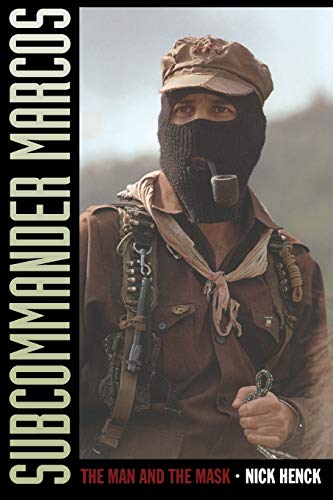
Subcommander Marcos made his debut on the world stage on January 1, 1994, the day the North American Free Trade Agreement took effect. At dawn, from a town-hall balcony he announced that the Zapatista Army of National Liberation had seized several towns in the Mexican state of Chiapas in rebellion against the government; by sunset Marcos was on his way to becoming the most famous guerrilla leader since Che Guevara. Subsequently, through a succession of interviews, communiqués, and public spectacles, the Subcommander emerged as a charismatic spokesperson for the indigenous Zapatista uprising and a rallying figure in the international anti-globalization movement.
In this, the first English-language biography of Subcommander Marcos, Nick Henck describes the thought, leadership, and personality of this charismatic rebel spokesperson. He traces Marcos's development from his provincial middle-class upbringing, through his academic career and immersion in the clandestine world of armed guerrillas, to his emergence as the iconic Subcommander. Henck reflects on what motivated an urbane university professor to reject a life of comfort in Mexico City in favor of one of hardship as a guerrilla in the mountainous jungles of Chiapas, and he examines how Marcos became a conduit through which impoverished indigenous Mexicans could communicate with the world.
Henck fully explores both the rebel leader's renowned media savvy and his equally important flexibility of mind. He shows how Marcos's speeches and extensive writings demonstrate not only the Subcommander's erudition but also his rejection of Marxist dogmatism. Finally, Henck contextualizes Marcos, locating him firmly within the Latin American guerrilla tradition.
Die Inhaltsangabe kann sich auf eine andere Ausgabe dieses Titels beziehen.
Über die Autorin bzw. den Autor
Nick Henck is Visiting Associate Professor in the Faculty of Law at Keio University in Tokyo.
Von der hinteren Coverseite
"In this encyclopedic biography, Nick Henck draws on almost everything ever published on Subcommander Marcos. The result is an analysis that first highlights Marcos's intellectual and political formation prior to his entering the Lacandon jungle in late 1983, and then illuminates the Subcommander's unique cultural and political flexibility, which ultimately served to let the EZLN be directed by the priorities of the indigenous communities of Chiapas. As Henck points out, this flexibility is what distinguished Marcos from other twentieth-century guerrilla leaders; it was pivotal in permitting the EZLN to play a central role in the democratization of Mexico after seventy years of one-party rule. This is a valuable reference book for all those interested in a detailed account of the rise of Subcommander Marcos and the EZLN in Chiapas."--Lynn Stephen, author of "Transborder Lives: Indigenous Oaxacans in Mexico, California, and Oregon"
Auszug. © Genehmigter Nachdruck. Alle Rechte vorbehalten.
SUBCOMMANDER MARCOS
The Man and the MaskBy NICK HENCKDuke University Press
Copyright © 2007 Duke University PressAll right reserved.
ISBN: 978-0-8223-3995-3
Contents
Illustrations.............................................................xiAcknowledgments...........................................................xiiiAbbreviations and Acronyms................................................xvCast of Main Characters...................................................xixIntroduction..............................................................11. Birth and Family.......................................................132. School Years...........................................................203. High School College....................................................234. UNAM...................................................................295. The Graduate...........................................................426. Chiapas................................................................577. Guerrilla Inception....................................................658. The Wilderness Years...................................................769. First Contact..........................................................8210. Promotion and Expansion...............................................8811. A Jungle Wedding......................................................10712. An Election, Exponential Growth, and a Rift...........................11213. Bust and Boom.........................................................12414. Fallout...............................................................12915. From the People's Guerrilla to a Guerrilla People.....................13316. Indigenous Indignation................................................14317. An Internal Coup and the Road to War..................................16318. The Uprising..........................................................19519. "Waging a Masterful Media War"........................................21320. A Cease-Fire..........................................................22121. The Cult of Marcos....................................................22622. Peace Talks...........................................................24723. Courting Civil Society................................................25324. The Elections and Their Aftermath.....................................26225. Marcos Unmasked and Rafael Revealed...................................27826. Nationalizing and Internationalizing the Struggle.....................30127. A March and a Massacre................................................31528. Speedy Gonzalez Breaks the Silence....................................32129. A Consulta, a Story, and a Strike.....................................33030. A Change of Government................................................33631. The Zapatour..........................................................34232. Marcos Today..........................................................353Conclusion................................................................361Notes.....................................................................369Glossary..................................................................467Works Cited...............................................................469Index.....................................................................487
Chapter One
Birth and Family
Rafael Sebastin Guilln Vicente was born in Tampico on 19 June 1957 into a family that neighbors have described as "part of [Tampico] society though not high society." Tampico is in the state of Tamaulipas-famous for its seafood and its cyclones-on the Gulf of Mexico. In the 1950s it was a bustling tropical port; in the early part of the twentieth century it had been the busiest oil port in the world. In hindsight it seems ironic that in the 1930s government money had been diverted away from public building projects (such as reservoirs) in Chiapas and toward Tampico: the consequential stunting of Chiapas's development would provide Rafael, a middle-class scion of the beneficiary city, with a setting and support base for his career as a revolutionary.
Rafael's date of birth is highly significant, coinciding with the emergence of left-wing guerrilla insurgency based on the foco. The year 1957 saw Che Guevara and Fidel and Raul Castro fighting their way through the Sierra Maestra toward Havana in neighboring Cuba. (They had arrived on Cuban soil on 2 December 1956, having sailed from Tuxpn, only 94 miles [151 km] down the coast from Tampico.) One month after Rafael's birth, on 21 July, Guevara became the first combatant to be promoted to comandante and was given command of the second column (called Column 4 in order to confuse the enemy). Rafael's most impressionable years (ten to eighteen) witnessed the death of Guevara (October 1967); the year of revolution (1968), including the Paris student uprising and the massacre of students in Mexico City at Tlatelolco (2 October 1968); and the severe repression unleashed by the Echeverra government against left-wing militant groups (the early and mid-1970s). It is not hard to imagine the impact of such events on the media and thus, consequently, on a politically minded family. Marcos states that as a family, "We learnt to read, not so much in school, as in the columns of newspapers." These happenings probably resulted in Rafael's first exposure to and participation in intense political discussion. Such family debate must have formed a lasting impression on him. Significantly, in the immediate aftermath of Tlatelolco, the student leader Eduardo Valle prophesied:
I think the Movement will have its effect on the children.... In generations that lived it ... seeing their older brothers move ... into action, hearing stories of the days of terror, feeling them in their blood ... the government of this country will have to be very wary of those who were ten or fifteen in 1968 ... they will always remember the assaults upon, the murders of their brothers.
Rafael, at that time aged eleven, proved to be just such a child, going on later to fulfill this prophecy by becoming the greatest thorn in the sides of the Salinas and Zedillo governments.
The impact of Tlatelolco on Rafael is made explicit in Marcos's communiqu Tlatelolco: Thirty Years Later the Struggle Continues, dated 2 October 1998 and addressed "to the Generation of Dignity of 1968." It was written to commemorate the thirtieth anniversary of the massacre, and, in addition to saluting those who died or felt the pain of 1968 and demanding "that the whole truth be told, that yesterday's and today's crimes no longer go unpunished," Marcos lays claim to being part of the same tradition as those who rebelled in 1968, the tradition of resistance. While admitting that the Zapatistas are "different and distinct" from those who resisted thirty years previously, the enemy is portrayed as the same, with the free-standing line "1968.1998," designed to highlight the fact that nothing had changed, comprising four of the final fifteen lines of the communiqu. Further evidence of the impact of Tlatelolco on Rafael can be seen in a February 1994 interview with La Jornada correspondents. The journalists asked him, "Generationally speaking, are you a product of '68?" Marcos replied: "I'm definitely post-'68, but not the core of '68 ... I was a little kid. But I do come from everything that followed, especially the electoral frauds, the most scandalous one in 1988, but others as well."
Ten days after the student...
„Über diesen Titel“ kann sich auf eine andere Ausgabe dieses Titels beziehen.
Suchergebnisse für Subcommander Marcos: The Man and the Mask

Beispielbild für diese ISBN
Subcommander Marcos: The Man and the Mask
Anbieter: Anybook.com, Lincoln, Vereinigtes Königreich
Verkäuferbewertung 5 von 5 Sternen

Zustand: Good. This is an ex-library book and may have the usual library/used-book markings inside.This book has soft covers. In good all round condition. Library sticker on front cover. Please note the Image in this listing is a stock photo and may not match the covers of the actual item,850grams, ISBN:9780822339953. Artikel-Nr. 3964905
Gebraucht kaufen
EUR 17,77
EUR 15,86 Versand
Versand von Vereinigtes Königreich nach USA
Versand von Vereinigtes Königreich nach USA
Anzahl: 1 verfügbar
Beispielbild für diese ISBN
Subcommander Marcos - The Man and the Mask
Anbieter: PBShop.store UK, Fairford, GLOS, Vereinigtes Königreich
Verkäuferbewertung 5 von 5 Sternen
PAP. Zustand: New. New Book. Shipped from UK. Established seller since 2000. Artikel-Nr. FW-9780822339953
Neu kaufen
EUR 39,79
EUR 6,85 Versand
Versand von Vereinigtes Königreich nach USA
Versand von Vereinigtes Königreich nach USA
Anzahl: 2 verfügbar
Beispielbild für diese ISBN
Subcommander Marcos
Anbieter: Majestic Books, Hounslow, Vereinigtes Königreich
Verkäuferbewertung 4 von 5 Sternen

Zustand: New. pp. 528 Illus., 3 Maps. Artikel-Nr. 7952400
Neu kaufen
EUR 46,49
EUR 7,58 Versand
Versand von Vereinigtes Königreich nach USA
Versand von Vereinigtes Königreich nach USA
Anzahl: 3 verfügbar
Beispielbild für diese ISBN
Subcommander Marcos: The Man and the Mask
Anbieter: Ria Christie Collections, Uxbridge, Vereinigtes Königreich
Verkäuferbewertung 5 von 5 Sternen
Zustand: New. In English. Artikel-Nr. ria9780822339953_new
Neu kaufen
EUR 43,00
EUR 13,17 Versand
Versand von Vereinigtes Königreich nach USA
Versand von Vereinigtes Königreich nach USA
Anzahl: 3 verfügbar
Beispielbild für diese ISBN
Subcommander Marcos
Anbieter: Kennys Bookstore, Olney, MD, USA
Verkäuferbewertung 5 von 5 Sternen
Zustand: New. A biography of Mexican guerilla leader (in Chiapas) Subcommander Marcos that synthesizes his life, his career, and his influence. The first such study in English. Num Pages: 528 pages, 19 photographs, 3 maps. BIC Classification: 1KLCM; BGH; HBTV; JPWQ; JWDG. Category: (P) Professional & Vocational. Dimension: 5893 x 3887 x 32. Weight in Grams: 739. . 2007. Illustrated. paperback. . . . . Books ship from the US and Ireland. Artikel-Nr. V9780822339953
Neu kaufen
EUR 53,74
EUR 9,16 Versand
Versand innerhalb von USA
Versand innerhalb von USA
Anzahl: 1 verfügbar
Beispielbild für diese ISBN
Subcommander Marcos The Man and the Mask
Anbieter: Revaluation Books, Exeter, Vereinigtes Königreich
Verkäuferbewertung 5 von 5 Sternen
Paperback. Zustand: Brand New. new title edition. 499 pages. 9.25x6.00x1.25 inches. In Stock. Artikel-Nr. x-0822339951
Neu kaufen
EUR 62,88
EUR 14,58 Versand
Versand von Vereinigtes Königreich nach USA
Versand von Vereinigtes Königreich nach USA
Anzahl: 2 verfügbar
Foto des Verkäufers
Subcommander Marcos: The Man and the Mask
Anbieter: moluna, Greven, Deutschland
Verkäuferbewertung 5 von 5 Sternen
Kartoniert / Broschiert. Zustand: New. Über den AutorNick Henck is Visiting Associate Professor in the Faculty of Law at Keio University in Tokyo.InhaltsverzeichnisIllustrations xiAcknowledgments xiiAbbreviations an. Artikel-Nr. 595069291
Neu kaufen
EUR 49,46
EUR 48,99 Versand
Versand von Deutschland nach USA
Versand von Deutschland nach USA
Anzahl: Mehr als 20 verfügbar
Foto des Verkäufers
Subcommander Marcos : The Man and the Mask
Verlag:
Duke University Press Jul 2007, 2007
ISBN 10: 0822339951
ISBN 13: 9780822339953
Neu
Taschenbuch
Anbieter: AHA-BUCH GmbH, Einbeck, Deutschland
Verkäuferbewertung 5 von 5 Sternen
Taschenbuch. Zustand: Neu. Neuware - Subcommander Marcos made his debut on the world stage on January 1, 1994, the day the North American Free Trade Agreement took effect. At dawn, from a town-hall balcony he announced that the Zapatista Army of National Liberation had seized several towns in the Mexican state of Chiapas in rebellion against the government; by sunset Marcos was on his way to becoming the most famous guerrilla leader since Che Guevara. Subsequently, through a succession of interviews, communiquÉs, and public spectacles, the Subcommander emerged as a charismatic spokesperson for the indigenous Zapatista uprising and a rallying figure in the international anti-globalization movement.In this, the first English-language biography of Subcommander Marcos, Nick Henck describes the thought, leadership, and personality of this charismatic rebel spokesperson. He traces Marcos's development from his provincial middle-class upbringing, through his academic career and immersion in the clandestine world of armed guerrillas, to his emergence as the iconic Subcommander. Henck reflects on what motivated an urbane university professor to reject a life of comfort in Mexico City in favor of one of hardship as a guerrilla in the mountainous jungles of Chiapas, and he examines how Marcos became a conduit through which impoverished indigenous Mexicans could communicate with the world.Henck fully explores both the rebel leader's renowned media savvy and his equally important flexibility of mind. He shows how Marcos's speeches and extensive writings demonstrate not only the Subcommander's erudition but also his rejection of Marxist dogmatism. Finally, Henck contextualizes Marcos, locating him firmly within the Latin American guerrilla tradition. Artikel-Nr. 9780822339953
Neu kaufen
EUR 93,09
EUR 30,50 Versand
Versand von Deutschland nach USA
Versand von Deutschland nach USA
Anzahl: 1 verfügbar