
Verwandte Artikel zu The Politics of Memory in Postwar Europe
Inhaltsangabe
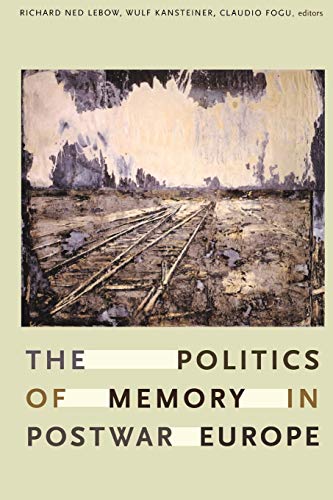
For sixty years, different groups in Europe have put forth interpretations of World War II and their respective countries' roles in it consistent with their own political and psychological needs. The conflict over the past has played out in diverse arenas, including film, memoirs, court cases, and textbooks. It has had profound implications for democratization and relations between neighboring countries. This collection provides a comparative case study of how memories of World War II have been constructed and revised in seven European nations: France, Germany, Austria, Switzerland, Poland, Italy, and the USSR (Russia). The contributors include scholars of history, literature, political science, psychology, and sociology. Country by country, they bring to the fore the specifics of each nation's postwar memories in essays commissioned especially for this volume. The use of similar analytical categories facilitates comparisons.
An extensive introduction contains reflections on the significance of Europeans' memories of World War II and a conclusion provides an analysis of the implications of the contributors' findings for memory studies. These two pieces tease out some of the findings common to all seven countries: for instance, in each nation, the decade and a half between the late 1960s and the mid-1980s was the period of most profound change in the politics of memory. At the same time, the contributors demonstrate that Europeans understand World War II primarily through national frames of reference, which are surprisingly varied. Memories of the war have important ramifications for the democratization of Central and Eastern Europe and the consolidation of the European Union. This volume clarifies how those memories are formed and institutionalized.
Contributors. Claudio Fogu, Richard J. Golsan, Wulf Kansteiner, Richard Ned Lebow, Regula Ludi, Annamaria Orla-Bukowska, Heidemarie Uhl, Thomas C. Wolfe
Die Inhaltsangabe kann sich auf eine andere Ausgabe dieses Titels beziehen.
Über die Autorin bzw. den Autor
Richard Ned Lebow is James O. Freedman Presidential Professor of Government at Dartmouth College. He is the author of many books, including The Tragic Vision of Politics: Ethics, Interests, and Orders.
Wulf Kansteiner is Associate Professor of History and Judaic Studies at Binghamton University. He is the author of In Pursuit of German Memory: History, Television, and Politics after Auschwitz.
Claudio Fogu teaches in the French and Italian Department at the University of California, Santa Barbara. He is the author of The Historic Imaginary: Politics of History in Fascist Italy.
Von der hinteren Coverseite
"This is not the first collaborative volume on post-World War II memory in Europe to appear in recent years, but it is the best and most important. Two qualities that set it apart are the integration of excellent historical writing with a stimulating social-science framework and the broadly humanistic cultural sensibilities embodied in the country-specific chapters. The book will be read with benefit by students of history and political psychology, as well as by those interested in the comparative politics of the past."--Martin O. Heisler, University of Maryland
Auszug. © Genehmigter Nachdruck. Alle Rechte vorbehalten.
The Politics of Memory in Postwar Europe
Duke University Press
Copyright © 2006 Duke University PressAll right reserved.
ISBN: 978-0-8223-3817-8
Contents
PREFACE..................................................................................................................................................................ixRICHARD NED LEBOW The Memory of Politics in Postwar Europe..............................................................................................................1HEIDEMARIE UHL From Victim Myth to Co-Responsibility Thesis: Nazi Rule, World War II, and the Holocaust in Austrian Memory..............................................40RICHARD J. GOLSAN The Legacy of World War II in France: Mapping the Discourses of Memory................................................................................73WULF KANSTEINER Losing the War, Winning the Memory Battle: The Legacy of Nazism, World War II, and the Holocaust in the Federal Republic of Germany.....................102CLAUDIO FOGU Italiani brava gente: The Legacy of Fascist Historical Culture on Italian Politics of Memory...............................................................147ANNAMARIA ORLA-BUKOWSKA New Threads on an Old Loom: National Memory and Social Identity in Postwar and Post-Communist Poland............................................177REGULA LUDI What Is So Special about Switzerland? Wartime Memory as a National Ideology in the Cold War Era.............................................................210THOMAS C. WOLFE Past as Present, Myth, or History? Discourses of Time and the Great Fatherland War......................................................................249CLAUDIO FOGU AND WULF KANSTEINER The Politics of Memory and the Poetics of History......................................................................................284BIBLIOGRAPHY.............................................................................................................................................................311CONTRIBUTORS.............................................................................................................................................................355INDEX....................................................................................................................................................................357
Chapter One
RICHARD NED LEBOW The Memory of Politics in Postwar Europe
Footfalls echo in the memory Down the passage which we did not take Towards the door we never opened Into the rose garden -T. S. Eliot, "Burnt Norton"
In April 2005 the College of Cardinals elected a German pope-Cardinal Joseph Ratzinger-who had been a member of the Hitlerjugend and briefly served in the Wehrmacht. The new pope was controversial in Europe-for his ultraconservative religious views, not for his German past. It was widely accepted that he bore no personal responsibility for the crimes of the Nazi era. Just about every youth of his age had been enrolled in the Hitlerjugend, and he had deserted the German army to return to the seminary. Jewish authorities praised him for encouraging his predecessor's official recognition of the church's historical role in fanning anti-Semitism and for his efforts to establish more fraternal relations with the State of Israel and Jewish communities in Europe.
At the same time as the College of Cardinals was deliberating, Chinese demonstrators, egged on by their government, were throwing stones at the Japanese embassy in Peking and consulates elsewhere in China, attacking Japanese businesses, and generally protesting Japan's efforts to obtain a permanent seat on the United Nation's Security Council. The demonstrators and the Chinese government had become doubly enraged by the nearly simultaneous publication of a Japanese textbook that sought to downplay or discredit the atrocities, including the Rape of Nanjing, that Japanese occupation forces had committed in China and elsewhere in Asia. The textbook, like most in Japan, also put a favorable gloss on Japan's invasions of China and Southeast Asia, characterizing them as acts of anticolonialism and as economically beneficial for those who had been occupied.
The two events in two different regions of the world were closely related, even if diametrically opposed in their symbolic value. The election of a German pope, and one, moreover, who had worn a military uniform, would have been hard to imagine in the absence of a decades-long effort by successive German governments to come to terms with the past and accept their responsibility for the horrendous suffering the Nazis had inflicted on Europe. The Chinese government was not shy about comparing the German and the Japanese politics of memory. Chinese officials praised Germany for acknowledging its Nazi past, for paying billions of dollars in reparations to victims or their families, and for the increasingly forthright approach of its school curriculum. They noted the visits Chancellor Willy Brandt and President Richard Weizscker had made to Auschwitz, as well as their seemingly heartfelt apologies for Germany's crimes. Had the Japanese behaved this way, one Chinese official said, we would view them and their claims for a Security Council seat differently.
These events clearly highlight the positive side of Germany's struggle to overcome its past. But that struggle is far from complete, not only in Germany-hate crimes have reached an all-time high in the former East Germany-but in Europe more generally, where the past continues to weigh on the present in unfortunate and unhelpful ways. On 28 February 2002 Chancellor Gerhard Schrder canceled his visit to Prague to protest Czech prime minister Milos Zeman's branding of ethnic Germans, expelled at the end of World War II, as "Hitler's fifth column." The week before, Prime Minister Victor Orban of Hungary said that neither the Czech Republic nor Slovakia should be admitted to the European Union until they revoked a 1945 decree stripping ethnic Germans and Hungarians of their citizenship in retaliation of their support for Nazi Germany. In September 2004 the Polish parliament unanimously passed a resolution demanding reparations from Germany.
How should one understand such statements and actions? Are they throwaway lines intended to placate aging migr constituencies? Do they reflect something more sinister: a revival of national assertiveness kindled by still-rankling memories of past wrongs in which all parties concerned consider themselves the victims? And what about the undeniable rise of anti-immigrant and anti-foreigner sentiment through Europe? Is this the last gasp of old ethnic antagonisms fueled by the unfreezing of politics in the east and high unemployment in the west brought about by both the collapse of Communism and an economic downturn? Or does it signal a rebirth of xenophobia, fueled by illegal immigration, Islamic fundamentalism, and opportunistic politicians like Jean-Marie Le Pen of France, Jrg Haider of Austria, and the late Pim Fortuyn of Holland? What do these events, and the ways in which governments and people respond to them, say about the emerging identity and politics of the European Union?
A growing literature explores these problems and how European public opinion and governments respond to them. Rather than engage these themes directly, the essays in this volume explore the context in which such issues play out and responses to them develop. Even the most cursory review of European policies about national identity, ethnic conflict,...
„Über diesen Titel“ kann sich auf eine andere Ausgabe dieses Titels beziehen.
Suchergebnisse für The Politics of Memory in Postwar Europe

Beispielbild für diese ISBN
The Politics of Memory in Postwar Europe
Anbieter: Wonder Book, Frederick, MD, USA
Verkäuferbewertung 5 von 5 Sternen

Zustand: Good. Good condition. With remainder mark. A copy that has been read but remains intact. May contain markings such as bookplates, stamps, limited notes and highlighting, or a few light stains. Artikel-Nr. U09B-04866
Gebraucht kaufen
EUR 6,43
Versand gratis
Versand innerhalb von USA
Versand innerhalb von USA
Anzahl: 1 verfügbar
Beispielbild für diese ISBN
The Politics of Memory in Postwar Europe
Anbieter: ThriftBooks-Atlanta, AUSTELL, GA, USA
Verkäuferbewertung 5 von 5 Sternen
Paperback. Zustand: Good. No Jacket. Pages can have notes/highlighting. Spine may show signs of wear. ~ ThriftBooks: Read More, Spend Less. Artikel-Nr. G0822338173I3N00
Gebraucht kaufen
EUR 6,80
Versand gratis
Versand innerhalb von USA
Versand innerhalb von USA
Anzahl: 1 verfügbar
Beispielbild für diese ISBN
The Politics of Memory in Postwar Europe
Anbieter: WorldofBooks, Goring-By-Sea, WS, Vereinigtes Königreich
Verkäuferbewertung 5 von 5 Sternen
Paperback. Zustand: Fair. A readable copy of the book which may include some defects such as highlighting and notes. Cover and pages may be creased and show discolouration. Artikel-Nr. GOR015074280
Gebraucht kaufen
EUR 29,67
EUR 6,62 Versand
Versand von Vereinigtes Königreich nach USA
Versand von Vereinigtes Königreich nach USA
Anzahl: 1 verfügbar
Beispielbild für diese ISBN
The Politics of Memory in Postwar Europe
Anbieter: WorldofBooks, Goring-By-Sea, WS, Vereinigtes Königreich
Verkäuferbewertung 5 von 5 Sternen
Paperback. Zustand: Very Good. The book has been read, but is in excellent condition. Pages are intact and not marred by notes or highlighting. The spine remains undamaged. Artikel-Nr. GOR006766525
Gebraucht kaufen
EUR 29,67
EUR 6,62 Versand
Versand von Vereinigtes Königreich nach USA
Versand von Vereinigtes Königreich nach USA
Anzahl: 1 verfügbar
Beispielbild für diese ISBN
The Politics of Memory in Postwar Europe
Anbieter: World of Books (was SecondSale), Montgomery, IL, USA
Verkäuferbewertung 5 von 5 Sternen
Paperback. Zustand: Good. Comparative case studies of how memories of World War II have been constructed and revised in France, Germany, Austria, Switzerland, Poland, Italy, and the USSR (Russia). Artikel-Nr. CIN0822338173G
Gebraucht kaufen
EUR 36,73
Versand gratis
Versand innerhalb von USA
Versand innerhalb von USA
Anzahl: 1 verfügbar
Beispielbild für diese ISBN
The Politics of Memory in Postwar Europe
Anbieter: PBShop.store UK, Fairford, GLOS, Vereinigtes Königreich
Verkäuferbewertung 5 von 5 Sternen
PAP. Zustand: New. New Book. Shipped from UK. Established seller since 2000. Artikel-Nr. FW-9780822338178
Neu kaufen
EUR 38,21
EUR 5,93 Versand
Versand von Vereinigtes Königreich nach USA
Versand von Vereinigtes Königreich nach USA
Anzahl: 1 verfügbar
Beispielbild für diese ISBN
The Politics of Memory in Postwar Europe
Anbieter: Ria Christie Collections, Uxbridge, Vereinigtes Königreich
Verkäuferbewertung 5 von 5 Sternen
Zustand: New. In English. Artikel-Nr. ria9780822338178_new
Neu kaufen
EUR 43,56
EUR 13,34 Versand
Versand von Vereinigtes Königreich nach USA
Versand von Vereinigtes Königreich nach USA
Anzahl: 1 verfügbar
Beispielbild für diese ISBN
The Politics of Memory in Postwar Europe
Anbieter: Kennys Bookstore, Olney, MD, USA
Verkäuferbewertung 5 von 5 Sternen
Zustand: New. 2006. Paperback. Comparative case studies of how memories of World War II have been constructed and revised in France, Germany, Austria, Switzerland, Poland, Italy, and the USSR (Russia). Editor(s): Lebow, Richard Ned; Kansteiner, Wulf; Fogu, Cladio. Num Pages: 384 pages, 22. BIC Classification: HBJD; HBLW3; HBWQ. Category: (P) Professional & Vocational. Dimension: 239 x 157 x 30. Weight in Grams: 556. . . . . . Books ship from the US and Ireland. Artikel-Nr. V9780822338178
Neu kaufen
EUR 54,84
EUR 9,37 Versand
Versand innerhalb von USA
Versand innerhalb von USA
Anzahl: 1 verfügbar
Beispielbild für diese ISBN
The Politics of Memory in Postwar Europe
Anbieter: Majestic Books, Hounslow, Vereinigtes Königreich
Verkäuferbewertung 4 von 5 Sternen

Zustand: New. pp. 384. Artikel-Nr. 7956453
Neu kaufen
EUR 66,96
EUR 7,68 Versand
Versand von Vereinigtes Königreich nach USA
Versand von Vereinigtes Königreich nach USA
Anzahl: 1 verfügbar
Beispielbild für diese ISBN
The Politics of Memory in Postwar Europe
Anbieter: Revaluation Books, Exeter, Vereinigtes Königreich
Verkäuferbewertung 5 von 5 Sternen
Paperback. Zustand: Brand New. new title edition. 366 pages. 9.00x6.00x1.00 inches. In Stock. Artikel-Nr. x-0822338173
Neu kaufen
EUR 62,16
EUR 14,77 Versand
Versand von Vereinigtes Königreich nach USA
Versand von Vereinigtes Königreich nach USA
Anzahl: 2 verfügbar