
Verwandte Artikel zu Histories of the Future
Inhaltsangabe
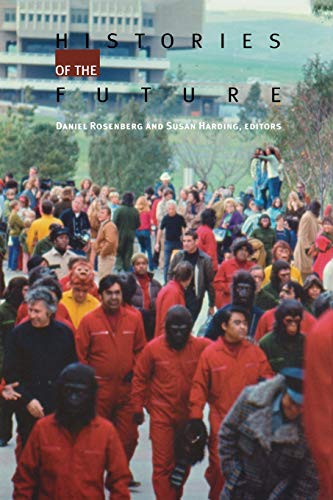
We live in a world saturated by futures. Our lives are constructed around ideas and images about the future that are as full and as flawed as our understandings of the past. This book is a conceptual toolkit for thinking about the forms and functions that the future takes. Exploring links between panic and nostalgia, waiting and utopia, technology and messianism, prophecy and trauma, it brings together critical meditations on the social, cultural, and intellectual forces that create narratives and practices of the future. The prognosticators, speculators, prophets, and visionaries have their say here, but the emphasis is on small narratives and forgotten conjunctures, on the connections between expectation and experience in everyday life.
In tightly linked studies, the contributors excavate forgotten and emergent futures of art, religion, technology, economics, and politics. They trace hidden histories of science fiction, futurism, and millennialism and break down barriers between far-flung cultural spheres. From the boardrooms of Silicon Valley to the forests of Java and from the literary salons of Tokyo to the roadside cafés of the Nevada desert, the authors stitch together the disparate images and stories of futures past and present. Histories of the Future is further punctuated by three interludes: a thought-provoking game that invites players to fashion future narratives of their own, a metafiction by renowned novelist Jonathan Lethem, and a remarkable graphic research tool: a timeline of timelines.
Contributors. Sasha Archibald, Susan Harding, Jamer Hunt, Pamela Jackson, Susan Lepselter, Jonathan Lethem, Joseph Masco, Christopher Newfield, Elizabeth Pollman, Vicente Rafael, Daniel Rosenberg, Miryam Sas, Kathleen Stewart, Anna Tsing
Die Inhaltsangabe kann sich auf eine andere Ausgabe dieses Titels beziehen.
Über die Autorin bzw. den Autor
Daniel Rosenberg is Assistant Professor of History in the Robert D. Clark Honors College at the University of Oregon. He specializes in the intellectual and cultural history of the French Enlightenment.
Susan Harding is Professor of Anthropology at the University of California, Santa Cruz. Her most recent book is The Book of Jerry Falwell: Fundamentalist Language and Politics.
Von der hinteren Coverseite
"An eclectic, provocative mix of ideas and approaches united by their common intelligence and lucidity, the essays in Daniel Rosenberg's and Susan Harding's "Histories of the Future "tease out unexpected adjacencies between a welter of social, political, and cultural scenarios that touch on questions of the "yet-to-come." This is a book that should be read by anyone with an interest in the relationship of the future to the past--and of the present to both."--Jeffrey Kastner, senior editor of "Cabinet "magazine
Auszug. © Genehmigter Nachdruck. Alle Rechte vorbehalten.
HISTORIES OF THE FUTURE
DUKE UNIVERSITY PRESS
Copyright © 2005 Duke University PressAll right reserved.
ISBN: 978-0-8223-3473-6
Contents
Acknowledgments.....................................................................................................................ix1 Introduction: Histories of the Future Daniel Rosenberg and Susan Harding........................................................12 A Notebook on Desert Modernism: From the Nevada Test Site to Liberace's Two-Hundred-Pound Suit Joseph Masco.....................193 How to Make Resources in Order to Destroy Them (and Then Save Them?) on the Salvage Frontier Anna Tsing.........................514 The Cell Phone and the Crowd: Messianic Politics in the Contemporary Philippines Vicente L. Rafael..............................75INTERLUDE I Global Futures: The Game Anna Tsing and Elizabeth Pollman..............................................................1055 Electronic Memory Daniel Rosenberg..............................................................................................1236 All That Is Solid Melts into Sauce: Futurists, Surrealists, and Molded Food Jamer Hunt..........................................1537 Sing Out Ubik Pamela Jackson....................................................................................................171INTERLUDE II Access Fantasy: A Story Jonathan Lethem..............................................................................1858 Subject, City, Machine Miryam Sas...............................................................................................201INTERLUDE III Manifesto of the Japanese Futurist Movement Hirato Renkichi Translated by Miryam Sas...............................2259 The Future of the Old Economy: New Deal Motives in New Economy Investors Christopher Newfield...................................23110 Why Rachel Isn't Buried at Her Grave: Ghosts, UFOS, and a Place in the West Susan Lepselter.....................................255INTERLUDE IV The Trouble with Timelines and A Timeline of Timelines Daniel Rosenberg and Sasha Archibald..........................28111 Living Prophecy at Heaven's Gate Susan Harding.................................................................................29712 Trauma Time: A Still Life Kathleen Stewart.....................................................................................321Bibliography........................................................................................................................341Notes on Contributors...............................................................................................................355Index...............................................................................................................................357
Chapter One
Introduction: Histories of the FutureDaniel Rosenberg and Susan Harding
We have been living through boom times for the future. Even before the escalating storms of 2001 and the conflicts that followed, our cultures and industries collaborated in a remarkable proliferation of words and images about the future. And none of this has shown any sign of slowing down. Whether in modes of progress or apocalypse, the media flow over with anticipations of things to come, with utopias, dystopias, stories of time travel and artificial intelligence, with accounts of acceleration and progress, of doom and imminent destruction, with scenarios, predictions, prophecies, and manifestoes. In this swirl of uncertainty, even the benighted "science" of futurology has come back into style.
In the first years of the twenty-first century, representations of the future have cycled wildly through a historical repertoire from the ray-gun gothic of the 1930s to the noir and the endism of the 1940s and 1950s to the plastic op-art modularity of the 1960s and back again. As if following a kind of Moore's Law scaling principle, futures today seem to be reproducing themselves faster and more cheaply than ever. At the same time, their shelf lives appear to be getting shorter. Any child can historicize them for you, can tell you in a minute which future is up to date and which is already over, which doesn't run fast enough on the current microprocessor and which doesn't run at all.
More and more, our sense of the future is conditioned by a knowledge of, and even a nostalgia for, futures that we have already lost. Indeed, nostalgia for the future has become so pervasive today that it has even developed a distinctive set of commercial uses. As Arjun Appadurai suggests, contemporary mass consumption "is not simply based on the functioning of simulacra in time, but also on the force of the simulacra of time." If, as E. P. Thompson argues, different modes of production imply different forms and experiences of temporality, our current mode of consumption appears to imply a nostalgia for productivity in general and for all the different experiences of temporality that it might be able to produce. Today our futures feel increasingly citational-each is haunted by the "semiotic ghosts" of futures past.
Whether ultimately this phenomenon will turn out to be an expression of the logical limits of the progressive chronotype (what, after all, comes after progress?) or simply another version of the Baudrillardian hyperreal (simulacra in yet another realm), the rise of future-nostalgia has already brought to light phenomena of formal and historical importance. From a formal point of view, future-nostalgia reminds us that the future is not, and has never been, an empty category. Even as we accept a skeptical critique of prophecy, we must acknowledge that for us the future is not so much underdetermined as overdetermined. Our lives are constructed around knowledges of the future that are as full (and flawed) as our knowledges of the past. Often these future knowledges are profoundly freighted, since they involve anticipatory hopes and fears. As one commentator recently put it, our futures are junkyards of memories we have not yet had. They are not merely geometrical extensions of time. They haunt our presents, obeying architectural laws that look more like Gaud than Euclid. They arise in the most diverse and peculiar ways.
In historical terms, the development of future-nostalgia also points to a kind of crisis in modern futurity. From the beginning, the modern was constituted through a rejection of prophecy. The philosophy of the Enlightenment required that time would be open to human achievement and that events could gain meaning from their interrelation, rather than from their relationship to absolute, biblical beginnings and ends. As Fredric Jameson has argued, by bracketing eschatological questions, the Enlightenment effectively "sealed off" the future from prophetic knowledge. But this development had paradoxical consequences. In no way did it amount to a going out of business for futurological workshops. The Enlightenment proscription against traditional prophetic practices turned out to produce new and intensified imaginative demands on the future and new techniques of narration and prognosis. The very possibility of an open-ended time elicited an outpouring of grand narratives from Condorcet and Kant to Hegel and Comte. This effect was by no means limited to high philosophy. In the arena of fiction, for example, the late eighteenth century saw an efflorescence of future fantasies. And for the first time in literary history, these futures took place not in some vague hereafter but in a chronological expanse freed from the finitude of sacred history, in the profane historical future, in the years 2440, 1850,...
„Über diesen Titel“ kann sich auf eine andere Ausgabe dieses Titels beziehen.
Suchergebnisse für Histories of the Future

Beispielbild für diese ISBN
Histories of the Future
Anbieter: ThriftBooks-Dallas, Dallas, TX, USA
Verkäuferbewertung 5 von 5 Sternen

Paperback. Zustand: Very Good. No Jacket. May have limited writing in cover pages. Pages are unmarked. ~ ThriftBooks: Read More, Spend Less. Artikel-Nr. G0822334739I4N00
Gebraucht kaufen
EUR 9,16
Versand gratis
Versand innerhalb von USA
Versand innerhalb von USA
Anzahl: 1 verfügbar
Beispielbild für diese ISBN
Histories of the Future
Anbieter: ThriftBooks-Atlanta, AUSTELL, GA, USA
Verkäuferbewertung 5 von 5 Sternen
Paperback. Zustand: Very Good. No Jacket. May have limited writing in cover pages. Pages are unmarked. ~ ThriftBooks: Read More, Spend Less. Artikel-Nr. G0822334739I4N00
Gebraucht kaufen
EUR 9,16
Versand gratis
Versand innerhalb von USA
Versand innerhalb von USA
Anzahl: 1 verfügbar
Beispielbild für diese ISBN
Histories of the Future
Anbieter: medimops, Berlin, Deutschland
Verkäuferbewertung 5 von 5 Sternen
Zustand: very good. Gut/Very good: Buch bzw. Schutzumschlag mit wenigen Gebrauchsspuren an Einband, Schutzumschlag oder Seiten. / Describes a book or dust jacket that does show some signs of wear on either the binding, dust jacket or pages. Artikel-Nr. M00822334739-V
Gebraucht kaufen
EUR 15,50
EUR 10,00 Versand
Versand von Deutschland nach USA
Versand von Deutschland nach USA
Anzahl: 1 verfügbar
Foto des Verkäufers
Histories of the Future
Verlag:
Duke University Press Books, 2005
ISBN 10: 0822334739
ISBN 13: 9780822334736
Gebraucht
paperback
Anbieter: WeBuyBooks, Rossendale, LANCS, Vereinigtes Königreich
Verkäuferbewertung 5 von 5 Sternen
paperback. Zustand: Good. Most items will be dispatched the same or the next working day. A copy that has been read but remains in clean condition. All of the pages are intact and the cover is intact and the spine may show signs of wear. The book may have minor markings which are not specifically mentioned. Artikel-Nr. rev1246386509
Gebraucht kaufen
EUR 18,97
EUR 8,73 Versand
Versand von Vereinigtes Königreich nach USA
Versand von Vereinigtes Königreich nach USA
Anzahl: 1 verfügbar
Beispielbild für diese ISBN
Histories of the Future
Anbieter: WorldofBooks, Goring-By-Sea, WS, Vereinigtes Königreich
Verkäuferbewertung 5 von 5 Sternen
Paperback. Zustand: Very Good. The book has been read, but is in excellent condition. Pages are intact and not marred by notes or highlighting. The spine remains undamaged. Artikel-Nr. GOR003569553
Gebraucht kaufen
EUR 28,94
EUR 6,69 Versand
Versand von Vereinigtes Königreich nach USA
Versand von Vereinigtes Königreich nach USA
Anzahl: 1 verfügbar
Beispielbild für diese ISBN
Histories of the Future
Anbieter: PBShop.store UK, Fairford, GLOS, Vereinigtes Königreich
Verkäuferbewertung 5 von 5 Sternen
PAP. Zustand: New. New Book. Shipped from UK. Established seller since 2000. Artikel-Nr. FW-9780822334736
Neu kaufen
EUR 39,52
EUR 6,00 Versand
Versand von Vereinigtes Königreich nach USA
Versand von Vereinigtes Königreich nach USA
Anzahl: 2 verfügbar
Beispielbild für diese ISBN
Histories of the Future
Anbieter: Ria Christie Collections, Uxbridge, Vereinigtes Königreich
Verkäuferbewertung 5 von 5 Sternen
Zustand: New. In English. Artikel-Nr. ria9780822334736_new
Neu kaufen
EUR 44,03
EUR 13,48 Versand
Versand von Vereinigtes Königreich nach USA
Versand von Vereinigtes Königreich nach USA
Anzahl: 1 verfügbar
Beispielbild für diese ISBN
Histories of the Future
Anbieter: Kennys Bookstore, Olney, MD, USA
Verkäuferbewertung 5 von 5 Sternen
Zustand: New. An anthropologically based interdisciplinary collection on sites and projections of imagined futures from conspiracy theorists to technological dystopias. Editor(s): Rosenberg, Daniel; Harding, Susan. Num Pages: 376 pages, 136 illustrations. BIC Classification: KC. Category: (P) Professional & Vocational. Dimension: 235 x 169 x 27. Weight in Grams: 640. . 2005. Paperback. . . . . Books ship from the US and Ireland. Artikel-Nr. V9780822334736
Neu kaufen
EUR 54,98
EUR 9,40 Versand
Versand innerhalb von USA
Versand innerhalb von USA
Anzahl: 1 verfügbar
Beispielbild für diese ISBN
Histories of the Future
Anbieter: Majestic Books, Hounslow, Vereinigtes Königreich
Verkäuferbewertung 4 von 5 Sternen

Zustand: New. pp. 376 136 Illus. Artikel-Nr. 7956328
Neu kaufen
EUR 65,25
EUR 7,76 Versand
Versand von Vereinigtes Königreich nach USA
Versand von Vereinigtes Königreich nach USA
Anzahl: 1 verfügbar
Beispielbild für diese ISBN
Histories of the Future
Anbieter: Revaluation Books, Exeter, Vereinigtes Königreich
Verkäuferbewertung 5 von 5 Sternen
Paperback. Zustand: Brand New. new title edition. 376 pages. 9.50x6.25x1.25 inches. In Stock. Artikel-Nr. x-0822334739
Neu kaufen
EUR 63,21
EUR 14,93 Versand
Versand von Vereinigtes Königreich nach USA
Versand von Vereinigtes Königreich nach USA
Anzahl: 2 verfügbar