
Verwandte Artikel zu Displacing Whiteness: Essays in Social and Cultural...
Inhaltsangabe
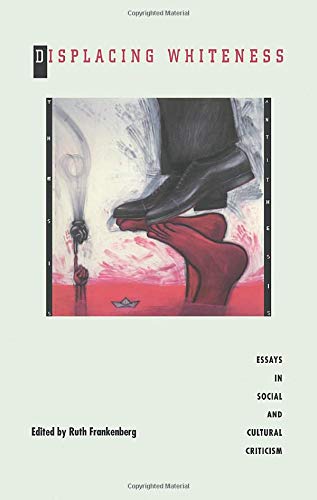
Displacing Whiteness makes a unique contribution to the study of race dominance. Its theoretical innovations in the analysis of whiteness are integrated with careful, substantive explorations of whiteness on an international, multiracial, cross-class, and gendered terrain. Contributors localize whiteness, as well as explore its sociological, anthropological, literary, and political dimensions.
Approaching whiteness as a plural rather than singular concept, the essays describe, for instance, African American, Chicana/o, European American, and British experiences of whiteness. The contributors offer critical readings of theory, literature, film and popular culture; ethnographic analyses; explorations of identity formation; and examinations of racism and political process. Essays examine the alarming epidemic of angry white men on both sides of the Atlantic; far-right electoral politics in the UK; underclass white people in Detroit; whiteness in "brownface" in the film Gandhi; the engendering of whiteness in Chicana/o movement discourses; "whiteface" literature; Roland Barthes as a critic of white consciousness; whiteness in the black imagination; the inclusion and exclusion of suburban "brown-skinned white girls"; and the slippery relationships between culture, race, and nation in the history of whiteness. Displacing Whiteness breaks new ground by specifying how whiteness is lived, engaged, appropriated, and theorized in a range of geographical locations and historical moments, representing a necessary advance in analytical thinking surrounding the burgeoning study of race and culture.
Contributors. Rebecca Aanerud, Angie Chabram-Dernersesian, Phil Cohen, Ruth Frankenberg, John Hartigan Jr., bell hooks, T. Muraleedharan, Chéla Sandoval, France Winddance Twine, Vron Ware, David Wellman
Die Inhaltsangabe kann sich auf eine andere Ausgabe dieses Titels beziehen.
Über die Autorin bzw. den Autor
Ruth Frankenberg is Associate Professor of American Studies at the University of California at Davis and is the author of White Women, Race Matters.
Von der hinteren Coverseite
"This collection will be a substantial contribution to a current and growing body of materials investigating whiteness. As Frankenberg and the contributors know, recent work--even work that brackets whiteness in terms of class--has made little effort to specify the stunning range of particularity in the ways whiteness is experienced. This collection begins such a specification."--Dana D. Nelson, University of Kentucky
Auszug. © Genehmigter Nachdruck. Alle Rechte vorbehalten.
Displacing Whiteness
Essays in Social and Cultural Criticism
By Ruth FrankenbergDuke University Press
Copyright © 1997 Duke University Press
All rights reserved.
ISBN: 978-0-8223-2021-0All rights reserved.
Contents
Introduction: Local Whitenesses, Localizing Whiteness,
Fictions of Whiteness: Speaking the Names of Whiteness in U.S. Literature,
Rereading Gandhi,
Theorizing White Consciousness for a Post-Empire World: Barthes, Fanon, and the Rhetoric of Love,
On the Social Construction of Whiteness within Selected Chicana/o Discourses,
Representing Whiteness in the Black Imagination,
Locating White Detroit,
Brown-Skinned White Girls: Class, Culture, and the Construction of White Identity in Suburban Communities,
Laboring under Whiteness,
Island Racism: Gender, Place, and White Power,
Minstrel Shows, Affirmative Action Talk, and Angry White Men: Marking Racial Otherness in the 1990s,
Bibliography,
Contributors,
CHAPTER 1
Fictions of Whiteness: Speaking the Names of Whiteness in U.S. Literature
Rebecca Aanerud
One of the signs of our times is that we really don't know what "white" is. —Kobena Mercer, in How Do I Look? Queer Film and Video
In our society dominant discourse tries never to speak its own name. —Russell Ferguson, Out There: Marginality and Contemporary Art
Racializing Whiteness
The final lines of Kate Chopin's novel The Awakening unmistakably mark Edna as white: "The foamy wavelets curled up to her white feet, and coiled like serpents about her ankles. She walked out. The water was chill, but she walked on. The water was deep, but she lifted her white body and reached out with a long sweeping stroke." Yet despite this specificity of Edna's white subjectivity, little critical attention has been paid to her position as a white woman. Whiteness in the above passage is often understood to signal Edna's vulnerability, her innocence, even her purity associated with the rebirth to her true self. Certainly reading whiteness as such, although troublesome, is valid. I suggest, however, that whiteness has multiple meanings and significations, not the least of which is "race." In 1985 Henry Louis Gates Jr. wrote that "until the past decade or so ... race has not been brought to bear upon the study of literature in any apparent way," to which I would add that whiteness as race has yet to receive adequate critical consideration in the field of literary studies. It is not my intent to appropriate discussions of race in an effort to recenter white subjectivity. Rather, I want to call into question what white subjectivity is by contributing to the recent work of making visible the "constructed, and contested character of 'whiteness.'" Far too often, when race as a category of analysis is invoked, its meaning and significance are construed in terms of nonwhiteness. A classic example of this is illustrated in the following passage in which Teresa de Lauretis responds to a question concerning the absence of a racial component— despite the interracial relationship between the two main characters (Agatha, a black Latina Brazilian, and Jo, a white U.S. American)—in her analysis of the film She Must Be Seeing Things. "I thought a lot about the inscription of race in the relationship between Agatha and Jo, but I concluded that the film intentionally focuses on the other aspects of their relationship. And though it makes it clear that the role of Agatha is marked by her cultural difference as a Brazilian, a black Latina, it doesn't address the racial difference between the women. So it's not that race is not a crucial issue in lesbian and feminist relationships, politics, and theory. It certainly is. But it is not represented as an issue in this film." Race, in this quotation, is understood as racial difference located in the characters of color or in the dynamics between characters of differing racial backgrounds. It would seem that discussions of race are applicable only to those individuals, real or fictitious, who occupy a subject position other than white. Within such a scheme, being white is equated with being unraced—or, to stress the political, being normal.
In fact, all people live racialized lives. Jo's subjectivity is as racialized as Agatha's. As social beings we are each implicated in an interconnected series of hierarchical systems, of race, class, and gender among others. These systems are read onto our bodies, and we in turn interpret and are interpreted through our understandings and misunderstandings of them. Our awareness of these systems is partially informed by the degree of privilege or oppression we experience as a result of our positioning. While it might seem that race is something that affects only people of color, in fact race is a meaningful and fundamental factor in all lives. In film as well as literature race need not be an issue in order for it to be a relevant component. I am interested in expanding the theoretical discussions of race to include an examination of the constructions and representations of white subjectivity in literature. Relatedly, I wish to see how current power relations of gender, sexuality, race, and class are reproduced through the unspoken privilege of assuming racial neutrality.
This essay will take "whiteness" to be a socially and historically constructed category of racial identity. As such, whiteness cannot be understood as a singular entity, existing prior to or apart from other categories of identities. Its formation depends on the changing relations of gender, class, sexuality, and nationality. Thus, the meaning of whiteness, like all racialized identities in the United States, is not monolithic. Instead, its construction and interpretation are informed by historical moment, region, political climate, and racial identity.
As the epigraphs suggest, whiteness can be difficult to see. As Richard Dyer puts it, in a white supremacist nation, whiteness "secures its dominance by seeming not to be anything in particular." This is not to suggest that representations of whiteness are similarly obscure to all "seers." In her article "Representing Whiteness in the Black Imagination," bell hooks argues that not only do many black authors (and her students of color) see whiteness clearly, they represent it in a way not seen in the works of white authors, namely, whiteness as terrorizing. I would add that one's ability to see whiteness is equally influenced by his or her relationship to white dominant society as a whole. In other words, the varying abilities to "see" whiteness are as much a result of consciousness as they are of race.
However, despite the "real" relations of readers of American fiction to that body of literature, all readers, to draw from Toni Morrison, "until very recently, and regardless of the race of the author, have been positioned as white." From this position, whiteness as race operates as an unmarked racial category. Unless told otherwise, the reader, positioned as white, assumes the characters are white. (Un)marked whiteness is, of course, a type of marking. In an analysis of Hemingway's To Have and Have Not, Morrison writes that she easily identifies Eddy as white: "We know he is because nobody says so." Such (un)marked whiteness is often reinforced by the overt racial marking of the non-white characters.
Although the construction of whiteness depends on dynamic social, political, and historical factors, a predominant construction in American literature is undoubtedly whiteness as...
„Über diesen Titel“ kann sich auf eine andere Ausgabe dieses Titels beziehen.
Suchergebnisse für Displacing Whiteness: Essays in Social and Cultural...

Beispielbild für diese ISBN
Displacing Whiteness Essays in
Anbieter: World of Books (was SecondSale), Montgomery, IL, USA
Verkäuferbewertung 5 von 5 Sternen

Zustand: Very Good. Item in very good condition! Textbooks may not include supplemental items i.e. CDs, access codes etc. Artikel-Nr. 00102902177
Gebraucht kaufen
EUR 6,11
Versand gratis
Versand innerhalb von USA
Versand innerhalb von USA
Anzahl: 2 verfügbar
Beispielbild für diese ISBN
Displacing Whiteness: Essays in Social and Cultural Criticism
Verlag:
Duke University Press (edition ), 1997
ISBN 10: 0822320215
ISBN 13: 9780822320210
Gebraucht
Paperback
Anbieter: BooksRun, Philadelphia, PA, USA
Verkäuferbewertung 5 von 5 Sternen
Paperback. Zustand: Very Good. It's a well-cared-for item that has seen limited use. The item may show minor signs of wear. All the text is legible, with all pages included. It may have slight markings and/or highlighting. Artikel-Nr. 0822320215-11-1
Gebraucht kaufen
EUR 6,12
Versand gratis
Versand innerhalb von USA
Versand innerhalb von USA
Anzahl: 1 verfügbar
Beispielbild für diese ISBN
Displacing Whiteness: Essays in Social and Cultural Criticism
Anbieter: AwesomeBooks, Wallingford, Vereinigtes Königreich
Verkäuferbewertung 5 von 5 Sternen
Paperback. Zustand: Very Good. Displacing Whiteness: Essays in Social and Cultural Criticism This book is in very good condition and will be shipped within 24 hours of ordering. The cover may have some limited signs of wear but the pages are clean, intact and the spine remains undamaged. This book has clearly been well maintained and looked after thus far. Money back guarantee if you are not satisfied. See all our books here, order more than 1 book and get discounted shipping. Artikel-Nr. 7719-9780822320210
Gebraucht kaufen
EUR 4,79
EUR 4,80 Versand
Versand von Vereinigtes Königreich nach USA
Versand von Vereinigtes Königreich nach USA
Anzahl: 2 verfügbar
Beispielbild für diese ISBN
Displacing Whiteness : Essays in Social and Cultural Criticism
Anbieter: Better World Books: West, Reno, NV, USA
Verkäuferbewertung 5 von 5 Sternen
Zustand: Very Good. Former library copy. Pages intact with possible writing/highlighting. Binding strong with minor wear. Dust jackets/supplements may not be included. Includes library markings. Stock photo provided. Product includes identifying sticker. Better World Books: Buy Books. Do Good. Artikel-Nr. GRP30403213
Gebraucht kaufen
EUR 10,13
Versand gratis
Versand innerhalb von USA
Versand innerhalb von USA
Anzahl: 1 verfügbar
Beispielbild für diese ISBN
Displacing Whiteness : Essays in Social and Cultural Criticism
Anbieter: Better World Books Ltd, Dunfermline, Vereinigtes Königreich
Verkäuferbewertung 5 von 5 Sternen
Zustand: Good. Pages intact with minimal writing/highlighting. The binding may be loose and creased. Dust jackets/supplements are not included. Stock photo provided. Product includes identifying sticker. Better World Books: Buy Books. Do Good. Artikel-Nr. 6336958-6
Gebraucht kaufen
EUR 5,62
EUR 5,83 Versand
Versand von Vereinigtes Königreich nach USA
Versand von Vereinigtes Königreich nach USA
Anzahl: 1 verfügbar
Beispielbild für diese ISBN
Displacing Whiteness: Essays in Social and Cultural Criticism
Anbieter: Bahamut Media, Reading, Vereinigtes Königreich
Verkäuferbewertung 5 von 5 Sternen
Paperback. Zustand: Very Good. This book is in very good condition and will be shipped within 24 hours of ordering. The cover may have some limited signs of wear but the pages are clean, intact and the spine remains undamaged. This book has clearly been well maintained and looked after thus far. Money back guarantee if you are not satisfied. See all our books here, order more than 1 book and get discounted shipping. Artikel-Nr. 6545-9780822320210
Gebraucht kaufen
EUR 6,23
EUR 8,14 Versand
Versand von Vereinigtes Königreich nach USA
Versand von Vereinigtes Königreich nach USA
Anzahl: 2 verfügbar
Beispielbild für diese ISBN
Displacing Whiteness: Essays in Social and Cultural Criticism
Verlag:
Duke University Press Books, 1999
ISBN 10: 0822320215
ISBN 13: 9780822320210
Gebraucht
Softcover
Anbieter: Anybook.com, Lincoln, Vereinigtes Königreich
Verkäuferbewertung 5 von 5 Sternen
Zustand: Poor. This is an ex-library book and may have the usual library/used-book markings inside.This book has soft covers. Clean from markings. In poor condition, suitable as a reading copy. Water damaged. Please note the Image in this listing is a stock photo and may not match the covers of the actual item,700grams, ISBN:9780822320210. Artikel-Nr. 8995963
Gebraucht kaufen
EUR 8,30
EUR 15,86 Versand
Versand von Vereinigtes Königreich nach USA
Versand von Vereinigtes Königreich nach USA
Anzahl: 1 verfügbar
Beispielbild für diese ISBN
Displacing Whiteness: Essays in Social and Cultural Criticism
Verlag:
Duke University Press Books, 1997
ISBN 10: 0822320215
ISBN 13: 9780822320210
Gebraucht
Softcover
Anbieter: Anybook.com, Lincoln, Vereinigtes Königreich
Verkäuferbewertung 5 von 5 Sternen
Zustand: Poor. This is an ex-library book and may have the usual library/used-book markings inside.This book has soft covers. Book contains pen & pencil markings. In poor condition, suitable as a reading copy. Please note the Image in this listing is a stock photo and may not match the covers of the actual item,700grams, ISBN:9780822320210. Artikel-Nr. 9785567
Gebraucht kaufen
EUR 13,00
EUR 15,86 Versand
Versand von Vereinigtes Königreich nach USA
Versand von Vereinigtes Königreich nach USA
Anzahl: 1 verfügbar
Beispielbild für diese ISBN
Displacing Whiteness
Anbieter: PBShop.store UK, Fairford, GLOS, Vereinigtes Königreich
Verkäuferbewertung 5 von 5 Sternen
PAP. Zustand: New. New Book. Shipped from UK. Established seller since 2000. Artikel-Nr. FW-9780822320210
Neu kaufen
EUR 49,38
EUR 5,85 Versand
Versand von Vereinigtes Königreich nach USA
Versand von Vereinigtes Königreich nach USA
Anzahl: 1 verfügbar
Beispielbild für diese ISBN
Displacing Whiteness: Essays in Social and Cultural Criticism
Anbieter: Kennys Bookstore, Olney, MD, USA
Verkäuferbewertung 5 von 5 Sternen
Zustand: New. . 1997. Paperback. . . . . Books ship from the US and Ireland. Artikel-Nr. V9780822320210
Neu kaufen
EUR 53,48
EUR 9,14 Versand
Versand innerhalb von USA
Versand innerhalb von USA
Anzahl: 1 verfügbar