
Verwandte Artikel zu Present Tense: Rock & Roll and Culture
Inhaltsangabe
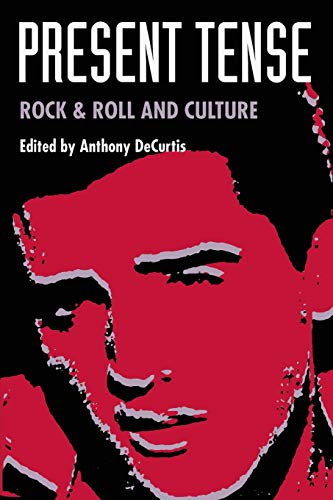
The most compelling art form to emerge from the United States in the second half of the twentieth century, rock & roll stands in an edgy relationship with its own mythology, its own musicological history and the broader culture in which it plays a part. In Present Tense, Anthony DeCurtis brings together writers from a wide variety of fields to explore how rock & roll is made, consumed, and experienced in our time.
In this collection, Greil Marcus creates a collage of words and pictures that evokes and explores Elvis Presley's grisly fate as an American cultural image, while Robert Palmer tells the gripping tale of the origins and meanings of the electric guitar. Rap music, MTV, and the issue of gender identity in the work of Bruce Springsteen all undergo thorough examination; rock & roll's complex relationship with the forces of censorship gets a remarkably fresh reading; and the mainstreaming of rock & roll in the 1980s is detailed and analyzed. And, in an interview with Laurie Anderson and an essay by Atlanta musician Jeff Calder, the artists speak for themselves.
Die Inhaltsangabe kann sich auf eine andere Ausgabe dieses Titels beziehen.
Von der hinteren Coverseite
"This collection is a useful and provocative addition to rock literature. Its collage of forms--scholarship, journalism, interviews, and fiction--allows access to a variety of readers, and provides a diverse forum for addressing the current consciousness about rock."--Andrew Ross, Princeton University
Auszug. © Genehmigter Nachdruck. Alle Rechte vorbehalten.
Present Tense
Rock & Roll and Culture
By Anthony DeCurtisDuke University Press
Copyright © 1992 Duke University Press
All rights reserved.
ISBN: 978-0-8223-1265-9All rights reserved.
Contents
Preface,
The Eighties,
The Church of the Sonic Guitar,
The Enemy Within: Censorship in Rock Music in the 1950s,
Notes,
A Corpse in Your Mouth: Adventures of a Metaphor, or Modern Cannibalism,
Why Don't We Do It in the Classroom?,
Notes,
Playing for England,
Notes,
Rock & Roll as a Cultural Practice,
Notes,
Tracking,
Notes,
Signposts on the Road to Nowhere: Laurie Anderson's Crisis of Meaning,
Concerning the Progress of Rock & Roll,
Notes,
Los Angeles, 1999,
Sexual Mobilities in Bruce Springsteen: Performance as Commentary,
Notes,
About a Salary or Reality?—Rap's Recurrent Conflict,
Voguing at the Carnival: Desire and Pleasure on MTV,
Notes,
Living by Night in the Land of Opportunity: Observations on Life in a Rock & Roll Band,
Notes on Contributors,
CHAPTER 1
Anthony DeCurtis
The Eighties
In November of 1980, Ronald Reagan was elected to his first term as president of the United States. A little more than a month later, on 8 December, John Lennon was shot to death outside his apartment building in New York City. Each of those events had its own all-too-real causes and consequences. But each has also come to bear the weight of symbol; each is a lens through which the mood and the manners of the 1980s, the cultural climate of the decade that followed, may be read.
Some say the 1960s died at Altamont; others say the 1960s died at Kent State. But whatever vestige of 1960s-style visionary thinking and progressive politics managed to survive the 1970s—when, after all, the Watergate revelations and Nixon's resignation at least partly vindicated 1960s radicalism and inspired a brief resurgence of idealism among the young—who can deny that the election of Ronald Reagan proved to be the fatal blow to the 1960s dream? Even the liberal values of the Great Society, which were little more than an extension of the civilizing efforts of FDR's New Deal, were anathema to Reagan—let alone the wild utopian urges that were meant to transport us to the Gates of Eden, or the road of counterculture excess that would lead us to the Palace of Wisdom.
The generous collective impulses of the 1960s may ultimately have yielded to the Me Decade hedonism of the 1970s. But who knew that the next stop would be the pinched privatism, the smug selfishness, the glib pragmatism, the grim status consciousness, the greed masking as taste, the brutal superficiality of the 1980s? Who knew that the hung over sybarites of the Me Decade would transform, as if in the course of a nationwide Night of the Living Dead, into the desperately sober workaholics of the Gimme Decade?
Could there possibly have been a place for the likes of John Lennon in such a world? The point is not that Lennon was a saint, too good to live among the gleefully solvent sinners of the 1980s. It's just that he was too ungovernable, too unlikely to play by the rules, too interested in the margins to succumb to the savage mainstreaming of the last decade. The willful experimentalism, loopy romanticism, and smiling politics that Lennon represented—this was a man, you will recall, who believed that bed-ins and planting acorns could bring about world peace—are not virtues that would have carried much weight in an era during which greed was the ultimate good.
The characteristics that define the personality of Lennon's assassin, Mark David Chapman—an obsession with Lennon's media image to the point of obliterating the reality of Lennon the person, a worship of Lennon's power and celebrity so intense that it shaded into violence and hatred, a need to destroy the ideal he could not himself attain—are far more central to an understanding of the past decade.
Like the killings at Kent State, Lennon's death struck at the very souls of a generation and made idealism seem senseless, even dangerous. The vacuum left in those dead souls was filled in the 1970s with a craving for pleasure that could be kindled in a moment and extinguished just as quickly, pleasure not as a means of self-discovery—not even to be enjoyed for its own delicious sake—but as a distraction from numbness, a way to feel something, however briefly. Money and possessions—things that could be counted, measured, and used and that, for those reasons, provided the illusion of certainty—filled the vacuum in the 1980s. That so many of the people who wept and lit candles to mourn John Lennon's death eventually fell into step with the unforgiving individualism of the Age of Reagan is only one of the innumerable contradictions of the decade.
Musically, the 1980s got off to an unsteady start indeed. The punk explosion of the late 1970s had succeeded in stalling the alienating superstar juggernaut that had defined the earlier years of that decade, but punk itself became too self-infatuated and failed to gain much of a popular audience. Progressive artists like Talking Heads and Elvis Costello found a niche, but many of their contemporaries had either burned out or simply fallen by the wayside. In the early years of the decade, the economy was poor, video games—a technological harbinger of the very real war games to come—had seized the imagination of the young, and record sales were down significantly. It hardly seemed as if music mattered at all.
Then an event occurred that would energize the music scene once again and set in motion all the forces that would go on to shape the popular culture of the 1980s. On 16 May 1983, before a viewership of nearly fifty million people, Michael Jackson performed his Number 1 single "Billie Jean" on Motown 25: Yesterday, Today, and Forever, the television special that commemorated the twenty-fifth anniversary of Motown Records. After that, for better or worse, nothing was the same.
To that point, Michael Jackson's Thriller, which had been released on 1 December 1982 and had hit Number 1 during Christmas week, seemed as if it were going to be a successful record in the manner of Off the Wall, Jackson's fine previous solo album, which was released in 1979 and had sold more than six million copies. But Jackson's electrifying performance of "Billie Jean" sent fans streaming into record stores, where they often purchased another album or two before leaving, giving the music business a much-needed economic shot in the arm. Thriller would go on to sell some forty million copies worldwide, making it the best-selling album in history, but its significance is far greater than even this astonishing number would indicate.
It must be remembered that Jackson's appearance on the Motown special was not exclusively, or even primarily, a musical performance. Jackson lip-synced to a recorded track—the better to execute his breathtaking dance steps, including the mind-boggling Moonwalk—and there were no musicians onstage even to create the illusion that a band was playing. For imagery, atmosphere, costuming, and choreography, Jackson drew on the video he had made for "Billie Jean"—a prescient strategy that would go on to become conventional wisdom for artists like Madonna, Paula Abdul, Jackson's sister Janet, and a host of other acts in the coming years. In a decade in which visuals meant as much as music, and live performance...
„Über diesen Titel“ kann sich auf eine andere Ausgabe dieses Titels beziehen.
Suchergebnisse für Present Tense: Rock & Roll and Culture

Beispielbild für diese ISBN
Present Tense: Rock & Roll and Culture
Anbieter: ThriftBooks-Dallas, Dallas, TX, USA
Verkäuferbewertung 5 von 5 Sternen

Paperback. Zustand: Good. No Jacket. Pages can have notes/highlighting. Spine may show signs of wear. ~ ThriftBooks: Read More, Spend Less. Artikel-Nr. G0822312654I3N00
Gebraucht kaufen
EUR 6,08
Versand gratis
Versand innerhalb von USA
Versand innerhalb von USA
Anzahl: 1 verfügbar
Beispielbild für diese ISBN
Present Tense : Rock and Roll and Culture
Anbieter: Better World Books, Mishawaka, IN, USA
Verkäuferbewertung 5 von 5 Sternen
Zustand: Very Good. Former library copy. Pages intact with possible writing/highlighting. Binding strong with minor wear. Dust jackets/supplements may not be included. Includes library markings. Stock photo provided. Product includes identifying sticker. Better World Books: Buy Books. Do Good. Artikel-Nr. GRP63655035
Gebraucht kaufen
EUR 8,58
Versand gratis
Versand innerhalb von USA
Versand innerhalb von USA
Anzahl: 1 verfügbar
Beispielbild für diese ISBN
Present Tense : Rock and Roll and Culture
Anbieter: Better World Books: West, Reno, NV, USA
Verkäuferbewertung 5 von 5 Sternen
Zustand: Very Good. Pages intact with possible writing/highlighting. Binding strong with minor wear. Dust jackets/supplements may not be included. Stock photo provided. Product includes identifying sticker. Better World Books: Buy Books. Do Good. Artikel-Nr. 4534058-6
Gebraucht kaufen
EUR 8,58
Versand gratis
Versand innerhalb von USA
Versand innerhalb von USA
Anzahl: 1 verfügbar
Beispielbild für diese ISBN
Present Tense : Rock and Roll and Culture
Anbieter: Better World Books Ltd, Dunfermline, Vereinigtes Königreich
Verkäuferbewertung 5 von 5 Sternen
Zustand: Good. Pages intact with minimal writing/highlighting. The binding may be loose and creased. Dust jackets/supplements are not included. Stock photo provided. Product includes identifying sticker. Better World Books: Buy Books. Do Good. Artikel-Nr. 4993344-6
Gebraucht kaufen
EUR 6,05
EUR 5,98 Versand
Versand von Vereinigtes Königreich nach USA
Versand von Vereinigtes Königreich nach USA
Anzahl: 1 verfügbar
Beispielbild für diese ISBN
Present Tense: Rock & Roll and Culture
Anbieter: Powell's Bookstores Chicago, ABAA, Chicago, IL, USA
Verkäuferbewertung 5 von 5 Sternen
Paperback. Zustand: Like New. Clean copy. May have remainder mark. Artikel-Nr. 2053341
Gebraucht kaufen
EUR 14,28
EUR 4,47 Versand
Versand innerhalb von USA
Versand innerhalb von USA
Anzahl: 4 verfügbar
Beispielbild für diese ISBN
Present Tense: Rock & Roll and Culture
Anbieter: Remarks Used Books, Pittsfield, MA, USA
Verkäuferbewertung 5 von 5 Sternen
Soft cover. Zustand: Fine. Second printing, 1992. 317pp. Bright, clean & tight copy, unread, in FINE condition. 'The text of this book was originally published [as a prize-winning special issue] without index or the present preface as volume 90, number 4 of the South Atlantic Quarterly.' "The most compelling art form to emerge from the United States in the second half of the twentieth century, rock & roll stands in an edgy relationship with its own mythology, its own musicological history and the broader culture in which it plays a part. In PRESENT TENSE, Anthony DeCurtis brings together writers from a wide variety of fields to explore how rock & roll is made, consumed, and experienced in our time. [] In this collection, Greil Marcus creates a collage of words and pictures that evokes and explores Elvis Presley's grisly fate as an American cultural image, while Robert Palmer tells the gripping tale of the origins and meanings of the electric guitar. Rap music, MTV, and the issue of gender identity in the work of Bruce Springsteen all undergo thorough examination; rock & roll's complex relationship with the forces of censorship gets a remarkably fresh reading; and the mainstreaming of rock & roll in the 1980s is detailed and analyzed. And, in an interview with Laurie Anderson and an essay by Atlanta musician Jeff Calder, the artists speak for themselves." [publisher copy] Contributors include Mark Dery, Alan Light, Martha Nell Smith, Robert Ray. "This shit rocks! To wit: Exhibiting a wide range of critical music writing, this collection speaks volumes about how music, and our varied perceptions of it, are intrinsically woven into the social and ideological web of end-of-the-century thought."--Michael Stipe. "This collection is a useful and provocative addition to rock literature. Its collage of forms--scholarship, journalism, interviews, and fiction--allows access to a variety of readers, and provides a diverse forum for addressing the current consciousness about rock."--Andrew Ross. "This collection brings together two of the cultural right's favorite targets--mass culture and high theory--and demonstrates brilliantly how mutually illuminating they can be as a way of understanding the American scene."--Stanley Fish. "This is a smart, witty, ingeniously balanced assortment of rock commentary, with a healthy number of pieces that seem prescient and even moving."--John Rockwell. Pristine paperback w/brilliant corners & crisp edges, a square & tight binding w/no creases in spine, in bright yellow wraps featuring a non-red-face Elvis. Quite presentable. Artikel-Nr. RUB2928
Gebraucht kaufen
EUR 28,10
EUR 5,37 Versand
Versand innerhalb von USA
Versand innerhalb von USA
Anzahl: 1 verfügbar
Beispielbild für diese ISBN
Present Tense
Anbieter: PBShop.store UK, Fairford, GLOS, Vereinigtes Königreich
Verkäuferbewertung 5 von 5 Sternen
PAP. Zustand: New. New Book. Shipped from UK. Established seller since 2000. Artikel-Nr. FW-9780822312659
Neu kaufen
EUR 36,03
EUR 6,01 Versand
Versand von Vereinigtes Königreich nach USA
Versand von Vereinigtes Königreich nach USA
Anzahl: 1 verfügbar
Beispielbild für diese ISBN
Present Tense: Rock & Roll and Culture
Anbieter: Ria Christie Collections, Uxbridge, Vereinigtes Königreich
Verkäuferbewertung 5 von 5 Sternen
Zustand: New. In English. Artikel-Nr. ria9780822312659_new
Neu kaufen
EUR 39,16
EUR 13,51 Versand
Versand von Vereinigtes Königreich nach USA
Versand von Vereinigtes Königreich nach USA
Anzahl: 1 verfügbar
Beispielbild für diese ISBN
Present Tense
Anbieter: Kennys Bookstore, Olney, MD, USA
Verkäuferbewertung 5 von 5 Sternen
Zustand: New. Editor(s): DeCurtis, Anthony. Num Pages: 12 illustrations. BIC Classification: 1KBB; AVGC6; AVGP. Category: (P) Professional & Vocational. Dimension: 5817 x 3887 x 24. Weight in Grams: 558. . 1992. Illustrated. Paperback. . . . . Books ship from the US and Ireland. Artikel-Nr. V9780822312659
Neu kaufen
EUR 48,71
EUR 9,39 Versand
Versand innerhalb von USA
Versand innerhalb von USA
Anzahl: 1 verfügbar
Beispielbild für diese ISBN
Present Tense Rock & Roll and Culture
Anbieter: Revaluation Books, Exeter, Vereinigtes Königreich
Verkäuferbewertung 5 von 5 Sternen
Paperback. Zustand: Brand New. 2nd printing. edition. 320 pages. 9.00x6.00x1.00 inches. In Stock. Artikel-Nr. x-0822312654
Neu kaufen
EUR 44,95
EUR 14,95 Versand
Versand von Vereinigtes Königreich nach USA
Versand von Vereinigtes Königreich nach USA
Anzahl: 2 verfügbar