
Verwandte Artikel zu Politics as Development: The Emergence of Political...
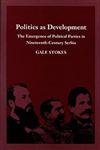
Politics as Development: The Emergence of Political Parties in Nineteenth-Century Serbia - Hardcover
Inhaltsangabe
Nineteenth-century Serbia was an economically and socially backward country with an urban population of approximately 3 percent and a literacy rate in the countryside of less than 10 percent. Still, during that century it created a functioning democracy with a constitution, independent courts, political parties, and civil liberties. The Serbian experience challenges the view that political structures fundamentally depend on socioeconomic ones, since Serbia created a modern political system without developing economically. Politics as Development analyzes one aspect of that process, the emergence of political parties in the 1870s and the 1880s, especially the creation of the Serbian Radical Party under the leadership of Nikola Pasic. By mobilizing the peasantry through organizing the countryside, the Radicals proved themselves the most original nineteenth-century Balkan political movement. Based on thorough research of primary documents, Stokes's study supports the view that the state and its attending class constitute an independent variable in the developmental process.
Die Inhaltsangabe kann sich auf eine andere Ausgabe dieses Titels beziehen.
Von der hinteren Coverseite
"Based on scrupulously examined published and archival material, Professor Stoke's book deals with the transition of Serbia from a patriarchal society to a modern state. it is an important contribution not only to East European historiography but also to comparative studies of political modernization. "Politics as Development" represents a skillful and impressive combination of historical analysis and theoretical insights."--Wayne S. Vucinich, Stanford University
Auszug. © Genehmigter Nachdruck. Alle Rechte vorbehalten.
Politics as Development
The Emergence of Political Parties in Nineteenth-Century Serbia
By Gale StokesDuke University Press
Copyright © 1990 Duke University Press
All rights reserved.
ISBN: 978-0-8223-1016-7All rights reserved.
Contents
Acknowledgments,
Foreword,
Abbreviations,
Introduction,
1 : The Beginnings of Parliamentary Life,
2 : The Radicals Find Each Other,
3 : Reform and the Red Banner,
4 : War and Politics,
5 : Facing Independence,
6 : Parties and the New Level of Discourse,
7 : Organization, Confrontation, and Mobilization,
8 : The Timok Rebellion,
Conclusion,
Notes,
Bibliography,
Index,
CHAPTER 1
THE BEGINNINGS OF PARLIAMENTARY LIFE
To do things according to our own circumstances would be better than all these great forms brought in from foreign lands.—Ilija Garašanin
The moment when Serbia began its transformation from an oriental land to a Western one can be fixed with considerable precision. It was in 1804 when the Serbs rose in revolt against the renegade janissaries that were seizing their crops and killing their headmen. This First Serbian Uprising, as it is called, failed, although it did bring Serbia to the attention of the great powers, especially Russia, for the first time. In 1813 its great leader, Karadjordje, along with thousands of his countrymen, had to flee before the reconquering Ottomans. But from 1815 to 1830, Miloš Obrenovic, who assumed leadership of the Serbs after Karadjordje, created an autonomous Serbian principality by methods Ottoman administrators understood and appreciated: absolute loyalty, ruthless self-aggrandizement, and shameless bribery. In 1830 the sultan recognized Miloš as hereditary prince of an autonomous province of the Ottoman Empire.
Autonomy was the fundamental first step in beginning Serbia's movement out of the Ottoman orbit into a European one, but Miloš's reign had little in common with the parliamentary system that Serbia adopted in the second half of the nineteenth century. Miloš was one of several local warlords who rose in Southeastern Europe in the early nineteenth century to carve out domains for themselves. Ruthless and boisterous men, their unself-conscious principle of rule was personal gain. Miloš discouraged trade except through his own companies, appropriated the income from ferries and import duties, and murdered not only his enemies, but even men who would not loan him money. If Miloš had a political model it was not any system influenced by the French Revolution and its aftermath, but the "well-flourishing, absolute domain of the House of Osman." Contemporaries referred to his reign wryly as the sultanate, and, just as in the Ottoman Empire, under Miloš the source of authority was simply the ruler himself.
But even in Miloš's time Serbia possessed some indigenous political traditions not directly inherited from the Ottomans. The first was the skupština (the term is derived from the word for gathering), an amorphous body that met occasionally to ratify important changes during the First Serbian Uprising. Miloš ran roughshod over the tradition that the adult males of the community should be consulted when important undertakings were under consideration, but a strong sense that in the end only decisions ratified by such a body were authentic remained a part of the Serbian folk ethic. Even Miloš had to call skupštinas from time to time to lend fig leaves to his autocratic rule. A second tradition was the idea that the prince should govern with the help of a council of advisors. Karadjordje had established such a council, which, despite the opposition of local strongmen who might have served on it, he controlled completely. Miloš was even cruder than the none too subtle Karadjordje; he simply murdered his opponents, appointed local leaders loyal to him, and put down the resultant uprisings by force.
But when the sultan recognized Miloš's special position in 1830, demands became more and more insistent that he create a government appropriate to Serbia's new dignity. After a stirring call for a constitutional government by Serbia's greatest intellectual figure, Vuk Karadzic, and, more important, a widespread conspiracy and rebellion by his main advisors, Miloš promised a constitution to Serbia in 1835. By doling out some formal appearance of power to the State Council, which was composed mainly of his opponents, Miloš hoped to maintain real power for himself. The new law also called for a skupština (assembly), but one with no important functions.
Besides formally instituting the main Serbian political institutions, the constitution of 1835 occasioned foreign powers to take a direct interest in Serbian affairs. The Austrians feared the constitution was too liberal and received permission from the Porte to send a consul to Belgrade. When England and Russia followed suit, the international competition between Russia and England became reflected in Serbian politics. The English consul took Miloš's side, for no better reason than the fact that the Russian and Austrian consuls had allied themselves with Miloš's opponents. Miloš's defeat by these forces came when the Porte agreed in 1838 to issue a new fundamental statute for Serbia that turned over power to the State Council, which consisted mainly of Miloš's opponents. The skupština was not even mentioned. The Defenders of the Constitution, as the victors in this struggle were called, set the seal on their victory when they chased Miloš's son Michael, who had succeeded him, into exile in 1842 and set up the weak grandson of Karadjordje, Alexander, as their figurehead prince.
During the era of the Defenders of the Constitution, the State Council overshadowed both the prince and the skupština, which met only once. At the same time, however, a fourth political element emerged, the bureaucracy, or the government itself. In a country like Serbia, almost totally peasant in structure, without a middle class, and without an intelligentsia, the state and the church were the sole permanent employers. Bureaucrat or priest—these were the options for anyone talented or tenacious enough to get an education. Of the two, the former had at least two important advantages. State service provided not only good and steady pay, prestige, a special uniform, and social standing, it also provided an opportunity to exercise power. Furthermore, as Serbia turned more and more toward Western styles of government the growing size of the state created a constantly expanding number of jobs. Although the number of state employees during the period of the Defenders of the Constitution was very small—perhaps one thousand—many of them had crossed over from Habsburg lands, bringing with them the Central European science of administration of cameralism, which reserved the dominant position in society to the government bureaucracy. Cameralists believed that initiatives in public affairs, whether this meant declaring war or simply setting up a scale at a local market, were the responsibility of state officials, not of popular organs of government. The prince—in actuality the State Council—decided the direction of movement, the bureaucracy provided the resources through administering the tax structure and keeping order, and the people supplied the wherewithal by paying taxes. Ilija Garašanin, the founder of the Serbian bureaucracy during these years, believed in rigid lines of...
„Über diesen Titel“ kann sich auf eine andere Ausgabe dieses Titels beziehen.
Suchergebnisse für Politics as Development: The Emergence of Political...

Beispielbild für diese ISBN
Politics as Development: The Emergence of Political Parties in Nineteenth-Century Serbia
Anbieter: ThriftBooks-Atlanta, AUSTELL, GA, USA
Verkäuferbewertung 5 von 5 Sternen

Hardcover. Zustand: As New. No Jacket. Pages are clean and are not marred by notes or folds of any kind. ~ ThriftBooks: Read More, Spend Less. Artikel-Nr. G0822310163I2N00
Gebraucht kaufen
EUR 7,56
Versand gratis
Versand innerhalb von USA
Versand innerhalb von USA
Anzahl: 1 verfügbar
Beispielbild für diese ISBN
Politics As Development: The Emergence of Political Parties in Nineteenth-Century Serbia
Anbieter: WorldofBooks, Goring-By-Sea, WS, Vereinigtes Königreich
Verkäuferbewertung 5 von 5 Sternen
Hardback. Zustand: Very Good. The book has been read, but is in excellent condition. Pages are intact and not marred by notes or highlighting. The spine remains undamaged. Artikel-Nr. GOR014564521
Gebraucht kaufen
EUR 6,49
EUR 6,53 Versand
Versand von Vereinigtes Königreich nach USA
Versand von Vereinigtes Königreich nach USA
Anzahl: 1 verfügbar
Beispielbild für diese ISBN
Politics as Development: The Emergence of Political Parties in Nineteenth-Century Serbia
Anbieter: JuddSt.Pancras, London, Vereinigtes Königreich
Verkäuferbewertung 5 von 5 Sternen
Hardcover. Zustand: New. Zustand des Schutzumschlags: New. In original shrinkwrap. Artikel-Nr. c151107
Neu kaufen
EUR 38,45
EUR 25,67 Versand
Versand von Vereinigtes Königreich nach USA
Versand von Vereinigtes Königreich nach USA
Anzahl: 1 verfügbar
Beispielbild für diese ISBN
Politics as Development: The Emergence of Political Parties in Nineteenth-century Serbia
Anbieter: The Guru Bookshop, Hereford, Vereinigtes Königreich
Verkäuferbewertung 4 von 5 Sternen

Hardcover. Zustand: Fine. FIRST EDITION with dust jacket + owners name - Rare and Collectable - will send out 1st class post within 12 hours of receipt of order. Artikel-Nr. mon0000124370
Gebraucht kaufen
EUR 51,42
EUR 28,00 Versand
Versand von Vereinigtes Königreich nach USA
Versand von Vereinigtes Königreich nach USA
Anzahl: 1 verfügbar