
Verwandte Artikel zu Migration and Remittances Factbook 2011: Second Edition
Inhaltsangabe
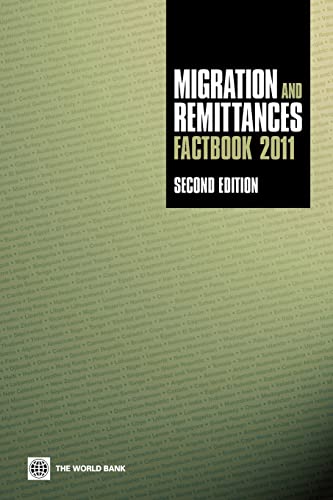
There are more than 215 million international migrants in the world. Recorded remittances received by developing countries, estimated to be US$325 billion in 2010, far exceed the volume of official aid flows and constitute more than 10 percent of gross domestic product (GDP) in many developing countries. Migration and Remittances Factbook 2011 provides a comprehensive picture of emigration, skilled emigration, immigration, and remittance flows for 210 countries and 15 country groups, drawing on authoritative, publicly available data. The current edition of the factbook updates the information in the popular 2008 edition with additional data for 71 countries collected from various sources, including national censuses, labor force surveys, population registers, and other national sources. In addition, it provides selected socioeconomic characteristics such as population, labor force, age dependency ratio, gross national income (GNI) per capita, and poverty headcount for each country and regional grouping. More frequent and timely monitoring of migration and remittance trends can provide policy makers, researchers, and the development community with the tools to make informed decisions. The factbook makes an important contribution to this effort by providing the latest available data and facts on migration and remittance trends worldwide in a comprehensive and readily accessible format.
Die Inhaltsangabe kann sich auf eine andere Ausgabe dieses Titels beziehen.
Über die Autorin bzw. den Autor
The World Bank came into formal existence in 1945 following the international ratification of the Bretton Woods agreements. It is a vital source of financial and technical assistance to developing countries around the world. The organization's activities are focused on education, health, agriculture and rural development, environmental protection, establishing and enforcing regulations, infrastructure development, governance and legal institutions development. The World Bank is made up of two unique development institutions owned by its 185 Member Countries. The International Bank for Reconstruction and Development (IBRD) focuses on middle income and creditworthy poor countries and the International Development Association (IDA), which focuses on the poorest countries in the world.
„Über diesen Titel“ kann sich auf eine andere Ausgabe dieses Titels beziehen.
Suchergebnisse für Migration and Remittances Factbook 2011: Second Edition

Beispielbild für diese ISBN
Migration and Remittances Factbook 2011
Anbieter: Ria Christie Collections, Uxbridge, Vereinigtes Königreich
Verkäuferbewertung 5 von 5 Sternen

Zustand: New. In English. Artikel-Nr. ria9780821382189_new
Neu kaufen
EUR 55,66
EUR 13,32 Versand
Versand von Vereinigtes Königreich nach USA
Versand von Vereinigtes Königreich nach USA
Anzahl: Mehr als 20 verfügbar
Foto des Verkäufers
Migration and Remittances Factbook 2011
Verlag:
World Bank Group Publications, 2010
ISBN 10: 0821382187
ISBN 13: 9780821382189
Neu
Softcover
Anbieter: moluna, Greven, Deutschland
Verkäuferbewertung 5 von 5 Sternen
Zustand: New. Contains statistical snapshots for 195 countries and 13 regional and income groups. This title includes overs 200 tables that focus on one country, region, or income group, explore immigration, emigration and skilled emigration, and inward and outward remit. Artikel-Nr. 595066686
Neu kaufen
EUR 51,71
EUR 48,99 Versand
Versand von Deutschland nach USA
Versand von Deutschland nach USA
Anzahl: Mehr als 20 verfügbar
Foto des Verkäufers
Migration and Remittances Factbook 2011 : Second Edition
Verlag:
World Bank Publications Nov 2010, 2010
ISBN 10: 0821382187
ISBN 13: 9780821382189
Neu
Taschenbuch
Anbieter: AHA-BUCH GmbH, Einbeck, Deutschland
Verkäuferbewertung 5 von 5 Sternen
Taschenbuch. Zustand: Neu. Neuware - There are more than 215 million international migrants in the world. Recorded remittances received by developing countries, estimated to be US$325 billion in 2010, far exceed the volume of official aid flows and constitute more than 10 percent of gross domestic product (GDP) in many developing countries. Migration and Remittances Factbook 2011 provides a comprehensive picture of emigration, skilled emigration, immigration, and remittance flows for 210 countries and 15 country groups, drawing on authoritative, publicly available data. The current edition of the factbook updates the information in the popular 2008 edition with additional data for 71 countries collected from various sources, including national censuses, labor force surveys, population registers, and other national sources. In addition, it provides selected socioeconomic characteristics such as population, labor force, age dependency ratio, gross national income (GNI) per capita, and poverty headcount for each country and regional grouping. More frequent and timely monitoring of migration and remittance trends can provide policy makers, researchers, and the development community with the tools to make informed decisions. The factbook makes an important contribution to this effort by providing the latest available data and facts on migration and remittance trends worldwide in a comprehensive and readily accessible format. Artikel-Nr. 9780821382189
Neu kaufen
EUR 68,89
EUR 35,00 Versand
Versand von Deutschland nach USA
Versand von Deutschland nach USA
Anzahl: 2 verfügbar
Beispielbild für diese ISBN
Migration and Remittances Factbook 2011
Verlag:
World Bank Group Publications, 2010
ISBN 10: 0821382187
ISBN 13: 9780821382189
Gebraucht
Softcover
Anbieter: Buchpark, Trebbin, Deutschland
Verkäuferbewertung 5 von 5 Sternen
Zustand: Sehr gut. Zustand: Sehr gut | Seiten: 256 | Sprache: Englisch | Produktart: Bücher | Keine Beschreibung verfügbar. Artikel-Nr. 6925234/122
Gebraucht kaufen
EUR 29,41
EUR 105,00 Versand
Versand von Deutschland nach USA
Versand von Deutschland nach USA
Anzahl: 1 verfügbar