
Verwandte Artikel zu Nature Knows No Color-Line: Research Into the Negro...
Inhaltsangabe
Classic work of black study refuting scientific racism
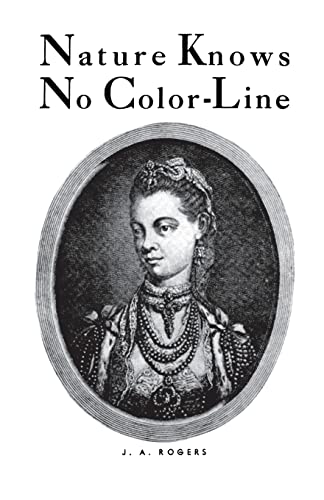
In Nature Knows No Color-Line, originally published in 1952, historian Joel Augustus Rogers examines the origins of racial hierarchy and the color problem. Rogers was a humanist who believed that there were no scientifically evident racial divisions--all humans belong to one "race." He believed that color prejudice generally evolved from issues of domination and power between two physiologically different groups. According to Rogers, color prejudice was then used a rationale for domination, subjugation and warfare. Societies developed myths and prejudices in order to pursue their own interests at the expense of other groups. This book argues that many instances of the contributions of black people had been left out of the history books, and gives many examples.
Die Inhaltsangabe kann sich auf eine andere Ausgabe dieses Titels beziehen.
Über die Autorin bzw. den Autor
JOEL AUGUSTUS ROGERS (September 6, 1880-March 26, 1966) was a Jamaican-American author, journalist, and historian who contributed to the history of Africa and the African diaspora, especially the history of African Americans in the United States. His research spanned the academic fields of history, sociology and anthropology. He challenged prevailing ideas about race, demonstrated the connections between civilizations, and traced African achievements. He was one of the greatest popularizers of African history in the twentieth century. Rogers addresses issues such as the lack of scientific support for the idea of race, the lack of black history being told from a black person's perspective, and the fact of intermarriage and unions among peoples throughout history. A respected historian and gifted lecturer, Rogers was a close personal friend of the Harlem-based intellectual and activist Hubert Harrison. In the 1920s, Rogers worked as a journalist on the Pittsburgh Courier and the Chicago Enterprise, and he served as the first black foreign correspondent from the United States.
„Über diesen Titel“ kann sich auf eine andere Ausgabe dieses Titels beziehen.
Suchergebnisse für Nature Knows No Color-Line: Research Into the Negro...

Foto des Verkäufers
Nature Knows No Color-Line: Research Into the Negro Ancestry in the White Race
Anbieter: WeBuyBooks, Rossendale, LANCS, Vereinigtes Königreich
Verkäuferbewertung 5 von 5 Sternen

paperback. Zustand: Good. Most items will be dispatched the same or the next working day. A copy that has been read but remains in clean condition. All of the pages are intact and the cover is intact and the spine may show signs of wear. The book may have minor markings which are not specifically mentioned. Artikel-Nr. rev3412888259
Gebraucht kaufen
EUR 8,96
EUR 6,70 Versand
Versand von Vereinigtes Königreich nach USA
Versand von Vereinigtes Königreich nach USA
Anzahl: 1 verfügbar
Foto des Verkäufers
Nature Knows No Color-Line: Research Into the Negro Ancestry in the White Race
Anbieter: WeBuyBooks, Rossendale, LANCS, Vereinigtes Königreich
Verkäuferbewertung 5 von 5 Sternen
paperback. Zustand: Very Good. Most items will be dispatched the same or the next working day. A copy that has been read, but is in excellent condition. Pages are intact and not marred by notes or highlighting. The spine remains undamaged. Artikel-Nr. rev2224682793
Gebraucht kaufen
EUR 16,33
EUR 6,70 Versand
Versand von Vereinigtes Königreich nach USA
Versand von Vereinigtes Königreich nach USA
Anzahl: 1 verfügbar
Beispielbild für diese ISBN
Nature Knows No Color-Line: Research into the Negro Ancestry in the White Race
Anbieter: Revaluation Books, Exeter, Vereinigtes Königreich
Verkäuferbewertung 5 von 5 Sternen
Paperback. Zustand: Brand New. 3rd edition. 242 pages. 8.50x5.50x0.75 inches. In Stock. Artikel-Nr. __0819575100
Neu kaufen
EUR 19,86
EUR 11,81 Versand
Versand von Vereinigtes Königreich nach USA
Versand von Vereinigtes Königreich nach USA
Anzahl: 1 verfügbar
Beispielbild für diese ISBN
Nature Knows No Color-Line: Research into the Negro Ancestry in the White Race
Anbieter: Revaluation Books, Exeter, Vereinigtes Königreich
Verkäuferbewertung 5 von 5 Sternen
Paperback. Zustand: Brand New. 3rd edition. 242 pages. 8.50x5.50x0.75 inches. In Stock. Artikel-Nr. xr0819575100
Neu kaufen
EUR 21,37
EUR 11,81 Versand
Versand von Vereinigtes Königreich nach USA
Versand von Vereinigtes Königreich nach USA
Anzahl: 2 verfügbar
Beispielbild für diese ISBN
Nature Knows No Color-Line: Research into the Negro Ancestry in the White Race
Anbieter: Kennys Bookstore, Olney, MD, USA
Verkäuferbewertung 5 von 5 Sternen
Zustand: New. 2011. 3rd ed. Paperback. . . . . . Books ship from the US and Ireland. Artikel-Nr. V9780819575104
Neu kaufen
EUR 27,16
EUR 9,37 Versand
Versand innerhalb von USA
Versand innerhalb von USA
Anzahl: Mehr als 20 verfügbar
Beispielbild für diese ISBN
Nature Knows No Color-Line
Anbieter: Majestic Books, Hounslow, Vereinigtes Königreich
Verkäuferbewertung 4 von 5 Sternen

Zustand: New. pp. 248. Artikel-Nr. 94838897
Neu kaufen
EUR 32,19
EUR 7,68 Versand
Versand von Vereinigtes Königreich nach USA
Versand von Vereinigtes Königreich nach USA
Anzahl: 1 verfügbar
Foto des Verkäufers
Nature Knows No Color-Line : Research Into the Negro Ancestry in the White Race
Verlag:
Wesleyan University Press Apr 2011, 2011
ISBN 10: 0819575100
ISBN 13: 9780819575104
Neu
Taschenbuch
Anbieter: AHA-BUCH GmbH, Einbeck, Deutschland
Verkäuferbewertung 5 von 5 Sternen
Taschenbuch. Zustand: Neu. Neuware - Classic work of black study refuting scientific racismIn Nature Knows No Color-Line, originally published in 1952, historian Joel Augustus Rogers examines the origins of racial hierarchy and the color problem. Rogers was a humanist who believed that there were no scientifically evident racial divisions--all humans belong to one 'race.' He believed that color prejudice generally evolved from issues of domination and power between two physiologically different groups. According to Rogers, color prejudice was then used a rationale for domination, subjugation and warfare. Societies developed myths and prejudices in order to pursue their own interests at the expense of other groups. This book argues that many instances of the contributions of black people had been left out of the history books, and gives many examples. Artikel-Nr. 9780819575104
Neu kaufen
EUR 26,53
EUR 35,00 Versand
Versand von Deutschland nach USA
Versand von Deutschland nach USA
Anzahl: 2 verfügbar
Foto des Verkäufers
Nature Knows No Color-Line: Research Into the Negro Ancestry in the White Race
Anbieter: moluna, Greven, Deutschland
Verkäuferbewertung 5 von 5 Sternen
Zustand: New. KlappentextClassic work of black study refuting scientific racism. Artikel-Nr. 898827931
Neu kaufen
EUR 19,72
EUR 48,99 Versand
Versand von Deutschland nach USA
Versand von Deutschland nach USA
Anzahl: 5 verfügbar