
Verwandte Artikel zu Sonnets to Orpheus (Wesleyan Poetry)
Inhaltsangabe
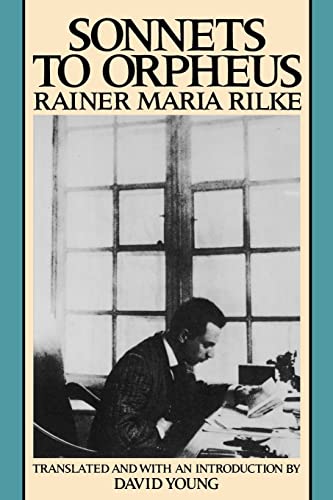
Sonnets to Orpheus is Rainer Maria Rilke's first and only sonnet sequence. It is an undisputed masterpiece by one of the greatest modern poets, translated here by a master of translation, David Young. This Wesleyan edition is bilingual, with German and English en face. Rilke revived and transformed the traditional sonnet sequence in the Sonnets. Instead of centering on love for a particular person, as has many other sonneteers, he wrote an extended love poem to the world, celebrating such diverse things as mirrors, dogs, fruit, breathing, and childhood. Many of the sonnets are addressed to two recurrent figures: the god Orpheus (prototype of the poet) and a young dancer, whose death is treated elegiacally. These ecstatic and meditative lyric poems are a kind of manual on how to approach the world - how to understand and love it. David Young's is the first most sensitive of the translations of this work, superior to other translations in sound and sense. He captures Rilke's simple, concrete, and colloquial language, writing with a precision close to the original. RAINER MARIA RILKE was born in Prague in 1875. After a motley education at military and business schools and at Prague's Charles University, he traveled in Europe, Russia, Egypt, and Tunsinia. In addition to Sonnets to Orpheus, Rilke's works include the Duino Elegies, The Book of Pictures, Poems from the Book of Hours, New Poems, and The Notebook of Malte Laurids Brigge. Rilke died in 1926. "An undisputed masterpiece by one of the greatest modern poets translated here by a master of translation"-- Voice Literary Supplement. "An artful and sensitive translation of this most elusive of Rilke's poetry.the thing that Rilke made is once again alive to us, all of it.Young has subtracted.the most persistent problem with other translations: he does not let the music of the form haunt the poem. There is no rhetorical 'rounding-out,' in either Pound's fine phrase, emotional slither. The reader feels that Young has successfully 'inhabited' the form, found a correlative language." -Stanley Plumly
Die Inhaltsangabe kann sich auf eine andere Ausgabe dieses Titels beziehen.
Über die Autorin bzw. den Autor
Ren Karl Wilhelm Johann Josef Maria Rilke, known as Rainer Maria Rilke, was an Austrian poet and novelist, widely regarded as one of the most significant writers in the German language. Born on December 4, 1875, in Prague, Czechia, Rilke became acclaimed for his idiosyncratic and expressive poetry, which explored deep existential and spiritual themes. Influenced by figures such as Lou Andreas-Salom and Friedrich Nietzsche, his work delves into the complexities of the human soul, grappling with subjects like love, death, and identity. Rilke married Clara Westhoff in 1901, and they had a daughter, Ruth Rilke. His work spans various genres, including lyric poetry, philosophical musings, and reflections on art. Rilke's most well-known works include "The Duino Elegies" and "The Sonnets to Orpheus," which reflect his intense personal and existential inquiries. Rainer Maria Rilke died on December 29, 1926, at the age of 51, in Montreux, Switzerland, leaving behind a legacy of deeply introspective and evocative poetry that continues to influence writers and thinkers to this day.
Von der hinteren Coverseite
In February 1922, Rainer Maria Rilke recovered his creative energies as a poet with a suddenness and abundance virtually unparalleled in the history of poetic composition.
„Über diesen Titel“ kann sich auf eine andere Ausgabe dieses Titels beziehen.
Suchergebnisse für Sonnets to Orpheus (Wesleyan Poetry)

Beispielbild für diese ISBN
Sonnets to Orpheus
Verlag:
Wesleyan University Press, 1987
ISBN 10: 0819561657
ISBN 13: 9780819561657
Gebraucht
Softcover
Anbieter: Better World Books, Mishawaka, IN, USA
Verkäuferbewertung 5 von 5 Sternen

Zustand: Good. Former library copy. Pages intact with minimal writing/highlighting. The binding may be loose and creased. Dust jackets/supplements are not included. Includes library markings. Stock photo provided. Product includes identifying sticker. Better World Books: Buy Books. Do Good. Artikel-Nr. 6269967-6
Gebraucht kaufen
EUR 9,95
Versand gratis
Versand innerhalb von USA
Versand innerhalb von USA
Anzahl: 1 verfügbar
Beispielbild für diese ISBN
Sonnets to Orpheus
Anbieter: Revaluation Books, Exeter, Vereinigtes Königreich
Verkäuferbewertung 5 von 5 Sternen
Paperback. Zustand: Brand New. 134 pages. 8.00x6.25x0.50 inches. In Stock. Artikel-Nr. x-0819561657
Neu kaufen
EUR 20,05
EUR 11,63 Versand
Versand von Vereinigtes Königreich nach USA
Versand von Vereinigtes Königreich nach USA
Anzahl: 2 verfügbar