
Verwandte Artikel zu Bishops on the Border: Pastoral Responses to Immigration
Inhaltsangabe
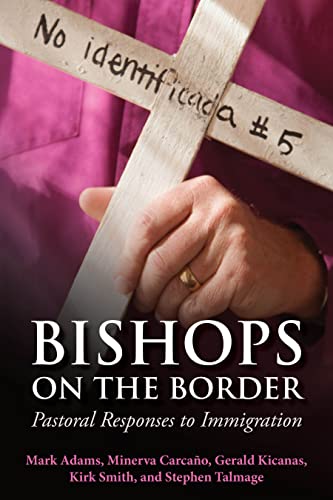
Ecumenical examination of immigration issues drawn from engaging, first-person narratives.
A group of bishops (Catholic, Episcopal, Lutheran, and United Methodist), all based along the US-Mexico border, found common ground to jointly address some key immigration issues, especially those being played out in the state of Arizona. The bishops worked together on behalf of local immigrant populations to address theological and pastoral concerns―and prayed for those whose lives were being directly affected. This book grows out of their shared work and the relationships that developed among them.
Die Inhaltsangabe kann sich auf eine andere Ausgabe dieses Titels beziehen.
Über die Autorin bzw. den Autor
Kirk Smith was elected Bishop of Arizona in 2003 and lives in Phoenix. He has served parishes in Connecticut and California. With an undergraduate degree in history, Smith earned a PhD in medieval church history from Cornell University. He studied for holy orders at Berkeley Seminary at Yale before being ordained a priest in 1980 through the auspices of his home diocese of Arizona. He lives in Phoenix, AZ.
Auszug. © Genehmigter Nachdruck. Alle Rechte vorbehalten.
BISHOPS ON THE BORDER
Pastoral Responses to Immigration
By Mark Adams, Minerva G. Carcaño, Gerald Kicanas, Kirk Smith, Stephen TalmageChurch Publishing, Inc.
Copyright © 2013 Contributors
All rights reserved.
ISBN: 978-0-8192-2875-8All rights reserved.
Contents
| Foreword by Kirk Smith | |
| Acknowledgments | |
| Introduction by Mark Adams | |
| 1 Immigration: A Bishop's Perspective Minerva G. Carcaño | |
| 2 Meeting at the Border: Restoring Human Dignity Gerald Kicanas | |
| 3 "Something There Is That Doesn't Love a Wall" Kirk Smith | |
| 4 We are All Cousins: A Biblical Mandate Stephen Talmage | |
| About the Contributors |
CHAPTER 1
Immigration
A Bishop's Perspective
Minverva G. Carcaño
Every summer since becoming a bishop I have taken a road trip from my home inScottsdale, Arizona, to my birthplace in South Texas. The 1,100 miles betweenScottsdale and Edinburg, Texas, give me much time to ponder life and ministry. Ialways take the route closest to the border between the United States andMexico. Family and friends encourage me to take the route through El Paso andthen on through San Antonio, Texas, but the border always beckons to me. As Itravel through Arizona, then across New Mexico, and then finally down the longstretch of Texas that leads me home, I remember.
I have spent most of my life and ministry on this border. It has shaped andnurtured me as well as given me a lens through which I see life. I am thedaughter of a father who came to the United States under the Bracero Program, alabor agreement between the United States and Mexico that allowed men to comeand work in the United States. As a bracero, a term referring to the arms heprovided the U.S. economy, my father labored in the cotton and vegetable fieldsof South Texas. It was there that he met my mother, the daughter of a Mexicanimmigrant mother and a father born and reared in Texas.
Born into this border family, I have always known myself as a daughter of theborder; that place that joins people, cultures, and languages in a way thatmakes one a citizen of one country with roots deep enough to also tap thesprings of life of the country just beyond. Such roots do not easily allow oneto side with the prejudices of one or the other country, for to do so is toviolate a part of one's own personhood. Such an identity comes with its ownvulnerability. The vulnerability of being a daughter of the border was put onfull display on the very first few days of my episcopacy.
Assigned to an episcopal area that covers most of Arizona, southern Nevada, andthe California communities that rest on the western edge of the Colorado River,I came to the Phoenix Episcopal Area of The United Methodist Church on September1, 2004. At that moment the Arizona state legislature was considering ArizonaProposition 200, causing much heated debate. One of the first things requestedof me as I assumed my responsibilities as a bishop was to write what wouldbecome my regular monthly epistles to the faithful. A great believer in ministrythat is contextual and socially relevant, I decided to comment on ArizonaProposition 200. Besides, I thought, it would give me an opportunity to share abit about myself.
I shared with my new constituency that being faced by Arizona Proposition 200had taken me back to the days of my childhood when, as the daughter of animmigrant, I would sit with my father at our kitchen table and hear withtroubled heart the stories of how he had come to this country. My father hadcome across the U.S./Mexico border as a strong young man to work in theagricultural fields of the Rio Grande Valley of South Texas, fields that havefed this country through times of war and peace. He was one of thousands ofMexican laborers who have toiled on that land for the sake of U.S. families, hisown family benefitting along the way as well. He worked long, hard days untilthe day he was told that his labor was no longer needed; the Bracero Program wasover for him. Returning to his village in the mountains of north-central Mexico,he found a community whose own agricultural economy had been devastated throughthe absence of their young men who had gone north. Soon he found himself with nooptions but to return to Texas. The preference of his heart would have been toremain in his beloved community and country.
When my father attempted to return to Texas, he was told that there was nolonger room for him; it mattered not that he had given long hard years ofservice to this country. Yes, he had been compensated for his work but at thebottom of the pay scale, with no labor rights to speak of, and often cheated bycorrupt middle men. Far from home and with no resources, my father joined themany others who yearly, to this day, swim across the Rio Grande River in searchof sustenance and hope. It was not an easy journey. On one occasion he had beenpulled out of the waters of the great river by U.S. border officials, accused oftransporting drugs, and threatened with death.
At that point in his life, my father did not even know what constituted a drugand had with him only a change of clothes in a plastic bag and a few pesos inhis pocket. He remembered how the border officials had placed him in aninterrogation room with glaring lights and told him he would not leave that roomalive if he didn't confess that he was involved in smuggling drugs or told themwho he worked for. My father had no dealings with the drug world. He simplywanted to provide food and care for his family in Mexico. Weary, and convincedthat his life would end in that place, he told the border officials that theywould have to just kill him because he had nothing to confess. A day later,exhausted from the terrifying experience, he was released and sent back toMexico. My father would never again fully trust the U.S. legal system even afterbecoming a U.S. citizen.
In spite of his ordeal at the border, my father continued to cross into thiscountry. It was not an act of defiance, but the simple human struggle forsurvival. Eventually, through marriage, he was able to become a U.S. citizen. Iwas in the third grade when my father prepared for and took his U.S. citizenshiptest. I helped him study for the test and no one was prouder of my father whenhe became a U.S. citizen than I. My father's story is the story of men andwomen, children and young people who today risk their lives as they cross theborder. I would venture to say that the majority of them would prefer to remainin their native land but come to this country out of great human need anddespair.
It was against this backdrop of life that I read Proposition 200, the ArizonaTaxpayer and Citizen Protection Act. My research and study of its components ledme to determine that it was a costly proposition not only in taxpayer dollars,but in the potentially negative impact it could have on communities across thestate. From the perspective of Christian faith, Proposition 200 would createunjust law. I do not oppose immigration laws per se. Immigration laws arenecessary for civil society to organize its life and care for its people, butimmigration laws must be just and fair. Proposition 200, however, did nothing tohelp achieve such a level of law. It did nothing to address true immigrationconcerns, but it did carry the potential of undermining the civil liberties andhuman rights of persons and further aggravating the hostility that alreadyexisted between documented and undocumented...
„Über diesen Titel“ kann sich auf eine andere Ausgabe dieses Titels beziehen.
Suchergebnisse für Bishops on the Border: Pastoral Responses to Immigration

Beispielbild für diese ISBN
Bishops on the Border: Pastoral Responses to Immigration
Anbieter: World of Books (was SecondSale), Montgomery, IL, USA
Verkäuferbewertung 5 von 5 Sternen

Zustand: Very Good. Item in very good condition! Textbooks may not include supplemental items i.e. CDs, access codes etc. Artikel-Nr. 00084027258
Gebraucht kaufen
EUR 6,24
Versand gratis
Versand innerhalb von USA
Versand innerhalb von USA
Anzahl: 1 verfügbar
Beispielbild für diese ISBN
Bishops on the Border: Pastoral Responses to Immigration
Anbieter: Wonder Book, Frederick, MD, USA
Verkäuferbewertung 5 von 5 Sternen
Zustand: Good. Good condition. A copy that has been read but remains intact. May contain markings such as bookplates, stamps, limited notes and highlighting, or a few light stains. Artikel-Nr. N18A-04686
Gebraucht kaufen
EUR 6,25
Versand gratis
Versand innerhalb von USA
Versand innerhalb von USA
Anzahl: 1 verfügbar
Beispielbild für diese ISBN
Bishops on the Border: Pastoral Responses to Immigration
Anbieter: ThriftBooks-Dallas, Dallas, TX, USA
Verkäuferbewertung 5 von 5 Sternen
Paperback. Zustand: Very Good. No Jacket. Former library book; May have limited writing in cover pages. Pages are unmarked. ~ ThriftBooks: Read More, Spend Less. Artikel-Nr. G0819228753I4N10
Gebraucht kaufen
EUR 6,54
Versand gratis
Versand innerhalb von USA
Versand innerhalb von USA
Anzahl: 1 verfügbar
Beispielbild für diese ISBN
Bishops on the Border : Pastoral Responses to Immigration
Verlag:
Church Publishing Incorporated, 2013
ISBN 10: 0819228753
ISBN 13: 9780819228758
Gebraucht
Softcover
Anbieter: Better World Books, Mishawaka, IN, USA
Verkäuferbewertung 5 von 5 Sternen
Zustand: Good. Former library copy. Pages intact with minimal writing/highlighting. The binding may be loose and creased. Dust jackets/supplements are not included. Includes library markings. Stock photo provided. Product includes identifying sticker. Better World Books: Buy Books. Do Good. Artikel-Nr. 48412649-20
Gebraucht kaufen
EUR 6,56
Versand gratis
Versand innerhalb von USA
Versand innerhalb von USA
Anzahl: 1 verfügbar
Beispielbild für diese ISBN
Bishops on the Border : Pastoral Responses to Immigration
Verlag:
Church Publishing Incorporated, 2013
ISBN 10: 0819228753
ISBN 13: 9780819228758
Gebraucht
Softcover
Anbieter: Better World Books, Mishawaka, IN, USA
Verkäuferbewertung 5 von 5 Sternen
Zustand: Fine. Used book that is in almost brand-new condition. May contain a remainder mark. Better World Books: Buy Books. Do Good. Artikel-Nr. 15826411-75
Gebraucht kaufen
EUR 6,56
Versand gratis
Versand innerhalb von USA
Versand innerhalb von USA
Anzahl: 1 verfügbar
Beispielbild für diese ISBN
Bishops on the Border : Pastoral Responses to Immigration
Verlag:
Church Publishing Incorporated, 2013
ISBN 10: 0819228753
ISBN 13: 9780819228758
Gebraucht
Softcover
Anbieter: Better World Books: West, Reno, NV, USA
Verkäuferbewertung 5 von 5 Sternen
Zustand: Very Good. Former library copy. Pages intact with possible writing/highlighting. Binding strong with minor wear. Dust jackets/supplements may not be included. Includes library markings. Stock photo provided. Product includes identifying sticker. Better World Books: Buy Books. Do Good. Artikel-Nr. 54737570-75
Gebraucht kaufen
EUR 6,56
Versand gratis
Versand innerhalb von USA
Versand innerhalb von USA
Anzahl: 1 verfügbar
Beispielbild für diese ISBN
Bishops on the Border
Anbieter: PBShop.store US, Wood Dale, IL, USA
Verkäuferbewertung 5 von 5 Sternen
PAP. Zustand: New. New Book. Shipped from UK. Established seller since 2000. Artikel-Nr. CX-9780819228758
Beispielbild für diese ISBN
Bishops on the Border
Anbieter: PBShop.store UK, Fairford, GLOS, Vereinigtes Königreich
Verkäuferbewertung 5 von 5 Sternen
PAP. Zustand: New. New Book. Shipped from UK. Established seller since 2000. Artikel-Nr. CX-9780819228758
Neu kaufen
EUR 20,29
EUR 3,84 Versand
Versand von Vereinigtes Königreich nach USA
Versand von Vereinigtes Königreich nach USA
Anzahl: 15 verfügbar
Beispielbild für diese ISBN
Bishops on the Border: Pastoral Responses to Immigration
Anbieter: Ria Christie Collections, Uxbridge, Vereinigtes Königreich
Verkäuferbewertung 5 von 5 Sternen
Zustand: New. In English. Artikel-Nr. ria9780819228758_new
Neu kaufen
EUR 21,37
EUR 13,99 Versand
Versand von Vereinigtes Königreich nach USA
Versand von Vereinigtes Königreich nach USA
Anzahl: Mehr als 20 verfügbar
Beispielbild für diese ISBN
Bishops on the Border: Pastoral Responses to Immigration
Anbieter: Revaluation Books, Exeter, Vereinigtes Königreich
Verkäuferbewertung 5 von 5 Sternen
Paperback. Zustand: Brand New. 160 pages. 8.90x5.90x0.50 inches. In Stock. Artikel-Nr. x-0819228753
Neu kaufen
EUR 31,95
EUR 11,67 Versand
Versand von Vereinigtes Königreich nach USA
Versand von Vereinigtes Königreich nach USA
Anzahl: 2 verfügbar