
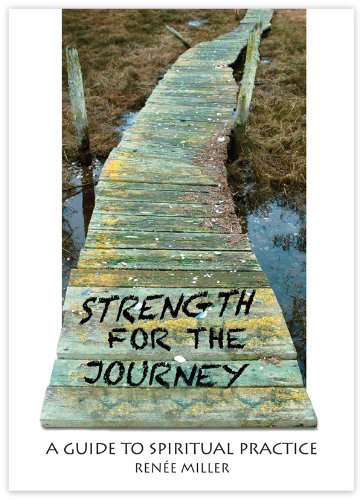
Verwandte Artikel zu Strength for the Journey: A Guide to Spiritual Practice
Inhaltsangabe
This collection of thoughtful reflections looks at events and activities of everyday life and discovers routes to spiritual practice and deeper, daily spirituality.
At the behest of CREDO Institute, Inc., which hosts health and wellness conferences and is supported by the Episcopal Church Pension Fund, priest and CREDO conference leader Renée Miller wrote the 20 reflections and grouped them into the categories: Meditative Practice, Ministry Practice, Media Practice, Mind Practice, and Movement Practice. Each entry, accented with color photographs, is aimed at evoking mindfulness in the common activities of life, from music and movie going to reading, writing, and walking.
For the reader who wishes to use the book to introduce or more deeply explore spiritual practices with other people or in an instructional setting, each chapter concludes with a nod toward who might be inclined to certain practices, based on individual predilections or personality.
The Foreword by Herb Gunn lays out the theological underpinnings of spiritual discipline in what could stand alone as a primer on spiritual practice.
Die Inhaltsangabe kann sich auf eine andere Ausgabe dieses Titels beziehen.
Über die Autorin bzw. den Autor
Renee Miller is a writer, poet, priest, entrepreneur, long-distance truck driver in training, and CREDO conference leader. From 1988 to 1997, she served as Director of the Diocesan School for Faith Ministry and as Canon to the Ordinary in the Diocese of Idaho. From 1997 to 2001 she served as Canon to the Ordinary in the Diocese of El Camino Real.
Auszug. © Genehmigter Nachdruck. Alle Rechte vorbehalten.
Strength for the Journey
A GUIDE TO SPIRITUAL PRACTICEBy Renée MillerMorehouse Publishing
Copyright © 2011 CREDO Institute, Inc.All right reserved.
ISBN: 978-0-8192-2746-1
Contents
Foreword.........................................................viiAcknowledgments..................................................ixIntroduction.....................................................1Centering Prayer.................................................13Praying with Beads...............................................17The Daily Office.................................................21Discursive Meditation............................................27Caring...........................................................35Hospitality......................................................39Money............................................................45Gratitude........................................................51Technology.......................................................59Music............................................................65Art..............................................................69Movies...........................................................75Reading..........................................................83Study............................................................89Writing..........................................................95Consciousness....................................................101Body Movement....................................................109Walking..........................................................113Nature...........................................................119Handwork.........................................................125A Process for Beginning a Spiritual Practice.....................131
Chapter One
Centering PrayerContemplative prayer is part of a reality that is bigger than itself. It is part of the whole process of integration, which requires opening to God at the level of the unconscious. —Thomas Keating
We move at a pace in life that keeps our souls as busy as our bodies; our unconscious as full as our conscious minds. We are regularly challenged to switch between ideas, images, feelings, thoughts, and emotions with the speed of a computer alternating between programs. The effect on our souls is subtle and stealthy. Over time, we find it difficult simply to be still. We find it difficult to pray or believe that we are centered in the Divine Presence during prayer. When we are able to take the time to focus ourselves on communication with God, we find our minds assailed by those same ideas, images, feelings, thoughts, and emotions that plagued us before we sat down to pray. It seems that the moment we settle ourselves in God's presence, we find that we are thinking about a meeting we need to prepare for, or a soccer practice we need to shuttle our child to, or something we have forgotten to buy at the store, or the person in the hospital that needs a visit. We may force ourselves to complete the prayer period and wonder at the end of it if we've even prayed at all. Or, we may choose to truncate or postpone our prayer because we are frustrated by the constant chatter in our minds.
Centering Prayer, a contemporary version of the ancient practice of contemplative prayer, is not only a way to pray, but a way of prayer that has the potential to make a significant impact on the pattern of our lives when we are not praying. Thomas Keating, the Cistercian monk and master of Centering Prayer, says that we are not able to determine if the practice is making a difference in our souls based on what happens during the actual time spent in the practice. Rather, we know the prayer is effective in our lives by the comments we receive from others who begin to see a difference in us. When we simply sit faithfully in God's presence and stay there, even when thoughts distract us, we will find that we are able to bring the practice into the situations of our everyday lives. Instead of becoming focused on what may seem urgent but is ultimately unimportant, we find we are able to let it go, just as we have done during the course of the prayer practice itself. In other words, what we practice in the prayer is what we begin to live outside the time of prayer.
Centering prayer is a simple, though hardly easy, practice. After settling in the presence of God, we choose a sacred word as a symbol of our intent to remain in God's presence during the prayer period. As thoughts rise in us, we gently let them go and return to the sacred word. Thomas Keating uses a potent image. He says that as thoughts float across our consciousness, they are like boats on the surface of a river. When we are focused on what is on the surface of the river rather than the river itself we slip away from our original intention. The sacred word helps call us back to the place of stillness and faithful presence to God. It is the soft offering that affirms that we want to give our attention back to God. We continue the process of letting go of thoughts and returning to the sacred word throughout the time given to the practice—usually twenty to thirty minutes once or twice each day.
* * *
If you are contemplative and reflective you are probably easily attracted to this form of prayer. You may find that it provides respite from the rigors of daily demands. On the other hand, if you are active and highly verbal you might, at first, think centering prayer is unsuitable for your spiritual personality. After practicing it for some time, however, you may be surprised by the spiritual balance that you experience as a result of quieting yourself in the place of deep spiritual rest.
Praying with Beads
To pray is to listen to the One who calls you "my beloved daughter," "my beloved son," "my beloved child." To pray is to let that voice speak to the center of your being, to your guts, and let that voice resound in your whole being. —Henri Nouwen
One of the most difficult aspects of prayer and meditation is focus. So much that occurs in the daily round of life distracts us during the time of prayer. If we were to count the number of thoughts we have in just one hour, we would be astonished at the capacity of our minds to flit like hummingbirds from thought to thought. In many ways, this is not a new phenomenon. We easily fault contemporary life and technology for what Buddhists call "monkey mind." Yet, it is more a primordial than a generational response. It is part of being human and it is a glorious part of being human. It is what makes dreaming, imagining, inventing, and creating possible. While we can quickly become discouraged during prayer with the plethora of stuff inside our minds moving us off focus, it is that very stuff that is responsible for our ongoing health and growth.
The real issue is in the timing. There are times when we want to be free of our bouncing thoughts in order to become inwardly still. There are times we want our focus to be as piercing as a laser beam. There are times we do not want any disturbance to interrupt our intention. An external aid can often help us find the peace and focus we seek. For centuries, in all religions, beads and prayer ropes have been such an aid. While the most familiar use of prayer beads is as a counter for the number of prayers said, its...
„Über diesen Titel“ kann sich auf eine andere Ausgabe dieses Titels beziehen.
Suchergebnisse für Strength for the Journey: A Guide to Spiritual Practice

Beispielbild für diese ISBN
Strength for the Journey: A Guide to Spiritual Practice
Anbieter: World of Books (was SecondSale), Montgomery, IL, USA
Verkäuferbewertung 5 von 5 Sternen

Paperback. Zustand: Very Good. A brief, accessible guide to a wide range of traditional and non-traditional spiritual practices,endorsed by the CREDO Institute, Inc., an organization which advocates a holistic approach to health and wellness. Artikel-Nr. 00090224828
Gebraucht kaufen
EUR 3,84
Versand gratis
Versand innerhalb von USA
Versand innerhalb von USA
Anzahl: 1 verfügbar
Beispielbild für diese ISBN
Strength for the Journey: A Guide to Spiritual Practice
Anbieter: World of Books (was SecondSale), Montgomery, IL, USA
Verkäuferbewertung 5 von 5 Sternen
Paperback. Zustand: Good. A brief, accessible guide to a wide range of traditional and non-traditional spiritual practices,endorsed by the CREDO Institute, Inc., an organization which advocates a holistic approach to health and wellness. Artikel-Nr. 00101684871
Gebraucht kaufen
EUR 3,84
Versand gratis
Versand innerhalb von USA
Versand innerhalb von USA
Anzahl: 5 verfügbar
Beispielbild für diese ISBN
Strength for the Journey: A Guide to Spiritual Practice
Verlag:
Morehouse Publishing (edition Illustrated), 2011
ISBN 10: 0819227463
ISBN 13: 9780819227461
Gebraucht
Paperback
Anbieter: BooksRun, Philadelphia, PA, USA
Verkäuferbewertung 5 von 5 Sternen
Paperback. Zustand: Very Good. Illustrated. It's a well-cared-for item that has seen limited use. The item may show minor signs of wear. All the text is legible, with all pages included. It may have slight markings and/or highlighting. Artikel-Nr. 0819227463-11-1
Gebraucht kaufen
EUR 5,42
Versand gratis
Versand innerhalb von USA
Versand innerhalb von USA
Anzahl: 1 verfügbar
Beispielbild für diese ISBN
Strength for the Journey: A Guide to Spiritual Practice
Anbieter: Wonder Book, Frederick, MD, USA
Verkäuferbewertung 5 von 5 Sternen
Zustand: Very Good. Very Good condition. A copy that may have a few cosmetic defects. May also contain light spine creasing or a few markings such as an owner's name, short gifter's inscription or light stamp. Artikel-Nr. T10M-00705
Gebraucht kaufen
EUR 6,41
Versand gratis
Versand innerhalb von USA
Versand innerhalb von USA
Anzahl: 2 verfügbar
Beispielbild für diese ISBN
Strength for the Journey: A Guide to Spiritual Practice
Anbieter: Wonder Book, Frederick, MD, USA
Verkäuferbewertung 5 von 5 Sternen
Zustand: Good. Good condition. A copy that has been read but remains intact. May contain markings such as bookplates, stamps, limited notes and highlighting, or a few light stains. Artikel-Nr. L04R-0919
Gebraucht kaufen
EUR 6,41
Versand gratis
Versand innerhalb von USA
Versand innerhalb von USA
Anzahl: 1 verfügbar
Beispielbild für diese ISBN
Strength for the Journey : A Guide to Spiritual Practice
Verlag:
Church Publishing Incorporated, 2011
ISBN 10: 0819227463
ISBN 13: 9780819227461
Gebraucht
Softcover
Anbieter: Better World Books, Mishawaka, IN, USA
Verkäuferbewertung 5 von 5 Sternen
Zustand: Very Good. 0th Edition. Pages intact with possible writing/highlighting. Binding strong with minor wear. Dust jackets/supplements may not be included. Stock photo provided. Product includes identifying sticker. Better World Books: Buy Books. Do Good. Artikel-Nr. 1000248-6
Gebraucht kaufen
EUR 6,55
Versand gratis
Versand innerhalb von USA
Versand innerhalb von USA
Anzahl: 4 verfügbar
Beispielbild für diese ISBN
Strength for the Journey: A Guide to Spiritual Practice
Anbieter: ThriftBooks-Atlanta, AUSTELL, GA, USA
Verkäuferbewertung 5 von 5 Sternen
Paperback. Zustand: Very Good. No Jacket. May have limited writing in cover pages. Pages are unmarked. ~ ThriftBooks: Read More, Spend Less. Artikel-Nr. G0819227463I4N00
Gebraucht kaufen
EUR 6,70
Versand gratis
Versand innerhalb von USA
Versand innerhalb von USA
Anzahl: 2 verfügbar
Beispielbild für diese ISBN
Strength for the Journey: A Guide to Spiritual Practice
Anbieter: ThriftBooks-Reno, Reno, NV, USA
Verkäuferbewertung 5 von 5 Sternen
Paperback. Zustand: Very Good. No Jacket. May have limited writing in cover pages. Pages are unmarked. ~ ThriftBooks: Read More, Spend Less. Artikel-Nr. G0819227463I4N00
Gebraucht kaufen
EUR 6,70
Versand gratis
Versand innerhalb von USA
Versand innerhalb von USA
Anzahl: 2 verfügbar
Beispielbild für diese ISBN
Strength for the Journey: A Guide to Spiritual Practice
Anbieter: ThriftBooks-Phoenix, Phoenix, AZ, USA
Verkäuferbewertung 5 von 5 Sternen
Paperback. Zustand: Very Good. No Jacket. May have limited writing in cover pages. Pages are unmarked. ~ ThriftBooks: Read More, Spend Less. Artikel-Nr. G0819227463I4N00
Gebraucht kaufen
EUR 6,70
Versand gratis
Versand innerhalb von USA
Versand innerhalb von USA
Anzahl: 2 verfügbar
Beispielbild für diese ISBN
Strength for the Journey: A Guide to Spiritual Practice
Anbieter: ThriftBooks-Dallas, Dallas, TX, USA
Verkäuferbewertung 5 von 5 Sternen
Paperback. Zustand: Very Good. No Jacket. May have limited writing in cover pages. Pages are unmarked. ~ ThriftBooks: Read More, Spend Less. Artikel-Nr. G0819227463I4N00
Gebraucht kaufen
EUR 6,70
Versand gratis
Versand innerhalb von USA
Versand innerhalb von USA
Anzahl: 2 verfügbar