
Verwandte Artikel zu Conversations with Scripture: The Law (Anglican Association...
Inhaltsangabe
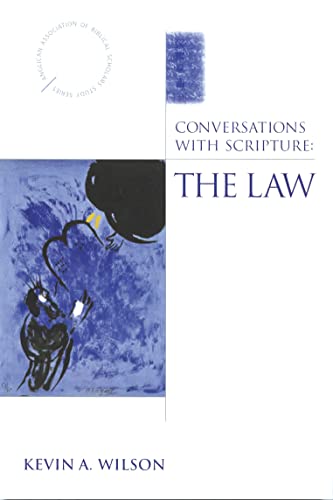
Although the Ten Commandments has been the center of much recent controversy in American politics, scripture contains many laws about which Christians are perplexed. If the Bible contains laws, shouldn't those laws be followed? What does the law that prohibits reaping a harvest to the very edges of your field mean in modern times? Or, what about God's prohibition, in Leviticus, not to round off the hair on your temples or to mar the edges of your beard? The Decalogue and the Holiness Code in Leviticus contain guidelines to ethical behavior that originally helped to shape a covenant community and still have meaning for us today.
In the newest addition to the Conversations with Scripture series, Kevin Wilson offers fresh insights into the meaning of the Law for today. In chapters that explore the Law in Exodus and Leviticus, Wilson examines the historical and cultural contexts of these legal codes. He discusses rituals such as sacrifice and rituals related to purification from defilement. Wilson demonstrates the ways in which the temple priests used many of these laws as their own code of purity and their own method of enforcing purity in the covenant community.
As with other books in the series, Wilson's book features definitions and sidebars in each chapter on particular topics, as well as study questions.
Die Inhaltsangabe kann sich auf eine andere Ausgabe dieses Titels beziehen.
Über die Autorin bzw. den Autor
Kevin A. Wilson is Professor of Biblical Studies at Lithuania Christian College. He has taught Old Testament at Virginia Theological Seminary and biblical studies at Wartburg College. He is frequently a guest speaker in parishes in the Episcopal Dioceses of Maryland and Washington, D.C., and he serves on the executive board of the Anglican Association of Biblical Scholars.
Auszug. © Genehmigter Nachdruck. Alle Rechte vorbehalten.
CONVERSATIONS WITH SCRIPTURE: THE LAW
By KEVIN A. WILSONChurch Publishing Incorporated
Copyright © 2006 Kevin A. WilsonAll right reserved.
ISBN: 978-0-8192-2147-6
Contents
Chapter One
The Ten Commandments
The Ten Commandments are a part of our Judeo-Christian heritage. Some even go so far as to claim that our civil laws are derived from the Ten Commandments. Such a claim is questionable, however. A quick glance at the Decalogue demonstrates this. Out of the ten laws, only three are reflected in modern law: the prohibitions against murder, theft, and the bearing of false witness in court. The other seven are not a part of our laws. In place of the first commandment to worship only God, the United States and many other countries have laws that guarantee the right to worship any god or no god at all. These same laws also prohibit laws against idols. While blue laws used to prevent business from operating on Sunday, most places have taken these laws off the books, and there is now no connection between the civil law and the commandment to honor the Sabbath. Dishonoring one's father and mother isn't a crime, and while adultery may be grounds for divorce, it is not an arrestable offense in most places. And as for coveting, most advertising is geared toward getting us to covet the goods the advertisers are selling, and there is certainly no law against it.
The Centrality of the Ten Commandments
While the Ten Commandments have little to do with our secular law, it's impossible to overstate their centrality to our Christian moral systems. Most people who grow up in the church memorize these laws at one time or another, and even those who enter the church as adults are generally familiar with their content. Many churches even display the Ten Commandments in their sanctuaries and Sunday school classrooms. With the possible exception of some of the psalms and a few of the stories, the Ten Commandments are probably one of the most familiar parts of the Old Testament.
This centrality is not accidental. It's rooted in the Bible itself, where the Ten Commandments are accorded a special status among the laws of the Torah. This is clear from the two passages that preserve the Decalogue, Exod 20:1–17 and Deut 5:6–21.
In Exodus 20, God has delivered the people from Egypt through the exodus and they have journeyed to Mount Sinai, where Moses tells them to prepare themselves for God's appearance. During the theophany, God delivers the Ten Commandments directly to the people. Having heard God's voice, however, the people fear that they will die, and they ask Moses to act as an intermediary: "You speak to us, and we will listen; but do not let God speak to us, or we will die" (Exod 20:19). From that point on, God speaks the law to Moses, who relays it to the people. The direct delivery of the Ten Commandments, combined with their position as the first laws given to the people, highlights the centrality of these laws to the ancient Israelites.
Deuteronomy also reinforces this impression through its placement of the Decalogue. Deuteronomy is set up as an address by Moses to the people of Israel as they prepare to enter Canaan. The book begins with a series of instructive sermons by Moses in chapters 1–11 that retell the events that have led the people to this point. Then the writer goes on to a second presentation of the law in chapters 12–26. But the Ten Commandments are not given as part of the law but placed at the beginning of the law as part of Moses' recitation of the history of the people. As in Exodus, the Ten Commandments are once again delivered directly to the people, who then ask that Moses be the mediator for the rest of the law (Deut 5:22–26).
But when did the Ten Commandments become the centerpiece of the law? They had certainly obtained this status by the time of the writing of Deuteronomy and Exodus in the seventh and sixth centuries, respectively. But there are surprisingly few references to these laws as a set prior to that time. Hosea seems to refer to them in his criticism of the people, when he accuses them of lying, murdering, stealing, and committing adultery (Hos 4:2). Jeremiah likewise records a list similar to the Ten Commandments. In his Temple Sermon, Jeremiah chides the people: "Will you steal, murder, commit adultery, swear falsely, make offerings to Baal, and go after other gods that you have not known, and then come and stand before me in this house, which is called by my name, and say, "We are safe!"—only to go on doing all these abominations?" (Jer 7:9–10). While other passages in the prophets do refer to one or two of the Ten Commandments, these verses from Hosea and Jeremiah seem to be the only ones that regard the Decalogue as a set list of laws.
One possible explanation of why so few other passages refer to the Ten Commandments is that they didn't reach their final form until late in the monarchic period. Exodus was completed in the sixth century, while the section of Deuteronomy that contains the Decalogue is from only slightly earlier. In the centuries prior to this, the contents of the Ten Commandments may have been in flux. This is suggested by several passages in the Old Testament that preserve lists of laws that are similar to, but not identical to, the Ten Commandments. In fact, the Bible contains several Decaloguelike formulations, including those found in Exod 34:17–26; Lev 19:1–19; and Deut 27:15–26.
The Top Ten List
To illustrate, let's take a look at two of these passages. Exod 34:17–26 contains a list of laws, only two of which are found in the Ten Commandments. Although the enumeration of these laws is unclear, it is possible to arrange them to form ten commandments:
1. Do not make cast idols.
2. Keep the Festival of Unleavened Bread.
3. Sacrifice all firstborn male animals to God.
4. No one shall appear before God empty-handed.
5. Keep the Sabbath.
6. Keep the Festival of Weeks, the Festival of Firstfruits, and the Festival of Ingathering.
7. Do not offer sacrifices with leaven.
8. Do not leave the sacrifice of Passover until the morning.
9. Bring the firstfruits of the ground to the temple.
10. Do not boil a kid in its mother's milk.
Of these, only the prohibition of idols and the keeping of the Sabbath are found in the Ten Commandments. The rest deal primarily with specific sacrifices and festivals. In this regard, it's interesting to note that within the Ten Commandments, the only festival law is the law concerning the Sabbath. Even the Passover, which is central to the salvation story of the Israelites, is left out of the Decalogue.
The laws of Lev 19:1–19, with a much longer catalogue, contain more laws that are parallel to the Ten Commandments. This list contains laws prohibiting stealing, swearing falsely, and bearing false witness. In addition, it includes a number of laws that cover topics ranging from unjust judgments and wage practices to the interbreeding of two different species of animals. There is only one law dealing with festivals, stipulating that the entire well-being offering must be eaten on the day it is offered. This passage also contains the commandment to "love your neighbor as yourself" (Lev 19:18), a law that Jesus called the second greatest commandment (Matt 22:39; Mark 12:31).
If these competing versions of laws were all circulating in the monarchic period, it's easy to see why the Ten Commandments were selected to serve as the center of Israelite law. Among the collections of laws surveyed here, the Decalogue is...
„Über diesen Titel“ kann sich auf eine andere Ausgabe dieses Titels beziehen.
Suchergebnisse für Conversations with Scripture: The Law (Anglican Association...

Beispielbild für diese ISBN
Conversations with Scripture : The Law
Verlag:
Church Publishing Incorporated, 2006
ISBN 10: 0819221473
ISBN 13: 9780819221476
Gebraucht
Softcover
Erstausgabe
Anbieter: Better World Books, Mishawaka, IN, USA
Verkäuferbewertung 5 von 5 Sternen

Zustand: Good. 1st Edition. Former library copy. Pages intact with minimal writing/highlighting. The binding may be loose and creased. Dust jackets/supplements are not included. Includes library markings. Stock photo provided. Product includes identifying sticker. Better World Books: Buy Books. Do Good. Artikel-Nr. 5111026-6
Gebraucht kaufen
EUR 17,27
Versand gratis
Versand innerhalb von USA
Versand innerhalb von USA
Anzahl: 1 verfügbar
Beispielbild für diese ISBN
The Law [Conversations with Scripture]
Anbieter: Windows Booksellers, Eugene, OR, USA
Verkäuferbewertung 5 von 5 Sternen
Paperback. Very good. 115 pp. Artikel-Nr. 706590
Gebraucht kaufen
EUR 11,95
EUR 6,70 Versand
Versand innerhalb von USA
Versand innerhalb von USA
Anzahl: 1 verfügbar
Beispielbild für diese ISBN
Conversations with Scripture
Anbieter: PBShop.store US, Wood Dale, IL, USA
Verkäuferbewertung 5 von 5 Sternen
PAP. Zustand: New. New Book. Shipped from UK. Established seller since 2000. Artikel-Nr. CX-9780819221476
Beispielbild für diese ISBN
Conversations with Scripture
Anbieter: PBShop.store UK, Fairford, GLOS, Vereinigtes Königreich
Verkäuferbewertung 5 von 5 Sternen
PAP. Zustand: New. New Book. Shipped from UK. Established seller since 2000. Artikel-Nr. CX-9780819221476
Neu kaufen
EUR 18,77
EUR 4,91 Versand
Versand von Vereinigtes Königreich nach USA
Versand von Vereinigtes Königreich nach USA
Anzahl: 15 verfügbar
Beispielbild für diese ISBN
Conversations with Scripture: The Law (Anglican Association of Biblical Scholars)
Anbieter: Ria Christie Collections, Uxbridge, Vereinigtes Königreich
Verkäuferbewertung 5 von 5 Sternen
Zustand: New. In English. Artikel-Nr. ria9780819221476_new
Neu kaufen
EUR 20,83
EUR 11,07 Versand
Versand von Vereinigtes Königreich nach USA
Versand von Vereinigtes Königreich nach USA
Anzahl: Mehr als 20 verfügbar
Beispielbild für diese ISBN
Conversations With Scripture: The Law
Anbieter: Revaluation Books, Exeter, Vereinigtes Königreich
Verkäuferbewertung 5 von 5 Sternen
Paperback. Zustand: Brand New. 1st edition. 115 pages. 9.00x6.00x0.50 inches. In Stock. Artikel-Nr. x-0819221473
Neu kaufen
EUR 22,80
EUR 11,81 Versand
Versand von Vereinigtes Königreich nach USA
Versand von Vereinigtes Königreich nach USA
Anzahl: 2 verfügbar
Beispielbild für diese ISBN
Conversations With Scripture
Anbieter: Majestic Books, Hounslow, Vereinigtes Königreich
Verkäuferbewertung 4 von 5 Sternen

Zustand: New. pp. xxi + 115. Artikel-Nr. 3407626
Neu kaufen
EUR 28,79
EUR 7,68 Versand
Versand von Vereinigtes Königreich nach USA
Versand von Vereinigtes Königreich nach USA
Anzahl: 1 verfügbar
Foto des Verkäufers
Conversations with Scripture : The Law
Anbieter: AHA-BUCH GmbH, Einbeck, Deutschland
Verkäuferbewertung 5 von 5 Sternen
Taschenbuch. Zustand: Neu. Neuware - Although the Ten Commandments has been the center of much recent controversy in American politics, scripture contains many laws about which Christians are perplexed. If the Bible contains laws, shouldn't those laws be followed What does the law that prohibits reaping a harvest to the very edges of your field mean in modern times Or, what about God's prohibition, in Leviticus, not to round off the hair on your temples or to mar the edges of your beard The Decalogue and the Holiness Code in Leviticus contain guidelines to ethical behavior that originally helped to shape a covenant community and still have meaning for us today.In the newest addition to the Conversations with Scripture series, Kevin Wilson offers fresh insights into the meaning of the Law for today. In chapters that explore the Law in Exodus and Leviticus, Wilson examines the historical and cultural contexts of these legal codes. He discusses rituals such as sacrifice and rituals related to purification from defilement. Wilson demonstrates the ways in which the temple priests used many of these laws as their own code of purity and their own method of enforcing purity in the covenant community.As with other books in the series, Wilson's book features definitions and sidebars in each chapter on particular topics, as well as study questions. Artikel-Nr. 9780819221476
Neu kaufen
EUR 27,30
EUR 35,00 Versand
Versand von Deutschland nach USA
Versand von Deutschland nach USA
Anzahl: 2 verfügbar
Foto des Verkäufers
Conversations with Scripture: The Law
Anbieter: moluna, Greven, Deutschland
Verkäuferbewertung 5 von 5 Sternen
Zustand: New. Über den AutorrnrnKevin A. Wilson is Professor of Biblical Studies at Lithuania Christian College. He has taught Old Testament at Virginia Theological Seminary and biblical studies at Wartburg College. He is frequently a guest speaker in pa. Artikel-Nr. 898826753
Neu kaufen
EUR 20,30
EUR 48,99 Versand
Versand von Deutschland nach USA
Versand von Deutschland nach USA
Anzahl: Mehr als 20 verfügbar