
Verwandte Artikel zu Welcome to the Episcopal Church: An Introduction to...
Inhaltsangabe
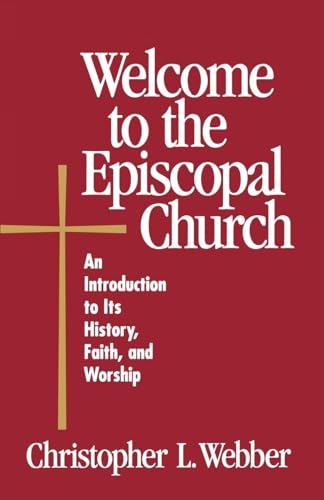
A comprehensive, easy-to-understand primer to the Episcopal faith for new members, inquirers, and Church members who are unfamiliar with its history, beliefs, and practices.
Written in accessible language and in a conversational tone, this introduction to The Episcopal Church is the ideal resource for adult parish study, newcomers, and other interested individuals. From an Episcopal perspective, the author examines the Church’s history, worship, beliefs, spiritual life, organizational structure, mission and outreach, and the way followers interpret and understand the Bible. Study questions accompany each chapter.
"Welcome to The Episcopal Church makes clear that the worship of God is the most important thing that can be said about us, and that worship is the source for everything else in our life together--our commitment to justice for all people, our mission to those who do not yet know Jesus Christ as their Lord and Savior, and how we should live out our lives in this very complex world.”―from the Foreword, The Most Rev. Frank T. Griswold III, Presiding Bishop and Primate
Die Inhaltsangabe kann sich auf eine andere Ausgabe dieses Titels beziehen.
Über die Autorin bzw. den Autor
Christopher L. Webber, a graduate of Princeton University and the General Theological Seminary in New York, is an Episcopal priest who has led urban, rural, and overseas parishes. He is the author of several books, including Welcome to Christian Faith,Beyond Beowulf, and A Year with American Saints, co-authored with Lutheran Pastor G. Scott Cady. Webber grew up in Cuba, New York, and lives in San Francisco.
Auszug. © Genehmigter Nachdruck. Alle Rechte vorbehalten.
Welcome to the Epscopal Church
An Introduction to Its History, Faith, and Worship
By CHRISTOPHER L. WEBBERChurch Publishing Incorporated
Copyright © 1999 Christopher L. Webber
All rights reserved.
ISBN: 978-0-8192-1820-9All rights reserved.
Contents
| Foreword | |
| Preface | |
| 1 History | |
| 2 Worship | |
| 3 The Bible in the Episcopal Church | |
| 4 The Church's Teaching | |
| 5 Spirituality | |
| 6 The Church's Ministry and Organization | |
| 7 The Church's Mission | |
| Suggestions for Further Reading |
Excerpt
CHAPTER 1
History
Beginnings
When a baby is born, the grandparents and cousins and friends will come toadmire the new member of the family and someone will say, "Isn't she the veryimage of Great-aunt Abigail!" or, "Doesn't he look just like Uncle Fred?" Forbetter or worse, we inherit many of our characteristics from our ancestors.Churches, like people, are shaped by their past.
But how far back must we go to understand the Episcopal Church? As members of anAmerican church, we need to know what happened in the colonial period andRevolution, but as inheritors of a European tradition, we can't avoid dealingwith the church's English heritage also. Finally we will need to go stillfurther back and understand something about the Reformation and the Middle Agesand the early church. If we had time, perhaps we should talk about Adam andAbraham! But this book is an introduction to the American Episcopal Church, sowe will need to concentrate on the last few centuries of our history and taketime here for only a few comments about the early church, Middle Ages, andReformation. What we need to look for in a quick summary of our church ancestryis the common characteristics that have always been part of the church's lifeand still are today. Let's begin with the Bible.
The Bible tells us that the first Christians "devoted themselves to theapostles' teaching and fellowship, to the breaking of bread and the prayers"(Acts 2:42). If that is a thumbnail description of the early church, then, in achurch descended from the apostles, we should expect to find that the breakingof bread and prayer are still at the center of the church's life, that arelationship with the apostles is still evident, and that our faith today isstill rooted in their teaching.
Episcopalians claim that the very name of the church indicates our continuationof apostolic tradition. The apostles were overseers of the church, and the name"Episcopal" (from the Greek episcopos or overseer) indicates that we area church that believes bishops, as successors to the apostles, are a vitalaspect of our common life. The Prayer Book (p. 510) tells us that the church hashad "three distinct orders of ordained ministers," bishops, priests, anddeacons, since the time of the apostles. That the Episcopal Church maintainsthis tradition links us strongly with the church in all ages. It also provides acommon bond with the Roman Catholic and Orthodox Churches of today.
Why is it, then, that there are so many churches around us that do not sharethis pattern? What is it that separates us from our fellow Christians in otherChristian churches, both those with bishops and those without? To understandthese divisions, we need to look briefly at the Middle Ages and especially atthe Reformation of the church that took place in the sixteenth century.
The Reformation
The church that grew up in the Roman Empire survived the empire's collapse andbecame the primary civilizing force in western Europe for almost a thousandyears. The monasteries, cathedrals, and parish churches were centers of lightand learning, teaching faithfulness and compassion in a chaotic and generallysavage world. But to hold on to the faith in such a world and avoid destruction,the church had to resist change and to exalt its own authority in every aspectof life—a policy that became increasingly difficult to maintain. As thenation-states of modern Europe began to emerge, increasing conflict between theold order and the new led to an explosion, which we know as the Reformation.Many of the factors that contributed to that divisive explosion were the veryones that had united the church of the Middle Ages, matters of churchgovernment, language, and culture. Others were deeper matters of faith thatmight have been dealt with peacefully if political and economic considerationshad not complicated the picture.
At the heart of the matter were concerns for unity and power. The church hadmaintained its unity in the Middle Ages by the use of Latin as a commonlanguage, but the people of Europe in the sixteenth century spoke French,English, Spanish, German, and other languages as well. The church had maintainedits unity by training the clergy as an educated elite, but growing commercialopportunities required an educated laity. The church had maintained its unity byeducating clergy to teach the faith, but the invention of the printing press anda better-educated laity made it possible for others to read the Scriptures andto raise questions about the differences they saw between the church of theapostles and the church around them. The church had maintained its unity byappointing bishops who were, in effect, the local agents of the Bishop of Rome;through them money flowed to Rome to enable it to maintain the structure thathad been so crucial to the survival of western civilization, but now there werenational rulers who wanted that money for their own purposes. The Reformationwas not only about changes in the church, it was also about a new economicorder, the role of educated lay people, and the authority of secular rulers inconflict with the authority of the pope.
In the turmoil of reformation, the role of bishops as guardians of the faith washard to distinguish from their role as representatives of papal government. Innorthern Europe, where independence from papal government was as much an issueas was a reformed faith, the bishops were seen as nonessential aspects of thechurch's life and even as obstacles to the creation of a renewed and purifiedchurch. In England, however, geo-graphy and personalities shaped a differentoutcome. As an island in a distant corner of Europe, England was somewhatinsulated from the full force of the Reformation. As a unified territory underthe strong rule of Henry VIII, the English church was held back from followingthe teachings of Luther and Calvin, the leaders of the Reformation on thecontinent. Had it not been for a personal quarrel between Henry and the pope,the English church might have remained under Roman rule; indeed, Henry hadwritten a criticism of Luther's teaching that so pleased the pope that he hadconferred on Henry the title "Defender of the Faith." The separation betweenRome and England took place afterwards for political reasons, not theological,and was designed to give Henry, rather than the pope, final authority inEngland. The reformation that took place in England afterwards was far moremoderate and gradual than that on the continent. The Church of England, onceseparated from papal government, became a reformed church, but it was not asradically changed in its structures, practices, and teaching as the reformedchurches of continental Europe. Bishops still served as overseers of the church,but now they served by appointment of the crown rather than the pope. The Churchof England also became a church that worshiped in English, the...
„Über diesen Titel“ kann sich auf eine andere Ausgabe dieses Titels beziehen.
Suchergebnisse für Welcome to the Episcopal Church: An Introduction to...

Beispielbild für diese ISBN
Welcome to the Episcopal Church: An Introduction to Its History, Faith, and Worship
Verlag:
Morehouse Publishing (edition ), 1999
ISBN 10: 0819218200
ISBN 13: 9780819218209
Gebraucht
Paperback
Anbieter: BooksRun, Philadelphia, PA, USA
Verkäuferbewertung 5 von 5 Sternen

Paperback. Zustand: Very Good. It's a well-cared-for item that has seen limited use. The item may show minor signs of wear. All the text is legible, with all pages included. It may have slight markings and/or highlighting. Artikel-Nr. 0819218200-11-1
Gebraucht kaufen
EUR 4,97
Versand gratis
Versand innerhalb von USA
Versand innerhalb von USA
Anzahl: 1 verfügbar
Beispielbild für diese ISBN
Welcome to the Episcopal Church: An Introduction to Its History, Faith, and Worship
Verlag:
Resources for Christian Living, 1999
ISBN 10: 0819218200
ISBN 13: 9780819218209
Gebraucht
Paperback
Anbieter: World of Books (was SecondSale), Montgomery, IL, USA
Verkäuferbewertung 5 von 5 Sternen
Paperback. Zustand: Good. The perfect book for inquirers and new members, as well as current Church members who may be unfamiliar with some of the Church's history, beliefs, and practices. This new introduction to the history, polity, spirituality, worship, and outreach of the Episcopal Church is written in an easy-to-read conversational tone, and includes study questions at the end of each chapter, making it an excellent resource for adult parish study and inquirers' classes. Kindle edition available. Artikel-Nr. 00108859313
Gebraucht kaufen
EUR 5,23
Versand gratis
Versand innerhalb von USA
Versand innerhalb von USA
Anzahl: 11 verfügbar
Beispielbild für diese ISBN
Welcome to the Episcopal Church: An Introduction to Its History, Faith, and Worship
Verlag:
Resources for Christian Living, 1999
ISBN 10: 0819218200
ISBN 13: 9780819218209
Gebraucht
Paperback
Anbieter: World of Books (was SecondSale), Montgomery, IL, USA
Verkäuferbewertung 5 von 5 Sternen
Paperback. Zustand: Very Good. The perfect book for inquirers and new members, as well as current Church members who may be unfamiliar with some of the Church's history, beliefs, and practices. This new introduction to the history, polity, spirituality, worship, and outreach of the Episcopal Church is written in an easy-to-read conversational tone, and includes study questions at the end of each chapter, making it an excellent resource for adult parish study and inquirers' classes. Kindle edition available. Artikel-Nr. 00109785163
Gebraucht kaufen
EUR 5,23
Versand gratis
Versand innerhalb von USA
Versand innerhalb von USA
Anzahl: 2 verfügbar
Beispielbild für diese ISBN
Welcome to the Episcopal Church: An Introduction to Its History, Faith, and Worship
Anbieter: ThriftBooks-Phoenix, Phoenix, AZ, USA
Verkäuferbewertung 5 von 5 Sternen
Paperback. Zustand: Good. No Jacket. Pages can have notes/highlighting. Spine may show signs of wear. ~ ThriftBooks: Read More, Spend Less. Artikel-Nr. G0819218200I3N00
Gebraucht kaufen
EUR 5,96
Versand gratis
Versand innerhalb von USA
Versand innerhalb von USA
Anzahl: 13 verfügbar
Beispielbild für diese ISBN
Welcome to the Episcopal Church: An Introduction to Its History, Faith, and Worship
Anbieter: ThriftBooks-Phoenix, Phoenix, AZ, USA
Verkäuferbewertung 5 von 5 Sternen
Paperback. Zustand: Fair. No Jacket. Readable copy. Pages may have considerable notes/highlighting. ~ ThriftBooks: Read More, Spend Less. Artikel-Nr. G0819218200I5N00
Gebraucht kaufen
EUR 5,96
Versand gratis
Versand innerhalb von USA
Versand innerhalb von USA
Anzahl: 1 verfügbar
Beispielbild für diese ISBN
Welcome to the Episcopal Church: An Introduction to Its History, Faith, and Worship
Anbieter: ThriftBooks-Phoenix, Phoenix, AZ, USA
Verkäuferbewertung 5 von 5 Sternen
Paperback. Zustand: Very Good. No Jacket. Missing dust jacket; May have limited writing in cover pages. Pages are unmarked. ~ ThriftBooks: Read More, Spend Less. Artikel-Nr. G0819218200I4N01
Gebraucht kaufen
EUR 5,96
Versand gratis
Versand innerhalb von USA
Versand innerhalb von USA
Anzahl: 1 verfügbar
Beispielbild für diese ISBN
Welcome to the Episcopal Church: An Introduction to Its History, Faith, and Worship
Anbieter: ThriftBooks-Atlanta, AUSTELL, GA, USA
Verkäuferbewertung 5 von 5 Sternen
Paperback. Zustand: Fair. No Jacket. Readable copy. Pages may have considerable notes/highlighting. ~ ThriftBooks: Read More, Spend Less. Artikel-Nr. G0819218200I5N00
Gebraucht kaufen
EUR 5,96
Versand gratis
Versand innerhalb von USA
Versand innerhalb von USA
Anzahl: 2 verfügbar
Beispielbild für diese ISBN
Welcome to the Episcopal Church: An Introduction to Its History, Faith, and Worship
Anbieter: ThriftBooks-Reno, Reno, NV, USA
Verkäuferbewertung 5 von 5 Sternen
Paperback. Zustand: Fair. No Jacket. Readable copy. Pages may have considerable notes/highlighting. ~ ThriftBooks: Read More, Spend Less. Artikel-Nr. G0819218200I5N00
Gebraucht kaufen
EUR 5,96
Versand gratis
Versand innerhalb von USA
Versand innerhalb von USA
Anzahl: 2 verfügbar
Beispielbild für diese ISBN
Welcome to the Episcopal Church: An Introduction to Its History, Faith, and Worship
Anbieter: ThriftBooks-Dallas, Dallas, TX, USA
Verkäuferbewertung 5 von 5 Sternen
Paperback. Zustand: Very Good. No Jacket. Former library book; May have limited writing in cover pages. Pages are unmarked. ~ ThriftBooks: Read More, Spend Less. Artikel-Nr. G0819218200I4N10
Gebraucht kaufen
EUR 5,96
Versand gratis
Versand innerhalb von USA
Versand innerhalb von USA
Anzahl: 1 verfügbar
Beispielbild für diese ISBN
Welcome to the Episcopal Church: An Introduction to Its History, Faith, and Worship
Anbieter: ThriftBooks-Atlanta, AUSTELL, GA, USA
Verkäuferbewertung 5 von 5 Sternen
Paperback. Zustand: Very Good. No Jacket. Missing dust jacket; May have limited writing in cover pages. Pages are unmarked. ~ ThriftBooks: Read More, Spend Less. Artikel-Nr. G0819218200I4N01
Gebraucht kaufen
EUR 5,96
Versand gratis
Versand innerhalb von USA
Versand innerhalb von USA
Anzahl: 1 verfügbar