
Verwandte Artikel zu The Changing Face of God
Inhaltsangabe
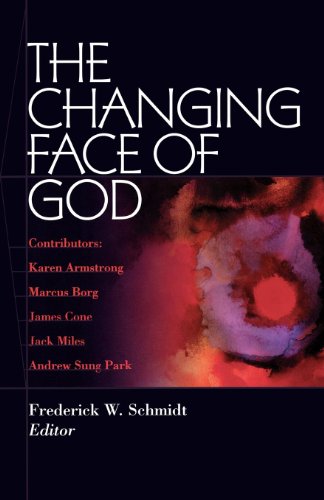
In 1999, five scholars presented lectures at Washington National Cathedral about our images of God and what difference they make. This book is ideal for parish study groups and individuals to consider and discuss the viewpoints of Marcus Borg, Karen Armstrong, Jack Miles, James Cone, and Andrew Sung Park.
"Does the face of God change? Years ago I would have said, 'No.' Countless hymns, passage of Scripture and confessions of faith assert or imply the changelessness of God. To take issue with traditions that are centuries, if not millennia old, seemed to be daunting and misguided....But when the great professions of confidence in God harden into philosophical propositions, one is bound to ask: What difference would it make to say that God has only one face? Even if true in some sense, the fact of the matter is that features each of us would count as necessary and changeless would be a matter of considerable debate."
- From the Introduction
Die Inhaltsangabe kann sich auf eine andere Ausgabe dieses Titels beziehen.
Über die Autorin bzw. den Autor
Frederick W. Schmidt is an Episcopal priest and the Rueben P. Job Chair in Spiritual Formation at Garrett-Evangelical Theological Seminary in Evanston, Illinois. He is the author of several books, including The Dave Test: A Raw Look at Real Faith in Hard Times. He lives in Arrington, Tennessee.
Auszug. © Genehmigter Nachdruck. Alle Rechte vorbehalten.
THE CHANGING FACE OF GOD
By Karen Armstrong, MARCUS J. BORG, James H. Cone, Jack Miles, Andrew Sung Park, Frederick W. SchmidtChurch Publishing Incorporated
Copyright © 2000 The Protestant Episcopal Cathedral Foundation of the District of Columbia
All rights reserved.
ISBN: 978-0-8192-1801-8All rights reserved.
Contents
| CHAPTER ONE THE CHANGING FACE OF GOD Frederick W. Schmidt | |
| CHAPTER TWO THE GOD OF IMAGINATIVE COMPASSION Karen Armstrong | |
| CHAPTER THREE THE GOD WHO IS SPIRIT Marcus J. Borg | |
| CHAPTER FOUR GOD IS THE COLOR OF SUFFERING James H. Cone | |
| CHAPTER FIVE A COMPLICATED GOD Jack Miles | |
| CHAPTER SIX THE GOD WHO NEEDS OUR SALVATION Andrew Sung Park | |
| SELECTED BIBLIOGRAPHY | |
| FOR FURTHER READING |
CHAPTER 1
THE CHANGING FACE OF GOD
Frederick W. Schmidt
Does the face of God change? Years ago I would have said, "No." Countless hymns,passages of Scripture, and confessions of faith assert or imply thechangelessness of God. To take issue with traditions that are centuries, if notmillennia old, seemed to be both daunting and misguided.
I eventually realized, however, that many of these great professions of faithwere bent on underlining the reliability of God. Both their theological andsocial function was to reassure believers of divine trustworthiness. To takethem as flat assertions of fact would be as wrongheaded as the attempt to takethe words of a poet in literal terms.
Nonetheless, it is true that some of those great statements of faith are meantto convey just exactly what they appear to convey. God never changes. So why thequestion?
Well, for one thing, there is a difference between the assertion that God neverchanges and the assertion that our perception of God—our view of God's "face"—neverchanges. The former is an assertion that God's nature has a permanenceabout it that nothing else around us can claim, an "immutability," theologianscall it. The latter is a very different kind of statement. Like the elephant ofthe great Indian proverb that each blind man touches, our perceptions alter aswe move from leg to trunk and from trunk to ear. In other words, the reality ofGod is large enough that, even in traditional terms, one could argue that God'sface changes as we learn more, seeing now this feature and then another.
But then when the great professions of confidence in God harden intophilosophical propositions, one is bound to ask, "What difference would it maketo say that God has only one face?" Even if true in some sense, the fact of thematter is that the features each of us would count as necessary and changelesswould be a matter of considerable debate. In fact, much of the history of boththeology and the life of the church is about those differences. We could evensay that the conversation about the changing face of God is not only under way,the church has actually embraced and memorialized the conversation in stone.
The Church of the Annunciation in northern Galilee is an excellent example ofthe potential diversity. It sits atop the remains of the hamlet that was oncebiblical Nazareth. Devoted to Mary, the Mother of Jesus, the church boasts aseries of Madonnas donated by Christians from around the world. Mother and childare sharply distinguished by the culture, aesthetic, and skin color of eachdonor-nation. The Madonna and Child given by Sierra Leone features costumes andiconography of one kind. The figures designed in Japan feature another, drawingon an artistic style characteristic of an earlier century. And the image of Marydonated by the United States is dressed in a flowing, metallic robe that hasprompted some visitors to draw comparison with aluminum foil!
It takes very little time to realize that even the diversity of theseinterpretations obscures the endless variety that lies behind the representativework of the artists. Not all Americans would choose to evoke the associationsthat accompany the heavy folds of Mary's metallic dress, and we can safely saythat the aesthetic assumptions that shape the faith and imagination of allJapanese Christians are hardly captured in the work of their own artist.
What is undeniably true, although difficult to remember, is that the sameassumptions shape more than our canons of beauty. They shape and define ourunderstanding of the truth, they determine what we believe to be important, andas a consequence, those assumptions give each of our lives a radically differentshape.
Not all of even the most important differences arise out of our nationalidentity. Race, socioeconomic status, education, and the vagaries of life givean added shape and texture to our view of the world around us.
In the final analysis, the resulting diversity is not the surprise. The surpriseis the extent to which we share a common bond or manage to communicate around,through, and over the differences. I can still remember a dear Jamaican friendof mine who studied for a time in Chicago noting that theologians thereregularly debated issues that were of little or no significance for his owncountry. The space that wealth created for one kind of dialogue was all butimpossible in a country laboring under the burden of poverty.
This, then, is why the assertion that the face of God is unchanging has limitedutility, even though it might have philosophical merit. And yet, it has heldsway, lending our conversation about God a "given-ness" that we are rarelywilling to probe. As a result, we overlook, ignore, and suppress the vital rolethat our education and experience play in shaping our view of God. And, yet, ifwe probed them, I suspect that the differences would far outnumber our personalpictures of Madonna and Child!
There are a number of reasons for our failure to confront this reality. For someof us the task of examining the differences is simply too demanding. Modern lifemakes demands on our time and energies that exceed the ability of those who donot specialize in theology, just as surely as the demands of still otherdisciplines (e.g., quantum physics) exceed the theologian's. So in our franticsearch for at least a few fixed assumptions (or ones that we just don'texamine), our assumptions about God are as good or better than any others. Theyappear to impinge less immediately on our lives, and frankly, it's comforting tomake assumptions about God.
But it's that last observation about comfort that hints at still anotherobstacle: the structure of our faith itself. Years ago, as I began teachingbiblical studies, I attempted to understand the almost violent reaction that afew of my students had to any of my attempts to teach them—almost anything—aboutthe biblical text. Even my deliberate attempts to pick the simplest illustrationof a point failed to win concessions from them on which I could base my largerobservations.
I soon realized that in large part their resistance to any new informationrested on the structure of their faith. Convinced that this or that assumptionabout the Bible was true, they believed that faith in God was also viable. Inother words, they entertained faith in an ultimate authority because they hadfaith in proximate authorities. However gently you challenged their assumptionsabout the Bible, you effectively challenged their ability to believe in God atall. Now imagine asking anyone more directly to grapple with their understandingof God—the changing face of God. The level of resistance is predictable.
Finally, I think it's also...
„Über diesen Titel“ kann sich auf eine andere Ausgabe dieses Titels beziehen.
Suchergebnisse für The Changing Face of God

Beispielbild für diese ISBN
The Changing Face of God
Anbieter: ThriftBooks-Phoenix, Phoenix, AZ, USA
Verkäuferbewertung 5 von 5 Sternen

Paperback. Zustand: Good. No Jacket. Pages can have notes/highlighting. Spine may show signs of wear. ~ ThriftBooks: Read More, Spend Less. Artikel-Nr. G0819218014I3N00
Gebraucht kaufen
EUR 6,42
Versand gratis
Versand innerhalb von USA
Versand innerhalb von USA
Anzahl: 1 verfügbar
Beispielbild für diese ISBN
The Changing Face of God
Anbieter: ThriftBooks-Dallas, Dallas, TX, USA
Verkäuferbewertung 5 von 5 Sternen
Paperback. Zustand: Good. No Jacket. Pages can have notes/highlighting. Spine may show signs of wear. ~ ThriftBooks: Read More, Spend Less. Artikel-Nr. G0819218014I3N00
Gebraucht kaufen
EUR 6,42
Versand gratis
Versand innerhalb von USA
Versand innerhalb von USA
Anzahl: 1 verfügbar
Beispielbild für diese ISBN
The Changing Face of God
Verlag:
Church Publishing Incorporated, 2000
ISBN 10: 0819218014
ISBN 13: 9780819218018
Gebraucht
Softcover
Anbieter: Better World Books, Mishawaka, IN, USA
Verkäuferbewertung 5 von 5 Sternen
Zustand: Good. Pages intact with minimal writing/highlighting. The binding may be loose and creased. Dust jackets/supplements are not included. Stock photo provided. Product includes identifying sticker. Better World Books: Buy Books. Do Good. Artikel-Nr. 5658231-6
Gebraucht kaufen
EUR 6,47
Versand gratis
Versand innerhalb von USA
Versand innerhalb von USA
Anzahl: 1 verfügbar
Beispielbild für diese ISBN
The Changing Face of God
Anbieter: PBShop.store US, Wood Dale, IL, USA
Verkäuferbewertung 5 von 5 Sternen
PAP. Zustand: New. New Book. Shipped from UK. Established seller since 2000. Artikel-Nr. CX-9780819218018
Beispielbild für diese ISBN
The Changing Face of God
Verlag:
Church Publishing, Incorpora, 2000
ISBN 10: 0819218014
ISBN 13: 9780819218018
Gebraucht
Trade Paperbac
Anbieter: Robinson Street Books, IOBA, Binghamton, NY, USA
Verkäuferbewertung 4 von 5 Sternen

Trade Paperbac. Zustand: Very Good. Prompt Shipment, shipped in Boxes, Tracking PROVIDEDBibles & Christianity: Very Good trade paperback, some creasing, tips bumped, prompt shipping with tracking. Artikel-Nr. Lower3JM121
Gebraucht kaufen
EUR 13,58
EUR 8,35 Versand
Versand innerhalb von USA
Versand innerhalb von USA
Anzahl: 1 verfügbar
Beispielbild für diese ISBN
The Changing Face of God
Anbieter: Ria Christie Collections, Uxbridge, Vereinigtes Königreich
Verkäuferbewertung 5 von 5 Sternen
Zustand: New. In English. Artikel-Nr. ria9780819218018_new
Neu kaufen
EUR 17,46
EUR 10,89 Versand
Versand von Vereinigtes Königreich nach USA
Versand von Vereinigtes Königreich nach USA
Anzahl: Mehr als 20 verfügbar
Beispielbild für diese ISBN
The Changing Face of God
Anbieter: Revaluation Books, Exeter, Vereinigtes Königreich
Verkäuferbewertung 5 von 5 Sternen
Paperback. Zustand: Brand New. large type edition edition. 112 pages. 8.50x5.50x0.25 inches. In Stock. Artikel-Nr. x-0819218014
Neu kaufen
EUR 17,95
EUR 11,63 Versand
Versand von Vereinigtes Königreich nach USA
Versand von Vereinigtes Königreich nach USA
Anzahl: 2 verfügbar
Foto des Verkäufers
The Changing Face of God
Anbieter: AHA-BUCH GmbH, Einbeck, Deutschland
Verkäuferbewertung 5 von 5 Sternen
Taschenbuch. Zustand: Neu. Neuware - In 1999, five scholars presented lectures at Washington National Cathedral about our images of God and what difference they make. This book is ideal for parish study groups and individuals to consider and discuss the viewpoints of Marcus Borg, Karen Armstrong, Jack Miles, James Cone, and Andrew Sung Park.'Does the face of God change Years ago I would have said, 'No.' Countless hymns, passage of Scripture and confessions of faith assert or imply the changelessness of God. To take issue with traditions that are centuries, if not millennia old, seemed to be daunting and misguided.But when the great professions of confidence in God harden into philosophical propositions, one is bound to ask: What difference would it make to say that God has only one face Even if true in some sense, the fact of the matter is that features each of us would count as necessary and changeless would be a matter of considerable debate.' - From the Introduction. Artikel-Nr. 9780819218018
Neu kaufen
EUR 21,46
EUR 35,00 Versand
Versand von Deutschland nach USA
Versand von Deutschland nach USA
Anzahl: 2 verfügbar
Foto des Verkäufers
The Changing Face of God
Anbieter: moluna, Greven, Deutschland
Verkäuferbewertung 5 von 5 Sternen
Zustand: New. KlappentextFive leading scholars explore why our understanding of God makes a world of difference. Excellent for parish study groups, with study questions and an introduction by the former Canon Educator of the Washington National Cathed. Artikel-Nr. 595061528
Neu kaufen
EUR 17,24
EUR 48,99 Versand
Versand von Deutschland nach USA
Versand von Deutschland nach USA
Anzahl: Mehr als 20 verfügbar